
Another search term that came up was model ship mast and boom connection.
I know little about making model ships, but on a yacht or a dinghy, the boom is connected to the mast by means of a gooseneck that allows sideways and vertical swivelling. The concept is similar to that of a universal joint in mechanical engineering, except the two movements oscillate instead of being in rotation. On modern boats, this device comes in extremely varied forms. See these images.
Most model ships with any degree of authenticity would follow old rigging methods on ships. The simplest example, usually for the boom of the mizzen mast carrying the spanker (for balancing the ship and helping it to sail close to the wind) is a fork at the end of the boom allowing both movements. The boom is held close to the mast by the outhaul of the sail and parrel beads.
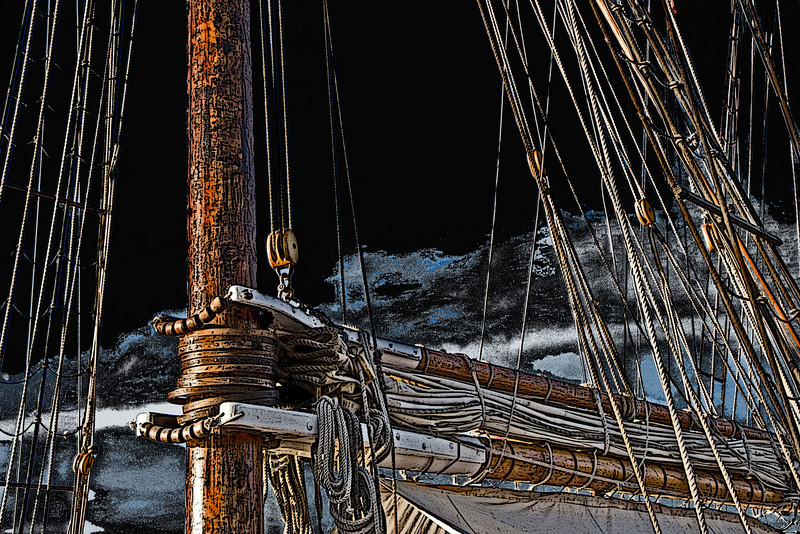
Here, the boom is seen with the mainsail down and the gaff resting on the folded sail. The “fork” on the gaff is called the parrel. The boom remains in the same place and is stopped from rising on the mast by some kind of vang or downhaul device, the sail being regulated by upward tension on the gaff. See gaff rig to know how it works.


 The Blue Flower