
I follow on from yesterday’s article with some stuff that is being sent out by e-mail. In particular, there is a link to a posting by the Young Fogey, our odd friend by the name of John Beeler – who estimates that I have no vocation to the priesthood because I don’t think exactly like he does (perhaps my growing hair has something to do with it, infatuated as he is with the 1950’s, the short back ‘n’ sides and Brylcreem gunk). I hardly idolise the reign of George III, but I do approve of the gentlemen’s hairstyles of the period (no wig)!
Anyway here is his article Cafeteria Catholicism of the right?
This article links to Fr Longenecker’s article The Rise of Conservative Cafeteria Catholicism. I won’t comment on this one, but a second article is doing the rounds by e-mail – Is Proselytism Solemn Nonsense?
Pope Francis, it appears, eschews proselytism – and thus directly opposes one of the prime tenets of conservative Roman Catholicism. We come back to the Kripkean dogmatism I discussed yesterday evening, inspired by Fr Jonathan Munn’s article, and the stages of bringing about a totalitarian theocracy not far removed from what some of the more fanatical Islamists want.
I have no interest in defending the Pope because he is Pope, or for any pretended infallibility, but for once I agree with him:
Don’t proselytize; respect others’ beliefs. We can inspire others through witness so that one grows together in communicating. But the worst thing of all is religious proselytism, which paralyzes: ‘I am talking with you in order to persuade you,’ No. Each person dialogues, starting with his and her own identity. The church grows by attraction, not proselytizing.
I go a little further and observe that the more Christians proselytise, the more the credibility of their message will go down in the eyes of the more critical and scientific among us. I haven’t taken much interest in Pope Francis since he was elected in March 2013, and I have by and large felt rather apathetic. I pray for him at Mass, but that’s as far as it goes. I generally find Jesuits as boring as watching paint dry!
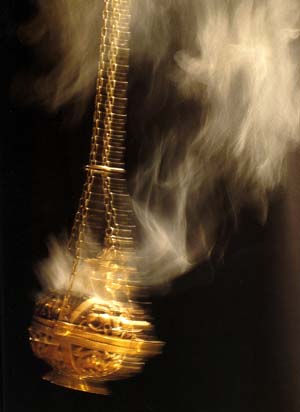
What about the command from Christ to preach the Gospel to the world? It is a difficult one, but what is sure that we have forgotten how to communicate by means other than the spoken word. Beauty is out of the window, as in the days when the Puritans were smashing stained glass, organs and altars. The conservatives know only verbal persuasion – as a prelude to compulsion once they get the political means to do so. Pinochet and Franco were quite useful for that kind of thing. Not a few Catholic Monsignori ended their lives on the gallows in 1946 for crimes against humanity!
I agree with the Pontiff as he prefers attracting people to the Church rather than forcing them, albeit through modern marketing and hard selling methods. One great mistake was getting rid of the Church’s liturgical tradition. Another was to alienate art, music and culture – so that all that is left is the spoken word.
I don’t know what the Pope is up to, not that I really care, but what he says here makes sense. At the same time, what is he doing to open up non-verbal means of communication to draw people to Christ and God’s love? There, I am less convinced.
The Church and Diocese to which I belong are not in communion with Rome, but we are in communion with the wider Catholic Church. We do care about Christ’s commandment and the duty of the Church to build and civilise, but also how we do it. Like most other Christians, we are on the defensive and fighting for survival in the face of justified criticism.
The essential of my experience in Europe simplifies things somewhat. Christianity, and monotheism in general, has discredited itself through fanaticism and the desire to impose itself as the only truth. Because of this and its own incoherence, it is no longer possible to give the world Christ’s message without all the baggage that discredits the three monotheist religions. I used to speculate as a seminarian that it was almost as if the Redemption was undone, that the Good News was no more, and the “tea break” was over. I fully understand the reaction of the post World War II period when priests were ashamed of their bishops who had collaborated with the Nazi occupation. They sought to make amends by sharing the lives of ordinary working men and removing the symbols of privilege like the cassock and Roman hat. I sympathise with them. Many of them turned to politics, but a few remained in the “workshop of Nazareth”.
I see many parallels between our time and the end of the eighteenth century, except for the executive suits of politicians and bankers replacing the powdered wigs of the guillotined aristocracy. I return to Berdyaev and his vision of a long and hard dark night during which Christians must expiate and suffer. Even worse than martyrdom is the feeling of helplessness, absence of meaning and purpose and the foreboding of a world without a future history. We have work to do on the virtue of Hope!
Let us be sincere with ourselves. We have ourselves to evangelise before we can start on other people, lest the other sees our hypocrisy. We yet have a timber yard to take out of our eyes!






 The Blue Flower