New Department

Sailors Department – no need for blow-outs, just a good stiff breeze to fill the sails!

Posted in Uncategorized | Tagged , | Leave a comment

And Now for Something Completely Different…

The Low Churchman’s Guide to the Solemn High Mass seems to be a satirical blog site, quite amusing at times. A new posting has appeared on the Latin language, said to have been

first spoken in the late ninth century A.D. in the Palatinate Forest region of southwestern Germany, after which the language is named.

Ahum! Had I claimed such a thing, my prep school master would probably have told me to stand in the hall – and wait for his wrath armed with his favourite slipper! Between the ink blots in our copy books, we enjoyed writing lines of “dog Latin” like – Caesar ad sum jam forte in fortibus es in ero. Translation: “Caesar had some jam for tea in forty buses in a row”.

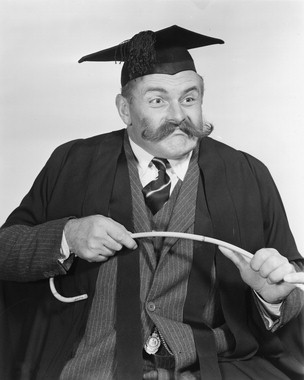
MM3 64Well, some of our old cane-wielding moustache-sporting gown-toting Whacko schoolmasters in old Imperial Britain taught Latin to generations of boys – and were probably low-church to boot!

It seems that Whacko’s cane needs to be rehabilitated… All the same, the Low Churchman’s Guide is amusing and provides a welcome break from some of the moroseness one finds in the blogosphere these days.

Posted in Uncategorized | Tagged | 1 Comment

Commenting on Blogs

This is one subject about which many of us bloggers have difficulties. I noticed that a major traditionalist RC blog has removed the possibility of comments because moderating them all is too time-consuming.

Most commenters are decent people who are aware that they are communicating with real people, even through the “emotionally blind” avenue of the computer and the Internet. A very small minority is the type of troublemaker who is sometimes called a troll (click on older posts at the bottom of each page). Real trolls (see this interesting Telegraph article) are particularly despicable people who have even caused vulnerable people to commit suicide! In extreme cases, they can be arrested and sent to prison. Other commenters are less extreme, but they are still bullies and cowards. Their tone is rude and provocative, and they invariably hide behind anonymity, use technical means to hide their IP address and make it impossible to be seen as a real person.

There is no real invariable typology. The signs differ, and this blog is different from those of professional journalist bloggers who get the really serious stuff, or pranks from teenage geeks who occasionally know how to cause real damage. The religious troublemaker is something else. The usual thing is bringing a discussion back to the same question, the narrow topic that interests the person – and always anonymously or under cover. I used to get troubled by this sort of thing, and had scruples about not allowing some persons their freedom of speech. No longer, I am completely immune.

I don’t moderate comments, but I moderate commenters. The WordPress system moderates all new commenters by default (though this option can be changed), and once they have had a comment allowed through, they are no longer moderated – unless – the moderator puts their e-mail address on a list in the options boxes. There is a commenter who still has a few comments on my blog, even one that is a little borderline. When his tone became poisonous, I added his e-mail address to the moderated box. I observed the old adage – Don’t feed the trolls. It works.

Comments are a valuable dimension of the blog, which give it some of the characteristics of a discussion forum. Without them, it would be a “Father says…” site, of little interest to internauts. The system I use takes little of my time, and it only takes a few seconds to put a troublemaker on moderated status. And, I keep the commenters who have something interesting to say, even if they think and say I am wrong.

Posted in Uncategorized | Tagged | 2 Comments

Religion in France

I have been in this country for quite a long time, and have noticed the slow extinction of Christianity in France, especially in the countryside. Going by the mainstream newspaper Le Figaro (centre-right politically) the writing is on the wall. Predictably, the religious future of France belongs to Islam. French law forbids the gathering of statistics of people according to their religion, but the article goes by the demographic mechanisms.

The growth of Islam is resisted by the official secularism of the State, according to which we all have freedom of conscience and choice of our religion, though it is understood that the French ideology considers man to be more free if he has no religion of faith. External and public manifestations of religion are discouraged. A priest can wear his cassock, but is liable to get mocked. Muslim women may not wear the burka, the garment that hides their entire body and face. But, sooner of later, things will tip over. We can expect Islam to be the majority religion in two to three decades, by something like the 2040’s.

The Figaro article gives a very sobering statistic:

  • 65 % of practising Catholics are over 50.
  • 73 % of practising Muslims are less than 54.

Even though the official gathering of statistics is illegal, but survey institutes can collect and publish data to allow a rigorous and scientific approach to this subject. Among people under 34 who practice their religion (church on Sundays or the Mosque on Fridays), there are only 16% of Catholics nationally and 48% of Muslims. For one young practising Catholic, there are three practising Muslims.

Will France be taken over by fanatics and put under the jackboot of Sharia Law? There seems still to be serious secularist competition. One thing this article does not tell us is whether the numbers of young practising Muslims is increasing or declining. If the latter, Islam will go the same way as Christianity as young people from wherever discover affluence and consumerism.

The future does not belong to us. All western countries, especially in Europe, are showing similar trends. Secularism would be dealt a severe blow by the economic crash some predict. The vital energy of Islam and Christianity are sapped by the consumer culture and affluence. The deprived “classes” are breeding grounds for fanaticism and violence.

Sociologists are not all agreed about the future of European religion. Our society is secular, but each of us has existential questions and a desire for transcendence in one form or another. Surely the meaning of life is not limited to I-pods, film and sports stars and Facebook! Different “political” views look for different causes, and some are quite cogent even if they bring great discomfort to priests and others who represent traditional institutional churches.

Here in Europe, we remain strongly influenced by events of the Christian calendar and the Saints, which are marked in most diaries one can find. Many public holidays are based on religious feasts like the Assumption and the Ascension, two examples of feasts occurring during the week. Most churches and Christian monuments, even when redundant, are left to stand. Most families still go to church for baptisms, first communions for children, weddings and funerals, but the Church has lost its moral grip on most people, particularly in regard to sexual ethics. Cultural Catholicism is still strong – its adepts believe in little but they are still “hooked”. When things go wrong in life or when in grief, people turn to prayer.

Another aspect is our freedom of choice and rejection of authoritarianism and obligation. Increasing numbers of churchgoers, especially in the cities, are guided by conviction and choice rather than upbringing. The Church has an increasing “convert” content over “cradle Catholics”. That has its advantages and disadvantages as I have written elsewhere.

Yet another aspect in city religion is the ethnical content of people from other parts of the world, especially eastern Europe, Asia and Africa. They come to Europe in search of jobs and relief from poverty. Southern hemisphere people certainly challenge the deeply held European assumption that religion is a private matter that should have no influence on public life.

There is an extremely interesting observation that Europe is secular insofar as it is European. It is not so much that Europe is modern, as is the USA that escapes the secularising dynamics to some extent, but that it is European. European religion has come to the end of its tether and is past its sell-by date.

In terms of popular religion, the Christianity of the future will be popular, charismatic and extroverted. There is an exception – monasticism. Inevitably, monasteries concern only an infinitesimal proportion of the population, one of radical converts and men and women of total commitment. It is in those communities where a liturgical expression of Christianity can still survive. This is also found in communities of lay people like l’Emmanuel and the Chemin Neuf, charismatic communities with a soignée (cared for) liturgy and devotion to the Blessed Sacrament. Communities for lay people with more traditional liturgical expressions have yet to be founded. There are of course the traditionalists with a strong sense of spiritual and political identity.

The future is closed communities and ethnic minorities in cities. Interesting…

Is there something I have missed?

Posted in Uncategorized | Tagged , | Leave a comment

ACC-UK French Chaplaincy Coverage

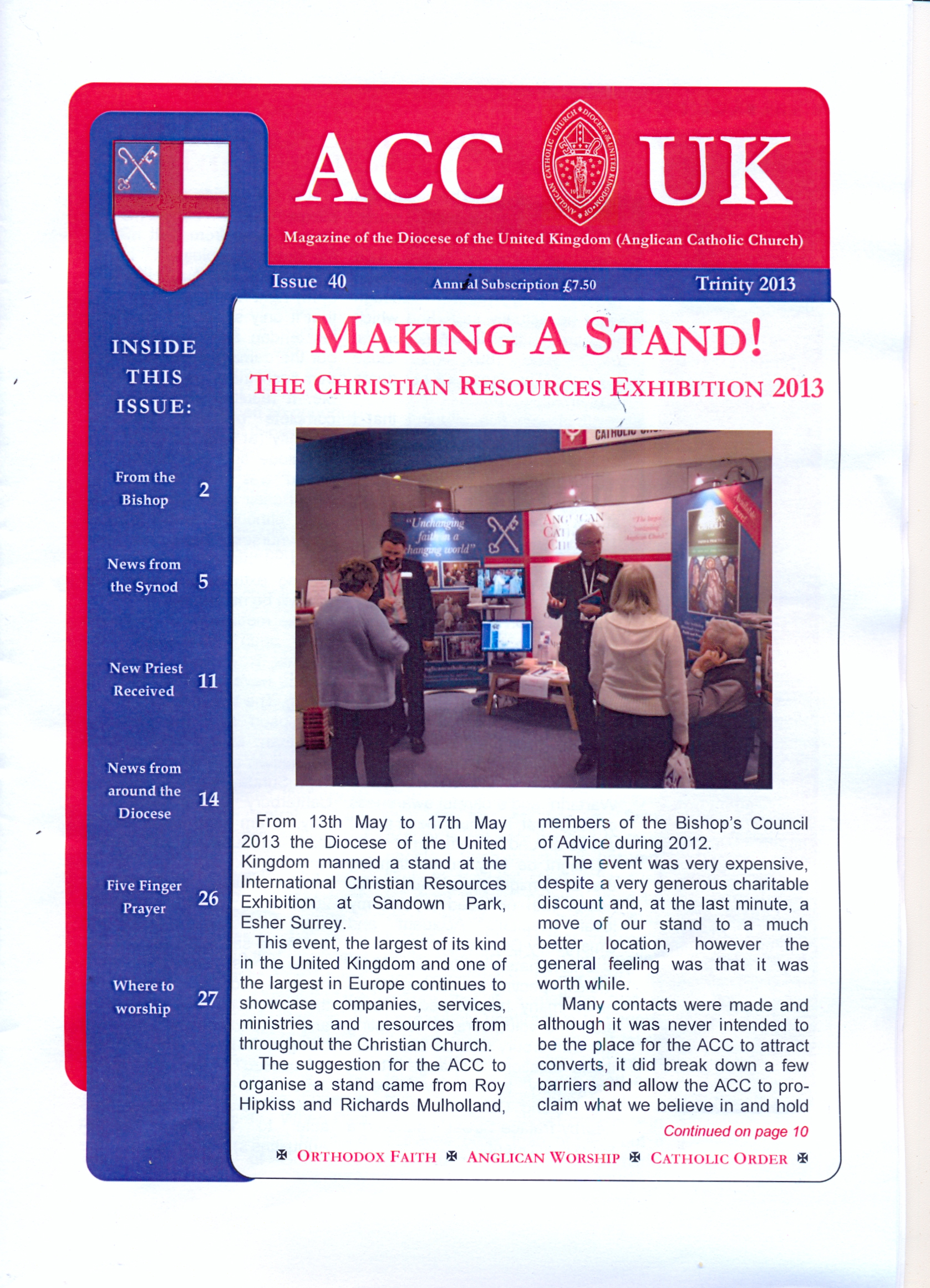
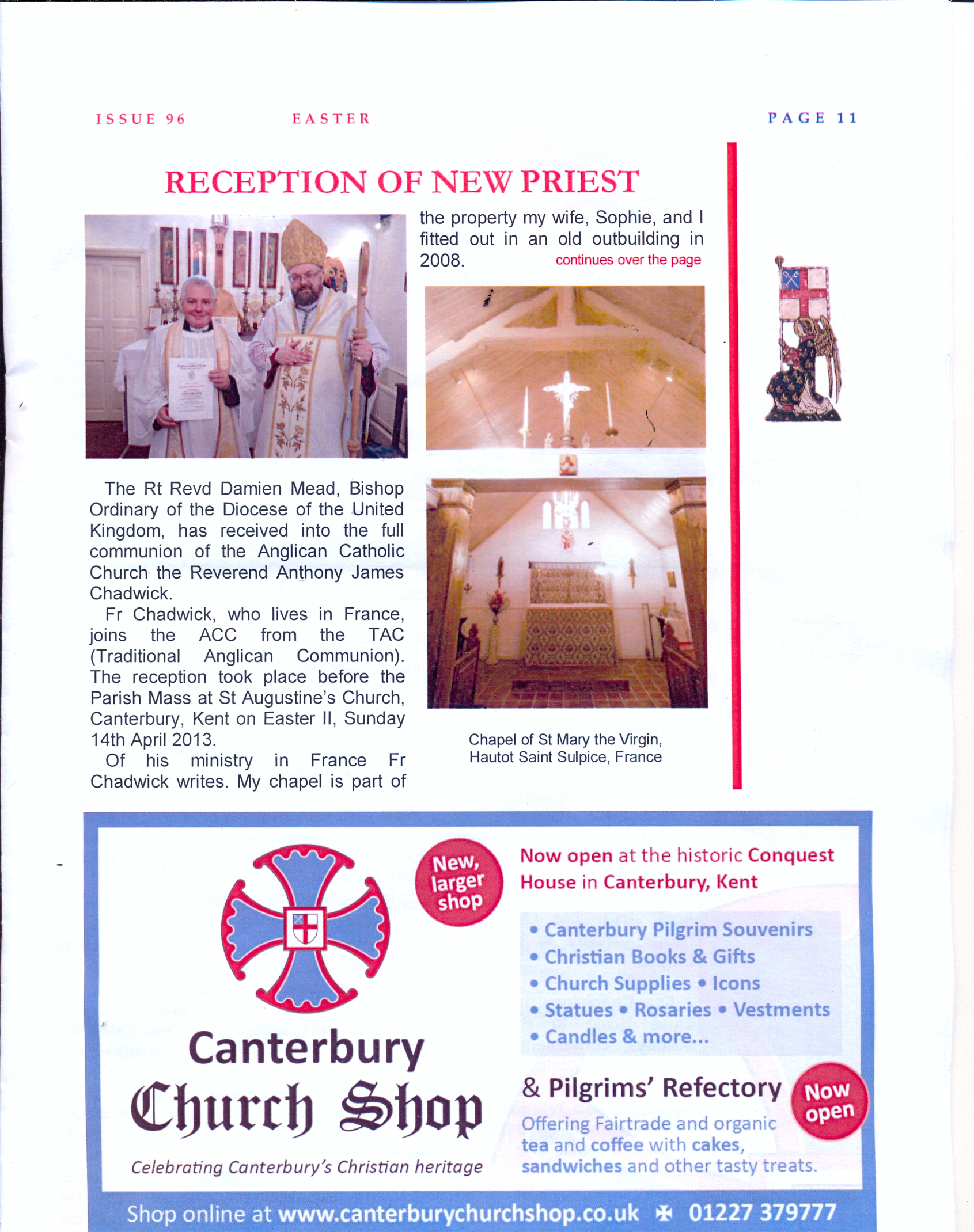
I received my copy of our Diocesan Magazine yesterday in the post. Certainly, many of our faithful in the UK rely on this printed medium since there are still fewer computer and Internet users this side of the Atlantic. I am very honoured to have been given two pages!

acc-magazine-1acc-magazine-2acc-magazine-3The holiday season is over for most people, but if there are some retired stragglers in their campers who feel like a visit to Normandy, they would be most welcome. I can recommend them the places to visit in fair weather and foul (rather the latter for the past week and into next week). I am available for their pastoral needs, and they are welcome to my humble chapel.

I renew my thanks to Bishop Damien Mead and his Board of Ministry for having obtained the consent of our Metropolitan Archbishop Mark Haverland for extending Diocesan Oversight outside the frontiers of the United Kingdom and having received me into the ranks of the ACC-UK diocesan clergy. There are parishes and missions in England that are further away from our Diocesan See in Canterbury than I am just over the English Channel.

It is a pleasant part of the world, not unlike the south coast of England. Normandy is less “rugged” than Brittany, but has some wonderful bits of coastline including the iconic cliffs of Etretat.

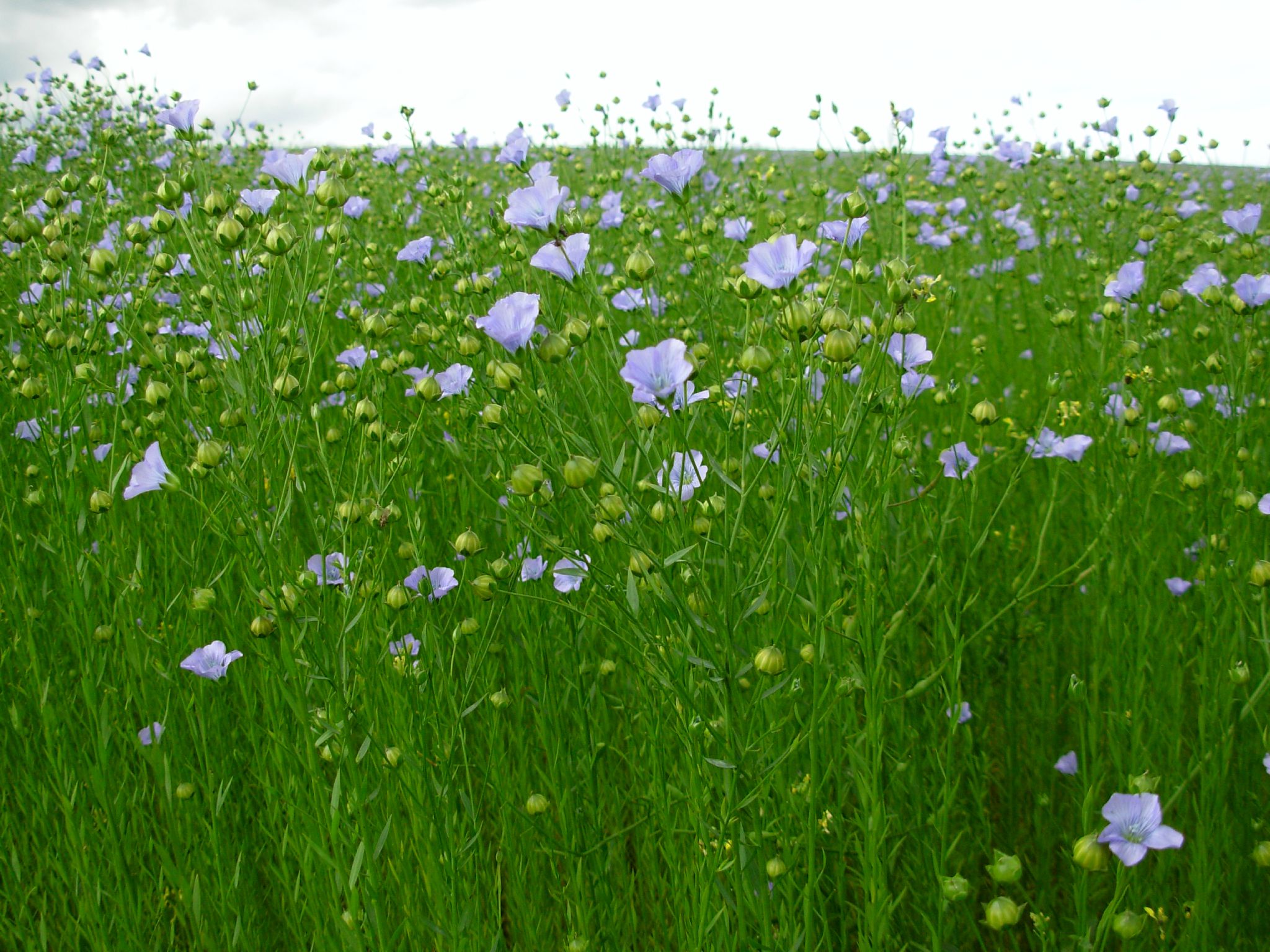
etretatFurther inland, as we live in the Pays de Caux, there are many things to see both in the towns and the countryside. Our area produces linen from locally grown flax, cultivated and gathered in the traditional way. Normandy has its own “Sussex Downs”. This is a view of the cliffs at Sotteville sur Mer looking towards Dieppe. The cliff in the mid range is Varangeville, where there is a beautiful house and garden in the Arts and Crafts style by the English architect Edwin Lutyens. The house is privately owned and opened to the public only once a year, but the garden can be visited any time – Le Bois des Moutiers.

pays-caux-1pays-caux-2The traditional architecture for farmhouses is half-timbered and thatched roofs. The eave of the roof is held by the roots of iris plants.

pays-caux-3Here is the inside of the church of Veules les Roses, where I go sailing.

veules-egliseMany of our churches are practically “untouched” apart from the presence of a nave altar for Mass facing the people. The old baroque altars are almost invariably intact, even if they are in their “Good Friday” state – bare and neglected.

Normandy and the Pays de Caux are well worth a visit, even by people who live in Kent and Sussex. There are fewer people over here and the traffic on the roads is lighter outside the main arteries.

My ministry is a chaplaincy, which means in this context an availability of a priest for the pastoral care of English tourists and expats. I don’t “tout for business”. If people want to live their lives without churches or formal religion, they are adults and are free to do and think as they want. Mass and Office are celebrated in this chapel, whether people come to them or not.

Posted in Uncategorized | Tagged , | Leave a comment

More Rig Questions

I still get quite a few searches, sometimes quite complex. Here are two from my stats page:

  • gaff jaws sail
  • home made sliding gunter rig sails

I assume the word sail was put in to refine the searches, since animals have jaws and Gunter or Gunther is a popular Christian name in Germany.

I have two nice boat building sites: Constructing a Mirror Dinghy, which has a section of making the gaff, and The Sliding Gunter: A versatile Traditional Sailing Rig. The difference between the Mirror gaff that works like a gunter (triangular and not a four-cornered sail) on one hand, and the older type gunter on other traditional rigs is seen.

I doubt many of my readers are into boat building. Even for those who will never build a boat, the technical aspects can often be helpful for us to understand “how it works”.

gaff_jawsThe gaff jaws are made of marine plywood and are screwed to the gaff, each with two brass or stainless steel screws. Gluing would be advisable, using epoxy resin. Make sure they are slightly further apart than the diameter of the mast, so that no jamming occurs. The old traditional rigs require study, and there is plenty of material on the internet. It helps to be good at rope-work – splicing and that sort of thing. It’s all wood, so can be made in anyone’s garage. It’s nearly the end of the season and time for boat building and maintenance work in the workshop.

Building a boat on the cheap? Duckworks is entertaining. You can even get on the water with little more than a plywood box and a tarpaulin – but I don’t guarantee you’ll win regattas with it!

Posted in Uncategorized | Tagged , | Leave a comment

Conversion and Falling in Love

Fr David Chislett has written a very interesting article – Conversion – real and ongoing – on conversion and the way Christians are committed to their faith and more so to the person of Jesus Christ. The different ways people are converted will certainly depend on their circumstances of life, experience and personalities.

He differentiates between sudden conversions like that of St Paul, looking at it from the theological point of view – grace – and the way of someone who arrives at Christianity through a long and drawn-out journey, tending his soul like a carefully maintained garden. He then brings in the dimension of the “cradle” Christian (with the adjective of one’s choice to denote whether the person was raised in Catholicism, Orthodoxy or an Evangelical version of the Christian faith). Fr David then hits upon something without describing all the implications – love. What is love?

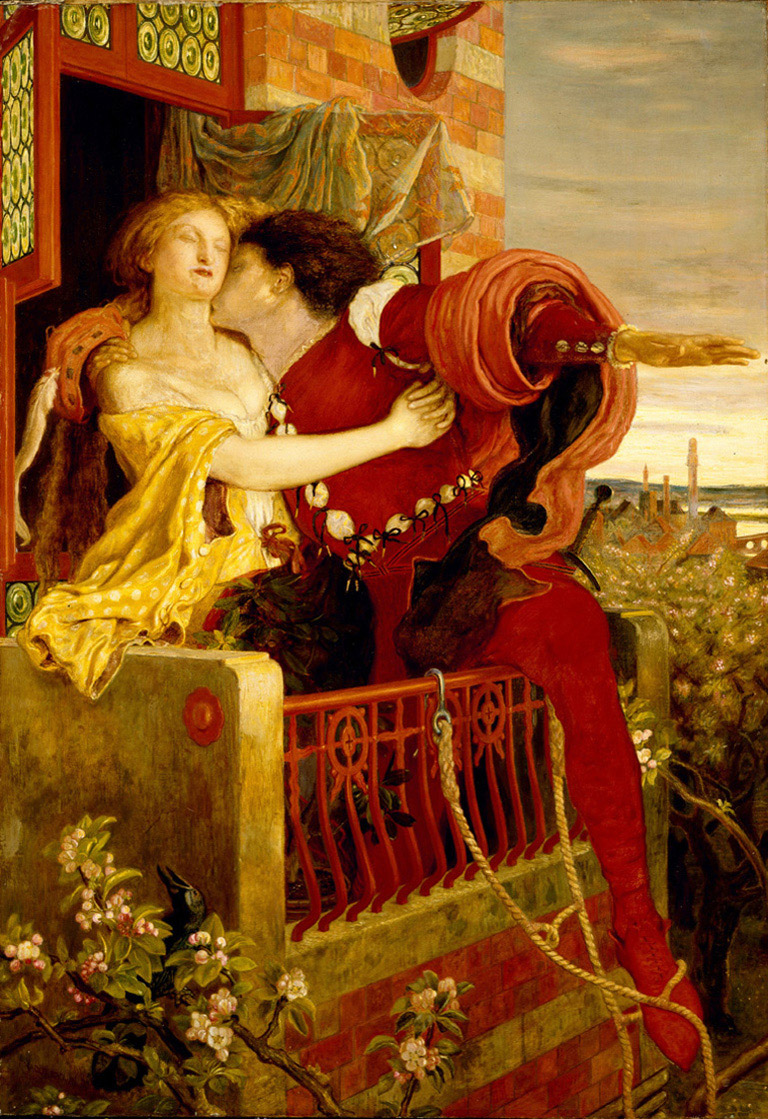
romeo_and_julietThere are four terms in Greek to denote love:

  • Agapè – ἀγάπη: the kind of love that St Paul describes in I Corinthians xiii, totally altruistic and the purest, self sacrifice that does not count the cost.
  • Éros – ἔρως:love through pleasure and desire, not necessarily sinful.
  • Storgê – στοργή: the kind of love that characterises family bonds.
  • Philia – φιλία: friendship, pleasure from company, love of things and interests (eg: philo-sophia – love of wisdom) – same thing with people who like collecting stamps or admire old cars, boats, trains, etc.

There is also the notion of passionate love, so-called romantic love, which many of us have experienced when relating to the opposite sex and living a relationship. This is the drama of marriage, having to move beyond the initial passions to a combination of all the above Greek terms and concepts.

Science has explained this phenomenon in simple terms. We get “high” from the natural chemical substances our body contains. The feeling is wonderful and narcotic! The most important “shoot” we get is from dopamine, made by the brain and adrenal glands, and which causes the release of testosterone. Dopamine enhances everything, not only our sexual instincts, but also our moods, emotions and feelings of happiness and excitement. The neurotransmitters norepinephrine and phenylethylamine bring focused attention. But these natural “drugs” only last a short time. Build your foundations before you run out of cement!

This initial reaction of falling in love has either to become a relationship, or the persons concerned have to come to terms with a break-up. Reality comes in. Different people go through these changes in different ways. We live through these dramas in our own families and see them acted out at the cinema or on TV.

Religious conversion can almost certainly follow the same dynamics. We hear of people becoming “warm and fuzzy” when they have had some kind of experience that made them accept Christianity for the first time – one of “romantic” love with Christ. The Christ in question may only be a figment of the imagination, like falling in love with a character in a film. That can be a good start, as long as it is only the start…

There are also experiences on another level which do not depend on biochemistry, but rather on an interaction between the person at a level of the spirit and above our biological existence. These are more difficult to explain.

Pastoral practice of priests and others involved in parishes and other types of communities seem mostly to be inadequate when dealing with those who have had this “experience” and the relationship with faith has become “unstuck”. Some of us get “burned”, an it isn’t easy to “go back for more”! The person has then to “move on” to other things or work towards a re-conversion on another basis, one that is more rational than emotional. This is what many of us married folk have to go through when the “romantic love” has dies and remains only in the memory. A new basis of the relationship has to be forged and worked out, so that the couple can build something lasting and strong.

The conversion experience in itself is not an adequate basis for Christian commitment or a life completely guided by Christian principles and moral teachings. The parable of the sower, explained by Christ himself, shows the differences and contrasts between the rootless conversions that dry up against the enduring and abiding relationship based on a deeper and more solid foundation.

The real point, whether in our Christian commitment or marriage, is knowing that we are never there, but always on the way, trying to improve and get things better each day, week, year, etc. Conversion is also a question of our values and priorities in life, whether everything is for ourselves or for our relationships with others. These things are so easy to say and so difficult to put into practice.

Posted in Uncategorized | Tagged , , , | Leave a comment

Nosso Lar and the Afterlife

I have been writing to some extent on life after death, both humans and non-human animals. A film with the title Nosso Lar (Portuguese for “Our Home”) has come out and is quite well known. I would like to bring it to the attention of my readers.

It might seem a little New Age, but perhaps if the notion of the afterlife can be independent from the idea of Salvation or Sanctification in Christ, or the control exercised by the Church, we might find ourselves with a more healthy spirituality and gratuitous commitment to the Christian way.

See this documentary:

The film itself is in Portuguese but can be seen with English subtitles:

Posted in Uncategorized | Tagged , , , , , | Leave a comment

Pope’s Day of Prayer for Peace

As there is no special feast this day in the Sarum calendar, I said the Votive Mass of Our Lady this morning for this intention, offering the souls of those who were gassed with dreadful chemical weapons, regardless of who launched them (like the Russians and most experts in the matter, I suspect it was the rebels).

I will probably spend a while in the chapel this evening for this intention in union with all offering their prayers for peace this day.

Tomorrow is the Feast of the Nativity of Our Lady, traditionally a feast on which we priests renew our commitments made when we received our Tonsures, Minor Orders and Major Orders. It was quite an elaborate feast in much of northern France, a reflection of pre-Reformation English usage.

September – a month of the last weeks of summer and the time to gather our apples and pears, and swat away the marauding wasps. Autumn isn’t far away, especially as we begin to feel the bite of the west wind. My little sloop still has a few nautical miles to sail this year yet before wintering! Let’s make the most of it!

This month also brings us worries as the nations agonise over whether or not they are going to attack Syria. Apart from the human tragedy in any war, just or unjust, we have only to consider the obscene cost of modern arms and running the Armed Forces:

  • F-22 Raptor fighter jet – $211.6 million each
  • Virginia Class Submarine –  $2,552.6 million each
  • Trident II Missile – $65.7 million a pop
  • Tomahawk Missile – $500,000 – the cost of two nice family houses in France. All this thing does is fly somewhere, explode and destroy itself with its target!
  • V-22 Osprey tiltrotor transport plane – $95.2 million each
  • Arleigh Burke-class Destroyer – $1,299.3 million (a nice second-hand sailing yacht in reasonable condition can be bought for 5-6 thousand).

And yet they squeeze the hungry peasants for tithes! Just divide these figures by your yearly salary, and take stock…

Posted in Uncategorized | Tagged | 5 Comments

Sally RIP

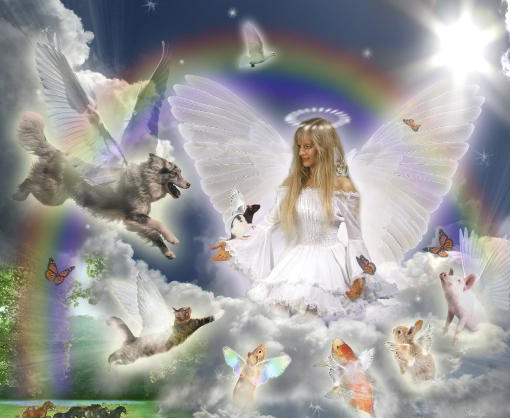
animals-heavenI wrote an article about my dog Sally who was ill with hemolytic anaemia as diagnosed by our vet a few days ago, probably caused by cancer of the spleen and liver. Before coming to the decision to have her put to sleep, unsure about the cancer, she got high doses of corticosteroids to fight against the immuno suppression of her red blood cells. It was a last chance to see if she would brighten up and start eating again.

She got worse, and I was going to take her to the vet today to have her put down. I gave her the blessing for sick animals yesterday. She died this morning at 8 am, peacefully and apparently without suffering. We will be burying her this evening in the garden.

Lose two dogs in the space of less than two months… Trop c’est trop.

* * *

I give you this link to reflect on Do Our Pets Go to Heaven? Metaphysics of Animal Souls and The Afterlife. I really do think that many Christians have a problem with this because they want to make access to the afterlife (other than hell) conditioned by full subscription to the teachings of Christianity and the Church. Traditional Church teaching considers only humans as having immortal souls.

Even for humans, the whole notion of our metaphysical existence beyond bodily death is bigger and greater than orthodox Catholicism and Protestantism. Taking the sum of all religious and philosophical traditions, we see that we have problems with metaphysics and tend to materialism, differing only in degree from that of atheists. What a human and a pet dog (or even a pig in a slaughterhouse) have in common is personality. That is something that abides if anything has any meaning for any of us.

We humans are at the top of the food chain, well almost. People get eaten by crocodiles, piranha fish and great white sharks! We are arrogant, and animals are still treated with incredible cruelty. We humans are set apart from other species by our use of language, tools and technology and many things. All the same, like other species, we are a part of nature. We become sick and die like they do. Perhaps, instead of seeing ourselves on top, we might be humbler to consider that we might be somewhere between the “higher” species of mammals and the angels.

Animals not only feed us and work for us. They teach us respect for their lives and happiness. We as a species have raped our planet, and perhaps can find redemption with the help of our dogs, cats, rats or whatever we have decided to go for. If we reconnect with our animals spiritually and recognise this quality in them, perhaps the gulf between our life and heaven might become that little bit smaller.

Another problem is what we eat. As I mentioned elsewhere in a comment, plant life is also life. Killing to eat is a part of our condition. We can only kill them as humanely as possible and avoid eating the “higher” species. We humans, as a species, need to forsake factory farming and return to traditional farming. Perhaps we should only eat meat if we are prepared to kill the animals like pigs and lambs ourselves! Vegetarianism presents other problems, and I am not a vegetarian myself. I know many vegetarians who wear leather shoes!

Another aspect to this reflection is the character of the world of which this world is only a part, like the entire range of all electro-magnetic frequencies and the capacity of a radio to tune in onto only one at a time. The new heaven and the new earth are beyond our imaginations or petty orthodoxies. Even the Holy Scriptures can only speak of them through allegory and analogy.

Posted in Uncategorized | 10 Comments