
About a week ago, I read the article Defining Church Growth for Traditional Anglicans: Leaving behind failed models of church growth for new ones. I wondered whether it would inspire some thoughts from me. It didn’t. Then this came up: The Church is abandoning its flock, the CofE’s great leap forward will cull clergy and abandon parishioners by Giles Fraser. I found this in Unherd, the group of people with critical minds about our slow descent to Orwellian Dystopia and living hell.
Already for Nietzsche in the nineteenth century, there was something very wrong with institutional Christianity. I keep quoting Alan Watts about the Church having lost its way from the notion of spiritual life. It is odd to hear about some of the clerical elite calling for a de-clericalised church that should sell off the buildings. Rest assured that the elite would change form but still hold the purse strings! Only the appearance of the bureaucracy would change. The medieval church is sold and the rich person’s lounge becomes the new church. Who else has enough space for the crowds of “vibrant” worshippers. It all drips with cynicism.
The church is not called to be successful. It is called to be faithful. I would prefer for us to die with dignity, being faithful to our calling, rather than to turn ourselves inside out trying to be superficially attractive, thus abandoning the faith as we have understood it.
The first article I mentioned is from a Continuing Anglican source (the second concerning the Church of England). The American scene is so different from what we have in the UK and even less in Continental Europe. The author of this article is critical of marketing methods as I have always been. I do quite a lot of translations of texts about corporate management, leadership of teams and projects. If that kind of collectivism enters the Church, that is the end of human spiritual life. Why bother?
What is important is quality, not quantity. The author tries to resume his recommendation in several points. I add my own words to his theme titles.
Authenticity. Let’s cut the crap and decide what we believe in.
Inspiration. People are inspired by different things. Again, we can begin by being ourselves and honest.
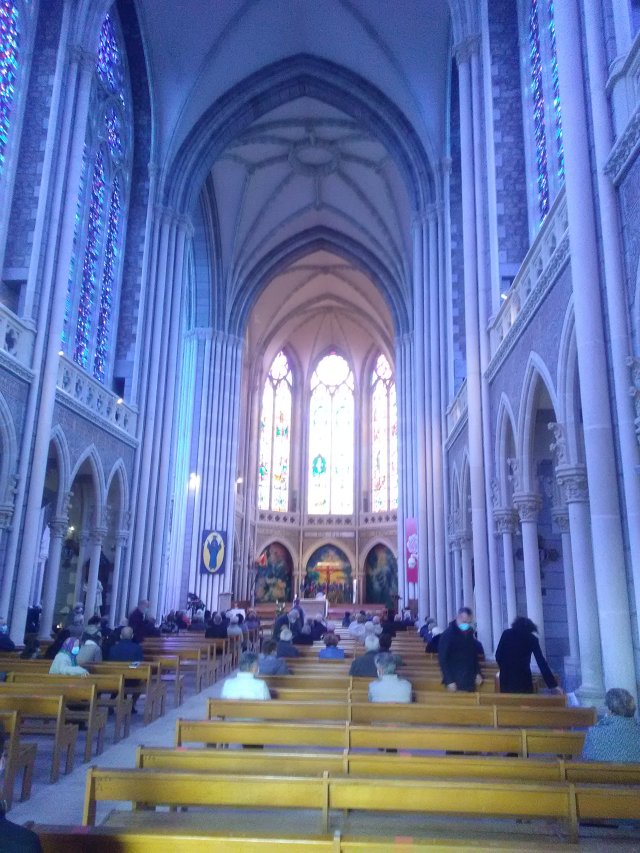
Beauty and Mystery. This is mainly manifested through liturgy, resisting the urges of philistinism, the “cancelling” of beauty, yet avoiding exaggerated rubricism. Naturally, beauty will only be appealing in a world that is mostly concerned only with money and what money can buy. You don’t throw pearls to swine!
An emphasis on mystery, paradox and interiority are antidotes to cold rationalism, and empty materialism.
These are the very thoughts of Romanticism.
Meaning and Purpose. Frankly, I find very little in the way of meaning of life in the average parish. It is much easier in the village where I live. The church is open every day, which is a complement to the person who keeps the key. I suspect it is more to keep the building dry rather than anything else. I often visit the church to go to a discreet place and pray. I haven’t seen anyone else doing the same thing. The church is only used for funerals and those are rarely conducted by priests. It is quite heartbreaking, but there is still some love for this Romanesque building and its baroque altars. Memento mori. The cemetery is beautifully maintained here, though, sadly, some graves have been abandoned and forgotten for decades. The remains will be removed and buried in the common grave, and the spaces will be made available for new burials. Ironically, a church reduced to the burial of the dead reminds us all of that one certitude, our mortality. Are we machines to be thrown away when we don’t work any more? Is there a consciousness that transcends both life and death and which eludes both reason and imagination? Perhaps the old church is still doing its job by its mere presence and the lay people working with the undertakers to ensure a decent burial for all.
Authority. There will be authority for as long as there is law and consequences for not observing the terms of the social contract. My freedom to swing my fist is limited by where your nose begins. Authority exists for the common good, though it often falls into the hands of the unworthy and unscrupulous. It therefore has to be subject to criticism and accountability. It is the same with Popes, Archbishops of Canterbury, Patriarchs and Metropolitans, clergy of every denomination and religion. The most important is the purpose of this authority and what it upholds.
Christ-likeness. What was Christ like? We have the Gospels as witnesses, but interpretation is not always easy. Most of us think of kindness and forgiveness, willingness to suffer rather than make others suffer. I tend to think of the paradox, the Sign of Contradiction, being oneself rather than following fashions and collective thinking. I don’t think we will solve it all in a few words. I think of the contrast between the Grand Inquisitor of Dostoyevsky and Christ who was in the place of the heretic on trial for his life. Who was the most Christian, Christ himself or the Cardinal taking advantage of his power having “cancelled” the freedom of the little people?
In his Charge to Synod yesterday, Bishop Damien Mead spoke of future-proofing the Church. That can mean good material stewardship, but it above all means our fidelity even if we end up doing little more than bury the dead. I believe we can still do more and be a small worshipping community of the living.





 The Blue Flower