Dr Luc Perrin on Pope François

I found this in the French Forum Catholique – my translation. Professor Luc Perrin teaches history at Strasbourg University and is someone I esteem and respect.

* * *

This is a very clear rejection of fundamentalism, which is normal because it is a Catholic prelate expressing himself, but the rejection of a vision – itself a caricature – of “traditionalism” is more questionable. He confirms what we knew about Cardinal Bergoglio in his approach to what was perceived as important by Benedict XVI: at this level, Francis will most likely be a “pope of rupture” in the words of Mr Guénois which seems right.

Very significantly, the Pope has just this Sunday quoted a work of a good theologian, so he says, Cardinal Kasper: when we know that Cardinals Kasper and Ratzinger frontally and publicly clashed about ecclesiology and whom John-Paul had supported … Ratzinger, we take stock of how deep the rupture will be.

Attachment to popular piety is real in Pope Francis, as Cardinal Bergoglio had previously shown. This is true for Paul VI and the commentary is right about Evangelii nuntiandi (1975), a major text constantly praised by Pope John Paul II.

However, Paul VI did not shine out by his unbridled optimism: if he speaks of the devil like Paul VI, Francis seems to resemble more Pope John XXIII in his style precisely in the optimism displayed by Pope Roncalli from 1962.

Strongly heir of John Paul II on ethical issues, Pope Francis seems more Roncallian in his general approach than Montinian: Paul VI was anxious to reassert the Petrine prerogative in a time when anarchy prevailed in the Church. I don’t think that is the priority of the new Pope.

This is what the sulphurous Cardinal Mahony said, who voted for Ratzinger in 2005, and is very happy today. What did the Cardinals want in 2005? There has probably been a mistake about the vote of the previous conclave where already, after Martini, Cardinal Bergoglio had been the alternative candidate with at least 40 votes. Wojtylian-Roncallian, so the new pope seems to appear in his first choices, gestures and words.  To be continued…

* * *

Remember how Cardinal Kasper went to Castel Gandolfo to tell Benedict XVI to shut up? Cardinal Kasper and the Ordinariate – chilling…

Posted in Uncategorized | Tagged | Leave a comment

Palmar de Troya

This is just a little sideshow whilst thinking of Spanish-speaking Popes, perhaps to go with some of those bishops who misrepresent themselves as Roman Catholics. So, don’t take this article too seriously. I have never had anything to do with this sect (they brainwash people, divide families, get lots of money out of people, break the law, etc.) and I would not recommend anyone to join them.

The story of this singular cult in the Andalusia region of southern Spain is known in some quarters and obscure in others. Here is an introduction to the so-called Palmarian Catholic Church founded at the end of 1975 with alleged apparitions of Our Lady to a group of children and the whole thing being taken over by a pair of fraudsters. Iglesia católica palmariana is in Spanish but better documented. A satirical film has been made in Spanish called Manuel y Clemente portraying Clemente Dominuez y Gomez and Manuel Alonso Corral as a pair of homosexuals and cynical fraudsters. Whatever happened, this group got hold of a lot of money and support at the beginning, enough to build this cathedral!

palmar-cathedral-interior

Palmar Cathedral interior

palmar-cathedral-exterior

Palmar Cathedral exterior

palmar-conclave

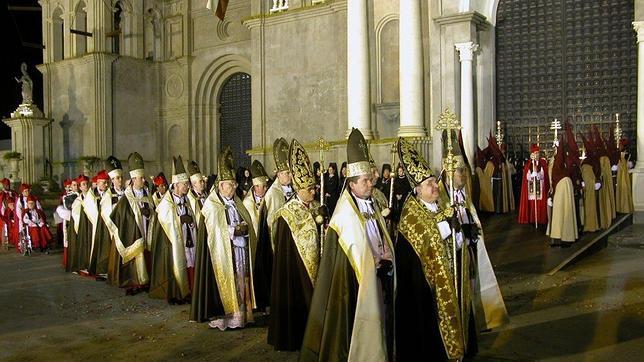
Clemente Dominguez y Gomez (pope Gregory XVII) leading a procession of cardinals (actually a cortège, since in a procession, the highest ranking prelate is at the rear)

palmar-peter2

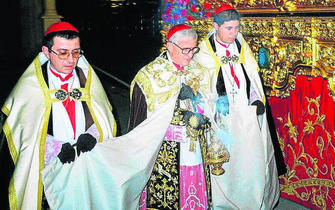
Peter II who died in 2011

palmar-gregory18

Gregory XVIII – since 2011

alejandro-ixArgentina also has a funny set-up – Iglesia Católica Apostólica Remanente with a blog on Iglesia Católica en el Exilio, also mostly in Spanish. Their pope never shows real photos of himself, but uses Photoshop to graft the head of a young Anglican curate of St Clement’s Philadelphia onto the body of Benedict XVI. If he exists, the real name of this man is Alejandro Tomás Greico and he is only 29 years old!

There are more things in heaven and earth, Horatio, Than are dreamt of in your philosophy.

Posted in Uncategorized | Tagged , , | Leave a comment

Hans Küng is extremely delighted

For a conservative, this would be a damning indictment for the Franciscan Papacy. From the little I have read of Hans Küng, particularly his introduction to Hans Bernard Hasler’s How the Pope became Infallible, he seems to be more of a progressive Old Catholic than a Protestant. I actually found some of his reflections concerning papal infallibility to be of great interest.

What is it about Pope Francis Küng most likes about him? We will find out in time. Is doing down Roman centralism characteristic of a Jesuit, the Ultramontane order par excellence since the Counter Reformation? Does Küng think Pope Francis will hand everything on a plate to the media and accept women bishops and the LGBT agenda? On both of those counts, he may be very disappointed. This newspaper article comes out with the same old tired mantras, not even worth the bother of naming because they are always the same.

Küng doesn’t seem to be as delighted as all that as he expresses a doubt in his question.

The decisive question is whether he will carry out the reforms that were blocked by his predecessors? Or, will he simply let things continue to go on, the way they were going at present. If he embarks on a reform course he will find broad support in the church throughout Europe, North America and Latin America — all over, but if he continues on the present course, the call to rise up and revolt will grow louder in the Catholic Church and provoke reforms from below without hierarchical approval.

Küng fails to take into consideration the fact that most Catholics aren’t interested in any kind of religion. Surely the proof of that is that the American Episcopal Church headed by Ms Jefferts Schori, which has implemented all the progressive and media-driven reforms, is not producing any kind of evangelisation or spiritual renewal, but rather – – – death.

Posted in Uncategorized | Tagged , | Leave a comment

Ah, begorrah

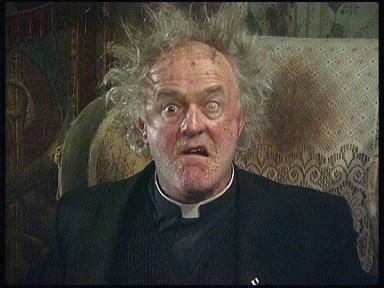
father-jackIt be Saint Paaatrick’s Day, to be surrre!

I wish any Irish readers a happy feast day, in spite of the fact that the feast is displaced by Passion Sunday and has to be transferred or merely commemorated. I celebrated the feast yesterday and commemorated the collect, secret and postcommunions of the Sitientes Mass.

Well, I’m English and love Irish jokes, just like the French tell the same ones about the Belgians. Here are some English jokes for Irish readers of this blog to enjoy. Apparently, we’re self-made men, worship our own creator and saved God a lot of bother!

Posted in Uncategorized | Tagged | Leave a comment

High Church and Humble Service – no Opposition

Humility and service of the poor and sound Catholic teaching, reverently celebrated liturgy and glorious ceremonial are not opposed, but can and are intended to go hand in hand.  There’s a whole tradition in Anglo-Catholicism which makes that point very clearly indeed.

A couple of links to see:

Also see

and

  • This Is Not Catholic – the problem’s not the Pope, but the anti-Benedict bishops and bureaucracies who have been waiting for eight years to get their own back!
Posted in Uncategorized | Tagged | Leave a comment

The Pastoral Side of Pope Francis

Over the last couple of days, I picked up on sole of the articles relating to the new Pope’s apparent insensitivity to what he termed as the “carnival”, referring to items of Papal dress revived since 2005 by Benedict XVI. In the absolute, none of these items is necessary and the Pope could run around in pyjamas or a simple priest’s cassock and still do his job.

Today, I would like to pick up on an article by Sandro Magister – The Name of Francis, the Rule of St. Ignatius, and the Example of Jonah. In the last part, in his former ministry in Argentina, Pope Francis speaks about pastoral questions.

* * *

A: I would have spoken about two things of which there is need in this moment, there is more need: mercy and apostolic courage.

Q: What do they mean to you?

A: To me apostolic courage is disseminating. Disseminating the Word. Giving it to that man and to that woman for whom it was bestowed. Giving them the beauty of the Gospel, the amazement of the encounter with Jesus… and leaving it to the Holy Spirit to do the rest. It is the Lord, says the Gospel, who makes the seed sprout and bear fruit.

Q: In short, it is the Holy Spirit who performs the mission.

A: The early theologians said: the soul is a kind of sailing boat, the Holy Spirit is the wind that blows in the sail, to send it on its way, the impulses and the force of the wind are the gifts of the Spirit. Without His drive, without His grace, we don’t move forward. The Holy Spirit lets us enter the mystery of God and saves us from the danger of a gnostic Church and from the danger of a self-referential Church, leading us to mission.

Q: That means also overthrowing all your functionalist solutions, your consolidated plans and pastoral systems…

A: I didn’t say that pastoral systems are useless. On the contrary. In itself everything that leads by the paths of God is good. I have told my priests: ‘Do everything you should, you know your duties as ministers, take your responsibilities and then leave the door open.’ Our sociologists of religion tell us that the influence of a parish has a radius of six hundred meters. In Buenos Aires there are about two thousand meters between one parish and the next. So I then told the priests: ‘If you can, rent a garage and, if you find some willing layman, let him go there! Let him be with those people a bit, do a little catechesis and even give communion if they ask him.’ A parish priest said to me: ‘But Father, if we do this the people then won’t come to Church.’ ‘But why?’ I asked him: ‘Do they come to Mass now?’ ‘No,’ he answered. And so! Coming out of oneself is also coming out from the fenced garden of one’s own convictions, considered irremovable, if they risk becoming an obstacle, if they close the horizon that is also of God.

Q: This is valid also for lay people…

A: Their clericalization is a problem. The priests clericalize the laity and the laity beg us to be clericalized… It really is sinful abetment. And to think that baptism alone could suffice. I’m thinking of those Christian communities in Japan that remained without priests for more than two hundred years. When the missionaries returned they found them all baptized, all validly married for the Church and all their dead had had a Catholic funeral. The faith had remained intact through the gifts of grace that had gladdened the life of a laity who had received only baptism and had also lived their apostolic mission by virtue of baptism alone. One must not be afraid of depending only on His tenderness.

*

Exemplary with regard to this last reference to the centrality of baptism is the battle that the then-archbishop of Buenos Aires fought in the Argentine Church against those who tend to withhold baptism from the newborns of those who are far removed from religious practice:

Go Forth and Baptize. The Wager of the Argentine Church (30.11.2009)

* * *

This is all about taking mission and pastoral ministry out of the box. I have ministered as a deacon in French country parishes where our fairly ad hoc pastoral initiatives sometimes came into conflict with the “system” mentality of the nouvelle pastorale. This is something very difficult to define, but I think Pope Francis does it very well. I remember my pastoral theology lessons at Fribourg given by the diocesan seminary rector who was also a professor at the University – completely Marxised and formatted in a paradigm that no ordinary person can understand! I always thought that pastoral ministry was simply being a good shepherd as Jesus exhorted us in the Gospel, following the example of saints like the holy Cure d’Ars…

We are perhaps witnessing the dismantling of a kind of “pastoral paralysis” that has afflicted parish life in many dioceses. “Pastoral systems” can have their use, like educational methods taught to those who become schoolteachers, but they are not an absolute. Sometimes, one has to think outside the box and take creative initiatives. We take responsibility and leave the door open. This is a refreshing piece of wisdom I did not expect to read from a Pope or even a high-profile Cardinal Archbishop!

What now comes is what traditionalists and continuing Anglicans have been doing for decades:

So I then told the priests: ‘If you can, rent a garage and, if you find some willing layman, let him go there! Let him be with those people a bit, do a little catechesis and even give communion if they ask him.’

There is of course the difference – that traditionalists and continuing Anglicans have had to remove themselves from “normal” parish life on account of its having become dysfunctional. The other aspect of pastoral ministry in this wise priest’s advice is the question of clericalism. Clericalism is not merely a disease of those who are officially clerics, priests and deacons – but of any group of persons in a community that cultivates a manipulative and exclusive spirit. I have often seen parishes poisoned and killed by clericalised laity. The healthy parish involves symbiosis between the priest with his specific responsibilities and the council of lay faithful who help and advise him, each person bringing his God-given talents to the service of all.

If this is the kind of insight we are going to see, then ermine trimmed Papal shoulder capes and red shoes really do become relative – as we all take our freedom and initiative, which also involve the service of the liturgy and putting our talents to the Lord’s service.

Posted in Uncategorized | Tagged | Leave a comment

Brace! Brace! Brace!

Torpedo! Torpedo! Torpedo! – – – BOOM!

It does seem to be insulting to the former Pope that some of the items of choir dress Benedict XVI reintroduced are referred to as “carnival” items!

Just the installation Mass to see and the appointments for the Curia (Archbishop Müller is confirmed in office at the CDF) – and we’ll know. Anyway, I’m glad I didn’t “swim” two years ago!

Posted in Uncategorized | Tagged | 4 Comments

Free Church of England and the Union of Scranton

This is interesting – Økumeniske samtaler i Storbritannia.

I suspected this for a long time, but it was all kept under wraps. Bishops Flemestad of the Nordic Catholic Church has revealed ecumenical work between the Union of Scranton and the Free Church of England. The work begun last year between these Churches led to a statement. I don’t read Norwegian, so can only give a summary based on a Google translation.

There has been a dialogue between the FCE and the Union of Scranton “with a view to possible membership in the Scranton-union”. This is expected to lead to an English local Church member of the Union of Scranton. There are further steps envisaged.

Website of the Free Church of England.

* * *

Update in the original English version sent to me by Bishop Flemestad (direct quote):

ECUMENICAL CONVERSATIONS

The Nordic Catholic Church has strong bonds with Anglicans. However, the liberalising innovations in the Church of England have complicated our ecumenical relations with them and at the same time made many Anglicans who cherish the Catholic heritage look for a new home.

In response, the Nordic Catholic Church has, together with our Mother Church, the Polish National Catholic Church, explored ways which could provide a new realignment for non-Roman Catholics, using the Union of Scranton as a means of achieving this. In this endeavour, we were encouraged by our affinity with the Free Church of England and conversations were initiated during 2012.

These talks have proved to be constructive and the following statement has been issued:

Official Statement from the International Catholic Bishops Conference of the Union of Scranton

On September 15, 2012 the International Catholic Bishops Conference (ICBC) of the Union of Scranton made the following motion:

The ICBC authorizes Bishop Flemestad to begin a dialogue with the Free Church of England on behalf of the Union of Scranton based upon the ‘Requirements for Communion with the Polish National Catholic Church’ (October, 2010) with the eventual goal of membership in the Union of Scranton.

Since then Bishop Flemestad has met on several occasions with representatives of the Free Church of England.

At a meeting in Scranton, Pennsylvania on 11-12 February, 2013, Bishops of the Polish National Catholic Church, the Nordic Catholic Church and the Free Church of England met and had a very fruitful discussion during which documentation was presented and discussed. In light of this meeting the International Catholic Bishops Conference anticipates being able to work with the Free Church of England to build up a Catholic jurisdiction in the United Kingdom.”

The next stage is for the conversations to be reported to the International Catholic Bishops Conference in April and to Convocation of The free Church of England at its meeting in May.

Posted in Uncategorized | Tagged , | 9 Comments

“The traditional Latin Mass brigade is finished.”

This is an interesting point of view.

A Vatican diplomat assured me yesterday, “The traditional Latin Mass brigade is finished.”

Do I detect a note of triumphalism and schadenfreude? This, if truly said by someone in the know, could mean several things. It could mean a return to the days of Paul VI and a reversal of Benedict XVI’s legislation, the persecution of priests for using the old rite, or even for using an eastward-facing altar and giving Communion ion the tongue – but I doubt it. Perhaps the target of an “anti-Benedictine” reaction would be a second abolition of using items of choir dress and liturgical vestments that were out of use since the pontificate of John XXIII. The in-style is to be something like what we saw in the 1980’s and 90’s under John Paul II. I have no need to describe it as I am less interested in this side of things than some might think.

What I would find difficult to follow, if I were a Roman Catholic, is this notion of dichotomy or opposition between beautiful liturgy and the Franciscan spirit of pastoral proximity to the people and in particular the poor and infirm. Surely, Vatican II brought up the notion of noble simplicity – a style that is found in the monastic liturgy. I don’t use lace either, and my vestments are very simple, yet I keep a monastic spirit in my celebration of the liturgy according to the old English pre-reformation rite. Does our liturgy have to be of the loud and brash style favoured by the Charismatics? I would like to see greater diversity and respect of difference in the cause of Catholic and Christian unity.

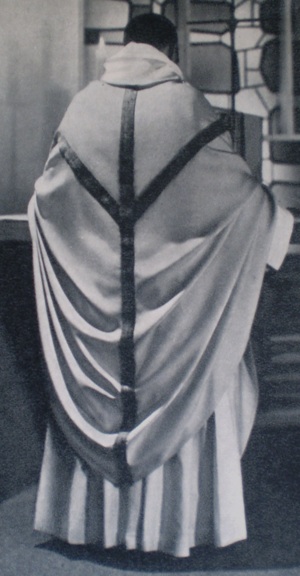
conical1940sbrugesPerhaps it would be good to see the back of high-church campery, but not of the liturgy itself and the quiet and contemplative spirit of which Benedict XVI often wrote in his books. This would seem to be a vitally important distinction to make. My most formative influence has been my time spent with Benedictine monks.

We’ll see what happens, but many of us are likely to serve God in obscurity and silence away from the din and noise of the kind of liturgies we saw in the 1970’s and 80’s. It really is all about serving God – and yet so is the Franciscan papacy. I come back to the respect of diversity and tolerance, and judging ourselves by God’s standard.

We could discuss this subject forever, but it seems that the goalposts are moving and we have to keep a careful watch.

Posted in Uncategorized | Tagged | Leave a comment

Official Vatican Response to Accusations against Pope Francis

I reproduce this official statement from the Vatican Information Service. As far as I am concerned, Pope Francis is innocent of any collaboration with an evil dictatorship, and I will not comment any further on the issue.

* * *

RESPONSE TO ACCUSATIONS AGAINST BERGOGLIO IN ARGENTINA

Vatican City, 15 March 2013 (VIS) – At this afternoon’s press conference, Fr. Federico Lombardi, S.J., director of the Holy See Press Office read a statement responding to allegations made against Bergoglio in Argentina. It states:

“The campaign against Bergoglio is well-known and dates back to many years ago. It has been made by a publication that carries out sometimes slanderous and defamatory campaigns. The anticlerical cast of this campaign and of other accusations against Bergoglio is well-known and obvious.”

“The charges refer to the time before Jorge Mario Bergoglio became bishop [of Buenos Aires], when he was Provincial Superior of the Jesuits in Argentina and accuse him of not having protected two priests who were kidnapped.”

“This was never a concrete or credible accusation in his regard. He was questioned by an Argentinian court as someone aware of the situation but never as a defendant. He has, in documented form, denied any accusations.”

“Instead, there have been many declarations demonstrating how much Bergoglio did to protect many persons at the time of the military dictatorship. Bergoglio’s role, once he became bishop, in promoting a request for forgiveness of the Church in Argentina for not having done enough at the time of the dictatorship is also well-known.”

“The accusations pertain to a use of historical-sociological analysis of the dictatorship period made years ago by anticlerical elements to attack the Church. They must be firmly rejected.”

Posted in Uncategorized | Tagged | 2 Comments