Clericalism

This subject has come up in a couple of blogs. John Beeler writes this:

Clericalism. I knew some of this. Even in the Middle Ages and the Counter-Reformation, “secular” (diocesan) priests’ lives weren’t quite like the 1800s Catholic model we traddies and Anglo-Catholics know and love, “Good, Father, night, Father,” 39-button cassocks, birettas outside of services, and all. Lay clothes and “Mr.” were common. The poor medieval village Mass priest (curate doing the pastoral work — what his job title means, the care of souls — while the absentee rector lived off one or more parishes’ income, which the Anglicans retained) wasn’t much different from his congregation in lifestyle and education (he could read well enough to say Mass). We more resembled Orthodoxy in some ways (monks vs. everybody else; unschooled village priests). The Catholic clerical culture we assume as the norm was really a reaction against “the French Revolution and 1848 revolutions,” rather like the exposition craze among conservative Novus Ordo Catholics reacts against heresy and liturgical abuse (bring back the old Mass; don’t distort our rite; thank you). Also: as Fr. Rutler says, Catholicism is sacerdotalist (the bishop fully sharing in Christ’s priesthood, offering his sacrifice and the grace of absolution, ordaining, confirming, etc.); clericalism is a parody of the faith that some Catholics fall for too. My point here is while liberals are anti-sacerdotalist (“don’t call me Father,” “presider,” etc.), they are the biggest clericalists. It’s why some old Catholic women want to be priests: they DON’T believe the church’s teaching about the Mass, apostolic bishops, etc. POWER. (Feminist cr*p: Freudian envy.) “Fake religion is always about self.” Same as the long-running circus of failed clergy wannabes (except they’re often orthodox on the basics and high-church like us), vagantes. P.S. Unlike in the Roman Rite, I think Byzantine priests have long been “Fr.” to their parishioners and worn a cassock. But “Priest Name Surname” in writing to their bishops. Only the bishop is a reverend father in God in his own right. (Did A-Cs ever claim Prayer Book precedent for “Fr.”?) Their professed monks are “Fr. Name in Religion” whether they’re priests or not. P.P.S. It’s actually traditional for Catholic priests in academia to wear lay clothes.

This is quite something coming from an American! John has always warmed to my anecdotes of life with old French parish priests. One positive thing that has come out of Continuing Anglican fragmentation in previous decades is a greater degree of humility among our bishops and priests. I have always wanted to tone down the clerical side so that the Christ-like character of the priesthood may shine through. Few people understand this, but John obviously does, and it is to his credit.

Posted in Uncategorized | Tagged , | 6 Comments

Secrecy

It was in 2012 that I last wrote on this subject of secrecy. Only a year before, Archbishop Hepworth still had secret dealings with Rome and “everything would be all right”. A month later, the bombshell exploded about the sexual abuse allegations. Blogging, secrecy and accountability – meaning someone was trying to keep a sinking ship afloat by denying the gash in its hull and the flooded compartments. After a time, all that is left on that bit of the ocean are a few lifeboats full of grieving survivors and a lot of dead bodies and debris.

Is the big secret the fact that nothing is left?

I remember the padded double door of my old superior’s study, in case a curious seminarian should be listening at the keyhole. I often speculated about tapping his phone or installing an electronic bug, just like in the James Bond films… We didn’t, because we only half-believed in what lay beyond the door of the Finis Africae, and we thought that spying would be morally wrong. I recommend reading Umberto Eco’s The Name of the Rose – and I mean reading the book and not watching the film with Sean Connery and the 007 associations. Set in fourteenth-century Europe, this book is a fine psychological study of the psychology of secrecy. The Venerable Jorge is as twisted a character as anyone could imagine!

“It was the greatest library in Christendom”, William said. “Now”, he added, “the Antichrist is truly at hand, because no learning will hinder him any more. For that matter, we have seen his face tonight”.

“Whose face?” I [Adso] asked, dazed.

“Jorge, I mean. In that face, deformed by hatred of philosophy, I saw for the first time the portrait of the Antichrist, who does not come from the tribe of Judas, as his heralds have it, or from a far country. The Antichrist can be born from piety itself, from excessive love of God or of the truth, as the heretic is born from the saint and the possessed from the seer. Fear prophets, Adso, and those prepared to die for the truth, for as a rule they make many others die with them, often before them, at times instead of them. Jorge did a diabolical thing because he loved his truth so lewdly that he dared anything in order to destroy falsehood. Jorge feared the second book of Aristotle because it perhaps really did teach how to distort the face of every truth, so that we would not become slaves of our ghosts. Perhaps the mission of those who love mankind is to make people laugh at the truth, to make truth laugh, because the only truth lies in learning to free ourselves from insane passion for the truth”. “But, master”, I ventured, sorrowfully, “you speak like this now because you are wounded in the depths of your spirit. There is one truth, however, that you discovered tonight, the one you reached by interpreting the clues you read over the past few days. Jorge has won, but you have defeated Jorge because you exposed his plot….”

“There was no plot”, William said, and I discovered it by mistake”.

The assertion was self-contradictory, and I couldn’t decide whether William really wanted it to be. “But it was true that the tracks in the snow led to Brunellus”, I said, “it was true that Adelmo committed suicide, it was true that Venantius did not drown in the jar, it was true that the labyrinth was laid out the way you imagined it, it was true that one entered the Finis Africæ by touching the word ‘quatuor,’ it was true that the mysterious book was by Aristotle. … I could go on listing all the true things you discovered with the help of your learning…”

“I have never doubted the truth of signs, Adso; they are the only things man has with which to orient himself in the world. What I did not understand was the relation among signs. I arrived at Jorge through an apocalyptic pattern that seemed to underlie all the crimes, and yet it was accidental. I arrived at Jorge seeking one criminal for all the crimes and we discovered that each crime was committed by a different person, or by no one. I arrived at Jorge pursuing the plan of a perverse and rational mind, and there was no plan, or, rather, Jorge himself was overcome by his own initial design and there began a sequence of causes, and concauses, and of causes contradicting one another, which proceeded on their own, creating relations that did not stem from any plan. Where is all my wisdom, then! I behaved stubbornly, pursuing a semblance of order, when I should have known well that there is no order in the universe”.

“But in imagining an erroneous order you still found some-thing…”

“What you say is very fine, Adso, and I thank you. The order that our mind imagines is like a net, or like a ladder, built to attain something. But afterward you must throw the ladder away, because you discover that, even if it was useful, it was meaningless.

We are often tempted to think that secret knowledge confers power on us, an advantage over common humanity. It was the worst aspect of Gnosticism and modern Freemasonry. A selling point many conspiracy theory authors have is to persuade the buyer that the knowledge he is divulging is secret. In fact it isn’t – the fact the book, documentary or whatever is published. Many films attract the viewer’s attention by simulating the private divulging of a secret. An example is the Hunt for the Red October and the message that nothing of what you will see ever happened. We are stimulated, even when we know that the secret isn’t secret.

Obviously I’m not talking about state or military secrets, for example, how to make and arm an atomic bomb. Most of modern warfare is intelligence and counter-intelligence. I am not talking about information a parish or diocese holds on persons, for example, details about a nullity trial and the intimate information about the lives of the man and woman concerned. I am not talking about the seal of the confessional. There are things about which we keep our mouths shut because they are nobody else’s business.

I make distinction between things we just cannot divulge about ourselves or other people – on one hand – and the unhealthy culture consisting of making everything a secret and making it a tool for gaining domination and power over others.

Very often, we get people saying I’m going to tell you something, but don’t tell anyone. If we accept the information, we create a dependency on that person and accept being bound. We have to discern. If it’s a part of our Church business, it’s part of the job. With other individuals, it’s perhaps best to reply that we don’t want to know.

Christ told us that the truth would make us free. Keeping secrets can ruin our lives, keep us on a tether, ruin relationships, waste us away. I recently read this quote of Goerge Orwell in Nineteen Eighty-Four: “If you want to keep a secret, you must also hide it from yourself.” The secret is an illusion of potency and power, but when we possess it, it takes away a part of our consciousness. It becomes a useless piece of baggage getting in the way of everything in our home. Secrecy, even when legitimate, is often the cross a priest carries throughout his life. It is a part of life, but has to be reduced to what is truly necessary to protect ourselves or others.

Secrecy can also be criminal, like in the Mafia where they use the technique of omertà. It is often used in the institutional Church to cover up heinous scandals and crimes against humanity. It was a part of the seminary life I knew a little over twenty years ago.

Perhaps our greatest fear is being “outed”, revealed to the world. We have to keep or regain our innocence, that there may be no secrets or fear of “coming clean”. Secrets are in a way like lies, and ever increasingly intricate webs have to be woven to protect them. To be a good liar, you have to be absolutely and rigorously logical and coherent. Contradict yourself just once and you are refuted and outed. The opposing lawyer has got you, and then you have to come clean – and you lose your credibility. Falsus in uno, falsus in omnibus. You can gnash your teeth but you are finished.

Secrecy should be used only for the gravest of reasons and for the sake of integrity, like for example the seal of confession. Someone’s sins don’t even concern the priest. The priest is only ministering on behalf of God, to help the penitent make a sincere examination of conscience and to give the sacramental Absolution. I have had the experience, and the grace of forgetting the information so that I would be incapable of divulging the secret. It isn’t even a secret, because the information is gone, forgotten, forgiven by God. Not so with the frivolous secrets of power-seeking clerics…

Only the truth and a limpid soul can set us free. As I said in another posting, I am glad that there is no culture of secrecy in my Church. There are things I don’t talk about, because they are nobody else’s business, at least not until things are seen in their entirety and worked through. Things discussed in meetings are usually implemented rapidly or put through Synod, and then they concern everybody. We don’t let things fester on for years without anything being done. In some Churches, I just see a kind of cloying inertia, obstructed by big secrets, but in reality containing nothing of substance. We need to grow up.

It is time for some people to stop playing games and get on with life!

Posted in Uncategorized | Tagged , , | Leave a comment

The TAC in England and the Nordic Catholic Church

Something is brewing – The Traditional Anglican Revival. A statement: from Bishop Ian Gray.

The TACB is an autonomous Continuing Anglican Church which is a member of the TAC (Traditional Anglican Communion), the largest grouping of such Churches in the world, and has a settled identity and purpose.

As announced in my recent letter in the Synod edition of the Clarion, the TACB seeks to enter into ecumenical discussions with Churches of a similar or analogous heritage, and thus is happy to respond to Bishop Flemested’s initiative via his representatives in England, and where appropriate, directly.

The TACB has been given to believe that the Nordic Catholic Church, enriched by its Lutheran history, aims to continue the Faith of the Union of Utrecht in the days of its orthodoxy via the Union of Scranton. We applaud this desire, which we have experienced ourselves with respect to our Anglican traditions.

In particular, the TACB would like to see a revival of the intercommunion which existed between Old Catholic and Anglican jurisdictions before the ordination of women became a divisive issue.

While it is clear that it must be at the level of the College of Bishops of the Traditional Anglican Communion and the equivalent within the Union of Scranton Churches that such an outcome would most appropriately be pursued, it is hoped that fruitful cooperation might develop in the United Kingdom, in mutually agreed ways, that would lead to the greater visible presence and the influence of classical Anglicanism.

The TACB welcomes Bishop Flemested’s interest in helping to ‘restore the Anglican mind’ and takes the view that the best way this could be done is by supporting the TACB’s efforts to become the Anglo-catholic counterpart of the evangelical Free Church of England in this country.

With the potential of the TACB and FCE working in tandem to represent the full range of traditions within the old Established Church, and with a restoration of intercommunion and cooperation between authentic Old Catholics and Anglicans, we could all look forward to a time when with God’s help, the assaults of secularism could be countered more vigorously, and the Gospel preached more effectively.

+Ian Gray

Bishop Ordinary, TACB.

November 2014.

I naturally wish them the best and encourage all efforts to unite churches and communities in Christ’s name. The project seems ambitious, but nothing is impossible for God. Does anyone have any independent information? It is interesting to note that this seems to be a local initiative and not one of the TAC as a whole.

This website is interesting, but the site appears to date only from November 2014 and is mostly “under construction”. There is also this brief introduction in English by Bishop Flemestad. The illustration of a modern-style Mass with a loaf of ordinary bread on the altar and everyone holding hands is disconcerting.

Posted in Uncategorized | Tagged , , | 65 Comments

Tenebrae Factae Sunt

It is perhaps the dark December days that influence my thinking – or my Romantic outlook on life. Whichever, I’m not depressed at this time, but I do feel weighed down by the darkness covering our world, wickedness in high places, whether in the Church, business or politics. People can be so unpleasant, so aggressive, so uncivil, but perhaps that has always been so in general. I begin to feel “disassociated” as the clouds gather and clearness is obscured by thick fog.

There are various explanations for evil, the classical biblical narrative of Satan and Original Sin, and another from the ancient Gnostics, naming the Demiurge and the Archons as the root of evil and not humans. Whichever, these are myths that attempt to explain a long-forgotten history and the archetypes that underlie our psychic and spiritual life. As a Christian, I assent to the biblical narrative but with the reserve that it isn’t complete. There is a much fuller picture than what was revealed in writing to the Jewish people. Greek and Egyptian mythology are full of images and characters that illustrate a spiritual reality, as do the Nag Hammadi scriptures that were found only in the 1940’s. We have to face these things for the sake of the credibility of our own faith in the One God and Jesus Christ.

Modern psychology has gone a long way to seeking the source of evil. My concern with this subject comes from other matters on which I have been writing. Occasionally I receive confidential e-mails that enlighten me just one bit more on certain matters.

Some years ago, I bought a book by a Polish scientist, Andrew Lobaczewski, Political Ponerology. It is hard going as a book, and assumes scientific knowledge, but the basis seems quite comprehensible to one who has studied philosophy and theology. If you want to read it, it can be ordered here. Ponerology comes from a Greek word that means evil. It is the study of evil. The concept is at the same time theological, philosophical and scientific. Lobaczewski stresses the scientific aspect in his study of clinical psychopathy.

History repeats itself in the way a central core of psychopaths (people without moral conscience, empathy or normal emotions) influences a whole group of people and poisons the whole as happened in Nazi Germany, Stalinist Russia and in our own world. This scientific approach can only enlighten our theological and philosophical understanding, and give us that much more insight. I was born fourteen years after Hitler blew his brains out, and I thank God I did not endure those days as my grandfather did as he languished in an Oflag. The war and the Holocaust are a part of our collective memory. The evil was exorcised, or was it? Did it not simply go elsewhere? For a time, it was the “soul” of the Soviet machine until its apparent dissolution in 1989 – and now? I have my suspicions, but I am not sure enough to commit them to writing.

This kind of evil is not combated by morality or philosophy, but by hard knowledge (as well as prayer and fasting). The key to identifying this kind of evil that is capable of atrocities on a vast scale, callous sadism, mass murder, laying waste whole countries and butchering women and children – is the phenomenon of the caricature of the human being that has no conscience, empathy or emotion. They are like reptiles and are human only in appearance. When they get into power, they influence others to become like them, and a disease becomes a pandemic.

Psychopaths are not only serial killers and revolting cannibals in American prisons and death row. They are also, in differing degrees, part of our businesses, banks, political structures and even the Church. It is estimated that as many as 6% of human beings are psychopaths. It would seem that these individuals are born evil, or at least carry something predisposing them to evil. Scientists other than Lobaczewski have gone much further in their studies since the days when Douglas M. Kelly examined the Nazi war criminals as they were tried and met their fate at Nuremberg.

Psychopaths are charmers, and many of us can be taken in. They cause us to be fascinated, they can break us, they can cause us to have bad emotions. Monsters like Ted Bundy had scores of fans and women “in love” with him as he waited for his own deserved fate. We find it so difficult to recognise their responsibility for the evil they did and caused. If psychopathy is an illness, that surely absolves moral responsibility. Or does it? Psychiatrists find that psychopaths know what they are doing and their faculties of reason are unimpaired, unlike those who suffer from mental illnesses that affect the rational faculties. The law in western countries punishes psychopaths as responsible for their crimes.

It is found that most of us, with a moral conscience and empathy for others, can all too easily get sucked into a psychopath’s game. When society is whipped into a frenzy, we have read about how Hitler did it. The whole society becomes a pathocracy, a totalitarian regime based on evil, an evil empire. Other than Nazi Germany, the other great historical example of such a nightmare was the Roman Empire. Such a regime ends up by self-destructing, like the Ebola virus kills its host until it evolves into an organism that acts in its own best interests. But, whilst that happens, countless people are killed and displaced, and irreparable damage is caused. Yes, a Church too can be a pathocracy as happened under the Renaissance Papacy for example. The Roman Curia in recent times seems to have been little better!

I recommend reading this book, even though it is difficult, and I lack the scientific knowledge to get the most out of it. We can learn a considerable amount all the same. We can resist evil by understanding it. Evil is a mystery for theology, a confused concept for philosophy, but something tangible and very real for psychology. We should read Robert Hare, who is an acclaimed specialist in the subject. We can stop evil by understanding it, or at least resist getting influenced.

Closer to home, most sect gurus are of this type of personality. They are ready to go to hell and take their people with them, as did the guru of the Solar Temple sect or Jim Jones. There have been many others, and many of us have been victims. As we say at the beginning of Compline:

Fratres: Sóbrii estóte, et vigiláte: quia adversárius vester diábolus, tamquam leo rúgiens círcuit, quaerens quem dévoret: cui resístite fortes in fide (I Peter 5: 8-9).

Posted in Uncategorized | Tagged | 4 Comments

Old Embers

Early this morning, I took a look at some sites I hardly ever look at. I remember those frenzied days of 2010 to 2012 when I was in the TAC and thought “Anglicanorum coitusinterruptus” (sorry, I couldn’t resist it) was about us and not various American and English Anglican bishops who stayed in the Establishment until their opportunity came up. Oh yes, I remember Cardinal Kasper’s analogy of the train leaving the station, and its veracity coming to light as the deception from all sides became clear. I was wrong, but no one other than Dr William Tighe and a few others could get over the message that the game concerned men who were dealing with the Vatican from about 1993.

I used not to be very kind with John Bruce who runs the St Mary’s Hollywood: The Cold Case File blog. Mr Bruce is mostly concerned with St Mary of the Angels church in Los Angeles, the subject of litigation and a continuing lawsuit. It is not exactly on my patch, and I am neither interested nor concerned. He naturally has a gripe with the ACA and the TAC and with Continuing Anglicanism in general. He became a Roman Catholic a few years ago. To his credit, he went to a run-of-the-mill parish and became an ordinary RC churchgoer. That also is a matter on which I cannot and will not judge.

There are some recent entries of some interest.

Would A Merged ACA and APA Stay In The TAC? One may speculate, but any movement towards healing the decades-old divisions between various continuing Anglican Churches can only be a good thing. The Anglican Catholic Church website reports:

The College of Bishops of the Original Province met October 16th and 17th in Shelton, Connecticut, where they took important steps toward the reunification of Continuing Anglican jurisdictions. In addition to voting to receive former ACC Bishop Thomas Kleppinger back into the Church, a report on Validation of Orders was approved, paving the way towards closer relations with the Anglican Church in America (ACA) and Anglican Province in America (APA). Reception of a new diocese in the Republic of South Africa was conditionally approved and representatives were appointed to respond to a request for dialog from a large group of Anglicans in Burundi. For more information on this and related matters, see the upcoming issue of The Trinitarian.

The American religious world is different from anywhere else, and it is difficult to appreciate from someone at my lowly level as a simple priest off the beaten track. As I say, anything positive is good and should be encouraged. Perhaps Mr Bruce would like Roman Catholicism to be the only way to go. We don’t agree.

My Bishop and I have often quipped about the TAC’s news being that there is no news. I am still recovering from the shocks I went through as I went through the time from the Portsmouth College of Bishops meeting of October 2007 to the resignation of Archbishop Hepworth in 2012. I still thank God for my fresh start in the ACC and the healthy air of truth and reality. As Fr Jonathan Munn once said to me, the ACC is what it says on the jar. Strawberry jam is not mango pickle! I still find it amazing how everything seemed so coherent in those years, then – bang! – nothing but whimpering embers. True, some of those men I met in Portsmouth are valiantly trying to patch it all up and reconstruct, just as we have had to do since the Bishops’ Brawl of the late 1990’s. So, if I comment on anything here, it isn’t intended to do down anyone who is genuinely trying to reconstruct in a spirit of truth and integrity.

We wait to see if anything will be rebuilt from the side of Archbishop Prakash. Bishop Gill in South Africa apparently is doing some good things down there. I was surprised to see photos of Mass facing the people in his ad clerum, but values are different with that culture that isn’t ours. All our Churches are loaded with histories of human sin and pride. We who are left have to pick up the pieces, unless we are going to be looking for “one true churches”, pretending that everything is well, or giving up altogether as some have. Mr Bruce goes on about Archbishop Falk being the stumbling stone, but do not others want to cut off the head of the Pope Emeritus also? Imperfection is everywhere!

Is Anything At All Happening In The “Worldwide Traditional Anglican Communion”? This is a little more interesting for those of us who live far away from California. Perhaps it is good that things are quieter than in those days when Archbishop Hepworth and I would talk over Skype and I would hear him relate his good times with his friends in Roman high places. I was kicked off The Anglo-Catholic in August 2010 for dissenting from the party line, which challenged the Hepworth hermeneutic which turned out to be blindingly illusory. I believe in a priest’s loyalty to his superior, but things went a little far as he drove his particular train over the cliff, or his ship into the hurricane, choose your analogy as you prefer…

How is the TAC since its decapitation? South Africa looks quite healthy, apart from the fact that Fr Smuts has not published anything for a while – which may be for any reason. I won’t speculate. The ACA continues more or less as before, with only a small number of priests having gone over to the Ordinariate. England – that’s nearer home, and I might be accused of saying bad things in a spirit of competition. They now have a Bishop and their website says what it says. We have fewer parishes and places of worship in the ACC, but ours seem to represent a handful of people and a priest, at least a visible chapel of some kind. The TAC in Australia seems not to be going well going by snippets of information, I get from time to time. The Anglican Catholic Church of Canada has just published a new newsletter. All that sounds quite positive. I gather that their present priority is to redefine the role of the Primacy, to make sure that what happened with Archbishop Hepworth never happens again. Canada? There will be a future if we can all be working towards unity and getting our houses into order. We have been working hard and so have they.

The evidence doesn’t entirely support Mr Bruce’s pessimistic line based on his unfortunate experience at his local church, but there are sobering points in the history. Also, I do not judge a Church by its small size. Many legitimate Oriental Churches are smaller than we are – just a little older in their institution…

The history of the Anglicanorum coetibus event brought out the fact that Cardinal Kasper was the most honest of the Roman lot, and the transition from Benedict XVI to Francis has also peeled back many layers of hyperbole. Fr Hunwicke allows a certain amount of information to get through from the Ordinariate point of view, but his perspective is not typical. Archbishop Hepworth proved to be either extremely deluded or wicked. The question of his having been sexually abused as an adult, which emerged in September 2011, was childishly transparent. It was found that his accusations against Monsignor Dempsey were without foundation. That was the end and a new beginning for those in the TAC who did not hitch a ride on the Kasper Express. Smoke and mirrors, and a lot of noise. I was being interviewed by French traditionalist journalists and even by someone from the official ecumenical establishment in France. Now I don’t exist, and my life is much quieter and more true.

The Anglo-Catholic is now dead, though the archives remain, and Christian Campbell has another blog where he shares his love of Celtic culture. I killed my old English Catholic blog shortly after setting this one up. The real reason was my collaboration with Deborah Gyapong who was tending towards a kind of conservative Roman Catholicism with which I cannot relate. I didn’t want to do with her as Christian Campbell did with me. I just deleted the blog, and left some remnants in The TAC Archive for historical record.

The embers that had to die have met their demise because they offended against truth and common sense. I was a part of this deception through my excessive loyalty to Archbishop Hepworth. I attended the Portsmouth meeting of October 2007, and it all seemed surreal. How would Rome deal with that motly bunch? Was Benedict XVI really a revolutionary Pope who broke with all convention, whilst old Cardinal Ratzinger went by the book in his old job? Did we really think it was all about us? We had no idea about the secret goings on with the Forward in Faith bishops, and they kept the lid on things almost until the day when the English and American ordinariates were actually set up. Rome threw a sop to Australia by giving the job to Bishop Entwistle who had been a pukka Anglican clergyman. Rome could have been more transparent, and it would have saved a lot of heartache.

As I see things now, if Archbishop Hepworth really wanted to take the TAC over to Rome, he should have resigned at the October 2007 meeting in Portsmouth to pass his position to someone more canonically regular – not divorced and remarried and not a former Roman Catholic. At most, he could have led the Romeward movement being clear that he was intending to resign as a cleric and become a Roman Catholic layman once the process was complete. But, how does a man rid himself of his priestly vocation, however compromised by canonical irregularity? More information could have been given on the basis of Dr Tighe’s work on continuing Anglicanism and Rome – and then a clear separation of the camps between those who wished to join a future structure for Anglicans and those who wished to stay in their local Continuing Anglican Churches. The whole thing took about 3 years to buckle apart and fracture, with Archbishop Hepworth saying It’s going to be all right! The incredible thing is that the TAC episcopate stayed together throughout without doing something about Archbishop Hepworth who should have resigned in 2007. Deception came from our side as much as from Rome (which is not unusual for them) and the Forward in Faith bishops who were nice to the TAC (inviting Archbishop Hepworth to talk at the FiF general assembly in London). What made me trust Archbishop Hepworth was the loyalty of all the other bishops.

The past is in the past. I believe the TAC as presently constituted has become a dinosaur, but I can see reconciliation and healing happening at a local level in the local Churches, especially in America. We still need to read Mr Bruce with a big pinch a salt, and we need to move on. I did so when I was accepted into the English diocese of the ACC and let them take their time to get to know me. I am encouraged by the complete transparency of our Bishop and clergy, by our slow growth through the reception of new priests and lay readers. Every little step counts in our work in the Lord’s devastated vineyard. The old dinosaurs have died, and it is our responsibility to move on and till the ground for the future.

Posted in Uncategorized | Tagged , , , , , | 5 Comments

Nannies

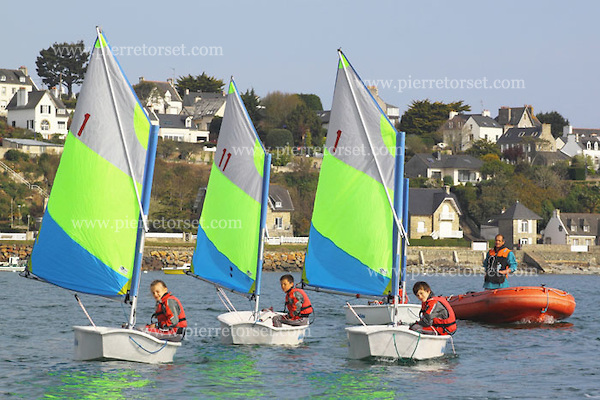
Optimist dingy sailing, in Brittany, franceWe live in a crazy world where the law of maximum precaution is the way. I first became aware of this when buying a pot of paint in England about 20 years ago, on which there was an instruction – Do not drink the paint. The reason has become obvious, protection against legal action by people who believe themselves to be absolved from their duty to cultivate common sense. The Nanny State invades every aspect of our lives, concerned for our safety, but certainly not for our freedom to live and take reasonable and calculated risks. Every time we get out of bed, we take risks – falling downstairs, getting burned or scalded, having a car accident. Even in bed, we can have a stroke or heart attack and die. The zero risk life is an illusion.

It is right to protect our children and other people who fail to appreciate the risk in question. It is right to take precautions for ourselves, a seatbelt in the car, a life jacket for the boat, safety goggles when grinding metal, a push stick when pushing the last few inches of a piece of wood through a circular saw. Reasonable precautions are to be taken with any risk, but there are always possibilities of things going wrong. Life is risky, and we ultimately face the certainty of death. That relativises things somewhat!

I am on an e-mail list of keen dinghy cruisers who enjoy being out in their boats. They are mostly experienced men and do the right things – checking the weather, carrying safety equipment, checking the tides and planning. They often go out together on the Solent and the South Coast. I would love to go with them, but that will have to wait for days when I won’t have to be so careful with money. Already, I will go to two organised gatherings in 2015, the Semaine du Golfe and the Route du Sable. Those associations have motor boats ready to give a tow or help someone in difficulty, but they don’t go policing everyone and assuming we’re all idiots.

We all had to learn to sail. Some learn on the job. I went to a sailing school and was “brought up” on regatta sailing. It formed a good basis, and we have to be able to handle a boat and overcome panic when we get a heavy sea, a broach and a capsize. Most of my learning has been alone on my little ten-footer, and finding I “invented” many techniques that are standard practice – for example spilling the wind out of the sail in a blow instead of sheeting in and hiking out in an extreme way. I discovered dinghy cruising and a whole different way of messing about in boats than racing round the cans. We were supervised by instructors in inflatable motor boats, and this is necessary when you’re learning and in someone else’s boat (ie. the school or club). After that comes a time when our experience allows us to become autonomous within the limits of which we are aware in terms of weather and sea conditions. In short, we don’t need to be nannied all our lives!

On the e-mail list, this came through:

Novembers issue of ‘All At Sea‘ – ‘Britains most read waterfront newspaper‘ has an article titled ‘Discover dinghy cruising‘ and describes a cruise from Lymington to Needles light house by the Cody sailing club based in Farnborough, Hants. What’s interesting about the article to me is the contrast in the running of this event with that of a typical DCA [Dinghy Cruising Association] event, or at least a south coast one.

There is an emphasis on safety in the article which include, having a nominated officer of the day who assesses weather conditions, suitability of boats taking part, experience and fitness of crews, safety equipment carried. Crews may be changed around to ensure they are suitably manned. Crews are briefed on the passage plan are are expected to stay close enough together so that sail numbers can be read. The cruise was accompanied by three yachts acting as safety boats.

Nothing wrong with safety of course but it’s hard to image the DIY DCA matching that. Most of us would not wish to for a number of reasons and that may limit our appeal to some sailors. Is the DCA will a club for diehard, stubborn individuals? I think so.

I replied on the list:

This sounds awful. I have been on the Route du Sable and there was little in the way of Orwellian interference. There were motor boats ready to give a tow without assuming we needed to be “rescued” or in serious trouble. I will be going to the Semaine du Golfe next May for the first time, and assume the spirit is about the same. There are some great tips in Roger Barnes’ book – be courteous with those who assume we have no sailing skills and need to be mothered, but sure of knowing what we are doing without help.

If this has to be the spirit of sailing clubs and gatherings, it is best to organise outings between friends. I have encountered this attitude with professional seamen like harbour masters – dinghies should be on lakes and tethered to motor boats like children in Optimists! We have a long way to go in promoting dinghy cruising and freedom to take our own responsibilities for safety and being able to assume the (reasonable) risks we take.

I see little of the Fédération Voile-Aviron, but attitudes seem to be reasonable. Discourage the obviously foolhardy and those who can’t handle a boat – get them to go to sailing school, and treat experienced sailors as adults. I must see about bringing my boat over to England for a DCA event… It sounds my kind of thing. I discovered dinghy cruising on my own as I got bored with going round the buoys and wanted to see more of the coast and set challenges.

Interesting and significant. Don’t let the DCA go the way of bureaucracy and the “principle of maximum precaution”! Keep it human!

Few things remain human and free from bureaucracy and official claptrap. It is also what has happened in the Church. That is perhaps the interest of my sailing articles for those who don’t sail. We have to be on our toes, and refuse to accept being bullied by control freaks. We are adults, and it’s our problem if we stupid enough to go out in bad conditions. There are legitimate rescue (mayday or pan) situations, but we can manage on our own nine times out of ten. There are risks, as when getting out of bed and taking a shower. That is life. I have discovered some good people out there, and these are the stars in the dark night – I treasure them and look forward to sailing with them next spring.

Posted in Uncategorized | Tagged , | 5 Comments

What’s it all for?

A few days ago, I said (I think in a comment) that most people are not interested in religion, and most of those who are interested are interested for the wrong reasons. We thus have a minority of whatever image you choose – gold in the dross, stars in the night, etc. – of a minority. This notion relates to my old posts on the Stages of Spiritual Life and Aristocracy of the Spirit. The real question is whether it is important to get people into churches or simply nurture the Christian way so that it may never die, but rather be as an invisible leaven in a dark world.

We dream of the old Christendom, because it meant money for churches, colleges, chapters of canons, foundations – a public presence of Christ in the world supported by ecclesiastical and state institutions. In our days, the monuments and buildings are still there, but mostly abandoned. If we don’t resort to marketing to get paying customers back, then the buildings will have to be closed for lack of money and use. For the churches with high stakes and expenses, it all comes down to marketing. The Christianity market is now very narrow, and cannot afford what the old market used to pay to keep the institutions going.

There is an article by Deborah Gyapong – What do we really have to offer? which links to an article, itself linking to another article by a Roman Catholic priest and “marketer”. I find the points full of meaning. The Church used to fulfil many social needs like entertainment, feeding the poor, nursing the sick, taking in orphans (yes, in those awful houses for “fallen women” in Ireland!), education and everything. Now, all that is over. All those needs are filled by state-funded agencies like social security, health services, education departments, schools and universities – and television. Every other need is covered by private enterprise. All of a sudden, there is no further need for churches, unless…

As we clutch for straws, we look for our “unique selling point”, the spiritual content of the Christian faith. If we go too deeply into that, we will find that what churches offer is not enough. Perhaps monasteries are nearer the mark – but most of us are not called to be monks. We start “marketing” that, and what will we get? I have said elsewhere that the notion of “marketing” is totally inappropriate. The cold simple fact is that the materialistic world has no use for us. Christendom, at least in the western world, is out of business.

We don’t have the right to give up, but I think this situation brings us to ask fundamental questions. We have no selling points because we are not on any market. What we are all about is essentially the message of Advent, anticipating the second coming of Christ. We live in the same spiritual darkness as did the world before Christ. We often forget that the world we live in and we ourselves are finite. The hope is the Mystery of Christ that is situated at another level of existence than the world of darkness in which we live. We have the liturgy to enable us to partake of this Mystery. Otherwise, it can only be an illusory figment of imagination. We not only participate in past events, but also in the event we face in the future, beyond our deaths – the Parousia or final Judgement.

The Church institution was geared for the attitude according to which the Parousia is inaccessible and so remote from our existence as to be pointless in our thought. Strangely, the secular world is conscious of its limitations, especially when considering threats from climate change (regardless of whatever causes it) and from space (meteorites and comets). Our little lives will not go on forever, because each one of us will die and the world’s days are numbered.

The history of the Church is marked by eschatalogical and  institutional phases. The prayers of the liturgical books reflect both these states of mind, between asking God to maintain what is right and good and asking him to help us in our adversity. In the twentieth century, there were two world wars and periods when people enjoyed themselves like in the 1920’s and 1950’s. There are the periods of consolation and those times when we see the world as dark with only a few light, like the Gnostics of old.

Our world is now marked by anguish about our future. The writing on the wall seems to point to Orwellian or Islamic totalitarianism and slavery, to the end of our technological comforts and obliviousness. People are increasingly unhappy, aggressive and rude. Culture is a thing of the past, and everything that makes us human is disappearing. Those who govern us are men without moral conscience, empathy or principle – criminals. We seem to be going from a period of peace that began in the 1950’s, since the end of World War II, to one of bitterness and pain.

The Church must return to the eschatalogical view of the first centuries, and not to the illusion of the Pax Christiana. We are not foretelling when it will all end, because we don’t know. We are not fanatics carrying billboards saying The End is Nigh! All the same, we are aware that it is all collapsing around us. We can only go to Christ and his holy Mother. They are the only ones we can trust.

We are not going to get people back to church. Churches are marked with stigma and the sins of men. All we can do is what monks do: pray and work, go about life with Christ forever in our thoughts and deeds. Perhaps people will see us living differently from the general run of humanity and ask why. We can them tell them, because they are ready to receive the Mystery. Otherwise they would not have the curiosity to ask. Such an event is extremely rare, because most people don’t have that degree of curiosity. We can’t force them, and we can’t assume they are all going to hell. Perhaps they have an invisible spiritual life that is higher than ours. Who are we to judge?

Some day, the Parousia will happen, whether through our deaths or some event that involves the end of this world. Beyond that lies the dawn which we already anticipate in our liturgy and the life it inspires. Christmas is such a liturgical anticipation as well as an anamnesis of the past events of God’s incarnation in the person of Christ.

Even if we end up with Big Brother or public executions of “apostates” from the “religion of peace” in our town squares, the light will always be there to bring us hope in our darkness and adversity. Only recently, my Bishop told me that Canterbury Cathedral is crumbling, and there isn’t the money to do the necessary work. It seems inevitable that it will become a museum and “cultural centre” and cease to be used for worship. Many other churches are in worse condition and can only be demolished. That particular “end” has already arrived. The dayspring lies beyond our worries and inability to see the “big picture”. We are out of business as an institution. We have no “market” and therefore no money to compete in the world. The Church is more than bricks and mortar, more even than our little chapels.

I certainly sound pessimistic and like all of us who suffer from the lack of sunlight in these shortening days. At the same time, the hope and the glory lie beyond our materialism and worldliness, and can so easily escape us, even at that very moment of trying to persuade other people of “our truth”. I have nothing new to say, because history goes round in cycles and we have seen it all before.

Sometimes there are surprises…

Posted in Uncategorized | Tagged , | Leave a comment

Saturnin

saturninIt was on this day in 1990, when I was at seminary, when someone gave the community a little duckling. The little fellow was something like the above photo, hatched out of an egg a very short time before. As we celebrate the Vigil of St Andrew and St Saturnin of Toulouse, Bishop and Martyr, I remember this day with its long dark night just before Advent.

We named the duckling after this saint of the day and we looked after him, keeping him warm and feeding him with special food for ducklings. It was frightening to see him in the common room, the old private theatre of the Villa Marcelli, amidst so many black shoes and cassocks – lest he be crushed underfoot!

He grew to be a fine duck, not for eating, but as a pet. He swam in the moat of the seminary building and I saw him each time I returned to the seminary in the early 1990’s. I don’t know how long ducks live, certainly not for twenty-four years. We also had a couple of geese, and they all got on together as our seminary pets.

Every time the name comes up each 29th November, a smile returns to my face as I think of the little duckling.

Posted in Uncategorized | Tagged , , | 7 Comments

Dripping…

I linked to Fr Hunwicke’s article When did the “Vatican II” liturgical ‘reforms’ really begin? yesterday whilst discussing the Ordo done by Rubricarius in Worcestershire. There are some comments thereto appended. This one by Anselm in particular draw my attention:

Very interesting indeed for private study and for a possible reform of the Usus Antiquior in fifty or so years time. Thank you Father for suggesting this. However the Usus Antiquior (1962) is also in continuity with what ‘B John Henry Newman, Bishop Challoner, the English Martyrs, all the Saints (and sinners and common ordinary Christians) of the Western Church in the seventeenth, eighteenth, nineteenth, centuries’ prayed. If you don’t believe me, then re-read ‘Summorum Pontificum’. There is also this important question : ‘Why not go back to the time before Pope St. Pius X, or even further back to the first edition of the Breviarium Romanum and the Missale Romanum ? Or even further back ? Despite unfortunate changes in the history of the Roman liturgy, we can still speak of continuity. Change can also be beneficial too. For example, the introduction of new feast days, more prominence given to the seasons of Advent and Lent, and ordinary Sundays, and ‘some’ simplification of rubrics. It is also worth re-reading Pope Pius XII’s groundbreaking encyclical, ‘Mediator Dei’, specially in relation to ‘archaeologism’. We should not be too hard on this great and venerable pope. Thank you.

It’s just the same kind of stuff you get about the Sarum Use. If you follow the logic, then this gentleman should go to the Novus Ordo and nothing else. A “possible reform of the Usus Antiquior in fifty or so years time. I can only assume Anselm is a little child or at least a young boy, since he assumes he will still be alive in that time frame to enjoy the promised future reform. In reality it’s just a smug grin to say “never”. Talk about patronising…

It is not my wish to be nasty with a person I have never met and will probably never meet. My concern is with the reductio ad absurdam that is applied by many Roman Catholic conservatives – if we don’t accept the contemporary liturgy we have to be “archaeologist” and revive much earlier liturgical forms than the ones to which we are attached like Sarum or the pre-Pius XII Roman liturgy. I have discovered in life that many things cannot be judged by the reductio ad absurdam principle, that there exists a via media or as St Thomas Aquinas put it, translating from Aristotle – in medio stat virtus. The Roman Catholic conservatives want to uniformise everything around the two uses (as Benedict XVI put it in Summorum Pontificium). You don’t talk too much about the Ambrosian or Lugdonensis rite, and the Dominican rite is too well contained to care about. Things would be a lot better with more liturgical diversity. There aren’t many Roman Catholics or Anglicans who would go any earlier than the period immediately preceding the Reformation and Counter-Reformation. The argument of “If you want something older than what is in contemporary papal legislation, you have to want some third-century fragments dug out of the incunables department of the Vatican Library” just doesn’t wash.

Though I don’t know Anselm, and I won’t go out of my way to meet him, I felt an “atmosphere” as I read his condescending words, and it was an unpleasant one. I spent fifteen years as a Roman Catholic. I was able to find another Church in which the Catholic Church subsists, and for that I am eternally grateful. To be out of the stifling hothouse – I am truly thankful to have my life back!

As for such attitudes as that of Anselm, it is best to spit it out and move on.

* * *

This little bit is worth adding – Patricius‘ write-up, More snides…, which is a lot more intemperate than mine. I am not interested in saying bad things about the unknown person behind the Anselm pseudonym. This seems to be like a case of condemning the sin and not the sinner. It is definitely a tendency rather than a person.

I think what got up my nose was the unoriginality of the comment, its being representative of a totalitarian vision of Catholicism which, fortunately, does not have the sanction of the very authorities to which these conservatives appeal. The joke has worn off. We are no more inspired by this kind of thing than with the maxims of Chairman Mao Tse-Tung’s Little Red Book. The condescending moralism is at about the same level of ideology.

Patrick and I seem, both of us, to pick up on the same points to criticise. As a priest using the Sarum Use with the knowledge and tolerance of my Bishop, I am familiar with the “museum” argument. We live in an age when everything is in a museum except what is most “modern”. We are cut off from our cultural roots in a “hermeneutic of rupture”. Anselm perfectly represents the modern managerial style that cannot tolerate any cultural reference other than his own. Any object in a museum, if it is in functional condition, can be used and made to live. It suffices to use a liturgical book and everything comes alive.

I have also grown tired with the development theory, since it has been hacked to death and can be used to justify anything. At the same time, it is impossible to justify Bossuet’s semper idem. We are putting ourselves above history and judging it like an item in a museum. What is tradition? Perhaps we need to be less self-conscious and stop trying to justify everything – just get on with life.

Back to the ideological dimension, projecting one’s ideology on a Church one would like to be Ultramontanist and totalitarian. The square peg no longer fits the round hole. Anselm is the exhibit in the museum, the one suffering from cognitive dissonance – and perhaps licking window panes as Patrick so deliciously puts it. Being a priest of another Church, I can take something of an aloof attitude – but I hope with compassion.

The Enlightenment was designed to be all about dispelling irrational ideology to replace it with reason and balanced argumentation. The Romantics went further and sought to free the imagination, the heart and feeling. We live in a time that reflects the eighteenth century in many ways: science and technology, the widening gulf between rich and poor and the imminent breakdown of the entire system. Our collective memory remains influenced by what the twentieth-century dictators left behind – and the extent to which churchmen saw opportunities in spite of the flagrant violation of human rights to life, liberty and the pursuit of happiness. We need to begin to learn from history and develop our critical faculties.

This question goes far beyond a single person writing comments on a blog or even questions of liturgical minutiae. The real issue is the mentality behind it, which isn’t pretty. The totalitarian party is over, at least in churches. If we continue in this trajectory, we pass into history and our artefacts whose purpose will be forgotten will be placed in museums. If the heart is gone, the savour of the salt, then it is over. I think Patrick senses this as much as I do, even if his expression is different.

The work begins within ourselves, nowhere else.

* * *

Some postings I have written on the question of liturgical tradition and archaeologism.

Posted in Uncategorized | Tagged | 13 Comments

Lighten our Darkness…

Following on from the more depressing aspects of Christmas (or at least its materialistic / commercial version), I see articles like this one on the phenomenon of Black Friday. I am astounded how some people can be so bestial as to be fighting over television sets and other consumer goods being sold at special prices on this day.

Indeed we see the worst of human nature, which we might be tempted to associate with race or social background. Perhaps that is so to an extent, but white people were also involved in the scuffles.

What makes this happen? There are various theories of psychology that are used by traders and advertisers. Many of us have a system of priorities in life and adjust them according to our financial means. We think about what we need, what we would like as “icing on the cake” and above all what we can afford. The question of money or lack of it often brings us to say “no”, deny ourselves and decide to desist definitively or wait. For some very expensive things like houses and cars, we have to contract debts, which is fine if we are sure of being able to pay them back. For other things, we just have to save up and decide on our priorities.

The commercial and advertising world want it their way, for us to forget our needs and means, and to buy their product without thinking about it. We exist for their business. We live in a world where they peddle their wares by every means possible, using psychology to overcome our normal big-picture instincts of managing our money and needs. Modern advertising by bill boards, television, telephone, spam, etc. is profoundly immoral and a violation of every human right.

Some of us see through it all and resist. Others are ensnared into behaving as they want them to do – spending more money and no matter whether it can be afforded or not. We exist for their business, and they will hound us until we buy. The retail trade seems to have used the ritual and religious instincts we humans used to have, and they have us worship at their “altars”. Christmas starts in October in the supermarkets, and that is followed by the January Sales (I buy my January sails on E-Bay! 🙂 ) and St Valentine. To this is added Black Friday.

I translate marketing stuff all the time, and this has given me a tremendous insight into their cynicism (modern meaning) and callous disregard for the “consumer”. A pseudo ritual makes people lower their prudence (knowing how much they have in the bank and what has to be kept back for paying the utility bills, etc.) and feel permitted to having a spending spree. Lowered prices would give this justification for buying more stuff.

Another one of our base instincts is our sense of competition and being hunter-gatherers. We do this in supermarkets, comparing prices and the quality we are looking for in products. We are made to think we are beating the retailer by getting an expensive product for a lower price. We have only to ask the question – What’s in it for them? Briefly, they are destocking and getting rid of what will shortly become obsolete. They make a big buck in a very short time, so they can afford narrowed profit margins. I don’t know too much about it, so I won’t go into it.

What I have found so astounding as a result of the marketing manipulation is the scene of people fighting over television sets and other pieces of electronic equipment. We are brought to think of dogs fighting over a scrap of meat. We are made to feel like winners as we snap up the “bargains”. This instinct is combined with our emotions around Christmas and “making it up” with the family.

Advent is certainly a time to resist the marketers and advertisers, thinking about what we really need in life, what we can afford, and perhaps even the satisfaction of buying something because it came from our own initiative and not from outside pressure. We can take on the challenge of resisting the advertising and marketing propaganda, and have pride in buying only what we need and can afford.

Especially at this time of year, it is a good idea to make a shopping list as we go through the fridge and kitchen cupboards. We then get the stuff and keep up our guard against the manipulation, spending as little time as possible in the shop. Perhaps, such a mentality is less difficult for someone already prejudiced against social conformity and the prevailing order. The so-called “growth” can’t go on forever. We need to reflect on our own mortality and yearn for a higher world than this one.

As I mentioned in my last article on Christmas, there are lights in the darkness. In history there are the saints, and in our own experience there are good people with whom we can emphasise. The world is dark, but there are lights that are worth more than silver and gold, or the glitter and noise of the “reign of quantity” as René Guénon expressed it. Let us turn our minds and hearts to the great prophecies of Advent, so that we can seek the essential, and truly celebrate Christmas in the fulness of time.

Perhaps a few ideas. For buying Christmas presents, decide on a reasonable budget and think of the kind of things that are most useful and meaningful. Then go and look for them and resist the manipulation. Go to those shops and internet sites knowing what you want and don’t give in to any pressure. Don’t be afraid to leave a shop empty-handed if you haven’t found what you are looking for or if the price is too high.

We can stop being “consumers” and can begin to be human beings with dignity and rights. We can buy and sell, but on equal terms, and we must insist on this. We will be helped by God and the Angels in our spiritual warfare against the powers of darkness in high places – and the glitzy sales men and women. Not all that glitters is gold.

Posted in Uncategorized | Tagged , , | 5 Comments