Shrill Polemics

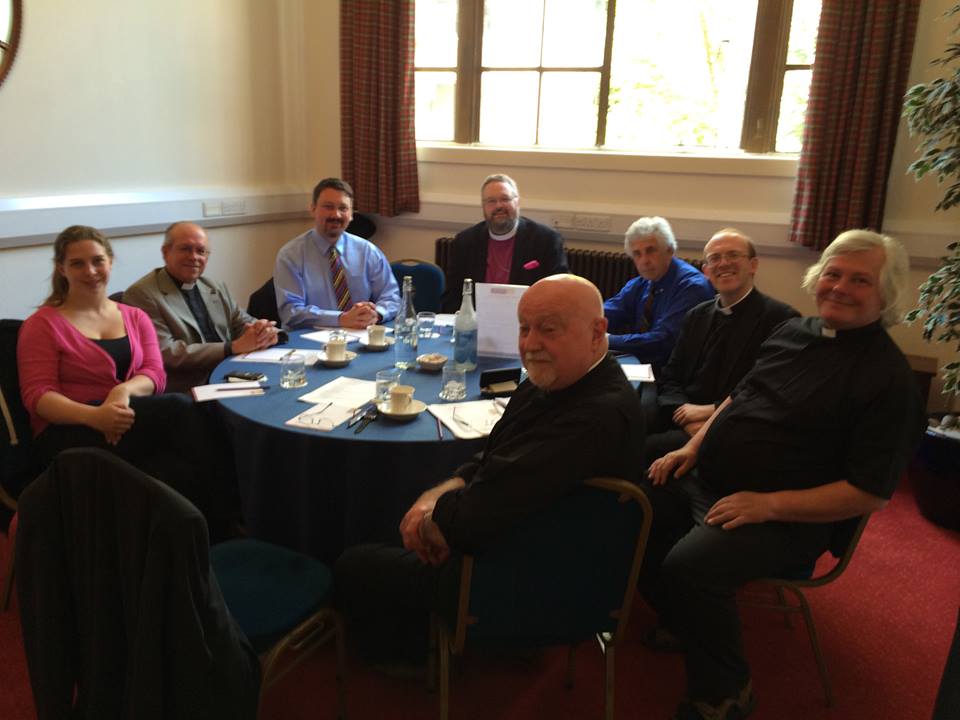
Something discussed in our recent Council of Advice meeting inspired me to write on the subject of shrillness on the part of many polemicists seeking to defend their convictions and win others over to them. One Council member regretted having used the word liberal as expressing a position against shrillness. I suggested using the word tolerant in that context, because liberal means different things to different people and points of view. We in the ACC are not liberals (relativism, indifference, etc.) but we are on the whole tolerant.

I have the impression in our polarised times that we are going back to an era like the 1920’s and 30’s when discussion was no longer possible. It is us and them, black and white, might is right, no quarter to the enemy. That era bred Mussolini and Hitler, a cruel totalitarian ideology without pity or tolerance designed to improve mankind, but which slaughtered millions for no reason other than their race or creed. The post-Communist world observes the genocide perpetrated against Christianity in the Middle-East and says nothing. Shrillness on one side and only our silence for an answer. What can we do but pray? It is a good question. We do care, but we are impotent faced with the looming monster.

The Muslims burning churches and slaughtering the innocent in Syria seem to believe they are doing it for God and truth. Hitler made the same claim eighty years ago. Many conservative Christians do not advocate killing people, but would – if they received authority to do so – would curb the liberty of others through laws and policing.

Between Islamic murderers and fanatical Christians, we find that these people are unable to reason. They have rejected both empathy and reason. When we find shrillness, it can only indicate an underlying fragility of their belief in truth and the spiritual. We ourselves have to learn from those people. We are tempted to build up strong positions against other creeds and faiths. Instead of looking at the positive things all Christians do, we seek to show up what is wrong with them and why they should “convert” to our “one true” camp. Insofar as we give way to this temptation, we discredit our own cause. I was so happy that during our meeting between the ACC Bishop in England and we his clergy and laity, we had a consensus that shrillness was not the way – but mature dialogue and empathy.

We are Catholics (even through Catholics in communion with Rome might dispute that fact). Our faith is calm, reasoned and experienced and rooted in the Scriptures and Tradition. We are called to discuss and debate points of doctrine, but always in the respect of the other “side”. We have both to believe in truth and practice tolerance. I have always expressed the idea that we need to be calm and kind. If we are shrill, we must be overreacting from the lack of credibility of what we believe in, from the shakiness of what can easily be refuted by the opponent.

One thing that has attracted me to the ACC is its maturity which comes from having been through suffering the experience of human conflict and sin. I am impressed by the calmness of our Archbishop and Bishops (which is not to say that there are occasional problems that need to be sorted out). We are no more perfect than anyone else, but we have learned lessons.

We must combat shrillness in ourselves and others. Truth has no fear of being challenged and discussed. We need to learn to let go and broaden our minds. We can do that through going out into the world and making the effort to understand what is going on. There is the old fable about the Sack of Constantinople in 1453 that theologians were discussing the gender of the angels whilst the Muslims were doing what they are doing today in Syria – burning churches and cutting priests’ throats. Christianity is challenged by greater realities than what any of us would care to imagine. Our shrillness only serves to fuel the arguments of the real enemy.

Just bear it in mind and think about it. It will make the difference between our survival or our annihilation.

Posted in Uncategorized | Tagged , , , | 7 Comments

Dr Raymond Winch

Today, I found the Liturgiae Causa article by a charming young man who lives in Kent, with whom I occasionally correspond. I met him in London recently in the company of a dear friend who is also keen on the liturgy and deeply critical of Roman Catholic traditionalism. He recently announced his intention to become Orthodox. My prayers and good wishes accompany him as he makes his slow, thoughtful and prayerful journey.

We who are now in our 50’s remember another period when we were through with Series III in the Church of England or the Novus Ordo. Our reaction was not ideological or political but rather more liturgical. The scales quickly fell from our eyes. We also remember our elders sharing that same experience of disillusionment with us. We have figures, often odd personalities, but who had their sensitivities. I particularly remember John Tyson from my early days with the SSPX in 1981 (I never went to their seminary, unlike what some say about me). His speciality was compiling an Ordo for the Roman rite as it stood in about 1920, and as his health failed, the work was taken over by Rubricarius (as he is known on the Internet).

Throughout my life, I have tended to befriend men some thirty years my senior, sometimes more. Their memories went back to the 1950’s and sometimes were mature young men in the 1930’s. One friend I had in the 1980’s was born in 1914 and became a Roman Catholic in 1930. Fr Coulson, who taught me how to serve Low Mass and ideas that served as an antidote to SSPX extremism was from 1912, served in World War II in the Italian campaign and joined the Camaldolese monks. He returned to his native England and was taken care of by a couple of Carmelite tertiaries living in Wimbledon. These and other men of that generation (about fifteen years older than my father) had a tremendous influence on me. They lived their youth in the “good old days” with the same difficulties as we lived through the 1970’s and 80’s.

One such man, whom I met during Holy Week in 1988 was Dr Raymond Winch. I went to spend some days with the Dominicans in Oxford to explore the possibility of a vocation with them. During a foray to Blackwell’s Bookshop, I stumbled across The Canonical Mass of the English Orthodox by Dr. Raymond Winch and another pamphlet with the title Orthodox Manual and Calendar. The Gregorian Club was based at 41 Essex Street, so I just went and rang the doorbell. That is how I met Dr Winch and enjoyed his company and immense learning.

He was as eccentric as they come, living in a very untidy and unkempt house. I had known others, and my own office gets into a mess, even though I am married. At the time, I was still doing my licentiate studies at Fribourg. He was an academic liturgical scholar with a doctorate in philosophy and many years experience in school and university teaching. His real subject was philosophy.

I never learned the details of this man’s life, but he seems to have been in his late 60’s when I met him. I would place his birth at around 1920. A cradle Roman Catholic with a fascination with Anglicanism, he would have been about 30 when Pius XII made his “infallible” definition of the Assumption of Our Lady. That seems to be the event that alienated him from Roman Catholicism. He became Greek Orthodox, as did another in about the same era, Timothy Ware who became Archimandrite and then Bishop Kallistos. Dr Winch never received Orders and remained a layman.

When I knew him, continuing to see him at his home in Oxford, or at his “other home” – the Oxford Union or the Bodleian Library, he used the Benedictine Office and attended Liturgy at his local Orthodox parish. He organised lectures at Pusey House and invited me to talk about my work on the Tridentine / Pius V reform (codification) of the Roman missal.

I and others have observed that he stood out by his gentle manners and courtesy, never judging and always ready to listen. I have even heard Dr. Winch referred to as a “new Joseph Overbeck“! Having spoken with him about this work and many other subjects, I was aware that he put in many hours of work and research from the wealth of manuscripts and published books in the various university and college libraries of Oxford.

Needless to say, the ideas expressed in his research never came to fruition in any recognised Orthodox Church. From about the mid 1990’s, he became highly disillusioned with Orthodoxy. He was a medievalist. As his health failed, Dr. Winch began to attend the Roman Catholic Mass celebrated in the old rite without being officially reconciled or receiving the Sacraments. If I remember well, I received an e-mail in about 2000 to inform me that he had died and that he requested a secular funeral.

I would now like to ask if there are any who read this blog and knew Ray Winch, or who had detailed knowledge about him. He has been largely forgotten since he died, and someone who had vaguely been in touch with me is in possession of his papers and unpublished works in view to getting them published. Google is parsimonious about him apart from the Canonical Mass and the Orthodox Manual and Calendar. His passing serves to remind us of our fragility and insignificance despite however much study we have done in the world’s greatest universities.

If there is any more information or reminiscences, please send them in. Any other comments concerning eastern or western Orthodoxy, not on this exact topic – please, put them in the Orthodox Blow-out Department.

Posted in Uncategorized | Tagged , | 10 Comments

Retroactive Truth

I have just seen Fr Robert Hart’s new article – Round up the usual suspects. He and I haven’t always seen eye to eye between his attachment to the Prayer Book and the Thirty-Nine Articles and my “pre-Reformation” and “Gallican” approach to Anglicanism. For this new article, I find his analysis interesting.

He reminds me of ideas from some Roman Catholic polemicists like (for example) the idea according to which Hans Küng was condemned by the Council of Trent or Pope Pius X. Trent took place in the sixteenth century and Pius X died in 1914. Küng was born in 1928. I suppose that what was meant is that Trent condemned certain propositions by Reformers of that time and Pius X opposed ideas by the Modernists. A parallel by analogy is drawn, and Küng’s ideas are compared with those of the Modernists and Protestant reformers. It is a strange method of working, likened to “anachronism” in historical study. An example of such an erroneous method would be judging the medieval Inquisition by the standards of the Enlightenment. We all do it, but that is no excuse!

Fr Hart has been astute enough to pick up this strange methodology. One example he gives is Henry VIII being seen as a Liberal and a direct cause of the Church of England’s decision to go ahead with women bishops by the simple fact of breaking away from communion with the Pope. Falsus in uno falsus in omnibus. Find one rotten floorboard in a house and the whole house must be demolished! Burn them all and God will recognise his own.

Nonetheless, there it is again; the root argument, trying to put an entirely unhistorical idea into a historical context. In short, it is based on the notion that everything that develops in history is rendered inevitable due to some key moment seen as its flawed origin. By that argument we could blame everything from Arianism to the Crusades on the original establishment of the Church by Christ Himself. He must have gotten something wrong, because, well…look at what happened centuries later.

By this argument every criminal’s grandparents should be convicted, if even posthumously, for their descendant’s crimes. If modern Church of England Anglicans are consecrating women as bishops, well then, that just proves that the Church of England Reformers were really Liberals in disguise. “Ergo,” argue the polemicists, “all of Anglicanism has been false all along.” Therefore, they would further argue, even the Orders of Continuing Anglicans must not be valid; not because of anything that happened in the sixteenth century, but because of a decision made in 2014. Roman polemicists are good at retroactive truth in general, so we should not be surprised.

The lesson here is that we need to be critical, considering events and ideas as they are, with some comparison with older ideas, but also with necessary distinctions. It is more difficult to be critical than to tar everyone with the same brush. The man who wrote Pascendi was not Pope Pius X but probably Mery del Val. That piece of Papal teaching seemed to confuse someone like Tyrrell with exactly his adversaries. Tyrrell lived only for the first decade of the twentieth century and sought to make Christianity credible for the critics of his time. Contemporary critics would now say that nothing more can be done for Christianity – and either it is possible to recover a few ideas from the Gospel or that an alternative philosophy to promote peace and harmony between human beings must be found and Christianity should be consigned to the scrap heap of unworkable ideologies and gods that failed. There is a vast difference between Protestantism, Modernism as an attempt to find a credible apologetic method in the face of modern science and rationalism, and the erosion of Christianity by an underlying conviction that Monotheism is the single cause of all human conflict and evil.

I won’t comment on Fr Hart’s final two paragraphs. It is another infra-Anglican subject for discussion. What is Protestant? Having a greater devotion to the Holy Scriptures than the average “Joe Catholic”, or being an anti-liturgical iconoclast? One again, words need to be carefully defined, otherwise they mean different things to different people.

In the end, Fr Hart and I belong to the same Church, the ACC, and confreres treat each other with respect and pray for each other. I apologise to him for offensive things I have said to him (in private) when I was in the TAC and trying to defend Archbishop Hepworth in my stubborn loyalty. He and I are of about the same age and we are both musicians. Perhaps he sails too. If he doesn’t, he certainly loves the great outdoors. I hope one day to meet him at the Provincial Synod and (figuratively) smoke a pipe of peace.

I too have read some of the flurries of comments from conservative RCs about the Church of England going ahead with women bishops. Some would like to have Anglican clergy on the virtual torture table of Orwell’s Room 101, and tell them that they can only “convert to the true church” or spiritually die and embrace modern materialism. Schadenfreude does not become us. Some Anglicans remain in the system for material reasons, and others from a sense of loyalty and emotional attachment. Who can blame them for not being heroes? We need to pray for our brethren in the Church of England. As Fr Hart points out, the ACC and other Continuing Churches are options. We are not the true Church, but a true Church, a Church in a Church of Churches as Fr Tillard (my old dogmatic theology professor at Fribourg) put it. People have free choices with free consciences.

Posted in Uncategorized | Tagged , , , | 2 Comments

A Quick Hop to England

I got back from a quick weekend in England for our Council of Advice to which I have been nominated. It took six hours door-to-door from my house, to check-in at the port, the sea crossing and the drive up to London. I camped in my little van, which would have saved me perhaps a hundred pounds in hotel costs for each of the two nights.

coa-0714We began at noon on Saturday in a small room in Westminster Central Hall and were is session for several hours. Two of the most significant subjects (not confidential because they are discussed by my Bishop on Facebook) were the use of the Internet for representing our Church (both “marketing” and educational) and the training of new priests given the many constraints. Fr Jonathan Munn and I will be increasingly responsible for helping candidates for ordination choose the right material to read, verify their progress and work above all on practical, human and spiritual aspects. This will supplement the precious work of our present Board for Ministry in the able hands of Canon Don Walker.

After spending a very pleasant evening with an old friend, I drove to Canterbury and played the organ at the Sunday Mass at St Augustine’s celebrated by our Bishop, at which he received the Revd Dr Miles Edward Maylor into the full communion of the Anglican Catholic Church. Fr Maylor is our first ‘Welsh’ Priest having been ordained in the Church in Wales and will oversee our work in South Wales. Deacon James Rundle assisted our Bishop at Mass and it was good to keep my hand in as a church organist. 

I am encouraged by the steps forward made by our Diocese and our quiet approach in serving souls and going ahead, unswayed by those who find us too small, too marginal, too lacking in “official status” – or simply those who deny that we are a Catholic Church in which the Universal Church fully subsists as in all other Catholic and Orthodox Churches.

We go and persevere, because it is our vocation and the best way we know of serving God. Pray for us…

Posted in Uncategorized | Tagged | 6 Comments

A Note on Aspergers Syndrome

Whilst commenting on John Beeler yesterday, I fell to the temptation of making sweeping statements about what medical experts used to call Aspergers Syndrome and which they now refer to as autism spectrum disorder.

I have known people with characteristics of this condition, and others who had been diagnosed with it but lacked some of the “usual” aspects (like collecting railway locomotive numbers, etc.). In my teenage years, I would develop a high degree of knowledge about things I become interested in and failed to recognise that other people were showing signs of boredom, because their own interests lay elsewhere. At the same time, I have not been diagnosed with this condition and have become more sociable with maturity and a more “big picture” view of life.

I really know no more about it that that, and I can be the victim of “a little knowledge” but clearly not enough. Every person is unique and escapes to some extent the typology by which psychiatrists try to find things in common between their patients (like in the case of a physical condition) in order to organise treatment better and more professionally. I am sceptical about psychiatry as a science for this reason, because the human person is unique and gifted with the spirit. Jung probably came the closest to a “whole” approach about the human person. As far as psychiatric categories clarify things in our minds, people may suffer from more than one condition.

Aspergers syndrome people or “aspies” find it difficult to “read” other people’s emotions, and this can be confused with psychopathy in which a person simply doesn’t care about other people or their suffering. Psychopathy is the attempt to explain an evil and immoral person in scientific terms. There are different typologies of personalities, because we have something in common with each other. Perhaps  some autistic people may be psychopaths or sociopaths to some extent, which would aggravate their cruelty or callousness in regard to others. There are tests by which personalities can be evaluated by specially trained professionals who develop and use them in their work.

We who have only read things on the internet about these subjects need to be very careful. I have read quite a lot about psychopathy and malignant narcissism, because I have had to try to understand why some people are truly evil. In the case of criminals coming under this category, the law tends to condemn them as responsible for their acts and not suffering from an illness that would mitigate their freedom and moral guilt. The typical characteristics of “snakes in suits” and callous manipulators are there.

Most aspies are not manipulators and usually have moral consciences. They usually have a sense of right and wrong, and remorse for when they have done wrong. This sets them apart from psychopaths.

Here are a few links that can shed light on this difficult subject:

There are many articles on these subjects on the internet and in libraries – of differing value and scientific validity. Most of us, not of the scientific community, can only acquire a general idea about these matters. A little knowledge can be dangerous, so we need to be careful.

Posted in Uncategorized | Tagged | Leave a comment

John Beeler off the Deep End

I don’t mind a man looking like something out of the 1950’s or 60’s with similar glasses as those of my old schoolmaster, and who daubs his blog with cars of the same era. All right, I am an eccentric too and do the same thing with sailing boats, but I do have other subjects of conversation too. My attention is drawn to this man yet again by something he has written on Facebook (entry of 9th July from about 8am East Coast Time) perhaps hoping I would never find it. Most of Facebook is utter drivel, but it is there to find people I lost contact with as well as those who try to keep in touch in a light-hearted vein. Well, what is it?

He wrote a little entry linking to his blog article recommending us to read an interesting article by Fr Hunwicke and commenting on the new Antiochian Metropolitan in America. His comments on the latter subject are outright cruel:

Of passing interest at best but this might mean the end of another small counterfeit Catholic church, their Western Rite experiment.

That’s his way of describing the Antiochian WR Vicariate. John Beeler reads my Orthodox Blow-out Department, where some of the conversation has been about how the western rite vicariate is faring. One of his friends commented saying that Fr Chadwick’s site always contains some interesting characters.

John Beeler responded:

Dale (Fr. Griffiths?) is my favorite, and I’m not being sarcastic. Of course I’m sorry to see Fr. C turn away from the Catholic Church. When I met him online years ago he was an unusually sweet-natured independent traditionalist Catholic priest, but he’s long been in an independent Anglican phase. He has no congregation, no real ministry. Nice guy, most of the time, with a nice life in France: his wife, his translator’s job, and his sailing hobby. But he reminds me of Arnold Harris Mathew, a historical figure. A sensitive soul, he means well and is not stupid but he is foolish.

As he reads my blog, I will ask him if this kind of thing is really necessary. In reality it is full of double standards. For example, you are only Catholic if you’re in communion with Rome (unless you go to the SSPX as I suspect he does), but yet I was not in such a situation as an “independent” priest. Better to be labelled a traditionalist Roman Catholic (though canonically irregular) than to be associated with Continuing Anglicanism! Honestly, it drips with hypocrisy and the usual callousness of people who suffer from his “mental condition” (a form of autism).

I went to the TAC, and when that was wrecked and I was left with precious little as an ecclesial home, I joined the ACC. I did this to be in a canonical situation in an institutional Church whose essential way is classical Catholicism rather than Protestantism. I believe it is better to do this than continue as an “independent Catholic” priest saying the right words but being in total irregularity. Beeler has the gall to compare me with Archbishop Arnold Harris Mathew, I suppose on account of his shifting positions when faced with major challenges like theosophy and rogue bishops born from his mistakes. I have a good deal of sympathy with that historical character who lived in the “good old days” of Pius X and Sodalitium Pianum and forayed into the Modernist camp. I suppose the comparison isn’t entirely off-target, as I find it difficult to deal with major challenges and conflict.

I am, so-called, “long been in an independent Anglican phase. He has no congregation, no real ministry“. Phase? I could always relinquish Christianity. But for what? If I want to be a RC layman, I have only to go to church. No point in jumping through hoops for years just to receive the Sacraments. The divorced and remarried (the honest ones) live with their canonical handicap and lead lives of prayer as best they can.

Nice guy, most of the time, with a nice life in France: his wife, his translator’s job, and his sailing hobby.

How condescending! Quite honestly, I would like to stuff that big red American car sideways down his throat. Now isn’t that a nice thought? I didn’t comment about his cars or autism, but I do now. I’ll say it in American – The guy’s a complete jerk!

I gave some attention to his more recent blog articles:

  • Church chat: I’m not that religious – so he takes the aloof position of the mildly anti-clerical. I know the tune!
  • A portrait of the alpha, and more – “The more I think about it the more I’m convinced that religion was intended to police the two groups in society that required the most policing: Women and Alphas. I’ve long thought that.”

I am finally described as a sensitive soul, he means well and is not stupid but he is foolish. Foolish? For going Continuing Anglican? I shouldn’t spend time discussing such ideas, because I have discovered a life outside religion. I keep wondering whether 95% of the people living in the country where I live can all be wrong – they have given up on religion but they are not all materialists.The world is run by people with personality problems involving lack of empathy or care for other people, whatever the cause to which psychiatrists give a name. I know that not all of us are like that, that callous and cruel personalities are only a minority.

I suppose I’m lucky to have a good and pastoral Bishop in England. I leave it to others to decide whether I am a Raca or a fool, or whether I have done well to find my peace in an ecclesial community that allows a broken and contrite heart some peace and consolation.

Perhaps his biggest problem is that I embraced what he rejected (high-church Anglicanism) on going to the RC traditionalist camp via a fleeting brush with Orthodoxy. I seem to have hit a nerve!

* * *

Update: I found this on Why women are no longer as attracted to providers, and it’s not about church size:

Church: does size matter? Ha ha ha. Seriously, while it’s great being Catholic in a place where many Catholics settled, such as the immigrant American Northeast, and the church fulfilled the Great Commission while the schismatics either were dhimmi or building their own empire, it’s really about principle. We accept the East. They reject the West. There are different schools of thought in Catholicism as there are different rites. I just see one faith: Trinity, hypostatic union (blessed be Jesus Christ, true God and true man), Mother of God, apostolic bishops, Real Presence, and images, for example. (We defend the use of images but they’re optional: the Nestorians often don’t use them, and of course the Roman Rite doesn’t have the iconostasis. Icons are great, but they’re cultural.) They mistake cultural differences for theological ones. As for Anglicanism, the plain meaning of the Articles of Religion speaks for itself, putting it out of serious consideration. And actually I’m as “romantic” as you: the church is best as the Church Local, run by custom (simpatico with Orthodoxy, no?), as long as it’s part of the Church Universal.

It seems to be about finding the “true church” by process of elimination. I have known this with others. If they went to the limit of the logic, there would be no true church – and then the answer is Christianity without church, another religion or atheism. That may well happen. Paradoxically, we find the use of “private judgement” in a matter that of off-limits to that miraculous oracle called the “magisterium“.

So, the Thirty-nine Articles put all forms of Anglicanism out of serious consideration? One thing that made it possible for me to join the TAC and then the ACC was that I never had at any time to accept the Articles. I have been in trouble with low-church Anglicans for this reason. That being said, I find this situation no more incoherent than belonging to the RC Church and saying that the Novus Ordo “sucks”. One can go through a thousand off-the-peg garments in a shop, and find that none fits perfectly. There is always some measure of compromise and acceptance of imperfection.

Perhaps there is nowhere left. The subject of this article has been a mild challenge, one that forces me to consider various loyalties and patterns of behaviour in terms of personality typology. The human personality is incredibly complicated, and I do not entirely trust the psychiatrists in their typing of personalities. I become increasingly aware of personalities that are devoid of empathy for others and are caught up in a black-and-white or binary world. The types like “malignant narcissists”, “psychopaths” and “sociopaths”, “borderline personalities” and others generally show this lack of empathy in common. Not all are devoid of moral conscience like the first categories. My eyes have been opened on reading introductions to this branch of psychology, but I remain sceptical due to the belief that the human person is free and responsible for his moral acts.

The search for the “true church” seems to go with an intolerant and cruel personality. This is something I am just unable to get over with most institutional churches for which Christ was some kind of “muscular” reactionary figure. I come to the stage of life when I see that the more we dig, we less likely we are to like what we find. Much of Christianity and the New Testament is difficult to justify in intellectual terms. That was the drama of the end of the nineteenth century when scholastic apologetics lost their credibility faced with the natural sciences and historical criticism. We are left with analogy and poetry to communicate with the Mystery to some measure through faculties we have outside our reason.

What we live through is the same as a hundred years ago, made worse by the two World Wars and the end of the old civilisation. We are called to enter the darkness and the via purgativa, preparing for something we cannot define for future generations. That is if we have time given the threats we face to our planet and what’s left of the life on it. Coming to terms with our own helplessness certainly brings us to evolve beyond the “machine” and its impotent apologetics.

This article, though emotive in places, is not about an individual – but what that individual believes he represents. I live in a world where people are extremely diverse and exercise their freedom in their lifestyles, jobs, hobbies and everything else. We need to be tolerant and let each person find his or her own way, even if if means that person having to learn the “hard way”. I won’t repeat my article of the other day on Berdyaev and religious freedom. What concerns me is the general tendency of the modern world – perhaps a return to twentieth-century totalitarianism. If that happens, there will probably be nowhere to go, no escape other than death.

The churches are impotent and discredited. The institutions we have known like politics and the media are being exposed as corrupt to the core with paedophile networks among other things. The major churches are not exempt and have to be purged. Most of us have lost faith in institutions. The shepherd is struck down and the sheep scattered, and no light is visible at the end of the tunnel.

Yet, we have to do something little and humble whilst we are still here – and do good around us. Our efforts are puny and feeble, and appreciated only by God, certainly worthless to man. So be it.

* * *

Another update (July 10): Beeler has been piling up the poison on Facebook. I don’t know Beeler, but Paul Goings does. I find the comment from another blog posting very apposite.

For the record, I quote the conversation.

John Beeler Dale (Fr. Griffiths?) is my favorite, and I’m not being sarcastic. Of course I’m sorry to see Fr. C turn away from the Catholic Church. When I met him online years ago he was an unusually sweet-natured independent traditionalist Catholic priest, but he’s long been in an independent Anglican phase. He has no congregation, no real ministry. Nice guy, most of the time, with a nice life in France: his wife, his translator’s job, and his sailing hobby. But he reminds me of Arnold Harris Mathew, a historical figure. A sensitive soul, he means well and is not stupid but he is foolish.

<…>

Anthony Chadwick Thank you for your criticism. Most appreciated. Would you like to expand on the similarities between me and Abp Mathew. I would be most interested, since you can’t say much behind my back on Facebook. Foolish? Perhaps there also, you can expand. In the end of the day, I come to the conclusion that aspies should stay away from religion!

John Beeler Speaks for itself. Now you know what I think. You’re not cut out for the ministry.

Anthony Chadwick Certainly not for the idea of the ministry that seems to be yours.

Benedict Andersen Forgive me for butting in, John, but this way of speaking to Fr Chadwick is simply not on. He deserves more respect than that. Disagree with him, yes, but you have no business standing in judgment over who is or isn’t “cut out for the ministry.”

<…>

Anthony Chadwick What I find most significant about Beeler is his posting in his blog that he’s “not very religious”. This whole thing is a game to him like collecting stamps or pictures of cars. I wonder if he drives a car… if you get my meaning. He doesn’t bother me at all – bad Christianity does and burns me out!

John Beeler <…> Fr. Chadwick, you ran away from the only real pastoring job you’ve had (as a Catholic deacon), abandoned your religious order, left the church, and write passive-aggressive swipes at the church, and you wonder why that bothers some Catholics. There was no way the church was going to take you back in your orders. Laicized, sure. The parallel to Mathew stands: good intentions (you’re sensitive and there are problems in the church) but one mistake after another. Not having the calling to the ministry doesn’t mean one is bad or worthless. You don’t have the calling.

Anthony Chadwick You’re a bit late to be going on at me about that. Of course, at the time you were yourself vacillating between high-Anglicanism and Orthodoxy. Now you have gone over to Rome (or Ecône?) you expect everyone to snap into line at your whim. I don’t want ever to hear from you again. About my calling or whatever, I have more confidence in my Bishop than you. If ever he tells me that not having a calling is his judgement, then that will be it. No more blog, no more chapel, nothing. Just go away. Your blog will be down to a dribble again in just a month or two.

John Beeler I wasn’t really vacillating between any kind of Anglicanism and Orthodoxy; rather, I was hanging out with Anglo-Papalists (whose beliefs are Catholic, not Anglican) with the goal of coming back to the church. I’ve been upfront in my blog about my mistakes, such as becoming Orthodox, which were about 20 years ago or older. Fr. Chadwick, man up and do likewise. Unlike you, I wasn’t in holy orders or a vowed religious, and I wasn’t charged with the care of others’ souls. Your soul’s in danger, and a kind heart like yours (I know you’re angry, but still) deserves better.

<…>

Anthony Chadwick Don’t give me any of that! I have enough information from people who knew you at St Clement’s. And don’t even begin to play spiritual director with me. You are the once who will be an atheist within a couple of years.

John Beeler What of it? I have nothing to hide. That you’re trying to threaten me only proves one of my points. You don’t have the calling.

Anthony Chadwick Maybe not, but you are not a Christian.

* * *

In many respects, he is right. Simply I will not take it from him. Today I feel very down and weak emotionally. Perhaps I should clear out the chapel and turn it into a music room or something of the like. There’s no question of my ever going back to Roman Catholicism or any other “true church”. The question is something of a red herring, as I am very well with my Bishop and the ACC in England, and Beeler is no authority for me in inferring that my Church is fake or whatever. This kind of thing takes its toll, but I can’t take it lying down.

I used to worry about not having a ministry. I have to look at the fact that there is no “market” for my priesthood in France. There might be if I were doing healings and exorcisms, at so many Euros per shot. I disapprove of such a use of one’s image as a priest. I have dealt too much with people who smelled of sulphur. I am emotionally and spiritually repelled from Roman Catholicism and from the traditionalists. I have done my best to live my priesthood in an honest way.

When I was interviewed for my ACC Diocese, they asked me what I would offer the Diocese. I told them – very little other than my daily Mass and prayers. I have been blogging over the past few years, and I don’t think it has done any good. I have held out for longer than most of the others. In myself, I know I really ought to be writing books and doing some more musical composition. Blogging only brings me into conflict with the weirdos of the dregs of bad religion.

Am I justified in remaining a priest, given that I would not go to the RC Church even if they were prepared to accept me as a priest? I go through a great deal of inner conflict and questioning, but I have a Bishop and a diocesan Church, in something instituted enough to be as much of a Church as some of the smaller Orthodox jurisdictions, who have accepted a useless servant. I am being given non-parochial responsibilities which I am not at liberty to discuss, and that is also a priestly ministry. I am on my Bishop’s Council of Advice, and sometimes my opinion is sought on one subject or another.

* * *

A few days ago, I read an article about blogging, asking the question of where the bloggers had gone. Those who are left seem anxious to put each other out of business to justify their own agendas. It reminds me of a film with Clint Eastwood about Alcatraz and the meaning a pile of steps had for some of the prisoners. Being higher conferred status. I read one blogger (not Beeler) whose awowed intent is to make Anglicans wake up and go over to Rome. They compass earth and sea to make one proselyte who will be twice the child of hell as themselves!

I will continue with this blog if it is of any use to others, but I am not interested in the rat race or the stairway of status at Alcatraz. I have escaped the stereotypes of polarised religion here in France, and I rarely look anything like a priest. Put on a cassock and I am masquerading as a traddie. The clerical suit means the conservatism that developed in France in the 1980’s and was reinforced by the Benedict XVI papacy. I am ill at ease in a “white collar” style, so I revert back to an earlier period of my life when I was myself. Occasionally, the subject of religion comes up, and any progress in spiritual matters is always hampered by the old dialectics and binary prejudices. That kind of religion must disappear so that Christ can once again be perceptible in some way.

I considered blogging as a ministry of sorts, but I have my doubts. The religious blogosphere is taken over by curmudgeons and fogeys. Woe betide anyone who mucks up their stamp albums or gets onto a higher step than them. It is almost a vision of hell. The internet makes someone who is small into an important person, and that can go to our heads if we are not careful.

I am a priest in a very small Church. The advantage of the small Church is that we do away with many of the things that corrupted Roman Catholicism, the Anglican Communion and some of the Orthodox jurisdictions. We Continuing Anglicans have more of a popular basis, less intellectual and elitist, than Old Catholicism. That is something positive, but it can’t survive faced with the Promethean titans – themselves crumbling and trying to reassure themselves that they will get “muscular” young conservative blood and get rid of the liberals.

We can only let those people get on with their certitudes. It is not Christianity but is reactionary. As Berdyaev defined it, reactionism is referring to a “golden” time just preceding the “revolution” they seek to overturn. We are called to go through a long dark age before someone in a far-off future once again sees the light of Christ’s grace and a new civilisation. Until then, the “debts” have to be paid, and many of us just have to quietly slip away entrusting our poor souls to God’s mercy. This is what is meant by Berdyaev’s New Middle Ages, from the perspective of someone observing a historical parallel with the end of the Roman Empire. We will not enter the Promised Land. Perhaps God will thank us for having pointed a few souls in the right direction so that the great grandchildren of their great grandchildren may reap the harvest.

What more is there to be said?

Posted in Uncategorized | Tagged , | 47 Comments

Bring Back the British Empire!

Update: the Route du Sable website has been updated with lots of photos. We were seventy six boats and about two hundred and fifty people in those boats. Some of our boats, like mine, only take one person. The Bantry yoles carry nine or ten people. Also see the Facebook page. There are new photos and media articles appearing all the time.

* * *

As for the Empire, forget it! There are too many people in England having to afford out-priced housing. I have lived in France for years, but I am still attached to my origins. Our English tradition has been the envy of many and there are too many good things for the baby to be thrown out with the bathwater. I am a monarchist (with anarchist tendencies), we have a rich culture in music and art. We are generally prepared to discuss religion rather than ram it down people’s throats (that is something of a sweeping statement!). England is my home country, but in France you can still drive on a country road without twenty cars in front of you, each driving slower than the one behind. English politics are in just about the same mess as in socialist France! Indeed, the Empire is a thing of the past…

So, I flew the Union Jack from the mast of my boat!

Last Saturday evening, the Ouest France journalist Louise Caledec interviewed me and took photos.

sea-dogAfter having lowered my sails, I hoisted my big Union Jack up the mast, and has just been given the Route du Sable flag, which I then added to my little banner of St George. I can’t sail with the big Union Jack, but the two small flags don’t get in the way.

My hair is now at nine months since my last haircut, and doing well – not yet quite as long as that of John Wesley! I am seen here in a traditional Brittany sailor’s shirt called a marinière.

British subject, Anglican Catholic priest – and totally eccentric! Even we priests need to be human, have fun and live in this world!

Posted in Uncategorized | Tagged | 2 Comments

Analogy

A couple of weeks ago, a lady blogger had a bone to pick with me (on another blog) on account of my applying the famous image of the Industrial Revolution immortalised by William Blake in Jerusalemdark satanic mills – to churches. I have always found it strange that we would sing Jerusalem to the tune of Parry as something eminently patriotic and English, whilst we are struck by this reproach about the places where formerly country folk were brought to toil long hours for a pittance. Properly speaking, a dark satanic mill is one of those textile factories established in the late eighteenth century to mass produce fabrics, cotton weaving in particular. For Blake, it was the symbol of the Industrial Revolution and the exploitation of the poor. Conditions in those places were appalling, where children had to work for fourteen or fifteen hours a day in near-slavery. Accidents with the machinery were rife and the entire system created a new urban under-class as would be described decades later by Charles Dickens.

In other articles I have written, I have compared the development of centralisation in the Church to the Industrial Revolution, a process of dehumanisation and institutionalisation. Canon law and bureaucracy become mechanised and theoretically efficient, I say theoretically, because the Roman Curia, like anything in Italy (England too and other countries where discipline and rigour are not given priority in popular culture), is notorious for inefficiency and confusion. My reference to Blake’s satanic mill in reference to churches is by way of analogy.

What is analogy? It is a device of human language to overcome (to some extent) the inadequacy of human language when reflecting on matters that escape our understanding. The words used to discuss God, the Trinity, the incarnation of Christ and other mysteries of our faith are analogies. The analogy shows a partial similarity between things that are dissimilar. A certain comparison is possible, without complete assimilation. Thus a church is not a dark satanic mill, because it is not a factory for the production of textiles or other mass-produced things. It is not intentionally evil. A comparison is made on the basis of the background idea of the transformation of a traditional society into a mass of people exploited by those who have money and political clout. The analogy strikes the reader and makes him ask questions.

We compare the Church to a body with a head and members, but the Church is not a human or animal body. God does not have eyes or hands because he is pure spirit and has no body. Yet, many of our liturgical prayers ask God for things that are only possible for beings with bodies. The language is analogical.

Bloggers and others who write need to be aware of the different ways of using language. I remember finding literary analysis at school very boring, because I was not aware of these distinctions and believed language either to be literal or nonsense. I despised poetry and found much of the Bible to be nonsense, because I had no idea about the use of figurative language. Literal language uses words in accordance with their defined meanings. Figurative language uses words by altering their meanings. Speaking of God as a being with body parts is using words that do not express literal truth. Many passages of Scripture seem incoherent, because their language is allegorical and poetic. Truth is apprehended at a level other than that of the intellect.

How do we tell the difference? The only answer I can give is our human experience and intuition, our capacity for living by our senses and the spirit, not only our rational faculties. This is the genius of Romanticism!

Posted in Uncategorized | Tagged | 11 Comments

Route du Sable

The event has happened. It was a long drive to the tip of Brittany, and the weather turned unstable only two days before. I camped at the extremely welcoming campsite of Rodaven in Châteaulin from Friday night until this morning, for a very reasonable price. I have already explained the plan. On Saturday morning, I arrived at Rosnoën and found a nice place to park my van and trailer.

The heavens opened, and down poured a diluvian rain from a thunderstorm cell above us. I waited about half an hour in my van for the rain to stop. I was ready for rain with my waterproofs. That was the last time it rained for the whole sail of the day. The heavens opened again after our boats were moored at Port Launay and we had our evening around a meal and traditional Brittany folk music.

Here is the official association website soon to be updated with photos – Route du Sable. There is a Facebook page with links to pages full of photos, videos and press articles. The event, with more than seventy boats and two hundred participants, was enormously successful. Truly it shows another side to sailing than racing or having too much money for our own good.

Continue reading

Posted in Uncategorized | Tagged | 7 Comments

Berdyaev and Religious Freedom

During my quiet week, I leave you with this meditation on freedom by the great Russian philosopher Nicholas Berdyaev, one of my favourites. I scanned this text from the book I have owned for many years. I suspect that most Christians are not free, but addicted to a religious system that distorts their perception and enslaves their intelligence. It is the problem I encounter all the time, and the most cogent accusation made against Christianity by atheists. Is our faith an illness or an expression of our spiritual freedom at its most sublime?

I continue to get my translating orders done and my boating stuff ready for the weekend. I’ll leave the comment box open, but read and meditate the text rather than jump into a reaction. What you write will make the difference between an addict in the Matrix and a free soul soaring with the Angels and the Saints even before dying and passing on. The choice is yours.

* * *

Nicholas Berdyaev, Freedom and the Spirit, translated from Russian by Oliver Fielding Clarke, London 1935.

Does Christianity recognize freedom of conscience and religious toleration ?

This is a question with a history written in blood and tragedy. The Christian world has gone astray. While fire and the sword, the most hideous of passions, and all the extremity of violence have found employment in the service of the religion of love and freedom, it has been left to men utterly indifferent to all religion to defend freedom of conscience and religious toleration.

For one who believes in nothing and is indifferent to truth it is easy to be tolerant towards every belief. But the real problem is how to reconcile an ardent faith and devotion to sovereign truth with a toleration for erroneous belief and a denial of that truth ? Is not religious toleration always a proof of indifference ? So at any rate those Christians think who deny liberty of conscience. The defence of the spirit of toleration has become the prerogative of liberalism and of a humanism which possesses no religious faith. Freedom of conscience is affirmed as a formal principle having no relation to any positive truth whatsoever. Religious men believing in a positive truth free from all error have only defended freedom of conscience when their own faith was persecuted and oppressed. The Roman Catholics, who are the least inclined to recognize the principle of freedom of conscience, appealed in Russia to that principle when the Roman Catholic faith was oppressed and its rights restricted. Christianity in the person of the apologists and doctors of the Church during the period of the persecutions before Constantine the Great maintained the cause of freedom of conscience in matters of religion. But when Christianity became the dominant religion we hear no more of these arguments in favour of religious freedom, and, on the contrary, we find appeals to force against heretics and dissenters and to the intervention of the sword of the State in questions of-faith. This, then, is how the question arises historically and it has been a fruitful source of lying hypocrisy and a gross utilitarianism.

But how are we to put this question of religious freedom from the Christian point of view ? How can it be stated in its inner essence and free from all human interests and from all the positivism and utilitarianism which are historically interwoven with Christianity ? Christianity is exclusive and cannot tolerate any approach to error. It cannot be indifferent as to whether men prefer a lie to the truth, because it cannot recognize them as being of equal value. A formal liberalism which is indifferent to truth is alien to Christianity, which cannot therefore defend freedom of conscience by recourse to its arguments. Christian liberty is not the formal and meaningless liberty of the natural man ; it is not a right as in humanistic liberalism ; it is an obligation and a duty to God, and if Christians have to maintain the cause of freedom of conscience it certainly cannot be by appealing to liberalism, and to the formal and juridical arguments which are employed by a world which is indifferent to faith and truth of every kind, and which clings to the freedom of untruth and evil. Those who deny the very existence of the religious consciousness cannot defend the liberty of religious thought except in a purely external fashion, for it is only useful from their point of view as a protection for their own right to atheism and untruth and to preserve their tranquil enjoyment of error. But is is only in Christianity that freedom of conscience has any inner meaning or religious justification. Christianity demands toleration for the inner experience and spiritual development of the human soul, because freedom is part of the Christian faith, and because Christianity is the religion of freedom. God Himself is infinitely tolerant towards the evil of the world. He bears with the greatest of wrong-doers for the sake of freedom. Christianity asserts freedom of conscience materially and in no formal sense, and it does this, not because it is indifferent to truth nor because it is tolerant of untruth, but rather because it believes in truth which is the revelation of the freedom of the human spirit. Christ opened up for us a freedom of the spirit which knows no limits and sealed it with His blood for all eternity. Faith in Calvary is faith in freedom.

The demand for freedom of religious thought in Christianity is far more profound than it is in liberal, humanist, and non-religious circles. Every form of coercion of the human soul in matters of faith is a betrayal of Christ, a denial of the very meaning of the Christian religion and of the nature of faith itself. Man has to be tested through freedom in order that he may know how to win the victory freely over the things which try him. Man must seek diligently for the truth. The denial of religious freedom, fanatical intolerance, and coercion in things spiritual all spring from the idea of salvation by compulsion, an idea opposed to the whole meaning of Christianity. God Himself could have saved the whole human race by force had He wanted to, and in a far more radical fashion than the hierarchy or the State could ever do. But God does not wish to impose salvation upon anyone, for it is quite contrary to His plan for man and for the world. God awaits man’s free response to His call, He wants the unforced love of His other self. God might say as man does, ” You cannot love to order.” Force cannot open the way to Paradise.

The idea of salvation by compulsion, which has had such fatal consequences in history, is due to a false identification of the Kingdom of God with the kingdom of Caesar, by which the spiritual world is degraded to the level of the natural. In the kingdom of Caesar coercion and slavery are everywhere in evidence, whereas the spiritual world, the Kingdom of God, is an order of liberty. Nobody can be saved by coercion because salvation presupposes an act of freedom and because it is the inner illumination of freedom.

The history of Christianity is full of acts of violence, but these form no part of the spiritual order of things, nor have they any connection with the inner history of Christianity; they belong rather to the social activity of mankind and are determined by the prevailing condition of the natural man. Though mediaeval Christianity witnessed only too many acts of violence and bloodshed, Christianity itself is not responsible for these things but rather human nature, which was only being Christianized with some difficulty. The things for which the Catholic Church has been commonly blamed should rather be laid at the door of the cruelty of human nature. But the question of religious freedom is not a historical problem, it is the question of the very essence of the Christian faith. From this point of view religious toleration is not the tolerance of the erroneous opinions of man, but a feeling of love and solicitude for every human soul.

Man comes to God by many arduous ways and through much suffering, through the experience of life’s tragedy, and through spiritual struggle. Trials beset his path in those personal experiences which belong to each individual alone. None of us can claim to possess truth in its fulness while regarding our neighbours as completely in error. Fulness and completeness are to be found in God alone, and all we can grasp is but a fragment of the truth, for only a few stray beams of its light become visible to us. The restriction and denial of freedom of conscience means the mechanization and the materialization of the religious life and the denial of the spirit and spiritual life which are essentially free. The present-day revolt of man against coercion in matters of faith and religion is completely justifiable. This revolt can and does bring in its train certain fatal consequences and may mean a loss of faith, yet it contains an inner moment of truth, namely the truth of freedom.

It is impossible to build the Kingdom of God by force ; it can only be created in freedom. It was the use of force which brought to an end the various historic theocracies and their fall was providential. Without man and without human freedom God cannot and will not establish His Kingdom, which is of necessity human as well as divine in character ; and here we have a truth which man must pursue to the very end. Nothing in this world can arrest its progress because God Himself wills that man should completely fulfil his freedom and come through liberty into the divine fulness. Man must pass through the tragedy of freedom in order to reach its final issue in the freedom of Christ, that is, in the third kind of freedom. Freedom is man’s fate and destiny, however paradoxical that may appear. The fanaticism which inspires to violence is only a form of madness which proceeds from the incapacity of the natural man for receiving into himself the truth of the spirit and of Christianity in all its divine fulness. Fanaticism means the imprisoning of the spirit within the passions of the soul and the body, the stifling of the spiritual man by the natural, and it is in continual conflict with even the most elementary laws of spiritual hygiene. For when man nourishes hatred in the name of. love, when he has recourse to violence on behalf of freedom, he is quite clearly mad, and has lost his ” psychical” equilibrium as a result of his powerlessness to receive within himself the truth of Christianity. Nothing is more difficult for man than to accept the freedom of truth within himself and to remain faithful to it. His ideas become confused and his heart burns within him. The evil which he compasses appears to him to possess a good motive. Now it is true that the Greek world was certainly more balanced and less prone to violence than is the Christian world, but that was because it did not have to accept for itself the supreme truth of freedom. It is this truth which has proved to be too heavy a burden for humanity, and having remained for long unapprehended it has been the origin of hitherto unprecedented violence.

It is through the tragedy of freedom that Christian renaissance on a world scale will take place. The Christianity of the future will be a Christianity of the freedom of the spirit which has successfully passed through the trials of freedom by overcoming the temptation to refuse them. Christianity can be renewed not through opposition to that which is eternal, but through the birth of a new soul able to apprehend its immutable truth. This new soul can only accept a Christianity of the freedom of the spirit, for the bondage of the spirit and the tyranny and coercion from which it suffers is part of the kingdom of Antichrist. The freedom of the spirit has been the fundamental theme of Russian religious thought. Slavophiles maintained the freedom of Christianity, and the greatest apostle of it was Dostoievsky himself.

The problem of the freedom of the spirit lies at the very centre of the Christian consciousness, and the problems of evil and of redemption, and that of man and his creative powers, are closely connected with it. Creation is impossible under the dominant influence of an authoritarian mentality. Creative life cannot simply consist in obedience and submission to authority. It always presupposes the freedom of the spirit and is indeed the manifestation of this freedom. In creation something else besides humility always has its part to play, for, though humility is an indispensable moment of the spiritual life, it does not mean that there is no place at all for the daring of freedom. The denial of freedom means a curtailing of human individuality and the extinction of the spiritual life of man. Individuality revolts against transformation into an automaton. The idea of Christian freedom, considered fundamentally with all its consequences, presupposes the affirmation of freedom in all spheres of human creativity, in science, philosophy, and art, in social relationships, and in love. Coercion in these matters has no value whatever from the Christian point of view. In all spheres of creation the truth of Christ must be revealed in the very depths of liberty. Science, art, society, like the free love between man and woman, must serve the truth of Christ and must turn their creative forces towards God as the manifestation of a free love towards God. No outward limitations can be imposed on freedom of thought and feeling. The life of Christ must be born within them ; the void and non-being of evil and the nothingness of all forms of atheism must be clearly revealed. This is the line of development, through immanence, the only one which humanity can follow, which has brought it to the very climax of the trials and contradictions of culture. The final separation of the two kingdoms will take place along this line of freedom which will lead definitively either to God or to the devil.

And the time is coming, indeed it has already come, when freedom will be found only in Christianity, when the Church of Christ will defend the freedom of man against the violence of the kingdom of this world, that kingdom of Caesar which has now become definitely irreligious in character. This has already happened in Communism, which has destroyed the freedom of the spirit and denies personality. The denial of the freedom of the spirit is precisely the spirit of Antichrist whose coming will be marked by extreme tyranny and by the absolute autocracy of the powers of this world. Only in Christ’s Church will deliverance from this destructive tyranny, this very incarnation of the spirit of the Grand Inquisitor, be found. In the kingdom of Christ all power and all autocracy, whether individual or collective, are limited, for there only the power of truth and justice are recognized. The Christian spirit of freedom is directed against all tyranny, whether proceeding from “the left,” “the right,” or “the centre,” whether it be monarchist, aristocratic, democratic, socialist, or anarchist in character. It is not the same thing as the spirit of liberalism, which is always indifferent to truth, but it is that of sanctified freedom and the freedom of love. The search for the Kingdom of God is the manifestation of the freedom of the spirit. The Kingdom of God, which is above all the object of our search, is the kingdom of the spirit. In the spiritual world external tyranny and compulsion of every kind, besides that which results from division, are no more. To attain to the Kingdom of God is to pass into a spiritual world where everything differs from that which we find in this natural world. God will be all in all and freedom will triumph over force. To enter into the spiritual world man must make an act of freedom and heroism, and this must not be something which he accepts from without but rather that which he must discover in himself.

Posted in Uncategorized | 21 Comments