The Sea off Brittany

Nothing is more Breton than seafaring, whether it is “messing about in boats” or risking your life in a storm to earn your living as a fisherman. This is the sea at its most placid and pleasurable for a dinghy sailor.

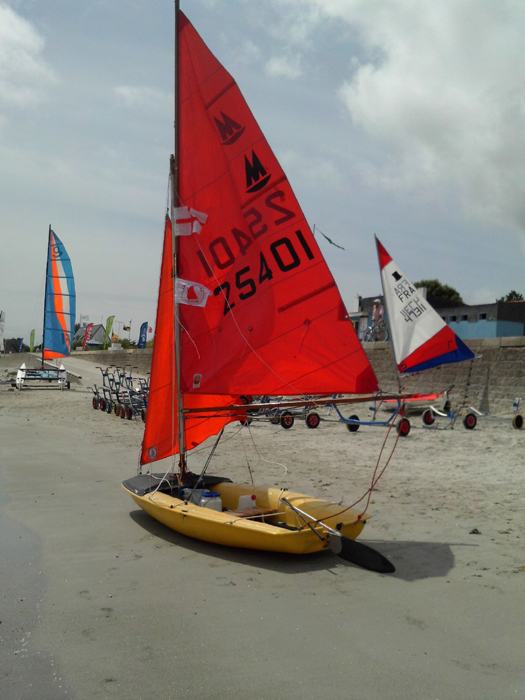
Here is my boat, familiar to those who look at this blog. I flew the Banner of St George and the little flag we were given at the Route du Sable. I actually met a few sailors from that event!

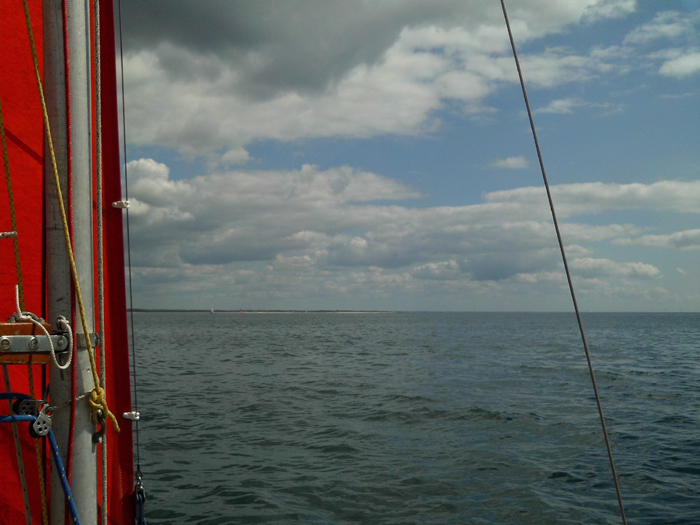
sophiaI did not photograph my first outing, which was to the Glénans Archipelago where I had done a sailing course back in 2009. I sailed 9 nautical miles each way, two and a half hours to get there and four back in a rather disappointing wind. The navigation was simple, by hand bearing compass and dead reckoning.

The following outings were less ambitious. There were some lovely inland waters around Loctudy.

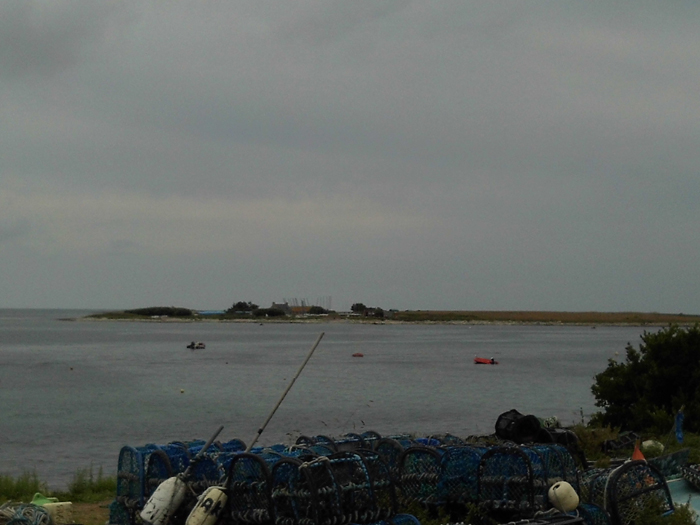
ansesThis one looks to the other side of the port of Loctudy.

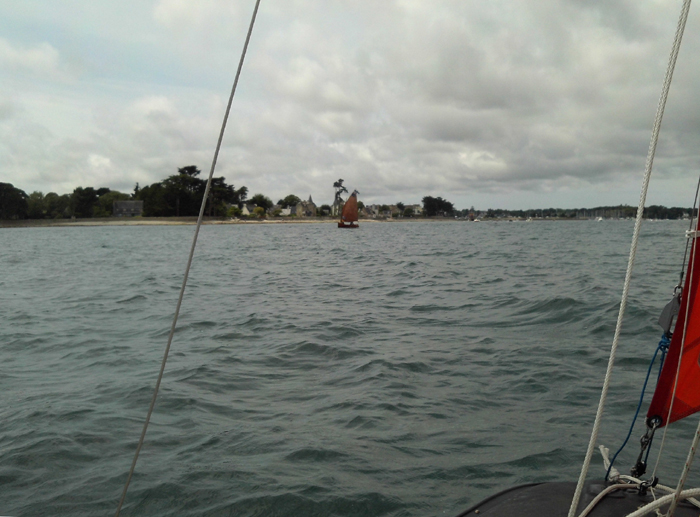
port-loctudyLooking across the bay of Benoudet towards the point of Beg Meil.

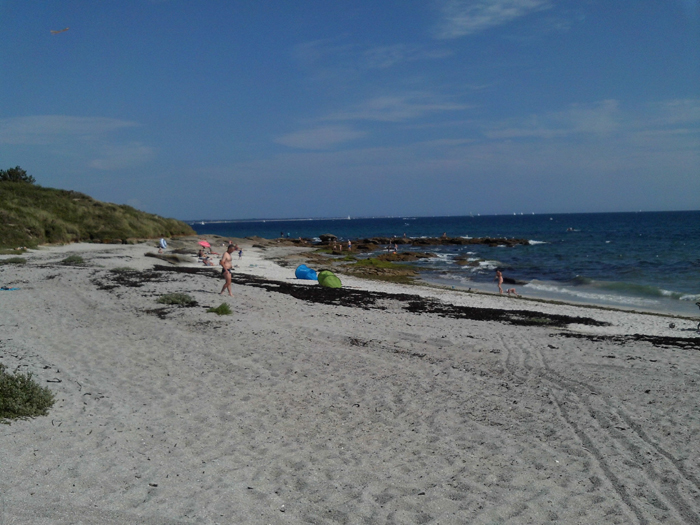
beg-meil-from-boatBeg Meil has a special meaning for me, since my first time there and in France was in August 1966 with my family. The granite and silica sand on the beach is white and the water is transparent.

beg-meilWe treated ourselves to a trip to the Glénans on an old lug rig, on which we could help with manoeuvres. The skipper was a laid-back young long-haired fellow called Pierre, and he and I sympathised with each other. There was very little wind that day. We motored on the starboard tack and tried to sail on a port tack, but little progress was made. We furled the sails and continued under power.

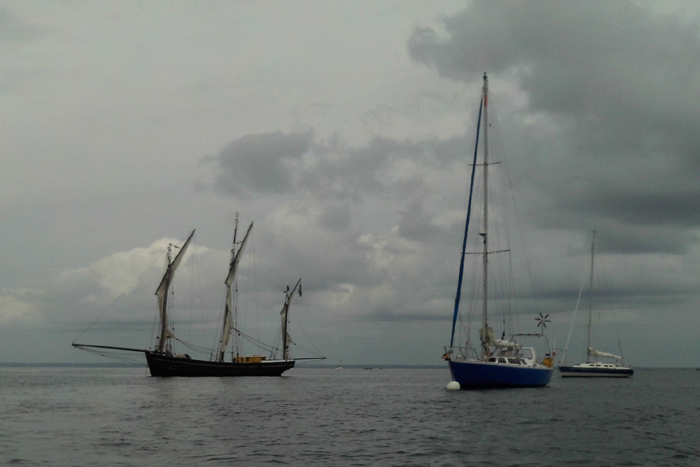
old-lug-rigThere was the vessel at anchor (to the left of the modern yacht) as we were taken off by rubber dinghy.

anchoredWe spent a couple of hours on the Ile Saint-Nicolas, which we shared with other noisy tourists. There was none of the peace I experienced on Drennec (taken from Saint Nicolas). Still, I had sailed there a couple of days before, not what most tourists do! We were taken back to the mainland by motor launch.

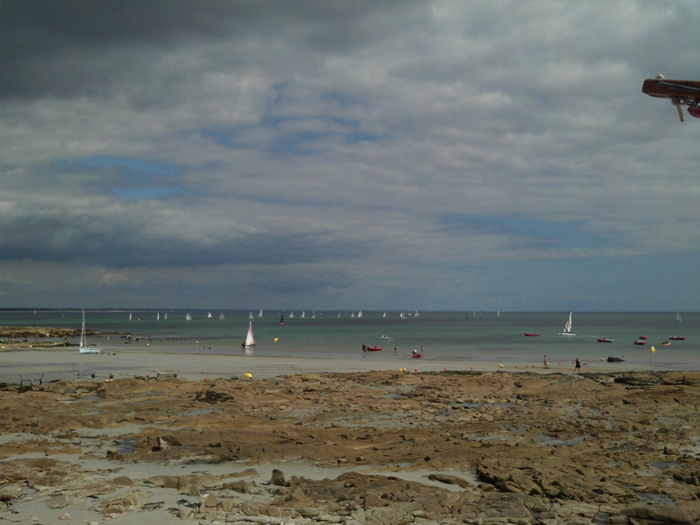
drenecThis final one is of our beach at Loctudy, at low tide and a good number of boats on the water. The weather most of the time was mediocre, and there is a saying in Brittany. The weather is fair every day, several times a day!

loctudy-beach

Posted in Uncategorized | Tagged , | 4 Comments

The Churches the Baroque Forgot

I am just back from Brittany and a fine two-week holiday of sailing and visiting. One thing we found surprising here in west Brittany is the good condition of the many fine medieval churches and a relative absence of baroque “accretions”. Perhaps my title is a little misleading because the first photo of this series, the Lady Chapel of Pont l’Abbé, is full seventeenth-century baroque. This church is full of surprises as many in this part of the country are. Perhaps Brittany remained poorer than other parts of France, and things happened more gradually. The architecture of the Breton medieval church is very “English” with the squared-off east wall and great window over the altar. In most parts of France, the east end of a church is finished off with an apse.

This little account with photos is incomplete and shortened, as we visited many more churches and chapels. One particularity of Brittany churches is the enclos, the close like round many English churches and cathedrals. It is a piece of land on which the church stands and surrounded by a wall. In many places, the wall has gaps and low wall over which a person can stride like a stile between two fields. This was originally to keep animals out of the church.

p_labbe_baroque_altar

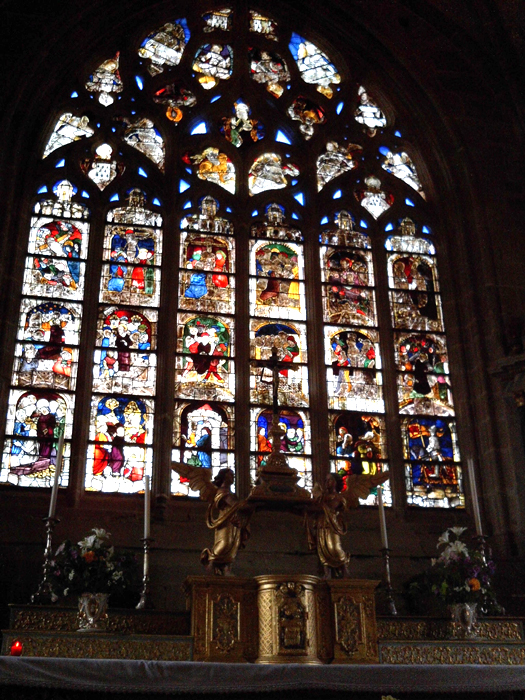
Here is the east window of Pont l’Abbé over a modest baroque altar, crying out for riddle posts and curtains.

p_labbe_east_window

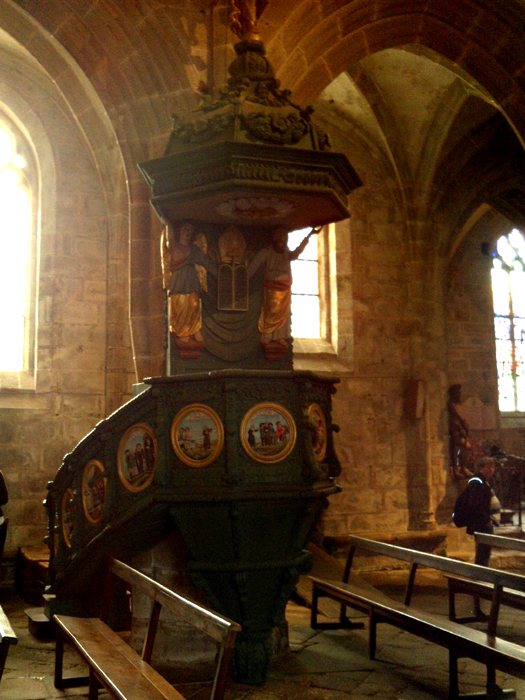
The pulpit is a complete catechism in carved wood, the quintessence of the Counter Reformation.

pulpit

The next day, we went to Quimper and visited the cathedral, heavily restored in the nineteenth century. I rather like the baldachino over the high altar which fits in well with the late gothic architecture. It is a pity to see a choir full of chairs and the ubiquitous table in front of the altar for facing-the-people celebrations.

quimper_choir

A close-up of the high altar.

quimper_high_altar

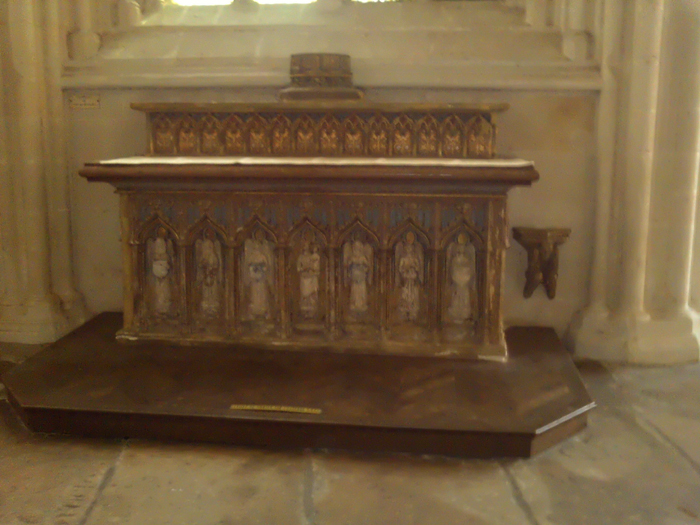
Most of the side altars were typical of the French nineteenth century, geared to particular devotions, but this one looks fairly fifteenth-century-ish.

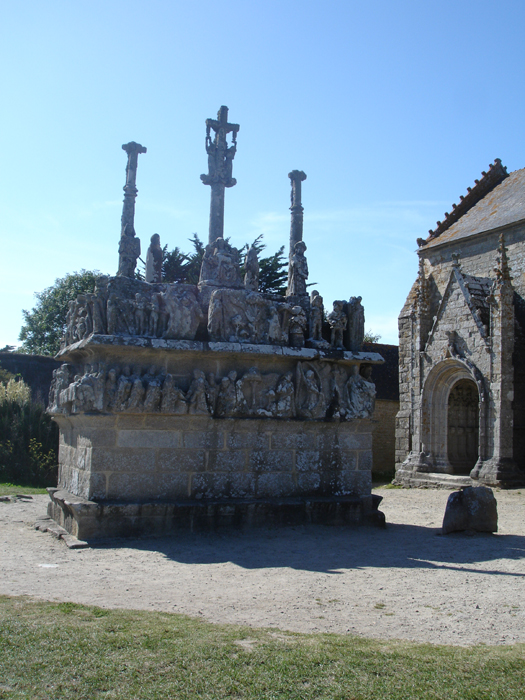
quimper_side_altarSome days later, we visited a couple of extraordinary churches. One was Notre-Dame de Tronoën on the coast. It has one of the most sumptuous calvaries of Brittany shown here.

tronoen01

Bell towers in Brittany have to be small with many gaps to allow the heavy west winds from the North Atlantic to pass. Many of these these bell towers are supported by the chancel arch.

tronoen02

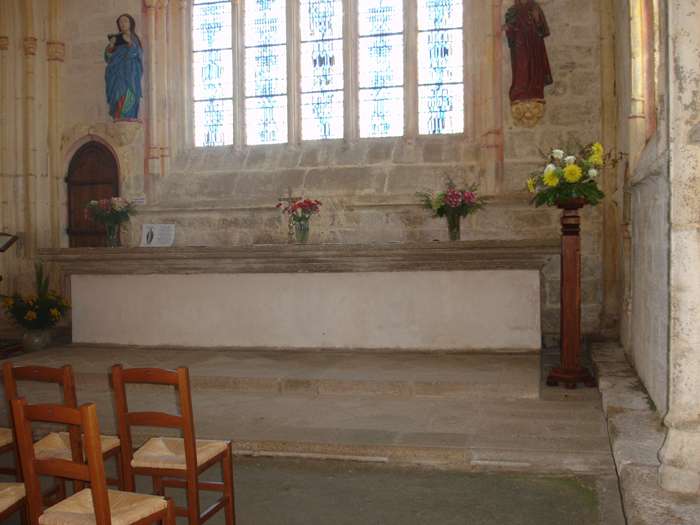
This enormous altar reminded me of Coventry Cathedral. It was not originally an altar but a kind of offering table situated outside the church. It is too long for this sanctuary and is out of all proportion.

tronoen_high_altar

This is the piscina as found in most medieval churches, a shelf for the cruets and the hole through which water flows directly into the earth.

tronoen_piscina

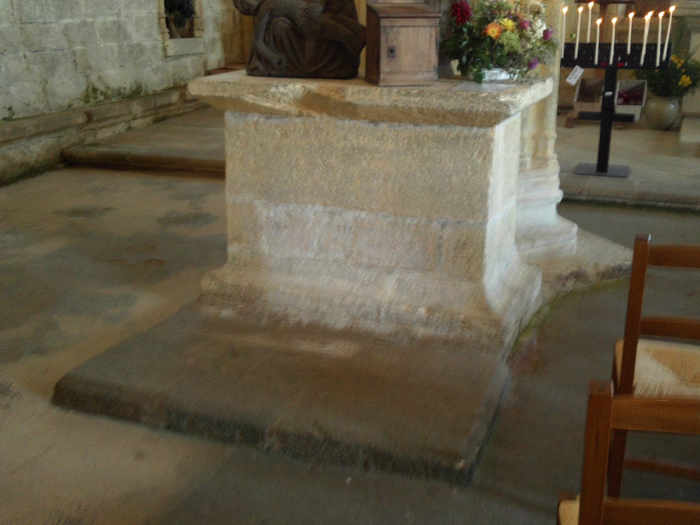
This side altar looks medieval, and unfortunately had a big chunk broken from it at some time.

tronoen_side_altar

Posted in Uncategorized | Tagged | 1 Comment

Don’t Proselytize

I follow on from yesterday’s article with some stuff that is being sent out by e-mail. In particular, there is a link to a posting by the Young Fogey, our odd friend by the name of John Beeler – who estimates that I have no vocation to the priesthood because I don’t think exactly like he does (perhaps my growing hair has something to do with it, infatuated as he is with the 1950’s, the short back ‘n’ sides and Brylcreem gunk). I hardly idolise the reign of George III, but I do approve of the gentlemen’s hairstyles of the period (no wig)!

Anyway here is his article Cafeteria Catholicism of the right?

This article links to Fr Longenecker’s article The Rise of Conservative Cafeteria Catholicism. I won’t comment on this one, but a second article is doing the rounds by e-mail – Is Proselytism Solemn Nonsense?

Pope Francis, it appears, eschews proselytism – and thus directly opposes one of the prime tenets of conservative Roman Catholicism. We come back to the Kripkean dogmatism I discussed yesterday evening, inspired by Fr Jonathan Munn’s article, and the stages of bringing about a totalitarian theocracy not far removed from what some of the more fanatical Islamists want.

I have no interest in defending the Pope because he is Pope, or for any pretended infallibility, but for once I agree with him:

Don’t proselytize; respect others’ beliefs. We can inspire others through witness so that one grows together in communicating. But the worst thing of all is religious proselytism, which paralyzes: ‘I am talking with you in order to persuade you,’ No. Each person dialogues, starting with his and her own identity. The church grows by attraction, not proselytizing.

I go a little further and observe that the more Christians proselytise, the more the credibility of their message will go down in the eyes of the more critical and scientific among us. I haven’t taken much interest in Pope Francis since he was elected in March 2013, and I have by and large felt rather apathetic. I pray for him at Mass, but that’s as far as it goes. I generally find Jesuits as boring as watching paint dry!

What about the command from Christ to preach the Gospel to the world? It is a difficult one, but what is sure that we have forgotten how to communicate by means other than the spoken word. Beauty is out of the window, as in the days when the Puritans were smashing stained glass, organs and altars. The conservatives know only verbal persuasion – as a prelude to compulsion once they get the political means to do so. Pinochet and Franco were quite useful for that kind of thing. Not a few Catholic Monsignori ended their lives on the gallows in 1946 for crimes against humanity!

I agree with the Pontiff as he prefers attracting people to the Church rather than forcing them, albeit through modern marketing and hard selling methods. One great mistake was getting rid of the Church’s liturgical tradition. Another was to alienate art, music and culture – so that all that is left is the spoken word.

I don’t know what the Pope is up to, not that I really care, but what he says here makes sense. At the same time, what is he doing to open up non-verbal means of communication to draw people to Christ and God’s love? There, I am less convinced.

The Church and Diocese to which I belong are not in communion with Rome, but we are in communion with the wider Catholic Church. We do care about Christ’s commandment and the duty of the Church to build and civilise, but also how we do it. Like most other Christians, we are on the defensive and fighting for survival in the face of justified criticism.

The essential of my experience in Europe simplifies things somewhat. Christianity, and monotheism in general, has discredited itself through fanaticism and the desire to impose itself as the only truth. Because of this and its own incoherence, it is no longer possible to give the world Christ’s message without all the baggage that discredits the three monotheist religions. I used to speculate as a seminarian that it was almost as if the Redemption was undone, that the Good News was no more, and the “tea break” was over. I fully understand the reaction of the post World War II period when priests were ashamed of their bishops who had collaborated with the Nazi occupation. They sought to make amends by sharing the lives of ordinary working men and removing the symbols of privilege like the cassock and Roman hat. I sympathise with them. Many of them turned to politics, but a few remained in the “workshop of Nazareth”.

I see many parallels between our time and the end of the eighteenth century, except for the executive suits of politicians and bankers replacing the powdered wigs of the guillotined aristocracy. I return to Berdyaev and his vision of a long and hard dark night during which Christians must expiate and suffer. Even worse than martyrdom is the feeling of helplessness, absence of meaning and purpose and the foreboding of a world without a future history. We have work to do on the virtue of Hope!

Let us be sincere with ourselves. We have ourselves to evangelise before we can start on other people, lest the other sees our hypocrisy. We yet have a timber yard to take out of our eyes!

Posted in Uncategorized | Tagged , , , , | 17 Comments

The Three K’s

Fr Jonathan Munn of our Diocese has just written Katholicism, Kripkean Dogmatism and ExKommunication. It is almost a case of telepathy as I was so tempted to react to a recent sanctimonious posting by Fr Zuhlsdorf on excommunication and hell. Indeed, it is the ultimate device for exercising totalitarian control over whole populations. I left Fr Z be, since nothing would change anything.

This article is not about the Klu Klux Klan but about other political and religious ideologies. The use of three K’s is, all the same, no coincidence. I always have doubts about those with absolute certitudes about anything. I grew up a sceptic, and faith has always come to me with difficulty. I have come to live with my doubts, and I seek by means of both reason and prayer to deepen my faith in God and Christ. How can a priest have doubts and set the example for his flock? It is perhaps exactly there that our gaps in perception of truth  enable us to have compassion, empathy and tolerance to others who also doubt – or who have even rejected belief altogether.

Tolerance and truth? The old subject comes up again and again, and we are confronted by the heart-rending news from the Middle-East about genocide and persecution against Christians in Iraq and Syria, and the continuing war between Israelis and Palestinians. I was recently upbraided by a young man on account of my devotion to tolerance – who himself has written something that might almost have come from Mein Kampf had it been written in German! Passons…

Can there be a reconciliation between faith and reason, truth and tolerance? It is unfortunate that we live the see the fruits of the tree – empty rotting churches and the continuing narrative of secularism and atheism. Perhaps truth and faith need to be placed at a level above human understanding. We cannot reject truth, but we still have to learn to tolerate and love so that someone might perceive Christ in us, and therefore experience truth at first hand.

This way of thinking does pose problems for us Christians who do insist on certain principles and doctrinal teachings.

Fr Munn comes up with a lot of good sense and fidelity to Catholic Tradition as our guide in both dogmatic and moral teachings. We may have to tolerate a church that ordains women, even though we as Anglican Catholics are viscerally opposed for doctrinal and sacramental reasons. We can’t say they are right, but we can refrain from hating them.

Kripkean dogmatism is an interesting notion. There are some interesting links on the subject:

– among many other obtained by using search engines.

Christianity seems simply to be going through a crisis, not of faith or authority, but credibility in the face of sincere thought and criticism. How can we answer that question?

Posted in Uncategorized | Tagged , , , | 2 Comments

And the House was filled with smoke!

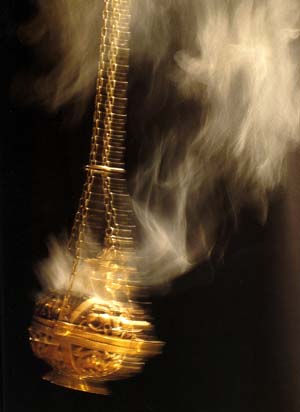
thuribleMy statistics page indicates that someone was looking for an anthem containing the words “And the house was filled with smoke”, which I believe come from the Prophet Isaiah. It is none other than John Stainer’s I saw the Lord. Truly, it is the quintessence of the Victorian Anglo-Catholic anthem, evoking ideas of an over-zealous thurifer overdoing things a little during Benediction.

This anthem is traditionally sung on Trinity Sunday, as the Church contemplates God in his transcendence and mystery. None can know God except through revelation and the experience of divine immanence. The Old Testament breathes that fear of God, which is the beginning of wisdom. Thus is salvation history, from fear of the Almighty to a Father / son relationship and love. God always revealed himself through the veil of smoke, or the veil of the Temple. This is the significance of our using veils of different kinds in the liturgy.

This is the only decent recording I could find on Youtube. I prefer St John’s College Cambridge, but you can’t have everything!

PS. I forgot I had already done an article on this anthem – And the House was Filled with Smoke. There was a good version by Westminster Abbey choir, but it has been deleted from Youtube for copyright reasons.

Posted in Uncategorized | Tagged , , , | Leave a comment

Hanging Pyx Revisited

Until now, I was unaware of an article on the subject of the hanging pyx, nearly two years old, but which very kindly mentions my humble chapel in France – The Hanging Pyx – a part of the Anglican patrimony. There are a few of them outside England, but I don’t know of any of them being used. After all, opening and locking a tabernacle door is easier than hauling a pyx up and down like rigging on a boat!

I wrote an article about my own hanging pyx and how I made it. They are not found in shops, so you have to adapt something that exists (perhaps a lantern) or make it yourself.

Certainly, it is not very practical if you give Communion to the faithful from the tabernacle. I prefer to give people Communion with hosts consecrated at the Mass. I never have many faithful, so that is very easy for me. The hanging pyx is more of a way of honouring the Blessed Sacrament by “heaving it high”and it being the centre of attention above the altar. It also clears precious space on the altar.

It also represents something of the “northern” tradition as found in England and many other places in Europe until the eve of the Council of Trent.

Posted in Uncategorized | Tagged , , | 8 Comments

Organ Tuning

The fiancée of a friend of mine was giving a concert this evening in the church of Saint-Pierre-en-Port on the Normandy coast, and the man playing the organ accompaniment phoned me to ask me to come and tune the organ, since the reeds were off. I went and did the job, and he held the notes for me. On the whole, the cone-tuned labial stops were in tune, apart from the odd note in the treble. The stopped flutes needed some attention, and particularly the 16-foot cromorne and the trumpet on the great. French reeds are very sensitive and unstable, so they require a lot of care and reserve.

Access for the tuner was very cramped and I got very hot and sweaty. The whole organ was contained in a mid nineteenth century case built on classical lines. I found the mechanism nicely designed and fairly well balanced, as often found in French instruments of the Cavaillé-Coll period. Unfortunately, this romantic instrument has suffered from a poor-quality re-do in the 1970’s to “baroque-ise” it, adding upperwork and removing many of the foundation stops. The swell shutters had been removed and a stop crudely added to each manual. That’s why I was particularly cramped on the passage board.

Tuning an organ this time of year reminded me of installing an old English organ (from the Methodist Church in Kettering, Northamptonshire) in the church of Bouloire near Le Mans.

bouloire_organI have already written about the brave priest Fr Pecha, and the fact of this organ installation making us become friends until his death in 2002. There too, I did most of the work in July 1992 (I was a subdeacon at the time) after we broke up from the Trinity term at seminary. The work continued into August with final regulation and two tunings before the inauguration on the Feast of the Assumption. Like today, it was very hot in the swell box with the cable lamp, reed knife and cones!

I didn’t stay very long with Harrison’s of Durham back in 1976, where I was an apprentice on leaving school, but I learned to tune organs and do repairs “in the field”. I also learned how to dismantle an organ and follow such a method as would allow me to transport all the parts in a vehicle and put it all back together in the new location. Unfortunately, in the works, I only had a few weeks in the general workshop (where I made the bellows frame for the tuba of Liverpool Cathedral), but no experience with design of new instruments, pipe-making and voicing. It is an extremely diversified trade, mostly fine woodwork but also electrical installation and many other things to learn. Many things go wrong with organs as with cars or any other complex machinery. I worked with a tuner called Tom Rennie who was very short-tempered, but an excellent tuner who taught me to lay a scale by ear and fine-tune the whole “job”. I admire craftsmen with a lifetime’s experience and who love their work.

I have moved a number of organs from England to the continent. Most of the churches I worked for looked after me well, gave me free lodgings and paid me in cash. Unfortunately, I had a bad experience with a Polish priest in France, who only paid the up-front amount needed to hire the vehicle and get the organ from England – and failed to pay me the rest. Even that amount was hard to get. He wanted me to advance the costs of doing the job, which he would not have paid unless I had told him that I don’t budge without funding. Churchmen can be just as untrustworthy as anyone else! Sad, but true. That job also keeps one away from home for weeks and is hardly compatible with priestly life. That is why I have not done any organ work since early 2001. There’s quite a lot at stake.

Technical translating is much “safer”, though less adventurous…

Posted in Uncategorized | 2 Comments

Gricigliano

I have just discovered this video:

More videos of this amazing seminary can be found here.

It certainly brings back memories of a very particular vision of Roman Catholicism with the old liturgy. The buildings are in better condition than when I was there (1990-1992) and the new chapel was then a wine-making workshop. The eighteenth-century chapel, hardly larger than my own, is still there and used for private masses. The video seems to be a special day when a choir was invited to sing, and the seminarians turned out in their best finery. We didn’t wear blue when I was there and we weren’t called Monsieur le Chanoine. The superiors and priests on the teaching staff have got older as we all have. It creates strange feelings!

I used to feel quite bitter about how things turned out for me. I just realise that I should never have gone there. I made the mistake, not they. They did their job and continue to do so. Roman Catholicism is something very strange to an Anglican, even one who “went over” in the best of faith. It  is closer to our tradition and sensitivity than Orthodoxy, but is difficult, in its “restored” post-Tridentine version, to assimilate. There is always the authoritarian political model in the background, however much Amaretto and champagne we drank on the high days! We see some images of the Roman rite in its baroque glory. My own tastes have changed back to Anglican aesthetics and medieval liturgical rites, which more or less accounts for why I opted for Sarum.

For me it was all a very long time ago and emotions fade. I am as alienated emotionally as intellectually. Gricigliano made a big impression on me. I was not “their type” and my spirituality lay elsewhere. Readers can interpret this as they wish. I found my vocation in the Anglican Catholic Church, but the scars are still sensitive. It seemed like a dream that came and went in my life.

Pray for those good men, as they seem to be producing priests with culture and aesthetic sensitivity. They have stayed the course and are still there, enjoying the favours of Rome and the Archdiocese of Florence. They seem to have plenty of money, and above all plenty of panache.

It looks impressive, but I lived the daily reality – the good and the bad. I also remember the names of many those from the early days who are no longer with the Institute, sloughed off as they were no longer needed. The subject is best left in silence and prayer.

Posted in Uncategorized | Tagged , | 3 Comments

ISIS Crucifies Christians

As we approach the centenary of World War I, we are confronted by the full horror of the persecution of Christians by ISIS Muslims in Syria and Iraq.

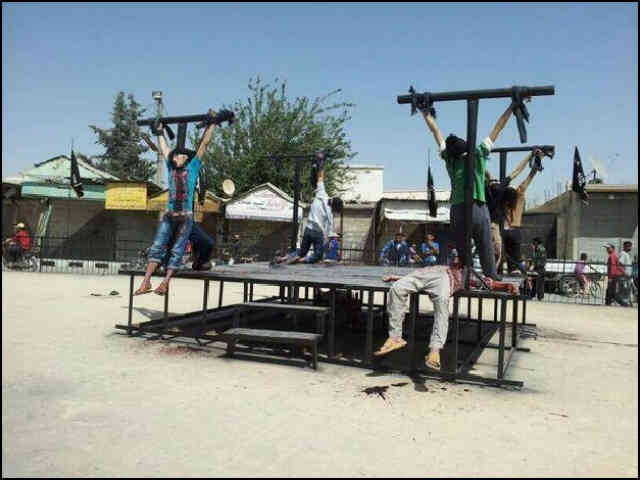
christians-crucified-syriaThe more conservative newspapers and websites give the story. The story goes that the crucified were killed for being too moderate, but others say that they were former Muslims converted to Christianity. The bodies are left for three days. One man out of nine survived his crucifixion. He probably got his throat cut.

There’s nothing I can do but pray for the victims and the barbarians who perpetrated this horror. I can only hope that the west will respond with military force and bring those men to trial. Poetic justice would see those men choking at the end of ropes in a prison gym in some devastated city like Von Ribbentrop and Streicher. Would such a course of action save the world any more now than in 1946? Evil only feeds from evil. I suspect that only war against ISIS and countries who knowingly accept its tyranny will be an adequate response to exorcise this particular demon. As so the twentieth century continues!

I am one of those who believe that Islam comes in as many shades and types as Christianity, from fundamentalism to strict conservative, from liberal to mystical. We can believe in the truth of Christianity and the errors of Islam, but we are called to respect those who do not commit violence or atrocities. That is a subject that the “convert” mentality and liberals will not agree upon. I know too little about Islam, but I have read some things which I don’t need to repeat here. It is not a matter of race or creed, but when they start killing, plundering and raping like the Nazis did, it is a different matter. We condemn them for what they do, not for what they are.

May the blood of these martyrs be upon those who can do something – but who remain silent like in the 1930’s!

Posted in Uncategorized | Tagged , , | 17 Comments

Returning to Brittany

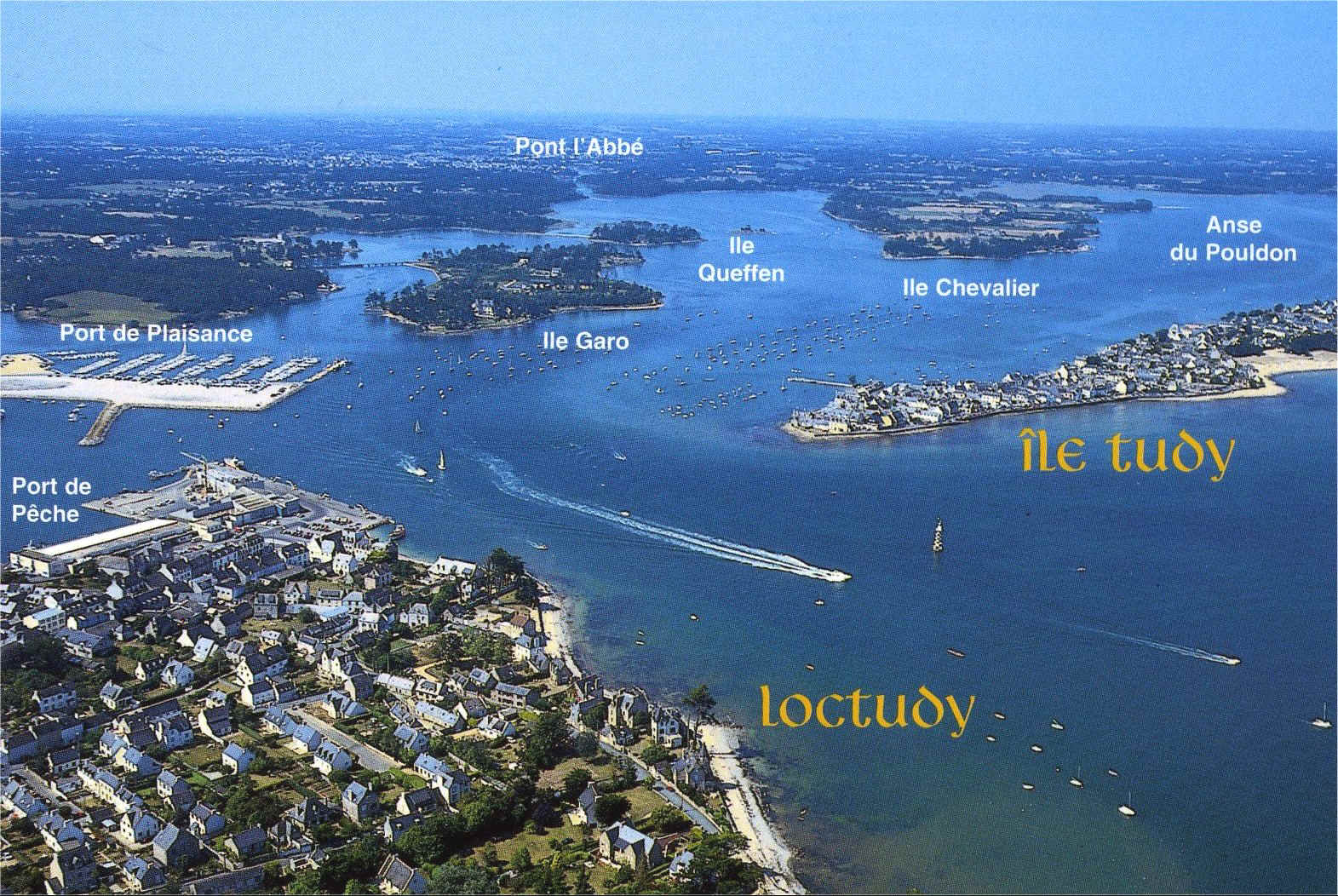
I am returning to Brittany in just over a week, but this time with my wife for our summer holiday. We will be going to Loctudy, shown on the map by a white circle, and in the aerial photo.

loctudy-maploctudy_aerienneIt is not very far from where I went with my boat to the Route du Sable at Chateaulin and downstream towards the Rade de Brest. We will be only 12 nautical miles from the Glénans Archipelago where I went in 2009 for the sailing experience of my life. The sand is white and the water is transparent. It is a little paradise in summer that attracts sailors and holidaymakers. We will be at a stone’s throw from the place my family and I went the first time we ever came to France in 1966 – Beg Meil.

beg-meil-beachI am studying the feasibility of sailing to the Glénans, but 12 nautical miles of open sea is daunting in view of tidal currents and drift errors. I will probably not attempt it this year without a GPS set to compensate for drift and current. A compass and chart alone are not enough, though I’m not too bad at coastal navigation with a Portland plotter and sighting compass. I’ll study it all the same, especially if the visibility is perfect and the tidal current is low. If it really is impossible or too dangerous by sail (in a boat as small as mine), my wife and I could go by motor launch. Those islands will bring back some lovely memories.

Inshore on the mainland, there will be many deep bays (anses) to explore and islands. I could also go some way up the river towards Quimper. There will also be non-sailing days when my wife and I will explore historical monuments and places of natural beauty.

We will be camping in the tent and enjoying the good life – but this year, we only have 2 weeks!

Posted in Uncategorized | Tagged , , | 2 Comments