English Use and Sarum Use

In the nineteenth century, most efforts in the direction of a Sarum revival were in the hands of Anglican scholars, and in a clear perspective of a more Catholic celebration of the Eucharist and Offices according to the 1662 Prayer Book. Uniformity in the Church of England was strict, and a priest could go to prison in those days if he overstepped the mark! There are doubtless some Anglicans who would like to return to that degree of uniformity, but that is another subject. Thus, the study of the Sarum Use had the objective of constructing a way or method of using the Prayer Book as an English Use.

This English Use was promoted most energetically by Percy Dearmer, who worked on the basis of scholars like Palmer and Walter Frere. Many such works were published by the Henry Bradshaw Society, the Plainsong & Medieval Music Society and the Alcuin Club. The guiding idea through this work was enhancing the Prayer Book rites, with something home-grown from before the Reformation, rather than importing post-Tridentine Roman customs as was done by certain Anglicans. Thus were born two kinds of Anglo-Catholic churchmanship, defined on whether they were English or Roman. Dearmer popularised many of these notions in the Parson’s Handbook, which involved refurnishing churches with the notion of medieval aesthetics held by proponents of the then contemporary Arts and Crafts movement. In terms of furnishing, it is hard to find a town in England in which not at least one church is furnished in this way. Many cathedrals have high altars with dossals, riddels and frontals in this fashion. Carlisle is quite low-church, but is furnished in this way. York has a very long altar with riddel posts, but with six candlesticks from the Milner-White era.

One criticism levelled against the English Use, as against the idea of complete revival of the Sarum Use such as I advocate, is its being antiquarian, romanticised, selective and not a true continuation of tradition. I reply that the Roman use of c. 1920 is no longer in general use, but is the result of the efforts of dissident traditionalists. The current style is brutalist architecture, the altar facing the people and modern popular music. Indeed, much of modern Anglo-Catholicism has gone that way, and the logic is perfectly understandable. On the other hand, archaeologism can be taken to the extreme of reviving some rite from the third century. Why not the exact Jewish rite of the Last Supper? These are good questions, and we are unlikely to arrive at a response on which everyone will agree.

The raison d’être of the so-called English Use is somewhat moot, as liturgical usage has become much more flexible – for better or for worse – in establishment Anglicanism and the continuing churches. In the ACC, we essentially use the Benedict XV revision of the Roman Missal with accommodation made for the Prayer Book cycle of Epistles, Gospels and Collects, translated into Prayer Book English and baptised the Anglican Missal. Sarum is tolerated and contained. Most of our churches are definitely Roman Use. I do not seek to change a usage with which most of our clergy and faithful are happy. I still use Roman vestments, because they are what I have and I don’t have the money to discard them and make gothic ones. I use an early nineteenth century baroque French chalice, the one given to me for my ordination. Sarum means something more than mere trappings.

An important piece of work from the Dearer era for studying the English Use concept is English or Roman Use? by E. G. P. Wyatt. This distinction between English Use and Sarum Use is very important, though I sympathise with the former in the situation of those priests and parishes in my Church using the Prayer Book according to the customary rules.

Some critics on the internet suggest trashing Sarum altogether. Why? There is still a fascination with the old pre-Reformation ways of England – like in eighteenth-century France. There were the nineteenth-century scholars seeking to improve the liturgy of the Established Church within the limits of the law, and then even some English Roman Catholics of a more “Gallican” bent showed interest. Fr Sean Finegan’s Sarum masses at Merton College chapel attracted good crowds of students and Latin Mass Society people. Going by the videos, it seemed to be for more than idle curiosity or acting out a pageant. It looks quite similar to a Tridentine Mass – only those who know something about the liturgy can tell the difference – and people were clearly praying at it. If it’s so close to the classical Roman liturgy, why bother?

I am an Anglican (belonging as a priest to the ACC), but I have been fascinated with the idea of our tradition for longer than I spent in the Roman Catholic Church as a layman and a cleric. This was confirmed on knowing that there were other “archaic” traditions like the Ambrosian, Lyons, Paris, Rouen, Dominican and other Latin rites, without even thinking of the oriental rites. The principle of liturgical diversity is even enshrined in the constitution Sacrosanctum Concilium of Vatican II, even though it has been curtailed in practice. The use of some of those rites, even the Dominican use, was broken and largely forgotten. Now it is revived, as the site Dominican Liturgy testifies, even though most Dominican priests use the Novus Ordo. There is an underlying nostalgia for Sarum, which is not the case, for example, for some of the dinosaur bones from the second or third centuries needing complete “reconstruction”. Sarum is completely documented, and reference to the Dominican use is helpful in clearing up “difficult” or unclear rubrics. There is an enormous difference between reviving a developed rite and the kind of archaeologism that inspired the Jansenists in the eighteenth century or the “litniks” of the 1960’s (actually as early as the 1920’s).

Sarum is not fundamentally English, but French. Usages in England in the middle ages were similar to France in the eighteenth century, the only difference being the baroque trappings this side of the Channel. Normandy gives a good idea of how Sarum would have evolved in England had there been no Reformation. The general spirit is looser and less of a legalistic straitjacket than the “bobbing and gawping” of the Counter-Reformation Roman liturgy. That being said, Sarum rubrics were quite precise in most cases. There is little room for the arbitrary.

Many arguments by Anglicans about the liturgy centre upon the trappings, which is unfortunate. Trappings are important and good, but not in isolation – rather as part of a whole. I have little experience with some of the excesses of London and South Coast “spikery”. The old joke is the church notice board advertising Matings, Snug Eucharist, Evensnog and Solemn Exposition of the Vicar! I was assistant organist at St Albans Holborn in the late 1970’s, and the liturgy was relatively simplified, an eastward-facing Roman Novus Ordo with various Tridentine bits and pieces. In the early twentieth century, I can understand some wanting a more sober and “monastic” style.

We need to emancipate Sarum from its association with the English Use movement and compare it with the general diversity of western liturgies. Four riddels posts do not make a Sarum liturgy as one waspish priest wrote some years ago. It can be celebrated with the same trappings as a Tridentine liturgy, in a church like Saint Sulpice in Paris, or in a modern building from the early 1960’s when the basic plan was still more or less traditional. I did out my chapel in Arts and Crafts “medieval English” style, since I worked from a tabula rasa. This is just to say that the use is not defined by the trappings.

It may not be a very strong argument for restoring Sarum, but the experience of having celebrated it for nearly six years does not leave me indifferent. My first reaction was the “feel” of not doing all the genuflections like in the Roman rite, but making profound bows – and not so many of them. Does this imply less devotion to the Blessed Sacrament, a criticism levelled by traditionalists at the Novus Ordo because it has fewer genuflections? I don’t think so, because I’m not just doing my own thing, but following what is written for that particular rite. I invent nothing. That is the joy of following a tradition, which comes back to life as soon as someone decides to cut out the talk and get on and do it.

The English Use movement did some wonderful work in its day, and we should not scoff at it. The literature needs to be read, and who knows, things could work the other way round. Instead of having Sarum support the Prayer Book, the academic monuments of the English Use movement can be used to help revive the Sarum Use as a complete liturgical tradition. I would not have been surprised if Dearmer would not have been inclined the same way had he not felt so constrained by Church of England law.


Posted in Uncategorized | Tagged , | 1 Comment

Quo vadis?

Whither goest thou?” – or in modern English – Where are you going? It is a question we have to ask of ourselves. We can be interested in all sorts of things, but where is it going? What does it all mean? This is something I thought of when I was getting enthusiastic about a Sarum gathering and a small association to organise it and keep it on the rails.

Humanly, there seems to be little hope for any kind of religion that isn’t tied to competing ideologies and social manipulation. I make one exception: monastic life which can only be an option for an extremely small elite of men and women of total commitment. People other than monks don’t seem to be able to live in communities, at least not for very long. Family life very quickly becomes dominated by consumerism, materialism and all the banalities of life. I have no easy or simple answers, simply that I cannot bear the thought of our way of life going down the endless spiral to dystopia and totalitarianism, a new Dark Age.

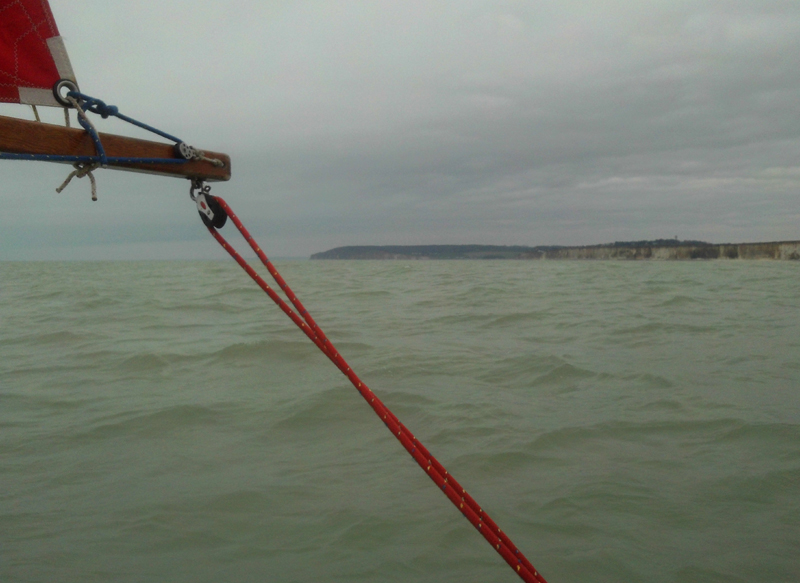
Discussing liturgical rites can hardly be the panacea for such a vast picture, but there is some meaning – perhaps like my tiny boat with its red sails on the sea without another boat within fifty miles. The sea is indifferent. Whether we live or die, it makes no difference. We are not indifferent to the sea, and we experience it. It is just the same with the Leviathan of society that is way past “evangelising” and our own experience of people trying to live out some spiritual idea. Even the vast organisation of the Roman Catholic Church can no longer address post-modernity. At the level of individuals and small groups, we can, by living another life discreetly and intimately.

What do we do? Shake our fists at Leviathan? We might as well curse the wind and sea as they tear the sails to shreds and drive what is left of the ship onto the rocks. I sometimes see this attitude in blogs. Christ responded to everything with unconditional love, even when he went through the money-changers’ stalls like a cyclone. Love is something we have to learn. It doesn’t take away our capacity to be angry or to react in a manly way, but it does make it possible for us to keep our souls. I went through agony in 2011 and 2012 as my canonical situation as a priest collapsed, both from the point of view of The Illusion and those who remained in the TAC. Reading old articles reminds me of these questions.

Since those days, I have been accepted into the clergy of the Anglican Catholic Church’s English diocese and my situation has become stable. The Mission of the Church has always been vital to my vocation as a priest. A priest without a bishop can function in “extraordinary” circumstances, but it is abnormal. It is the minimum. Many priests have no parish ministry, but all are aware of this essential relationship with the Church. One has to beware of this healthy instinct, because it can induce a priest to want to become “his own bishop” – and we see how far it goes in certain cases.

Where are we going? It is always the same question. I am a priest of a conservative Church body, but at the same time, we have learned many lessons from the recent history of Continuing Anglicanism. I have already mentioned that the Episcopate of the ACC seems to have reformed itself to the extent of having achieved stability and credibility. I don’t know about others, but I no longer see the drama of Christianity in terms of liberalism and conservatism. Whilst I have absolutely no sympathy for the vacuous platitudes of most “establishment” bishops and the gay lobby, I feel quite alienated by the gung-ho attitude of some conservatives with their “The only thing that stops a bad guy with a gun is a good guy with a gun“.

Our answer has to be something other than constantly moaning about the mores of the modern world, about the “great apostasy” and so forth. We have other things to do.

There is something I have already hinted when discussing the philosophy of the Arts and Crafts movement of a hundred years ago. Benedict XVI once said something about a small Church of the future, something that is very badly understood as almost a form of Jansenism or Gnosticism. One thing is sure, that the “industrial” Church is finished. We are always grieved to see churches demolished, but it seems inevitable given the absolute apathy of people in their regard – until they read in the local newspaper that their local church is to be knocked down. It cruelly seems a part of the trajectory of history.

The Arts and Crafts movement proposed a simple and human-scaled way of going about things, whether designing furniture, building houses or in a philosophical way. Simplifying the liturgy and the clothes clerics wear may seem to be going along with the “progressive” and secularising agenda. A Sarum Mass I celebrate on my own is inevitably simpler than our High Mass at seminary back in the early 1990’s. Necessity prunes many things away. Even if I was given the use of my village church, I could not afford to maintain it. These are the realities.

There are many paradoxes these days. One is Father Guy Gilbert, the well-known longhair prêtre chez les loubards. A few years ago, he met Pope Benedict XVI and lamented the disappearance of Latin in the liturgy. There is a very genuine spirituality about this priest and a vision one doesn’t find in the bureaucrats. See also his official site if you read French. Many of the saints are to be admired but not imitated. Perhaps Fr Gilbert has more insight about the situation of Christianity today than many conservatives! He is every bit the Goliard of our days.

It is in this spirit that I would like to promote the use of medieval liturgies from before the Church’s “industrial revolution” of the late sixteenth century and onwards. Materially, we can only expect to achieve very little, like the Pre-Raphaelites and Distributists in their own time. Christianity has never been renowned for worldly success. When it does, it is at the price of fidelity.

My message is hardly a new one, but I press on. It is my calling as a priest with a ministry of the word. My blog is my parish! Now, we need to take it a step further and get a few like-minded souls together for a few days.

For the rest – à la grâce du Bon Dieu!

Posted in Uncategorized | Tagged , | 3 Comments

Why a Sarum Gathering

I woke up this morning to a great clarity of thinking about my project of a Sarum Gathering. Once I get a core group established and we begin work on the academic side, thought will have to be given to the event itself. Nearer the time, I will ask for registrations, and based on numbers, I would need to find the most suitable venue in Normandy or southern England. Yes, the place is important even if Canadians and Americans have to do the travelling.

As has been suggested, it would be possible to put on a kind of summer university to study the Use of Sarum like the Ecclesiological Society. Somehow, there is a nagging thought: Sarum is not simply a monument of history that has no relevance to us other than as historians. Sarum to me represents a way of living the Catholic ideal that disappeared with the Reformation in England and with the Revolution in France. Traditional (as opposed to traditional-ist) Catholicism was destroyed by the absolute power of Roman Catholicism and Anglicanism, just as traditional farming, arts and crafts were annihilated by nineteenth century industry and capitalism. This theme brings me right back to the appeal of the Pre-Raphaelite Brotherhood, Arts and Crafts and William Morris. It hit me like a hammer over the head! The Counter-Reformation Church with its rubricism and legalism, and its hermeneutic of continuity in the post Vatican II mess, is to Catholicism what the Industrial Revolution was to traditional rural life. Truly, modern parishes have, at least to me, the appeal of the dark satanic mills of William Blake. This gave me the key to the spirit I am trying to impart. It isn’t about a rite, but about a Catholic life that has been swept away by mechanisation and legalism.

I believe we can approach religion in the same way those nineteenth-century movements approached human work and art. Western churches like Rome and the Church of England have sought to become relevant to man as he has been formed by capitalism and mechanisation. A healthy society is one in which man has his dignity as an artist and creator. Society is at a human level and persons mean something. The Church has not only alienated farmers and craftsmen, but even the factory workers for whom it claimed to seek relevance. As crafts people take pleasure in their work, there is a certain pleasure to be found in the Church’s liturgy and the life of the parish. Even in the penitential season of Lent, the beauty of the liturgy, like a fine claret, warms the heart of man.

I believe this is a way by which religion can once again become relevant to us all. As persons, we take our place in the liturgical action, and the Church as an impersonal machine loses its meaning with its notion of authority and law. Man finds security in small and intimate communities, and in this, something like the Anglican Catholic Church has more relevance than a modern Roman Catholic diocese and its bureaucracy.

I would certainly like to do further study on this essential keystone, which is eminently pastoral. Seen through this tint of glass, I believe that the rest of our studies of traditional Catholicism and its liturgy will take on a whole new value and relevance. I am also profoundly democratic in my ideas, like the movements that sought to bring great music out of the elitist concert halls to the streets, for example Les Six in Paris between the wars. The spirit of the Goliards seemed to have subsisted a little longer in France. It is still to be found here and there in Paris and the countryside. This aspect also needs to be developed.

I am in contact with some men who I believe share this spirit. They seem not to be addicted to “ecclesiastical authority” and being “in the true church” as some others might feel inclined to be. The Church is a mystery far above human institutions great and small. At one time, one could navigate “between the cracks” and live as human beings do with laws and “getting on” in society. It is a particularly European notion of law and society unlike England and Germany where people form perfectly straight queues and obey the law to the letter merely because it comes from authority.

I am under no illusion about the medieval Church. They had feudalism and the Inquisition, but they don’t seem to have be an all-invasive as modern bureaucracy and the management spirit.

We certainly need a high standard of scholarship to give us credibility and take the emphasis off clericalism and institutionalism. We also need to be Christians and live the liturgy, not as a museum or pageant, but our life-blood like monks in their communities – Nihil operi Dei praeponatur. If this kind of strength is found at the centre of this initiative, it would influence others who attend sessions and gatherings, such as the one we would like to get going in 2015. This is the spirit I am trying to promote, and which will give cohesion to our practical strategy for organising and financing something for August 2015.

This time, here on the blog, let’s forget about practical organisation and “sign me up”. We need to be working on ideas and philosophies, the fundamental inspiration, then the event might actually make a difference.

Posted in Uncategorized | Tagged , , , | 7 Comments

Early Season Sail

I took the boat out today at Veules les Roses, my usual haunt where I am on the board of the sailing club. Here, we launch boats from the shingle beach.

Conditions today were much calmer than the last time. I launched one and a half hours before high tide, of about medium current between the last spring tides and the neap tides in about a week’s time. The weather was overcast and the wind was blowing at about 6 to 7 knots with the occasional gust of about 10. The sea was slightly choppy.

I was able able to experiment with a new bilge pump, which seems to work quite efficiently, and makes a change from bailing. I began by heaving-to and photographing Veules.

sail20140307-01Veules les Roses is a seaside resort in the summer on the Normandy coast to the east of Saint Valéry en Caux. There is one fishing dory that is pulled out of the water each time by a heavy tractor. Though the sea front was quite heavily damaged in 1940, many lovely houses of the early twentieth century remain. It is a very lovely village, and I recommend it to anyone spending his holidays on the Normandy coast north of the Seine. This is the east part of the beach.

sail20140307-02Here is the west part of the beach with the slipway, the sailing club and the fishermen’s workshops where they gut and pack the fish. For the rest of the outing, I have kept just two photos.

sail20140307-03This one look east towards Varengeville and Dieppe. Sotteville is hardly discernible on the cliff top. Saint Aubin sur Mer is a little further, which boasts a fine summer holiday resort and beach.

sail20140307-04This photo is taken off Saint Aubin sur Mer, and looks towards the Sotteville headland. Veules les Roses is hidden behind the headland. The most distant headland is the fishing port of Saint Valéry en Caux.

It was a peaceful outing and gave me plenty of opportunity to think about the Sarum Gathering and the spirit I want to start it off with. I was most clear this morning as I awoke, but the sea also brought counsel on this Friday after Ash Wednesday.

Posted in Uncategorized | Tagged , | 4 Comments

Sarum Gathering

I have deleted the two postings related to a project for a gathering for the purpose of studying the Use of Sarum and the spiritual “soil” in which it once flourished. I have kept copies on my hard disk.

Provisionally, I anticipate this possibility for two or three midweek days in August 2015 in northern France or southern England depending on numbers and the possibilities of finding a suitable venue. It is not a good idea to get too embroiled in practical details until the fundamentals are all sorted out.

Is this merely a summer university for the academic study of the liturgy or something much deeper to rethink the place of generic Catholicism in the modern world from a liturgical point of view? I am communicating with a number of interested persons on a private e-mail group, and this process may take some time. It would be foolhardy to rush into this and end up with a fiasco. It needs to be properly prepared and organised, and some of us will need time for serious academic work.

That being said, you are welcome to express opinions and interest, and I will have progress reports to post as the fundamental preparation work advances.

Posted in Uncategorized | Tagged , , | Leave a comment

Ecce quam bonum…

synod-clergyEcce quam bonum et quam jucundum habitare fratres in unum – Behold, how good and joyful a thing it is : brethren, to dwell together in unity. So begins Psalm 133 in the Prayer Book. When I was at seminary, I discovered that it was possible to sing these Latin words to the tune of the famous tenor aria La Donna è mobile from Verdi’s Rigoletto. We had a team system at seminary for daily chores, a total of four teams. One was on washing up and doing the pots, another on serving in the refectory, a third doing general cleaning and tidying each day, and the fourth had its week off. We were six in each team, and we would sing Ecce quam bonum raucously as we shoved the stuff through the industrial dishwasher and four of us dried dishes with great speed and dexterity and put them onto the serving trolley for the next meal. Liturgically, this psalm is sung at Vespers on a Wednesday, and an occasional smile would show itself as we intoned it, this time, in Gregorian chant. I saw little of the bonhomie, since I was generally at the organ to accompany the Office.

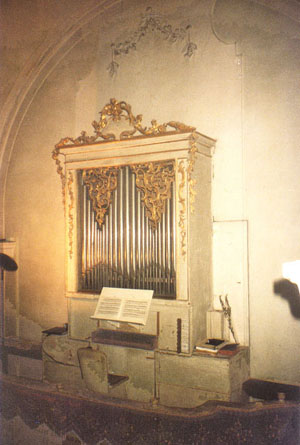
grici_organ2A Diocesan Synod is something to celebrate and look forward to. It isn’t a boring meeting like others, but is a spiritual occasion when the community meets together. As Fr Jonathan Munn wrote in his article on this theme – Summons to celebrate – it is a privilege to be called by our Bishop to do our duty, to be there and contribute to our life as a spiritual family. I too have received my summons in the official form used in our Church and Diocese. I have already bought my ferry ticket, and I’ll go and spend a few days with my father before returning to London for the Synod to take place on 3rd May at Central Hall Westminster. Indeed, it is a summons and not an invitation, because we clergy are needed to perform our duties of helping our Bishop to run the Diocese and make the right decisions. Duties are not always painful, but can be fulfilling to perform, because we are serving a cause above and outside ourselves. I feel exactly as Fr Jonathan does.

I offer this article as a prayer intention, for our Diocesan family needs prayers and God’s grace, not only to stay together in unity, but also to find the goodness and joy of living together as brethren in the Lord.

Posted in Uncategorized | Tagged , | Leave a comment

1962 and 1965

Just as another approach to the subject of auctoritas in canon law as it relates to liturgy, I commented on Patricius’ post Numquam abrogatam?

I touched upon the notion of custom, sometimes known as auctoritas, in canon law and its bearing on the liturgy. A landmark piece was written by the Florentine canonist Count Neri Capponi in the Some juridical considerations on the reform of the liturgy in the 1970’s. This text seems not to be available on the internet, but similar arguments are advanced by the same canonist in The Motu Proprio “Ecclesia Dei” and the Extension of the Indult. I remarked that Capponi represents a minority opinion, since Paul VI’s words seem to indicate his intention to trash the pre-Novus Ordo liturgy and make the Novus Ordo the sole Roman rite. A piece of work to consider is Fr Anselm J. Gribbin, Immemorial Custom and the Missale Romanum of 1962 (usus antiquor).

I also mentioned the committee of Cardinals of the 1980’s that included Ratzinger and Stickler among others. The motu proprio Summorum Pontificum of Benedict XVI affirmed that the “old” rite had never been abrogated. Is this deliberately sloppy legislation coming from a pastoral and pragmatic sentiment?

Rubricarius responded thus:

But the established principles of custom cannot apply to the 1962MR as it was only in use in its entirety for just over two years, its ritus was entirely re-written and it cannot be protected by virtue of immemorial or centennial custom. Caponi et al are vague and refer to the ‘old’ rite etc and write as though the Roman rite was unchanging; their essential argument is certainly valid but cannot apply to such a novelty as 1962MR. The whole argument was that Paul VI’s Missale Romanum did not contain an abrogatory clause that would affect immemorial custom but that cannot apply to 1962MR – it is even younger than you and I dear Fr! No supporter of SP has come up with a coherent argument of why Ratzinger’s assertion that particular, short-lived, edition of the MR was ‘never juridically abrogated’. They all start talking of the ‘vetus ordo’, centuries of use etc ad nauseam but the damned thing was only in use between 1962 and Lent 1965 at best.

I responded:

I am no more “for” the 1962 or 1965 than you are. I’m not trying to catch anyone out or be unpleasant. Far from it. I’m just trying to discern some cogent argumentation. I would like to ask you whether you consider the principle of custom to have applied to the Roman liturgy since the Editio Princeps of 1474. Can it be argued that Pius V put law above custom when he promulgated the 1568 breviary, 1570 missal, etc? Was there essentially any difference from this point of view between the 1962 version and (for example) that of Clement VIII, Urban VIII, etc. Perhaps if we want to use the Roman rite, as opposed to a local use, should we not be pressing for the Editio Princeps of 1474?

Rubricarius answered me:

Fr. Anthony, I thought I had re-iterated my support for the argument of custom above? The point is 1962 was so novel, so transient, custom can have no bearing on it.

Give me 1474 any day!

I’m not sure he really understood my question. My real question goes much deeper than many traditionalists. The Novus Ordo of 1969 was a new rite to replace the old. What is the “old” rite? The one that immediately preceded the new one? Do we assume that the 1962 (or the 1965) for that matter was a new rite, or a revision of the old? I may seem to be laborious and pedantic in this, but I am trying to get some clarity in our thinking.

It happens that if I were to use the Roman rite, I would prefer the 1474 missal to the succession of reformed missals from 1570 to 1965. After the edition of Puis V of 1570, the first new typical edition was promulgated in 1604 by Clement VIII. This version replaced the old Roman biblical texts with texts from the revised Vulgate. He also amended a rubric following the consecration of the chalice. The next typical edition was issued in 1634 by Urban VIII. The next edition came in 1884, when Leo XIII introduced some minor changes. In 1911, Pius X made signifcant modifications to the rubrics through the bull Divino Afflatu, but the resulting edition came in 1920, promulgated by Benedict XV. Pius XII did not issue a new missal, but allowed it to be supplemented by the new Holy Week ceremonies, changes in the calendar and the common of sovereign pontiffs. Naturally, all the way along the line, the Congregation of Rites in Rome approved propers for newly canonised saints’ feasts. These changes were enshrined in the 1962 edition of John XXIII. The 1965 and 1967 versions severely simplified the rubrics and allowed parts of the liturgy in the vernacular.

My real question to Rubricarius is that of singling out the John XXIII 1962 version (with the 1965 and 1967 Paul VI versions). Was the Benedict XV version part of the “old” rite covered by the principle of custom or auctoritas? Did the entire line of missals from 1570 to 1967 represent a notion of liturgical law by which the Pope’s legislative authority was higher than custom? Was the whole notion of liturgical custom abrogated by Pius V in 1570 despite his will to let the 200-year old rites through the net? I think we need to discuss this point from a canonical point of view as well as from that of common sense. If the 1962 is to be singled out from the “good” versions, this is to be established on the basis of what criteria?

Rubricarius gave the beginning of an answer in 1962 was so novel, so transient, custom can have no bearing on it. It was certainly the shortest-lived edition, especially for those who forked out the cash to buy an altar missal that year. Was such transience intended? Would this transience alone single out the 1962 missal from the 1570, 1604, 1634, 1884 and 1920 series?

To many traditionalists, such question will inevitably seem cranky. Didn’t the 1474 missal come from papal legislation, added to by the Ordo of Burchard under Alexander VI? Were the Ordines Romani and Sacramentaries not also the results of papal legislation? Did these rites just develop out of usage and custom? I am just trying to get down to the bottom of things.

I really do welcome comments and discussion, because I do think this is an important question, in a blog that is free from the influence of Roman Catholic conservatives and their tendency to use arguments of authority rather than reasoning. This is a space of real discussion.

Posted in Uncategorized | Tagged , , , | 13 Comments

A Couple of Gripes with Anglo-Papalism

I have always had difficulties in understanding certain phenomena in Anglo-Papalism. What I mean by this term is the tendency of some Anglican clergy and laity to refer to contemporary Roman Catholic norms as if they were already under Roman Catholic authority. This is the tendency that formed the backbone of the Ordinariate movement. Archbishop Hepworth was just as much affected by this what I might term an ideology as the old Forward in Faith clergy. Again, it is is not my objective to level any accusations against the Ordinariates, but rather in regard to this odd phenomenon in Anglicanism.

I have just found a blog posting that perfectly epitomises it – Tenebrae. The subject of the 1950’s liturgical reforms is discussed, citing Ritual Notes (1956):

778. Anglo-catholics are therefore now faced with the question as to their attitude to these changes. First, it should be said that, unless the original adoption of these rites by Anglo-catholics, now some generations ago, was purely an act of private judgment (and so in accordance with protestant rather than catholic principles), it implied that (a) it was permissible to supplement the Prayer Book rites as they stand, and (b) that this should be done from a source which was in its own way authoritative. There seem, therefore, to be two courses open: either to fall back on the Prayer Book as it stands for these days in all its liturgical poverty; or to adopt the roman rites (with or without adaptation*); and this will mean adopting the new rites, for the old now have no place in that Church. What seems impossible is to retain the old ceremonies and times (from which, as has been said, all authority has now been removed), unless the very un-catholic principle of private judgement is invoked; for it is hardly possible to describe these as either the authoritative or “traditional” use of the English Church [my emphases].

779.The changes in the Holy Week rites and times have not been made on grounds of antiquarianism (though they do in fact go back on the whole to the early Christian Holy Week); they have been made out of pastoral care for souls. The ceremonies of the Great Week, which had originally been the central observance of the Christian year, had, for reasons that need not be particularized, become in fact the preserve of the devout (and leisured) few who were not involved in, or who could escape from, the requirements of secular life* [my emphases]. It is of a piece with other changes of recent years in the Roman Communion as a result of the “liturgical movement,” such as the modification of the Eucharistic fast and the simplification of rubrics; and indeed goes back to the great movement initiated by Pope Pius X towards frequent and daily Communion.

I suppose the authors of this edition of Ritual Notes, a sort of Anglican Fortescue & O’Connell, went Novus Ordo in 1969 just like the Roman Catholic parish down the road. What is this so-called “authority” that disappears as soon as something new came from Rome? Fr Hunwicke is also quoted in this article (from his article Auctoritas) , giving another meaning to this term and concept:

I expect some Catholic readers may feel uneasy about the path I am treading. This is because the Catholic Church, more than most, has a deeply ingrained sense of Law. This makes it easy for Roman Catholics to underestimate of the force of auctoritas (although Benedict XVI nodded towards it when he wrote “What earlier generations held as sacred, remains sacred and great for us too, and it cannot be all of a sudden entirely forbidden or even considered harmful”). My impression is that Orthodox, on the other hand, are instinctively influenced in liturgical matters much more by the auctoritas of a Liturgy than by the mere fact that it may have, on its title page, some windy claim to have been authorised by such-and-such a hierarch. As, I suspect, was the medieval West before the invention of printing. The Sarum ‘Rite’ spread in England more because of its auctoritas than because of any legislative enactments.

We seem to have two meanings of auctoritas, but that will be the subject of a future article when I get time to study it from a canonical point of view.

To finish this article provisionally, I mention the time when I visited St Mary’s Cable Street in the East End of London and complemented the priest for keeping the nice sober wooden altar. He told me that the altar was going to be removed and replaced by a free-standing altar for Mass facing the people. Why? – I asked. The answer was that this parish felt bound to follow Roman Catholic norms in spite of being in the Anglican Diocese of London. I shook my head, thanked him for his explanation – and was glad to be out of the church and on my way.

We in the ACC are quite Roman in liturgical externals, and our Anglican Missal is substantially the Roman Missal as it stood in the 1920’s, with re-working to make it compatible with the Sarum cycle of Biblical readings as given in the Prayer Book. Even though I use Sarum, I still have the baroque chalice and fiddle-back vestments I used when I still followed the Roman rite. I must admit, we are a little looser with rubrics and liturgical auctoritas, which I find refreshing and closer to the pre-Reformation ethos.

One last remark about the ἀναστόμωσις blog in spite of its often excellent articles, was its most recent article Between Scylla and Charybdis contrasting the recent visit of Dr Jefferts Schori to Nashota House and a visit of the American Ordinariate to Rome. The caption is given – So, isn’t this the only real alternative? No, it is one possible alternative among others. Others include Continuing Anglicanism and Orthodoxy, depending what is available in one’s country.

Posted in Uncategorized | Tagged , , | 1 Comment

Lenten Array

lenten-arrayMy chapel is about to go into Lenten Array in readiness for Ash Wednesday. One of last year’s palms will be burned in my back yard to make the ashes for my wife and I. These are the outward signs.

Inwardly, many of us have been thinking about making a holy Lent and preparing for the mystery of Easter. Lent was originally instituted for the instruction and probation of the catechumens. We would already do well to read books of theology, commentaries on the Holy Scriptures and whatever brings us to remember our university and seminary courses, our knowledge of doctrine. We then have to interiorise all that by prayer and fasting.

Perhaps we are furiously eating up all the meat, butter, animal fat, cooking oil and all the things that make for tasty food. Perhaps we are thinking in more secret and inner terms. It is up to each of us. The important would seem to be keeping our observances to ourselves. The Gospel of Ash Wednesday is explicit. Only hypocrites are ostentatious about their observances.

Other than curbing our appetites and eating more simply – many of us have to anyway because of limited financial means, there are many things we can work on. One is ourselves and our self-understanding. Humility is truth about ourselves, stopping being a caricature of other people or projected images. We accept ourselves as we are, with all our weaknesses and faults. Then we bring the raw material to God with our realistic resolutions, so that we might be transformed.

We especially fast from sin, as we read in many prayers of the liturgy. Some of the worst sins are gossip, detraction and calumny – and we don’t notice them.

We are certainly going to fail and backslide, especially after the first days and if we are excessive. We just pick ourselves up and get back to the grindstone. Whether we are Anglicans, Orthodox or Roman Catholics – or whatever – we have no cause for triumphalism. Let’s keep our piety under our hats, a silent leaven in the desert.

Another rule is common sense – not doing something that will affect our health. If in doubt about something, get medical advice. If we get invited to dinner on a Friday and meat is on the menu, eat it and be thankful. There’s nothing worse than being anti-social and being an absolute jerk with our “religion”. Then, in the secret of our chamber, we can substitute something else. Lent isn’t about mortifying other people.

Our faith is full of signs and symbols, but the most important thing is what’s inside. Failure to understand this aspect of Christianity led to the distortions we find in the institutional churches and the decline we all bewail. How much responsibility for this do we have ourselves? More than we think.

Let’s get the inside scoured out, and then our outward observances will really mean something. If we are going to be serious about this, contemplate these harrowing words in Dom Delatte’s commentary on the Rule of Saint Benedict:

“The absence of distractions and diversion entirely delivers us to our suffering. The suffering of contemplatives is like Purgatory: the fire penetrates to the marrow, to the most intimate fibres; it is like food being cooked slowly, the lid on the pot, the steam transforming the food. All the movements become painful, like a man who has had his skin stripped away…”

Posted in Uncategorized | Tagged , | 1 Comment

A Highly Lucid Analysis

I warmly recommend you to read – Understanding Context and Reading the Grand Narrative.

I suggest you read the article fully in its place and then come back here for my reflections.

Of course, Catholicism has not really been a traditional religion from some time before the Reformation. Reformations have always seen the need to put religion under centralised control, and what might have been thought of as “organic growth” under theological speculation and trends.

It has always been my belief that liturgical reform alone did not cause the “crisis” in Catholicism, but that the “crisis” is much older and goes back many centuries. I too went along with the traditionalist narrative, but it will not survive critical thought. Theology became autonomous from the liturgy and praxis of the Church, and liturgy became a mere adjunct of canon law. Latterly, liturgy would be regulated by theological developments rather than the old principle as expressed by Prosper of Aquitaine: legem credendi lex statuat supplicandi popularly expressed as Lex orandi lex credendi. The way Christians pray (liturgically) determines what they believe. Scholasticism reversed this axiom and made liturgy subject to developments in theology.

I take a more radical view than someone like Fr Hunwicke, or myself as I wrote my university piece on the Pius V reform of the Roman missal. It was an act of reform that created the precedent for Paul VI’s Missale Romanum of 1969: In conclusion, we wish to give the force of law to all that we have set forth concerning the new Roman Missal. In promulgating the official edition of the Roman Missal, Our predecessor, St. Pius V, presented it as an instrument of liturgical unity and as a witness to the purity of the worship the Church. Pius V allowed the continuation of local uses, and the Roman missal of 1570 was comparatively conservative, but really, the principle was the same. Paul VI went further, and trashed everything outside his new missal, requiring complete uniformity outside of “pastoral adaptations”. The liturgy has its importance, since it is the Church’s “shop window”. Seen from this point of view, the “ordinary form” was in perfect continuity from the “extraordinary form”. Many aspects of the western Catholic tradition were trashed in 1570 and by Counter-Reformation rubricism and legalism.

The most radical conclusion to draw would be that western Christianity is dead and the only viable form of traditional sacramental Christianity is Orthodoxy in the Byzantine rite and the various other oriental rites that have continued to be used. Another possible conclusion is to revive pre-Reformation rites and hope they will influence the (marginal) communities using them. Such an idea assumes adequate documentation to be able to do it with an acceptable degree of authenticity without “inventing” or “reconstructing” too much. Another possibility is to go along with the new rites and keep away from theological speculation and teachings, preferring the foi du charbonnier and “keeping out of the engine room”. Yet another possibility is to scrap Christianity altogether as something that has become so distorted that the original idea has been irretrievably lost. Most of us try to make some form of compromise to avoid having to resort to that last radical denial. There is no simple solution, though we should avoid seeking complex ones.

By at least the thirteenth century, the unity of Latin Christianity was coming undone. The Reformation left little doubt that a homogenized Latin Christianity had vanished in the West. So, there was a need to have the law of faith determine the expression of prayer.

Such a notion leaves western Christianity, both “sides” of the Reformation, in a very awkward situation. Restoration is possible or impossible. My own approach is to try, whatever the odds against it, as the only alternative to abandoning Christianity.

Reading, however, does not solve the problem of actually having to do something, to find some model of life that reflects the conviction that reality is not merely the quantifiable, that our greatest purpose for existence far exceeds the limitations of sense perception.

Perhaps Christianity could be reborn in another western culture, one that has suffered complete collapse and return to beginnings. However, in such a scenario, it is unlikely that any knowledge would survive and be transmitted. Such a notion is bleak. Reducing religion to conservatism and liberalism will only accelerate the decline. Perhaps we would do well to look at Christianity in other parts of the world, as different culturally as it is from our own distant roots.

Certainly this article is thought-provoking in the extreme, and can be taken as a warning. It is for us all to decide what we want.

Posted in Uncategorized | Tagged , | 1 Comment