Dinghy Cruising

dinghy-cruisingI return to a theme to which I have given a considerable amount of thought over the past few years, that of dinghy cruising. I have taken my 10-foot hybrid to quite a few places, and am improving on its road transport by having bought an old Erka trailer chassis to do some conversion work on it. I have crossed the Seine Estuary and done some voyages of fourteen to fifteen nautical miles round trip. There is still something of the Cub Scout in me with the ghost of Swallows & Amazons and memories of Windermere in our English Lake District.

At the same time, sailing is a sport and hobby for adults, sometimes doing extraordinary feats like sailing oceans in open boats! People are sometimes amazed that I take my 10-foot dinghy so far, but I take very careful precautions for safety. Even then, the predictable can happen, like being becalmed in the path of a ship just outside the Port of Le Havre and having to be towed to safety by a Harbourmaster’s boat.

Some have said that dinghy sailing is in decline. There aren’t the numbers at rallies there were in the 1960’s and 70’s when sailing first became accessible to ordinary people. At my old sailing school, we were about 25-30 at each Saturday afternoon session, and now there are barely ten. One thing I found about my sailing school was its being geared for racing, and for modern and expensive boats, a certain distasteful elitism as one might find in some of our English clubs. There seems to be a snobbish and “status symbol” aspect, like those who drive powerful and expensive cars.

Chandlery shops and websites seem also to be geared for whizz-kids sailing modern boats with new sails, everything in gleaming condition and paid for by parents. All that can leave us with the impression that sailing is still the “sport of kings”, and that those of us on a lower budget or level of ambition could get discouraged. Myself, as a boy, I took up other and cheaper occupations like fishing and cycling. Not once was it suggested at my sailing school that dinghies could be used for anything other than racing “round the cans”. In 2009, I bought an old plastic boat, such as I have already described, and was told it was no good for racing owing to its fragile rig! On land, we don’t have to be athletes and marathon runners to enjoy a stroll in the park or a hike in the Lakeland mountains or the Alps.

Dinghy cruising is about going places in small open boats, discovering coastlines and rivers alone or with a group. The extreme of dinghy cruising is the crossing of the North Sea or the Atlantic in an open boat and facing conditions that can kill you in no time flat! An example – The Unlikely Voyage of Jack De Crow.

jack-de-crowMost of us sail our boats near the coastline, choosing pleasant weather and tidal conditions and playing it safe. I refer you to my time on the Rance and near Saint-Malo described in Sketches of the Sea. Sailing such a small boat, I sometimes meet quite condescending attitudes with coast guards and harbourmasters – but some are intrigued by my hybrid rig, and reassured that I have all the necessary safety equipment on board – and wear a life jacket!

Cruising boats can get quite knocked about as we land them on shingled beaches and haul them up onto the trailer. My plastic hull looks like a bathtub, but it can be easily repaired if it gets damaged – by plastic welding using an electric hot air tool and a strip of the same kind of plastic. No maintenance! My main problem, apart from slowness, is having very low seaboard – I easily get swamped in heavy seas. But, my boat is very stable, and even a sharp broach to the wind will not capsize it – because I have always had time to react, which you don’t get on many modern racing boats. They go right over, you hit the drink – and then you swim to the centreboard side to right the boat. I find that not capsizing saves time!

There are many ways to have a cruising holiday, notably by using the boat like a yacht and sleeping in it (with a boom tent and various improvements) – or by trailer-sailing from a fixed camp (or several camps) and going to a different place each day, as I did this summer.

One good thing about this kind of thing is that is isn’t structured, at least yet, unlike racing in regattas. Many dinghy cruisers I have met stay away from yacht clubs and sailing schools, away from the “status” aspect. I am lucky in that my club at Veules les Roses is something with some great ordinary folk with no pretensions. We share our love of the sea. Some of us sail, others fish from motor boats, others wind surf, and others still just like to walk along the cliffs and beaches and drink in the salt air. But some clubs can be awfully snotty and elitist. We like independence and the sense of freedom – our boats and the sea give us that.

I have often thought of a yacht. They can be saved up for and bought for a few thousand euros, but they have to be maintained and berthed in a port. To transport it anywhere, you either have to sail it, and that takes time, or you have to arrange expensive road transport. A very small yacht or a dinghy can be hauled up onto a road trailer and taken where you want, like a caravan. Once you have made the initial outlay for the boat and the trailer, there are no port costs and you can sail in very shallow water where it gets really interesting.

Doing a cruise in a group is a very good idea, because it is much safer. Help is always at hand for someone who has a problem with his boat or with his own health. The alarm can be sounded and the emergency services called. There is something of a traditional boat revival, but which can become quite exclusive of “hybrid” and modern non-racing vessels.

I would like to see the kind of seamanship needed for cruising taught at sailing schools, more practical instruction in repairing boats and rigging and making improvements. Sailing isn’t just about racing “round the cans” but also practising spatial perception, simple coastal navigation, the meanings of buoys and safety. It is also about feeling the sea and perceiving it as a “living” being with a spirit and a soul.

The advantages of a small boat are obvious, quite apart from lower cost and ease of road transport. It can navigate in shallow water – as long as you watch your depth and your centreboard and rudder. I have heard it said that you can’t get seasick in a dinghy – at least, if it is rough enough to get seasick, you have more major concerns at that point!

I would like to find more “all boat” rallies in France and England, and that can add a whole new and social dimension to cruising. The freedom of it all is the most wonderful aspect, between extreme adventure, playing it safe but going places, or just pottering around a place like the Rance or Chichester Harbour – doing it alone, just a couple of boats or a big group. We need to work hard to get new ways of thinking known.

It just takes a little imagination.

Here are two videos showing the greatest of the English spirit – modifications to a Mirror dinghy for cruising. We might be a nation of shopkeepers as Napoleon said, but above all we are a country of inventors! To music by Eric Coates…

Part 3 to come…
Posted in Uncategorized | Tagged , | Leave a comment

Ember Days

This week, we have the Ember Days, though today we celebrate Saint Matthew and commemorate Ember Saturday. We are sometimes at a loss to explain the meaning of the Ember Days (obsolete in the Pauline Roman liturgy). Here is an excellent article for our instruction – Liturgical Notes on the Ember Days of September.

Posted in Uncategorized | Tagged | Leave a comment

Episcopal Anniversary

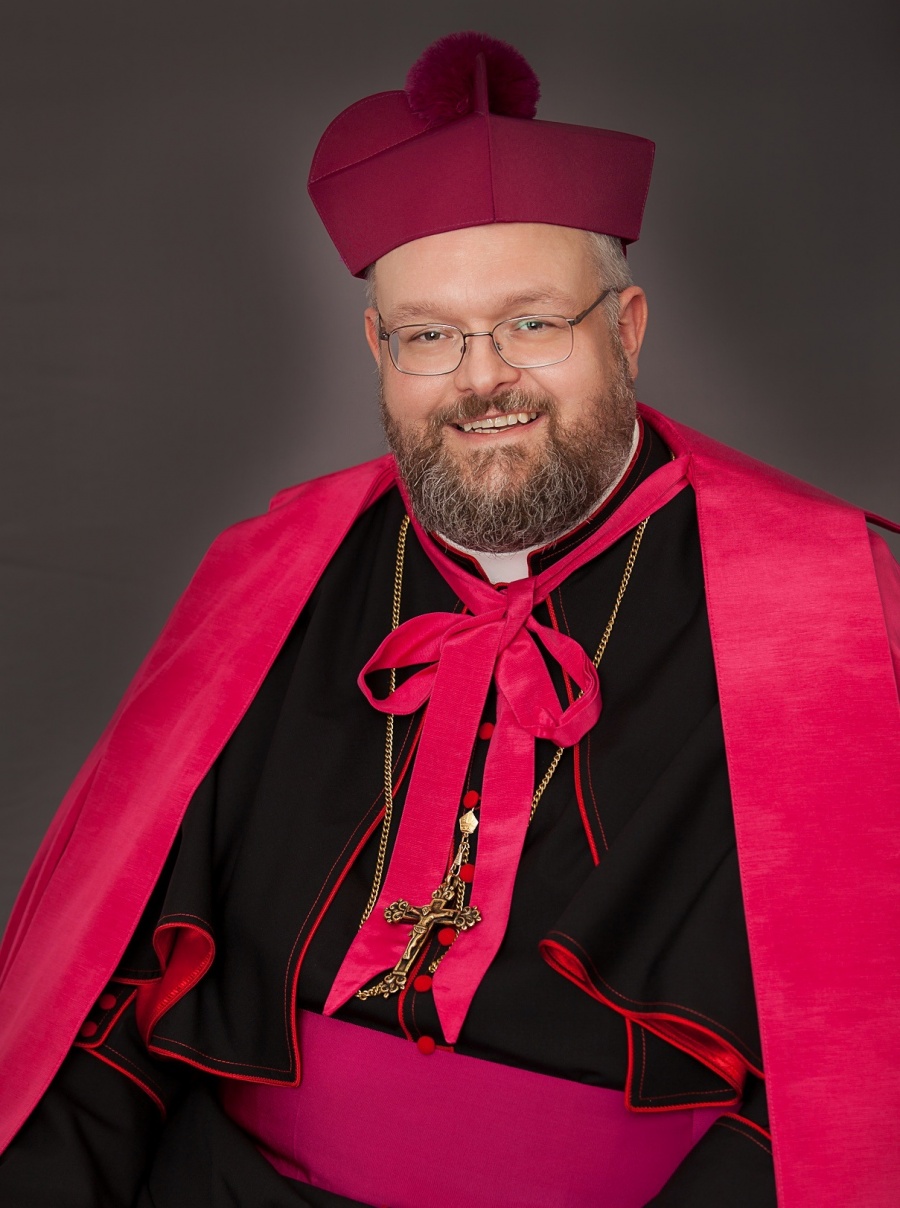
bishop-damien-meadI convey my warmest congratulations to my Bishop on the fifth anniversary of his episcopal consecration in the Anglican Catholic Church.

I celebrated Mass of Ember Friday of September and the Vigil of St Matthew today for his intentions, and took the liberty of using some very beautiful prayers for a Bishop in the Sarum Missal:

Oratio
Rege, quaesumus, Domine, famulum tuum Damianum, pontificem nostrum, et intercedente beata Dei genitrice Maria cum omnibus Sanctis tuis gratiae tuae in eo dona multiplica; ut ab omnibus liberetur offensis, et temporalibus non destituatur auxiliis, et sempiternis gaudeat institutis. Per Dominum.

Secrete.
Suscipe, quaesumus, Domine, tibi munus oblatum, et intercedente beata Dei genitrice Maria cum omnibus Sanctis tuis famulum tuum Damianum pontificem nostrum tua propitius ubique miseratione conserva, atque ab omnibus quas meretur adversitatibus redde securum; ut, tranquillitate percepta, ab omnium visibilium et invisibilium inimicorum insidiis liberatus, devota tibi mente deserviat. Per eundem.

Postcommunio.
Subjectum tibi famulum tuum Damianum pontificem nostrum, qusesumus, Domine intercessione beatae Dei genitricis Mariae cum omnibus Sanctis tuis propitiatio caelestis amplificet; ut et praesentis vitae periculis exuatur et perpetuis donis firmetur. Per Dominum.

I wish our Bishop – Ad multos et faustissimus annos!

Posted in Uncategorized | Tagged , , | 2 Comments

The Fatherly Aspect of the Holy Father

I don’t write much about the Roman Catholic Church since the polemical days when the Ordinariates were founded and the muddy waters of the TAC became clear to the satisfaction of some and the disappointment of others. I followed the entire movement and refrained from the black / white positions of some, and saw it as an aspect of the old “corporate reunion” movement which failed every time it approached Rome. A compromise solution has been put into place, in which some priests are able to do good pastoral work and others have a more spiritual mission. I have long ago ceased my contribution to the polemics and turned the page by moving to the ACC.

In spite of the ACC’s early decision not to avail of Anglicanorum coetibus, we honour and respect the Papacy and the authority of the Popes. Each Pope has his personal style. Benedict XVI timidly tried to implement the luminous ideas about the liturgy expressed in his writings and a notion of moderate and discerning restoration in the Church. Make the Church more spiritual and many of the moral and pastoral problems could be solved. Whatever made Benedict XVI decide to abdicate, many of his fundamental insights have been resumed by Pope Francis.

Pope Francis gave a long interview to La Civiltà Cattolica A Big Heart open to God. The traditionalist in us will be cringing and wondering how a Pope can take such risks by ceasing to issue condemnations of bad morals and problems in society. Like Benedict XVI, he seeks to put the spiritual aspect over the letter of the law and preserving the institution at any cost. I don’t envy him!

Not being a conservative Roman Catholic, I do not have the obligation of trying to defend the Pope at all costs and prove his hermeneutic of continuity from the pre-conciliar Pontiffs. You can read the interview in its place, but I’ll just pick up a few points that stand out for me.

Until now, we have had the impression of returning to the 1970’s and the days of Paul VI. There is a difference. Paul VI was a diplomat and a curial bureaucrat, and the clergy and people on the ground still remembered the “old ways”. This time, we have a profoundly spiritual religious priest and a pastor who really lives a simple and austere life.

Pope Francis is a Jesuit. I am reasonably familiar with the Exercises of St Ignatius. It’s not really my way, and I find it all too methodical, but the wisdom is undeniable. Particularly, there is the discernment of spirits. There is a gentleness to the Ignatian way that many don’t recognise. I have known Fr Hugh Thwaites in London, who was a saintly priest and gave me help as I was on the doorstep of my old seminary. The French have a saying – Le mieux est l’ennemi du bien. Seeking perfection often derails us from doing good and seeing to the basic aspects. We can get bogged down in details instead of seeing the essentials. I have always been able to discern magnanimity and generosity in superiors. The more hearts are open to us, the more we will serve with generosity of heart. Ask for little and people will be encouraged to do better.

Discerning the will of God is difficult, because most of us don’t have extraordinary experiences. We have to rely on intuition and read our own feelings. It is fragile and leaves us open to error, but we have to have something. The fundamental rule is not to make a decision when you’re upset. That is the common sense of generations of religious and non-religious people. Sometimes, we just have to wait for an answer – only to find that we have to go and get it ourselves. All too often, our first thoughts about something are wrong, but they can also be right as with first impressions.

Pope Francis’ notion of the priestly vocation is of course coloured by his commitment to the Jesuit way of life. Given that, some of his reflections are surprising and show an extraordinary breadth of tolerance. The first thing is to be genuinely pious and devoted to serving God, and then to be gentle and loving.

Pope Francis has always been in positions of authority, Provincial from the age of 36. This gives him a view of things I will never have. I have never been a leader, and don’t have the charisma to be one. Was Bergoglio ambitious? That is a difficult question, but I don’t have the impression.

Thinking with the Church, a much-abused concept, has always been high in my mind. I prefer to trust the judgement of my Bishop rather than my own, but I know he isn’t infallible. He too can be wrong, but I can only trust he isn’t most of the time – through his experience and grace of state. Newman often wrote about the consensus of the Church. The more united in symbiosis we are, the less likely we are to be victims of sin and error. The communion of the Church protects each of us.

Pope Francis isn’t afraid to fall into the trap of the highly polemical subject of homosexuality, between the extreme positions of how things were in the past, for example in the Victorian era, and the militant “gaystapo” lobby. We need to approach this issue from an intellectual and above all pastoral point of view. That is a tough one, and the media feed on it with a frenzy!

The thing the church needs most today is the ability to heal wounds and to warm the hearts of the faithful; it needs nearness, proximity.

These are warming words after having seen the way the “fallen” are rejected and forced to become spiritual outlaws because or errors they committed in discerning their vocations. I avoid pleading my own cause, but I have cut out the bad bit from my life, though I remain indelibly marked by it, and not only by the Sacrament of Order. Do we want a Church that locks people out inextricably for reasons similar to my own, or because their marriages went as wrong as my own priestly vocation? What kind of Church would we like to see, a “perfect” institution that even good people come to reject – or something that picks up the sinner out of his mess and re-establishes him or her to the dignity of a Christian? This is now a real issue, but also a very old one.

This is also the great benefit of confession as a sacrament: evaluating case by case and discerning what is the best thing to do for a person who seeks God and grace. The confessional is not a torture chamber, but the place in which the Lord’s mercy motivates us to do better.

This way of discernment and mercy is so rarely present in blogs, in which we cannot even hear each other’s voices and get the least idea of personalities. A prophetic wind blows through the Church, something Benedict XVI the liturgically traditionalist Pope saw the need of.

Will Pope Francis succeed in reforming the aspects of the Church that have caused some of us great pain? How would that be possible? We can only wait and see, and cling to our ships and lifeboats where we can find some degree of safety.

The section on Certitude and Mistakes strikes home for me. All too often, people in the Roman Catholic Church who make mistakes in their vocations and life are only fit to be destroyed and discarded without mercy. Fallen priests in the “old days” could find redemption as monks or as “auxiliary priests” in city parishes, like the pre-Reformation chantry priests. Many of those men came to great heights of holiness in their abnegation and humility. Nowadays, they are just told to go away. Certitude is a problem in Churches, where we all have to call ourselves into question. Do we have all the answers? I think not. We are looking for God’s will, and so much noise in the world makes that discernment so difficult.

If the Christian is a restorationist, a legalist, if he wants everything clear and safe, then he will find nothing.

Pope Francis may have used inappropriate terms to describe traditionalists, but he is right that safety and security are but illusions in this life. Our only certitude is that one day we will die and face Judgement. Lack of certitude has to go with hope, something about which Benedict XVI and Francis are developing so well in their teaching.

Christian hope is not a ghost and it does not deceive. It is a theological virtue and therefore, ultimately, a gift from God that cannot be reduced to optimism, which is only human. God does not mislead hope; God cannot deny himself. God is all promise.

Finally, many of us have been used to considering Pope Francis as a philistine in matters of art and beauty. He seems to have little interest in the liturgy or music, but there are other expressions of art in the spoken and written word, and in painting and sculpture. We all have different perspectives. I am sensitive to music, literature and speech – but I have not developed drawing and painting in my life. We read that Pope Francis appreciates the great musical classics and has wide tastes from classical to romantic.

Creativity is an uppermost theme, and this reminds me of the Russian philosopher Nicholas Berdyaev in his extraordinary works. These are the old-school Jesuits who devoted themselves to art and science in order to evangelise the real world through every walk of life. This is a far cry from “factory-produced priests”.

This is an illuminating interview, which should dispel many of our prejudices and received ideas. We need to open our minds and hearts and seek to do God’s will just where we are.

Posted in Uncategorized | Tagged , , , | 1 Comment

Another Interesting 320 Makeover

The Tabur 320 (scroll down to find the 320 sailing dinghy among the various tenders and fishing boats). It’s a French boat designed by Georges Auzépy-Brenneur, a well-known naval architect and produced at 12,000 units in the 1970’s. It is lightweight and made of plastic, which makes it possible to haul the almost indestructible hull over a shingle beach without damage to the hull, and it is repairable by plastic welding. This ten-footer was designed above all for sailing schools, and you almost have to want this very stable boat to capsize.

This hull has very little freeboard, and one often sails with the lee gunwale underwater. The bow often goes under waves when running before the wind – the sailor has to sit far back towards the stern, leaving just enough space for the tiller. If this happens, the boat can broach in the waves and cause a capsize or something to get broken, especially when beaching. It helps not to be have too much “middle-age spread” for this boat!

With its round bow, the 320 is not the fastest boat on the water, and does not sail well in heavy water. The hull is tough, but the original mast without forestay and shrouds is fragile. Sails and masts for this boat are about as rare as hen’s teeth! The replacement solution I adopted was an English Mirror rig.

terre&mer14The Spaniard Juan de la Fuente, a serious Tabur 320 sailor, has invented another fascinating rig involving the original mast (with standing rigging) and a standard jib, together with a Walker Bay 8 mainsail. In this Youtube clip, he sails on a man-made lake near Barcelona, Spain. It indeed looks like a lovely spot. The boat seems to sail quite fast in what looks like a moderate wind. Señor De la Fuente says in his Youtube thread:

probably the only creative element there is that strange little sail under the boom. The original Walker bay sail forces the boom to pitch up, which is great for headroom but I wanted to add as much sail area as I could. I never seen that type of sail before but it actually works quite nicely.

This clip inspires me to do a video of one of my own outings on the sea. I keep an eye on waterproof digital movie camera prices, and will probably one day take the plunge!

Posted in Uncategorized | Tagged | 18 Comments

Arts & Crafts and our Churches

blackwell-hallThe Arts & Crafts movement of the late nineteenth century is one of my recurring themes. Here is what I have already written related to this subject. In its time, it mainly concerned the homes of the well-to-do, those who could afford the work of craftsmen rather than of machines in factories.

The image at the head of this photo is of a house near Windermere in the north of England. Until the 1970’s, it was a girls’ prep school and my mother taught sport and physical education there. I often went there with her in the 1960’s when she was teaching and I didn’t have school that day. I grew up in a large Victorian house, but this place, called Blackwell, made a lasting impression on me – particularly the peacock friezes and the half-timbered parts evoking buildings of the Middle-Ages and the Renaissance in most of northern Europe. Whenever I discovered buildings and furnishings from that era and design philosophy as a boy, my reference was Blackwell. This house is now owned by the National Trust, open to the public (I revisited it with my wife a few years ago) and beautifully restored.

The Arts & Crafts Movement mainly concerned domestic architecture and furnishings, but it influenced a few public buildings like Carnegie libraries and a handful of churches. It was essentially a movement in reaction against the aesthetic philosophy of the Victorian era, mass production in factories, something not unlike our own era of manufactured goods designed not to be repairable!

In this little entry, I concentrate on the “philosophy” of this movement and why it appeals so much to me.

chapel_roodThe first characteristic is simplicity and sobriety. I installed my chapel within a few months of my last visit to Blackwell. The building gave itself perfectly to a space with very little decoration, a match between stark white walls and a lightly stained wooden ceiling. It isn’t Arts & Crafts, but it is me. Being oneself is part of Morris’ philosophy.

William Morris said –

Simplicity of life, even the barest, is not a misery, but the very foundation of refinement.

Clutter was a characteristic of Victorian homes and churches. Arts & Crafts was a spiritually-inspired movement, aiming to free us from clutter and noise, mass production and consumption, from materialism. Perhaps this tenet is expressed in minimalism, which seems to have gone to the other extreme, a kind of anti-beauty. Simplicity is not so much the abolition of beauty and ornament, but is a monastic and spiritual notion of looking for the essential – God and the finer things of life. It is expressed in the old Shaker hymn from across the Atlantic – ‘Tis the gift to be simple… Simplicity

The essential characteristic of Arts & Crafts is beauty – a concept based on harmony and order. Beauty isn’t an add-on, but is a part of our life. In the spirit of Morris, we create our own living space, free from a spirit of following fashion or the dictates of designers. It can be the same thing in churches, bearing in mind the basic traditional structure of the narthex, nave, choir and sanctuary. Something else can convey the spirit of Arts & Crafts: contrast the music of Elgar and Vaughan Williams, Berlioz and Ravel. Of course, Elgar wrote grandiose and patriotic music to earn his living, but he was a profound, interior and simple man. A different spirit entered the early years of the twentieth century before the hecatomb of World War I.

There is nothing better for our spiritual life and worship than designing our chapels ourselves and doing the work. A man with practical aptitude can turn to any skill and learn its techniques. Myself, I have training in woodwork, but have adapted these skills to metals and masonry. I have often had e-mails asking how one can have a chapel like mine. I always answer – Just do it.

Posted in Uncategorized | Tagged , , , , | Leave a comment

Speech and Pronunciation

I was giving an English lesson this morning to a young French engineer in his place of work in Rouen. It seemed appropriate, as his main objective is speech and pronunciation, to introduce him to the various accents and dialects in our language. These accents are a part of our local identity, and we are brought up with them. These days, there is less in the way of snobbery in England between received pronunciation (RP) speakers and those who speak grammatically and well, but in their local accent. I said to him that he might find it more useful to go for American English. Why not? He is learning English for his job, which might involve trade with US companies. No, he wants “standard” English, something that all English-speakers understand.

Spoken language is a part of our culture, something that has fascinated me for years. English culture is related to the topics of this blog. One problem with this blog is that we don’t hear each others’ speech. Of course, we can make Youtube videos (I don’t have a movie camera) but the result can be highly embarrassing unless we have had some training in public speaking and acting. To a keen ear, speech tells us a great deal about a person.

It is human to stereotype and make caricatures of others, especially those with strong accents like the Scottish (Glasgow docker, Edinburgh and Highlands), Irish, Geordies from Gateshead and Newcastle, the Cockneys (London and South-East), Scouse (Liverpool), Brummies (Birmingham), West Country (Oooh Argghhh!) and broad Yorkshire or yet the Lanky Twang (Lancashire). I am totally unqualified to comment on local accents in the United States (though I can distinguish between New York and Texas), Canada or other English-speaking countries. People in all countries and speaking the languages of those countries have local accents and dialects, like Marseilles French, Parisian and the “standard” French of the Touraine area. The purest Italian is spoken not in Rome but in Florence, or it used to be like that. Perhaps a German could tell me where good Hochdeutsch is spoken.

Personally, I was born in the north of England (Kendal, Westmorland) and brought up by a father who is a Yorkshireman with only the faintest trace of an accent. He was at St Peter’s, York in the 1940’s. In my day, you could speak in that school in any accent (usually Yorkshire) provided we spoke in correct English. In his day, I assume they had to talk RP. My late mother came from Surrey, and she kept a slight south-eastern accent all her life. Having spent some of my life down south and in London, I seem to have assimilated the accent of my mother to some extent, though I am fundamentally an RP speaker.

If you work at it, you can “elocute” (not electrocute) yourself, learning by imitation and acting. But, what for? From about the 1960’s, Socialist and egalitarian ideology has tended to discourage elitism and characteristics of the upper classes including the use of RP. In England, we are encouraged to keep our own local accents or adopt a moderate south-eastern accent (without the caricature of a stage second-hand car dealer or safe-breaker in Wormwood Scrubs).

On the other hand, we find there are affected and non-affected, more natural, ways of talking RP. The most amazing caricature I came across was expressed by the dotty Romantic Ladies of the Empire of Aristasia, who encouraged living in an archaic imaginary subculture, away from the modern life they called The Pit, and educated girls using questionable methods. See The Invisible Empire of Romantia.

Here is a couple of documentaries discouraging RP in favour of local accents.

The young lady in the second video talks in a generic south-eastern accent replete with glottle stops. I find her speech quite pleasant, though bordering on the “common”, and articulate. She reflects the anti-elitist opinion of many people in our country, and I can understand her position when giving the caricatured imitation of someone like Queen Elizabeth II. According to her, BBC English is now a moderate and cleaned-up south-eastern accent. I would disagree. Listening to BBC Radio 4 or TV broadcasts, many still use RP but without the “1920’s” caricature, a neutral and natural way of speaking for those used to it. There are two versions of RP, neutral and natural and the la-di-da speech of the 1920’s beautifully reproduced in the old 1981 version of Brideshead Revisited. Anthony Blanche, the camp aesthete, mixes affected RP with a French accent.

Here are some more caricatures, which are rather wonderful, but a little absurd to modern ears.

Stiff upper lip, Jeeves!

The important thing is that I can go to any English-speaking part of the world and be understood. I have been to the US and bought things in a supermarket and saw raised eyebrows because of my RP English. They love it! But, I could never be one of them or even some of our own people in England. We need to keep it natural. Living in a non-English-speaking country like France can cause us to caricature things somewhat. As I advised my pupil, the best thing is to listen to the wireless and news broadcasts on the Internet, watch films in English and documentaries about contemporary life.

Spending time each day listening to English news broadcasts, watching documentaries and films and getting to England whenever possible keeps me in touch and prevents me from developing a caricature way of speaking as I have seen in other English expatriates. I have always found RP pleasing to the ear, as spoken by the likes of Jeremy Irons, who was the leading character in Waugh’s Brideshead Revisited and one of our great contemporary English actors. His RP in Brideshead Revisited almost alone remained without affectation. He is heard in the above clip.

I am in a mixed mind about elitism in speech or anything else. Priests are trained to hide their social origins through their speech, dress and generally upper-class manners, at least as it used to be. It was the same with us public school boys. When I began my apprenticeship with a firm of organ builders at 17 years of age, I was working with men speaking Durham Geordie (or similar to true Geordie)  and I was used to speaking RP. Within a few days, they were calling me Lord Charles – I fully understand. Perhaps RP speakers would be encouraged either to cultivate their original accents or a moderate south-eastern accent with a few glottle stops! In the end, what does it matter if we are being ourselves and not a caricature of someone else? Just talk natural! My way of talking is “unaffected” (or as unaffected as I can make it) RP – and I am unashamed.

In my own family, my brother and one of my sisters speak RP with a “Yorkshire tinge” and my other sister has cultivated the accent of my home town. Her husband Julian has a pronounced Westmorland accent, and I admire people who unashamedly speak their language and keep their audible identity. Diversity within a single family indeed! I remain Northern, but I was considerably influenced by the South when I was in my teens and twenties – and it stuck.

Speech and language fascinate me, and it has not been by accident that I have become a “language professional”, teaching English as a foreign language and translation. Listen to our great actors like John Gielgud and Ralph Richardson.

Posted in Uncategorized | Tagged , , | 12 Comments

Prayers for Fr Robert Hart

Fr Robert Hart announces the loss of his father in The Continuum. I extend my deepest sympathy to him and his family, and will remember his father at the altar.

Fr Hart and I didn’t exactly see eye-to-eye when I was a TAC priest under Archbishop Hepworth, and I was not always very kind to him. He and I both serve as priests in the same Anglican Catholic Church – Original Province. This is a time for forgiveness and outreach to a fellow priest suffering the same pain of loss as I have also suffered this year with the passing of my dear mother.

I ask your prayers for Father Robert Hart and his family in this moment of turning to God in hope and faith.

Posted in Uncategorized | Tagged | 1 Comment

Liturgical Dilemmas

A short while ago, I wrote The Liturgy Matters and read another fine article on Fr David Chislett’s blog Is traditional worship an impediment to evangelisation? The question is a good one. Should we cast out liturgy, sell off our churches and treasures and begin to use the same techniques as political ideologues, salesmen and television stars to get people into a building, preach at them and get them into the mood for conversion to Christianity?

I am out of touch with what goes on in Anglo-Catholic churches of the Established Church in England but the Ship of Fools thread Preserving the English Missal and Traditional Liturgy mostly from the spring of this year is interesting. One view comes out. Preserving or reviving traditional liturgies is described as “museum religion”. What of it?

Museums are not necessary places of preserving dead and outdated things, but keeping us in touch with the past and reminding us that we are not superior to or above history. There have been many changes in the way of running museums over the years. When I was a little boy, museums showed things in glass cases with a minimum of description and explanation. They were stuffy and boring places for children, who associated museums with dull history lessons at school. These days, I have visited some great museums. I particularly think about those preserving the memory of World War II and D-day here in Normandy. There is a sense of getting visitors involved so that learning becomes easier and more stimulating. There is more interaction as modern technology is used. That in churches is expressed with microphones, overhead screens and “praise bands”.

On the other hand, liturgy is not merely a memory of the past or an object for preservation. It is something to be done by human beings according to the particular Sacraments they have received in the Church. The implication of many who do trash traditional liturgy, claiming that it is an obstacle to evangelisation, is that it’s just a show put on for reasons other than strictly religious. Could that not also be said about modern expressions involving technology and the latest musical trends? Is that not also a show?

Some of those participating in the Ship of Fools thread are intolerant low-church, legalistic Anglicans saying that such-and-such is not allowed, or show a fair and positive viewpoint. A few are at the limit of trolling! That is not my concern. The cross section is interesting and shows a lack of unanimity, one cause of liturgical and pastoral problems in Church of England parishes. Perhaps this degree of diversity is a good thing, and no one is excluded, including those who want traditional liturgies for spiritual or cultural reasons or both.

Fr Chislett makes the point that the assumption that traditional worship is an obstacle to evangelism is dated. The movement for cultural relevance has not succeeded in stemming the haemorrhage of numbers of people attending church on Sundays. In some places, it has accelerated the decline. On the contrary, a number of young people are preferring their new discoveries of old-style liturgy without having been indoctrinated as children. Being sober about it, the large majority of young people in the west want nothing to do with churches at all.

We come to consider any kind of relationship between traditional liturgy and popularity of places of worship, attended presumably by those who are committed Christians. Outside Eastern Orthodoxy, there is only a small minority attracted to traditional-rite parishes in the Church of England and Continuing Churches. A more “successful” venue is traditionalist Roman Catholicism in the wake of Ecclesia Dei and Summorum Pontificium or the Society of St Pius X. The reasons, however, do not seem to be liturgical, but rather doctrinal or political.

Few people outside of “fogeys” and aesthetic eccentrics seem to be attracted to liturgy for its own sake. I surmised that the liturgy is now only of interest to communities of the totally committed – monasteries or lay communities inspired by monastic characteristics. It is obvious that more people are going to mega-churches with charismatic and extroverted ministers, praise bands and audio-visual equipment than to monasteries or Anglo-Catholic parishes locked in their “time warps”. That is a clear fact, but I and many others are simply not interested in mega-church Christianity. I would even go as far as saying that if that all there was, I would quickly turn my attention away from Christianity and consider the alternatives. Lord, to whom shall we go?

It is all full of dilemmas, and the most educated of us find it difficult to navigate in a sea full of Charybdises and Scyllas, where the ship has nowhere to sail without being wrecked or running aground. Wherever we turn, someone has a good reason to say we are wrong. We live in a very unhealthy time for faith.

We could let ourselves be blown and buffeted by the wind, or just carry on with what we are doing – knowing that it is all for nothing or for some secret plan known only to God. I prefer to believe the latter in the same way as we prefer to believe in the promises of Christ rather than enter the insanity of nihilism and negativeness.

God himself doesn’t seem to have any preferences this or that way on this question, but we have our preferences and ways to “communicate” with transcendence. One, for some people, is liturgy. Well then, we continue with what we have and treasure it – for where a tiny group is gathered in his name, there he is.

Posted in Uncategorized | Tagged , , , | 10 Comments

Liturgical Colours

I recommend a look at The Colours of the Church Year in Full Homely Divinity. It depends what we’ve got in our sacristies and what’s wearing out. On the other hand, it gives some ideas for when we feel inclined to get the sewing machine out and start looking round the curtain fabric shops.

I’m not sure about using rose for feasts of Our Lady as an alternative to white and blue, but it bears thinking about. Pre-Reformation and pre-Tridentine usage was much more flexible about the use of colours and varied according to local traditions and places. I made my rose vestments in the late 1980’s but they are still in mint condition, whilst my green set has become more “floppy” and grubby round the collar…

Posted in Uncategorized | Tagged , | Leave a comment