Doing my daily rounds of the blogs (perhaps when I should be in prayer), I came across On Silence and Sundays. It is a frequent observation that there doesn’t seem to be the slightest trace of spiritual life in most parishes, even where the liturgy is conservative. I have discussed the subject of monastic silence already on this blog.
Derek Olsen, the Anglican blogger in the US I referred to above, gives his journalistic sources in their reflections about silence and spiritual life. There is of course the old saying by the French Jansenist writer Blaise Pascal Qui veut faire l’ange fait la bête. Loosely rendered, those who play at being holier than thou are often the vilest sorts of people.
People putting on a display of holiness in a parish or an Anglican boys’ school are seen with suspicion, and rightly so, for Jesus tells us to retire to our secret chamber to pray and not be seen to be doing so. This is a question of discretion and intimacy – and authenticity. This is obviously the limit to the idea of importing monastic spirituality into ordinary parish life.
It is still fashionable to talk of Orthodox folk being more spiritual than Roman Catholics, Anglicans or Christians of other confessions and traditions. I have no experience of Orthodox parish life, and perhaps our Orthodox readers can enlighten us with theirs, but I suspect that there are enthusiasts who go lighting candles and jabbering on about their favourite devotions and saints. There are people who go on retreats, spend time with the priest, go to confession and daily Mass. Most keep their contact with church to a minimum.
We often discuss the finer points of apophatic theology and suchlike, but is this not a matter for clerics and enthusiasts? How do we go about promoting the interior life so that religious observance does not become mechanical and soul-less?
It is always disconcerting to go into a church before Mass and hear the same level of talk and hubbub as at the local market. We are surrounded by noise and it is very difficult to get away from it. People can no longer tolerate silence and stillness.
Something extraordinary happened in nineteenth-century France, as many things did. A parish priest sought to convert his flock, as did the Curé d’Ars before him and many other holy priests. This was the Abbé Ernest André of Mesnil Saint-Loup in the Champagne area. This priest founded a monastery and took the name Père Emmanuel by which he is better known. In 1886, his community was affiliated to the Olivetan congregation, and monks from his community in 1940 re-founded the Abbey of Bec Hellouin, so well-known to Anglicans and English Roman Catholics.
To this day in France, many lay Christians go to Mass and Office in monastic churches, preferring the silence and a place impregnated with prayer. It suffices to have a car and not too many miles to travel. One can also spend a few days as a guest for a retreat in most communities. That is certainly what I would do if I were a lay Christian seeking a place to worship God.
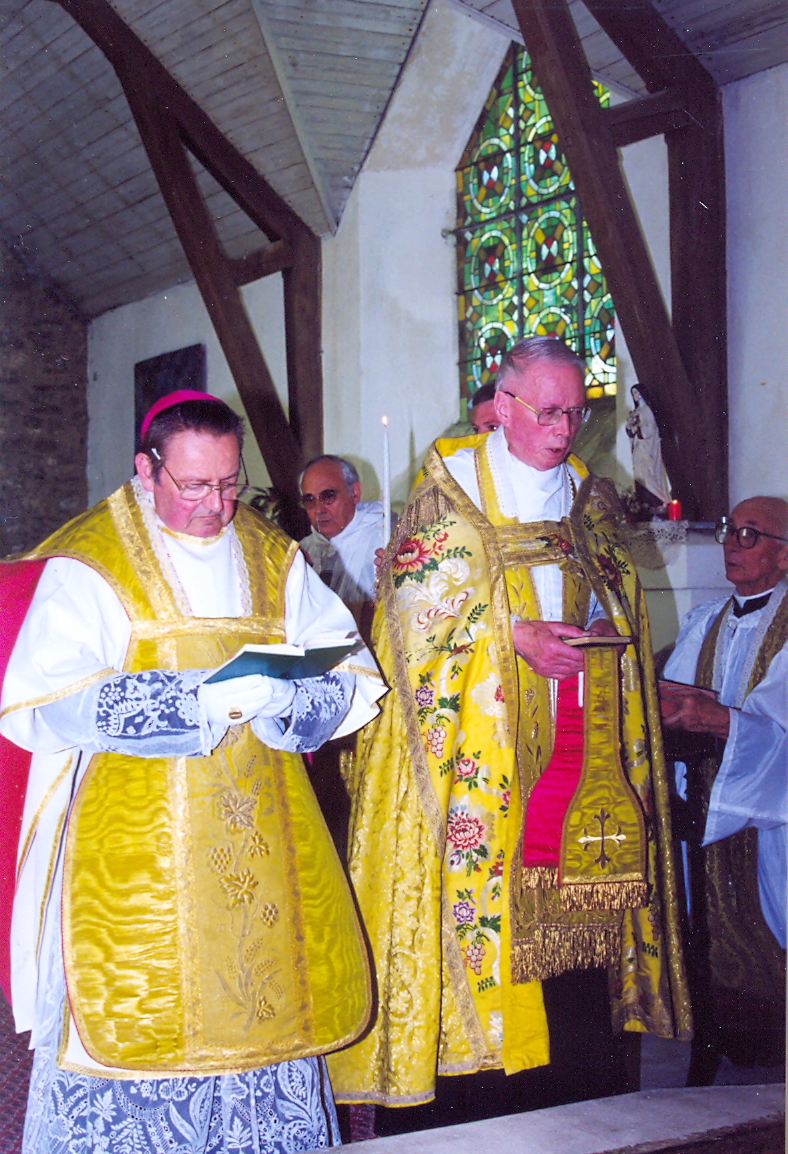
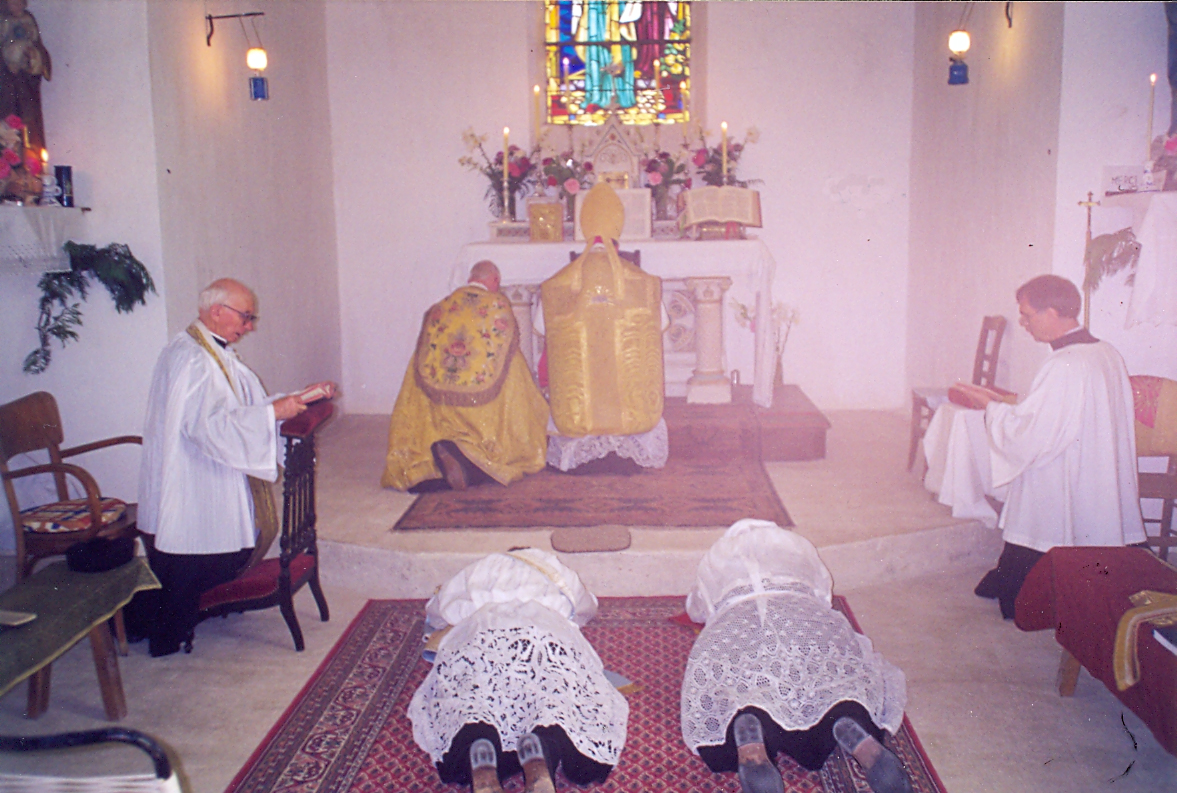
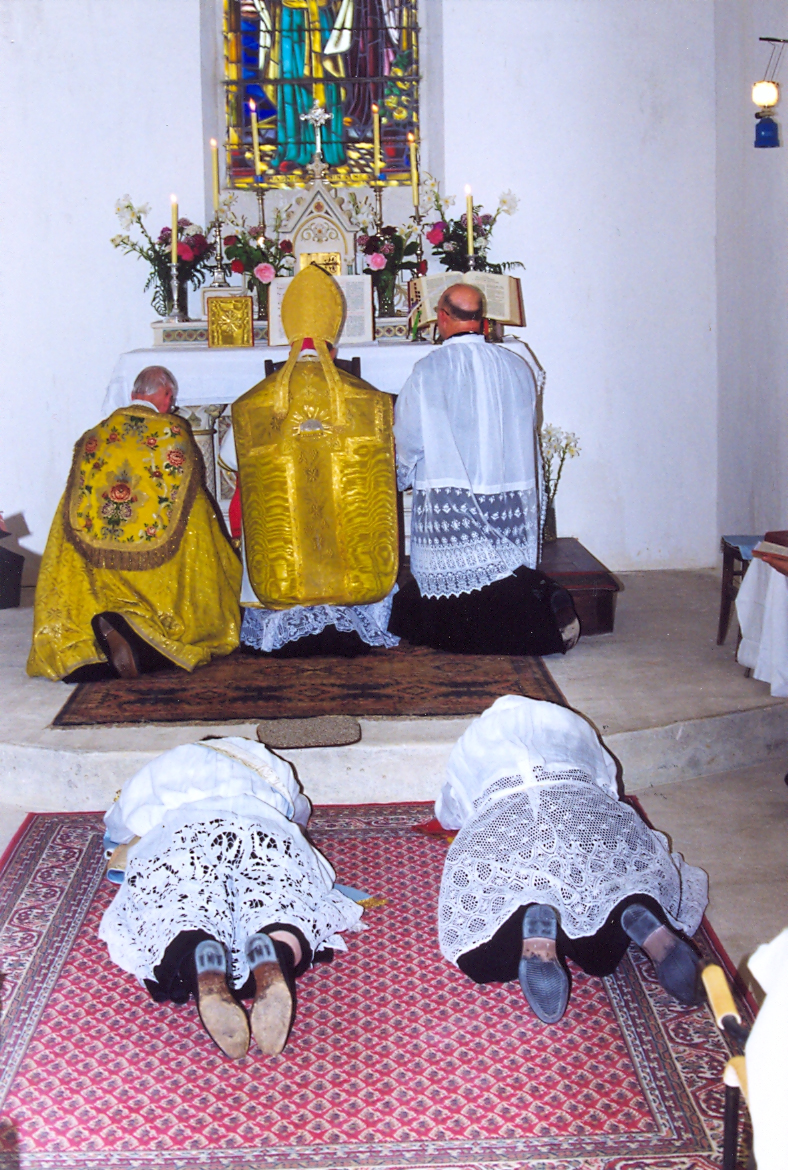
My “archdeacon” and parish priest of Bouloire was very influenced by the French monastic revival and the liturgical movement. The church would be sober and stripped from many of the uglier devotional trappings from the nineteenth century. He used the 1965 version of the Roman missal with many simplifications, and I have a lot of sympathy with this approach. The earlier forms of the Roman liturgy can be very finicky with the priest effectively celebrating a low Mass simultaneously with doing a high Mass with deacon and subdeacon. Medieval rites did not have the degree of rubricist rigidity as the Tridentine reform between 1570 and the 1950’s. Priests from that tradition tended to go so far in the reform movement before refusing the “hermeneutic of rupture” of the new liturgy under Pope Paul VI. Many mistakes were committed through “pastoralism” and imperfect liturgical scholarship. Mass facing the people was one of them as were some of the new bits and pieces in the 1950’s Holy Week rites.
There is the liturgy, but that is not all. At the same time, a parish priest trying to make his parish into a “lay monastery” is likely to make people “switch off”. You can only go so far. The spiritual life is of its essence personal and out of church. However, there is no opposition between the mystical life and the ways of the institutional church. Our spiritual freedom is bound to our practice of the Church’s liturgy, particular in the Mass and Office. The liturgy of the monasteries, cathedrals and parishes is the ground that nurtures our spiritual freedom.
No priest will succeed in making a parish of saints, but two things are essential – the celebration of a liturgy that invites souls to contemplation and doing everything to get people to be quiet in church, turning from profane conversation to prayer, switching off mobile phones and i-pods, making a transition from one world to another. It is not easy for any of us, as I can easily arrive at the altar with my vestments on thinking about things like shopping, work and daily business. The essential is to take just a few seconds before putting on vestments to shut up and remember what we are about to do.
This is something that increasingly strikes me when I go to weddings, first communions and the like. I often forget how noisy people are, both with other people and their electronic gadgets. I went sailing yesterday as the Tour de France took the coast road. Megaphones blaring, loud pop “music”, sirens of police cars and ambulances getting ready for any emergency. Like a scene from Apocalypse Now, six television helicopters flew over my frail mast and red sails. The engines thumped so loudly that I could feel the vibration though the tiller of my rudder. The vibrations were transmitted through the air to the water, and then through incompressible water to the nethermost parts of the earth. Imagine what it must be like for the whales and dolphins! The sea dampened out some of the noise, but the contrast between the silence of the sea and cliffs and the blare of the sporting event was quite surreal. Admittedly, I could not go out very far because there was little wind and a strong current and I had to think of safety at sea! Of course, we have to be real and tolerate people at their sporting events. But this level of noise has become so normal.
The transition from the profane to the sacred is not easy for any of us, but some of us are less attracted to limitless noise and hubbub than others.