Christian Humanism

The themes keep going through my mind – those of the Romantic’s lament over our passing as humans and our being brought back to a kind of feudal existence under the domination of the strongest. We have to begin with the fact that we are humans – the one writing this piece and those reading it, and then the rest of our species. As in the rest of nature, there is beauty, there is ugliness and there is death. Humanity lives and works like each one of us, creative, exulting, depressive, suicidal and every other mood within us.

Our attitude towards humanity, ourselves and others, will change according to whether we consider man’s greatest achievements and inspirations – or whether humanity is what we see in hospitals, mortuaries, death rows, prisons, corrupt countries and war zones. Our response can be anything from living life to the full, giving the same joy to others – or wishing for a meteor to hit the earth, big enough to send us the way of the dinosaurs.

I do believe that we have the Christian duty of affirming the good and noble in us so that it may overshadow sin and sickness. If that idea is motivated by the philosophy of life Christ set forth, then we are looking at Christian philosophy. The high point of this attitude caused the Renaissance, the reaction against the worst of medieval Augustinianism and the appeal to ancient Greek and Roman culture. The Renaissance was in the blood of Europe much earlier than many of us imagine and it was visible in many of the art forms we call Gothic. This movement was far more advanced in Italy and France than Germany, but the Perpendicular style in England was all part of it. It came to a head in the sixteenth century as Counter-Reformation Catholicism would follow the Renaissance whilst trying to keep it under authoritarian control. Calvinism and Lutheranism would seek to preserve the medieval Augustinian status quo and blame all the corruption on Renaissance idolatry.

Many have written on the passing of the Renaissance and humanism and the advent of a dark age, or an era in which no one knows where we are going. Many signs manifest themselves: the archetype of Frankenstein and the Greek myth of Prometheus, which colludes with the Gnostic narrative of the Demiurge and the Judeo-Christian notion of the fallen angel Lucifer who became Satan or the Devil. This would be the way of technological progress, breaking the taboos one by one. Another sign is the descent to barbarianism represented by Islamic jihadism and the present black stain on the Middle East. At some level, the two are linked by a conviction according to which humanity is but dross – but which is “redeemed” by strength and the lack of pity. Here, we recognise the strains of thought through Nietzsche and the crank philosophers who gave Hitler his archetypes to make his ideology take over the minds and imaginations of the German people. We speak of post-humanism and trans-humanism.

Perhaps one of our duties as Christians is to contribute to a revival of the Renaissance, not necessarily in its appearance, but in its underlying philosophy. Benedict XVI’s lecture at Regensburg in 2006 was a milestone as he brought out the fatal flaw of Islam (and fundamentalist Christianity by analogy) and appealed to Hellenism – to Greek philosophy. This way of thinking has underpinned the whole idea of reason, logical thinking and discussion and metaphysics for almost the entire history of the Church. On this foundation, theological speculation and thought become possible as does a tempering of the blind faith (or adhesion to a leader or an ideology) that can lead to fanaticism and hatred.

I believe that my blog has more or less explicitly been dedicated to such a movement of Christian humanism. It is important to distinguish the Christianity variety from the secular variety, for the Gospel gives the reason or λόγος behind such a consideration of our species and our personal and collective spirit. The secular variety leads to Promethean pride and the move from humanism to post-humanism. The boundaries are somewhat blurred when liberal Christianity colludes with secularism, the accusation thrown against Pope John Paul II and his existential personalism or Jacques Maritain’s ingtegral humanism. The conservative Evangelical or Catholic contends that God is everything and man is nothing, reduced to absolute ruin by sin. The most noble understanding of humanism would be, without qualifying adjective, belief in the intrinsic dignity and value of man, and his cultural creativity.

The old dialectic continues from the old Augustinian view of nature and grace, the effects of sin in bringing about corruption and death. In short, is humanity to be judged by the state of Hitler or Ted Bundy, or Shakespeare, Bach, Plato and St Francis of Assisi? Both? Everything in between? Then we have the misery of humanity caused by disease, natural catastrophes and sin. The general way of thinking in Christianity is that man receives his dignity from God, by sanctifying grace by what makes the spirit stand out from the animal soul we all have (we all need to eat, preserve life and reproduce – sharks and crocodiles too!). Is there a default state? Whether man is intrinsically sinful or endowed with rights and dignity will determine whether our response involves strength and force, or compassion and pity for weakness.

History has played out between lust for power and domination with the consequent extermination of the weak. This is the dominant thought of Darwin and Nietzsche, leading to Marxism and Nazism in the twentieth century – a world-view that persists in America in conservative circles. The Protestant Work Ethic is also an example of the victory of force, strength and thrift. You are worth your money, which is a sign of success and God’s electing grace. Reading Charles Dickens with the knowledge of this idea can be very enlightening. Outside the tiny minority of the elect, humanity is dross to be exploited, worked to death and eliminated at will. If they are poor, let them starve. If they are sick, put them down. If a criminal has sinned – an eye for an eye… and make the execution particularly sadistic! Human beings are totally depraved, so therefore are expendable. The only people worth anything are the elect – and they know they are the elect because they are successful and rich. I have the impression that Hitler and his gang of goons were only the tip of the iceberg. Cut off one tentacle and there still remain seven more…

I understand the temptation. If we have strengths and talents, it is too easy to de-humanise the sick and support capital punishment, refuse to help the poor (they don’t help themselves when they are obviously scamming). We hear about yet another Daesh atrocity and wonder when the meteor is going to come and end it all. Our lying politicians disappoint us profoundly, hypocrisy and treachery from our loved ones and friends, the “nozzle of weirdness” as a Canadian journalist mentioned a few years ago.The decision is ours.

We are faced with the worst of human nature as Renaissance culture evaporates away, not only in its artistic expression but also the rational and spiritual faculties of man. I have no need to recite the litany of ills here. It is well known. Apart from crime and the drifts of science, the century of my birth saw two world wars and totalitarianism. It is also understandable when we hear the banalities of liberal talk in politics, the media and academia. As we get older, we generally become more cynical and disbelieving. We approach death and wonder if the all-destroying meteor would not be a good thing! We were once young and hoped. Do the young people of today not have the right to hope and wonder in what is good, noble and beautiful?

Renaissance humanism gave learning and philosophy, or rather a new angle to add to the heritage of medieval thinkers and saints. Erasmus called for a study of the Fathers and the Scriptures in Greek and Hebrew. Christian humanism brought in the image of God in humanity as the base and source of the dignity of the human person. Life is a gift to be enjoyed and not merely a preparation for our life after bodily death.

Christian humanism, if it ever returned to churches, would herald creativity and restore compassion and pity. It would see the possibility of redemption even for the most hardened sinner, and would oppose cruel punishment. Eastern Orthodoxy has a greater emphasis on the notion of personhood, certainly derived from its theology of the Trinity. We need to seek what is good, noble and beautiful, encourage the arts, education and courtesy.

The Calvinist temptation is never far, nor is its parallel in Catholicism in the form of Jansenism and other exaggerations of Augustine’s doctrine. One can say that if God created everything only for his own glory, it shows a narcissistic and sinful deity. One wonders about the Gnostic belief that the creator was a lesser entity than God! Wesley, following the Arminian tradition, taught that God created out of love and that he loves all human beings even if they are sinners.

Such optimism about humanity may be a dangerous illusion that has outstayed its welcome. History seems to vindicate power and success, the survival of the fittest and the elimination of the weak and inferior. Man is often brought to believe in his own evolution and triumph, but as technology evolves, morality is perverted and defeated. There are scientific articles claiming that human DNA is degenerating and will eventually lead to the extinction of humanity (if something else doesn’t). It seems clear to me that what gives humanity dignity and worth is the image of God by deifying energy (sanctifying grace), and that our vocation is to come to knowledge of this image through knowledge of our true selves. I am intrigued by the idea of Annihilationism, the notion according to which those  who reject God and his image in us face non-being after their bodily death, something like what atheists believe, the difference being that some would be immortal and others would cease to exist. I do not affirm belief in this theory, since I am attracted to Universalism (conversion and sanctification would be possible after bodily death so that the person has a “second chance”), but I find it intriguing.

Surely non-existence is the one thing that makes death so frightening to those who believe in “universal annihilation” (atheists). If such an idea is to be believed, then why bother?

I leave this posting open-ended for views and comments, as I have no real certitude in this matter.

Posted in Uncategorized | Tagged , , | 2 Comments

This one wasn’t written in the Villa Diodati!

I allude to the posting of a couple of days ago about the summerless year and the little threesome of Romantic poets in 1816 challenging each other to write scary stories. Mary Shelley wrote the terrifying and captivating story of Frankenstein. This poor unfortunate creature, made from parts of dead bodies and brought to life with electricity fascinated my childish imagination – and ever since, from Boris Karloff from 1931, to the corny Hammer horror films of the 1970’s to a rather good production of the 1990’s.

The whole story is one of playing God, superseding humanity with science and arrogant manipulation of life itself. We now know that electricity is not life, and that “galvanising” a dead limb does not give life, but simply makes the muscles contract and move. We now have the spectres of genetic engineering and cloning, heralds of a post-humanist and trans-humanist world. I have every chance of not living long enough to see it in its full horror.

They have gone a step even further. Making people from scratch? No need for parents when you have the right chemicals. There is a secret project to create a synthetic human genome.

I ask many questions. First of all, would it work? Would the product be a biological organism with its own life and what we call a soul and spirit? Those of us who have read and watched Frankenstein are divided between the monster being a human being or some kind of malevolent machine. The creature’s various gestures of humanity in Mrs Shelley’s story lead us to believe in a being with a soul. The same question comes up with cloning and genetic manipulation. A possible opinion is that cloned humans would be as human and endowed with a spiritual soul as anyone born via two parents or conceived in vitro.

Another spectre is that of humans enhanced by machines or non-organic material. False teeth and prosthetic limbs have been around for a long time, as have pacemakers and metal replacements for arthritic joints. I have two pieces of plastic gauze in my body which a surgeon used to repair two hernias. All those devices are generally accepted in medicine and surgery and have distinctly improved the lives of those who need them. Science fiction evokes the possibility of futuristic computers planted in the human brain to enhance our mental performance. The idea of bionic humans has been on the go for a long time. Electronic devices can help people with Alzheimer’s or Parkinson’s disease. Where is the dividing line between modern medicine and “playing God”?

My intuition would tell me that the difference is between helping incurably ill or disabled people using technology and making man what he is not. Even worse is the idea of creating humans or “synthetic humans” outside human reproduction. Cloning is monstrous, though it can be argued that nature occasionally clones, as in the case of identical twins. A Star Wars film shows a planet used as a clone farm and the products bred for the Empire’s army. The film The Boys from Brazil portrays Dr Josef Mengele as having escaped justice in 1945 and established a laboratory in South America to make clones of Hitler. In the film, a scientist explains the process to Ezra Liebermann, the fictional character based on Simon Weisenthal.

As the western world sloughs off Judeo-Christian principles of the sacredness of life and the dignity of the human person, we can begin to be very afraid of what lies in store in the future. This Angst has been with us since Frankenstein or the Modern Prometheus from two hundred years ago. Technology evolves at a dizzying rate, but man seems just as morally bestial. This is certainly the reason why individual humans have a short life-span. I certainly would not want to see what might exist a hundred years after my death! It would either be a utopian or dystopian vision from science fiction or a black, charred and desolate planet without life.

Why want to create “perfect” humans? Wasn’t this kind of stuff supposed to have been done away with when the Nazis were defeated? Evidently, trans-humanism and eugenics were not specific to Hitler’s ideology. From Mary Shelley to Star Wars, we are faced with the fact that man is at his most ingenious when devising weapons of war and machines of destruction.

Usquequo, Domine?

Posted in Uncategorized | Tagged , , , | 1 Comment

Low Mass

I found A liturgical abuse… very interesting on my old friend’s blog. As usual, Patrick is a tad categorical. He sees it from the point of view of a layman, and myself from the point of view of a priest who rarely has anyone at Mass. That leads to another issue, on which I have already written in Mass without a congregation. Anglicanism since the Reformation banned it and Roman Catholic canon law has only loosened the ban since the new Code of 1983. Before then, a priest who was on his own like Fr Charles de Foucault had to apply for an indult to say Mass without a server.

Should Mass be forbidden unless there is everything required for High Mass with music and full ceremonies? That would be excessive. Most of the masses I celebrate are solitary. I have the cruets on the altar and make my own responses. It isn’t ideal, but daily Mass helps me to maintain a priestly identity, however minimal, as well as being the sacrificial prayer to God of the entire Church including the saints and the souls of the departed. Should I stop saying Mass? I have already answered the question, and that answer is largely determined by the place where I live.

The subject is this article is really the use of a specific “low mass” model when celebrating Mass with a congregation with or without a server. The problem goes back a long way to the various late medieval scholastic theories of the distinction between the one Sacrifice of Christ on the cross and the application of that sacrifice through the sacrifice of the Mass. The more Mass is celebrated, the more the Redemption is “effective”. I frankly find the subject boring, but can recommend Fr Joseph de Sainte-Marie, L’Eucharistie, Salut du Monde, Paris 1981. I am sure that an English translation exists of this work.

During the period after the Council of Trent, churches in towns put on as many low masses as they had priests and one high mass (capitular, conventual or parochial). People could freely go and receive Communion at the side altars if they were at peace with their consciences, and lay Communion was rare until the beginning of the twentieth century. There arose a tendency for some people to prefer low mass to high mass for reasons of expediency or because they preferred quietness for their devotions to a liturgical service with ceremonial and music.

I touched on the “low mass ideology” when I wrote my mémoire at Fribourg University, but found I had little to add to the usual dialectics between traditionalists and those promoting pastoralism and modern liturgical forms like Mass facing the people. Rocks and hard places, Scylla and Charybdis, you name it. During the time I spent with the traditionalists, I found the medieval theories and practice perpetuated – the “blessed mutter of the Mass“, high mass ceremonies as something added to the “primitive” form. If we study the Tridentine ritus servandus, we will see the essential structure being a priest saying low mass with the sacred ministers “adding ceremonies”. This was the greatest defect of the Tridentine codification, and it went unnoticed. When I did my research in Fribourg University Library (no internet in those days), I discovered the collusion between late medieval scholastic theory and practice and those of Luther, Calvin, Cranmer and others. I wrote:

The Mass came to be regarded as an occasion of private and subjective devotion: such an attitude would lead inevitably to the protestant conception of the Eucharist. The logical development would have been to remove the external action, leaving the individual to his devotions.

Looking at my footnotes, I referred particularly to Dom Gregory Dix, The Shape of the Liturgy, London 1945. Dix quoted the English Puritan divines as having said:

The minister is appointed for the people in all publick services appertaining unto God, and the Holy Scriptures both of the Old and New Testaments intimating the people’s part in publick prayer to be only with silence and reverence to attend thereunto.

That is a direct consequence of the “low mass mentality”, even though the rites were mutilated and emphasis was placed on community, communion and memorial. This quote expresses an even greater degree of clericalism than in the medieval Church! It is true that such a notion led to the drab and dreary services of the eighteenth century or the average Roman Catholic parish since the 1970’s. Mass facing the people alone would not reverse this underlying mentality.

What about my own experience? Most of the masses I say are celebrated by the priest alone and without music, though I do make the effort for some feasts to use incense and sing the ordinary and proper of the Mass, either in Latin or English. Whatever I do, I either have no one in the chapel or occasionally my wife and mother-in-law (for whom I say Mass in French according to the best translation I have compiled myself from other sources). It is still a low mass. The only difference is that it is something imposed on me rather than something I have chosen for theological and spiritual reasons.

This is not confined to my own situation, but also to many other places or worship and priests who are struggling with practically nothing. It isn’t the ideal, but we do what we can.

I wouldn’t sail the Atlantic in my twelve-foot boat – if you get my meaning. But, I would do it in a ship with the right skills and crew. That is something else…

Posted in Uncategorized | Tagged , | 9 Comments

Nearly Ready…

preparation-boatIt looks a mess for the moment with the boom, yard with mainsail and rudder lying in the hull, not at all Shipshape and Bristol Fashion, but Sarum will be ready when I launch her next Tuesday at the Port of Tinduff on the Rade de Brest. It makes a big difference when the rig is in its proper place and leaves more room in the hull.

These two photos are taken from the Port’s official website.

The amazing thing with this slipway is that it can be used at all tides and enables you to launch a boat into the water at any time. I can then tie up against the wall whilst I go and park my trailer and leave everything tidy for the fishermen and other users.

It is an exciting time, like the children in Arthur Ransome’s novel Swallow and Amazons when they arrived in the Lake District from London by train! My adventure for last year was the Semaine du Golfe on the south coast of Brittany. This time, I will be sailing on the Rade de Brest at the western tip of the Finistère and will go far up the river Aulne inland on Friday 17th to join the Route du Sable, which promises to be a numerous flotilla this year, on Saturday 18th.

I found this fine idea on a sailing forum.

mirrorWhen you row a boat, you have your back to the bow and have to keep turning your head to see where you’re going. Someone in Victorian times came up with a complicated idea of an oar mechanism so that you would face forwards and pull the oar handles in the normal way. The oar mechanism would reverse the direction and hey presto. This convex mirror eliminates the Steampunk mechanics! This idea is inspired by the rear-view mirrors of road vehicles, so that you can see what is behind you. These big mirrors are sold in car accessory shops as safety devices to see the road when you have a blind corner getting out of your gate or garage. I have taken this photo from about where I would be sitting on the thwart for rowing – and the view is very wide. I use a G-cramp to attach it to the lazarette of the boat, and I remove it for when I’m sailing – because it is only needed for rowing. It will be interesting to see how well it works when we pass the first or second lock on the Aulne and find there is no wind. In any case, the mast has to come down for going under the two low bridges of Châteaulin when we go and tie up at the municipal campsite to have lunch on Sunday (I’ll need to say my Office early in the morning at Port Launay).

Posted in Uncategorized | Tagged , | Leave a comment

The Year without a Summer

villa-diodatiIn these early days of June, my wife has been complaining about the cold and wet weather. We have been lucky to avoid the floods that have driven many people from their homes, not only here in France but even worse in Germany, Holland and parts of the United States. It is not very cold, about 13°C, but very damp with cloying drizzle.

I suggested to her that we could go to Switzerland and rent a villa by Lake Geneva. Of course, we would not be able to afford it, but I did suggest that we would light a hearty log fire and write horror stories and poetry. I had to explain to her what I was alluding to: the year without a summer of exactly two hundred years ago. The foul climate, partly caused by an extremely big volcanic eruption in Indonesia, caused one of the greatest events of English literature, the summer months spent at the Villa Diodati near Geneva by Percy Shelley, Mary Godwin (Shelley’s future wife) and Lord Byron. The most enduring piece of prose fiction was of course Frankenstein written by such a young and fair lady. Lord Byron waxed melancholic as he wrote Darkness. Percy Shelley perished at sea six years later in 1822.

Mount Tambora in Indonesia

Mount Tambora in Indonesia

I think it would be a gross exaggeration to compare our present miseries with that blighted year in the Romantic era. The present outlook shows a gradual improvement over the next week or so as a south-westerly wind chases away the static thunderstorm cells over central and eastern Europe. Temperatures will remain a little under average for the time being, and we wait for the next anticyclone. There have been many volcanic eruptions this year in the world, but I have not read a scientific opinion to the effect that we were in some kind of “nuclear” winter like in 1816 because of Mount Tambora.

I ask your prayers for the many people forced to evacuate from their homes, for families and for those who have lost relatives and friends in the floods. We are not yet at the end of the world, not by a long chalk, and I am sure that this year’s summer will be little different from the ones of these last few years.

Posted in Uncategorized | Tagged , | 1 Comment

Butcher’s Shop Devotions

That is how I have heard the feast of the Sacred Heart spoken about – I think it was in a novel but I can’t remember which one. It might have been Morris West who wrote an almost prophetic novel about an Ukrainian bishop elected Pope and released from a Gulag prison camp in Siberia. Anyway…

Yesterday, seeing this feast in our ACC calendar, I celebrated yesterday the votive Mass of the Five Wounds, a devotion that was especially popular in pre-Reformation England and in some other places. Fr Hunwicke has most eloquently written on this topic many times. Most of us, at least those of us with a whit of empathy, relate to the sufferings of others – so it is as we consider the suffering and tortured body of Christ in his Passion. Just out of Paschal time, we find ourselves again contemplating the Passion.

My brother in the priesthood, Fr Jonathan Munn has written The Authenticity of the Sacred Heart. I am very much with him in his eschewing the habitually tawdry, cheap and vulgar representations one find in piety shops selling bondieuseries. Fr Munn draws out attention to another dimension of this part of western Catholic piety around Christ’s Passion and the parts of his body where he was afflicted the most, namely his hands, feet, heart and head. Of course, every other part of his body was horribly mutilated by the flagellum, which would have been much worse than even the British Navy’s cat o’ nine tails. The hands, feet, head and heart are all symbolic of a spiritual reality beyond wounded and dead flesh.

No iconography has ever perfectly portrayed the mystery of Christ and the Redemption. Our perception is limited. Perhaps our devotion will be that much more authentic with a Platonic-based notion of the body and parts thereof being mere signs of something spiritual but no less real.

Posted in Uncategorized | Tagged , , | 1 Comment

Cold Shower

Update: See When Christianity is at its best. Does anyone know of such ideal communities?

* * *

I have had quite a number of reactions on my posting about trying to play the violin as a wind instrument or bow the valves of a trumpet. Some perhaps suggested that ceasing to discuss archaic liturgical forms would favour the work of engaging the modern world with the Christian faith and witnessing among unbelievers. Perhaps. It seems a good argument, and it is obvious that there are several billion Christians in the world, but probably less than twenty persons in the world are remotely interested in Sarum. I attempted a response to an English conservative Roman Catholic who is satisfied with the modern Roman rite and advances the usual conservative arguments. I suppose I should exclaim that I had “never thought of that” and go to my local parish church, served once a month, go through the canonical process of laicisation then perhaps persuade the brave people of our village who are not terribly interested in religion to become model urban conservatives.

I have to admit that I am somewhat “out of it”. I see little of the world living in the countryside in a dormitory village and consulting a fraction of a percent of the Internet. It looks like I am irrelevant. The modern clash and bang of “pop” and rock “music” shocks and frightens me, though it often comes blaring out of car windows as my wife and I go to town for a concert or do some shopping or sort out serious stuff at the bank. I am glad to get home to the cows and apple trees, and better still, get out to sea – the ultimate desert. The reflection keeps coming into my mind: Relevant to what? Everything has been tried and the Christian ideal is utterly incompatible with everything round us.

This came up today, and expressed things so well: The culture war is lost – now get on with being counter-cultural. That seems quite a mouthful. We have French bishops deciding to challenge laïcisme, which is obviously atheism as an official “religion”. Give up engaging in politics and there is no further point to anything. That is quite an epitaph! The liberal left is more resilient than what most conservatives would like to believe. Liberation theology gone all the way! Christianity is no more than a load of empty words with no meaning except a twisted one taken from some ideology based on Marx, Nietzsche and Darwin.

I don’t have to give a précis of JD’s article here, but there is an idea that emerges from the thick London fog. The culture we are in is a manufactured culture as never happened in the past. That notion is extremely far-reaching.

Christianity’s natural home is: a) in defiance of the dominant culture (which often tacitly endorsed a morality Christianity openly rejected) and b) along the borderlands of law, always walking the line between questionable legal status and outright illegality.

The trouble is knowing what Christianity is nowadays in terms of churches. Institutional Christianity seems to have become an image of the current situation in France: a governing party calling itself Socialist but manifestly serving the oligarchs and the elite, and a workers’ union representing ideas that were discredited in the late 1980’s and early 90’s. The weakest will collapse, but the stronger will not necessarily be right.

I am reminded of the much-bandied idea of Josef Ratzinger about the remnant church, something like the underground churches in the Soviet bloc at the height of the persecution. But, in the west, I see little evidence of their existence, whilst there are brash, noisy churches in the cities with lots of people and with no opposition from the political regime. The traditionalists tried to fulfil that role in the 1970’s and early 80’s, but they were eager to join the respectability club and get their justification from political groups. Only the monasteries seem to have something of that gratuity of Christianity as a spiritual way and a philosophy of life. Even then, too many monasteries remind the observer of the barracks! Too many pinched faces who don’t exactly exude the joy of the Resurrection!

My little chapel and my eccentric quirks hardly seem to herald the future. In worldly terms, what I value and represent is dying, as it did at the onset of the Reformation. In historical terms, I will soon be a thing of the past, forgotten and obliterated by the needs of the living. I say this but I am not depressed, just starkly realistic. Blessed Charles de Foucault was shot dead in 1916 by a group of Islamic zealots, and all he did was to live a contemplative life in a desert that was as barren in geographical terms as in human terms. He was not forgotten, but was totally irrelevant in his lifetime and did not convert a single Muslim to Christianity. In worldly terms his life was a waste and a failure.

Except a corn of wheat fall into the ground and die, it abideth alone: but if it die, it bringeth forth much fruit.

Posted in Uncategorized | Tagged , , , | 14 Comments

Pisser dans un Violon

The French expression conjures up a repugnant image of someone urinating into a violin. An earlier form of the expression conveyed the idea of blowing air into this stringed instrument, something that would not make the violin play music either. The real meaning is doing something useless or ineffective.

I received this link this morning: A (proposed) Open Letter regarding the Restoration of the Sarum Rite by Bernard Brandt. The effort is valiant, and I admire Bernard Brandt for trying it even though Fr Sean Finnegan and his correspondent in Rome gave up.

I am reminded of the scene in the film 1492 where Christopher Columbus is rehearsing an explanation of his seafaring project for the theologians and the dreaded Spanish Inquisition:

Columbus: I believe the Indies are no more than 750 leagues west of the Canary Islands.

Antonio de Marchena: How can you be so certain?

Columbus: The calculations of Toscanelli, Marin de Tyr, Esdras…

Antonio de Marchena: Esdras is a Jew…

Columbus: So was Christ.

Antonio de Marchena: Two minutes and you’re already a dead man.

Columbus: For telling the truth?

Antonio de Marchena: Yes. They are burning people for less. The men you are about the confront have no emotions. You must learn to control your passion.

Columbus: Passion is something one cannot control.

Bernard Brandt’s letter is measured. Certainly he should try it, because he doesn’t risk being tortured or burned at the stake. At least that. The big problem is that there is no popular movement for the Use of Sarum, nor is there an idea that availability might arouse interest.

I believe it is a lost cause in the Roman Catholic Church. My doing it as a priest in the Anglican Catholic Church is tolerated, but no one else seems to be interested. There have been conferences and talks in Church of England and Episcopal Church circles. I celebrate it myself, but I hold little hope for the future. Sarum has been utterly crushed by the juggernaut of the Reformation and the Counter Reformation. Until the 1960’s, Rome regulated the liturgy like Brussels EU-dom regulates the size and shape of vegetables. Now it’s the Novus Ordo.

I wish him luck, but I won’t be holding my breath.

Posted in Uncategorized | Tagged , , | 16 Comments

Spinners, Lures and Fly Line

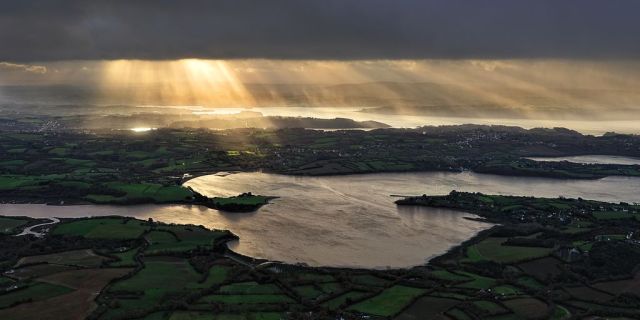
rade-brest-airI would seem an odd title, but easily explained. In the same way as I take time preparing my boat for something beyond a brief day-sail, I used to sort out my fishing tackle as a boy. I had several rod and reels: fly fishing for trout, spinning or using bait to catch fish that look for food on the bottom. All these different methods of fishing require piles of different kinds of line, hooks, lures, floats, lead weights – all of which would go into a plastic box with drawers, rather like nails, screws, washers, etc. in a workshop. I labelled one of the drawers, “spinners, lures and fly line“. The three categories of things had to share the same drawer. Fly line is thick and designed to float, so takes up quite a lot of space. That would fit in one compartment of the drawer, and there was still a little space for the spinners and lures. Spinners are curved metal plates attached to the line and hook, and would catch the fish’s eye and provoke the predatory instinct. Lures are more like imitations of worms or small fish. It is quite a world! I gradually lost interest in fishing as I went through school and my mind was taken with other things. The label – Spinners, Lures and Fly Line – stuck in my mind.

This time, it isn’t fishing tackle but three blog entries that may have something in common well under the surface. The first is a posting by my friend Patrick – What is there to like?

I was a little tickled by one of the comments – “Look at Fr Anthony down there in Normandy. Does he bother with Rome much these days, between his new church and his sailing?” Perhaps I am something of a harmless fool messing about in boats. Why not? Most of us live little lives and pass on what little we can to posterity. Perhaps this is precisely the point, that Patrick has something to pass on to posterity. I was rather impressed by his writing, even though it would be dismissed by Roman Catholic apologists.

What is there to like? That seems to be the question. In life we do many things for pleasure and other things by necessity or duty. As soon as I finish this posting, I have to get back to a boring technical translation about quality control in the steel industry. Then I have to go onto my online banking site and get my calculator out! Normally, it’s business before pleasure, but today I’m doing my blog first. Obviously, traditional Catholic liturgy brings pleasure as well as an occasion for the contemplation of God. Most convinced Catholics tend to be much more serious than Patrick or myself – accounts, asceticism and morality before anything pleasurable! We seem to be looking at to the old disputes of the pre-Christian classical world between the Stoics and the Epicurians. Things don’t seem to be so clearly distinguished nowadays.

Some of us do tend to get steamed up with the idea that things could have been so good, but were messed up by things like the exaggeration of Papal authority and positivism in canon law. Patrick writes what he feels, and I tend to make a more conciliatory approach. His writing seems to convey hatred and bitterness (which I don’t think is the case) and I tend to measure these questions of the Church against the wider issues of the modern world: our current slide down the slope towards totalitarianism and a world in which I would not want to live. Going by the probable time scale, that is likely to be the case for me and others of my age! Our world is dominated by very rich people and career politicians who care nothing about the common good and peace between nations. Going by appearances, the current Papacy is trying to fit into that morass in a kind of Erastianism never known to the Church of England. Pope Francis seems to show the bathos of a long history of an ideology that made nonsense of a Christian faith that seems totally forgotten and choked by weeds. In many ways, I agree with Patrick, but I moved on and found a Church with which I could relate and took up sailing. This year, I might take some fishing tackle and see if I can vary my diet on the Rade de Brest with a nice fresh mackerel cooked in white wine on my camping gas burner!

Perhaps we can be thankful to Benedict XVI and Francis for having demolished the mythology of the Papacy, one by resigning and the other by saying things no one would ever have heard from a Pope in the past. I wonder what the world will say when we read stories of two emeritus popes living in former convents in the Vatican gardens and the new guy being a CEO in a power suit or another guffawing extrovert clown keeping the crowds amused. I have read musings of this nature. I have also seen evidence that Benedict XVI has no problem with the present situation. The image some traditionalists and conservatives made of him were only based on appearances and Ratzinger’s taste for beauty. The real problem is not the Popes but conservative clergy and lay people who seek to project a Church that no longer exists on the screen and call it the “true church”. I say – let them do what they want, because I recognise no authority in them.

I bare no hatred, but I do observe that the system has trashed itself if we look at it from a conservative Catholic point of view. However, most of the clergy and faithful have gone along with the “normal” ways: the current political orientations, political correctness and something like the American mega churches. It seems to be the right thing for the majority of western humanity, over which people like Patrick or myself have no more control than over the weather or things moving around at high speed in outer space. We have to learn to let go and rely on ourselves more. For that we have to make our own spiritual and psychological pilgrimages of individuation and integration. In ordinary language – we have to learn to be ourselves and not rely on others. So I have earned the reputation of being between my “new church” and sailing! I could think of worse…

I like Patrick’s reflections on the pre-Tridentine Church. Unfortunately, most of it is illusion and romantic in the sense of filtering out the nasty superstitious and obscurantist stuff away from the rood screens and apparelled amices. Using the vernacular in the liturgy goes back to fifteenth-century Germany, and we Anglicans made a success of it. I have a very fine English translation of the Sarum Missal (Canon Warren) which I use most of the time. The Counter Reformation is beautifully summed up in its effect on the liturgy:

We’re constantly told by apologists of the “traditional Latin Mass” that the Tridentine reforms were minimal, but go into any major cathedral church in Europe and you will not find a Rood Loft or chancel screen, which were all used in divine service before the Reformation. Why? They were mostly dismantled and destroyed following the introduction of the reformed Missal and Breviary, and so any visual continuity with the Middle Ages has disappeared from the most prominent churches on the continent. During the 17th and 18th century a period of liturgical revival against these Ultramontane encroachments flourished in France and elsewhere, misnamed “Gallicanism,” which was soon condemned and crushed by Rome, and then ridiculed by Dom Guéranger, one of the most arrogant and destructive men of the 19th century.

The order of Mass was very little different from the 1474 Princeps edition and the Ordo of John Burchard. What really changed was the spirit of it all, the ultra regulation over the details of the rites like the European Union on the size and shape of carrots! I wonder if anyone has made that comparison before… When that carapace was finally broken, the equal and opposite reaction was the arbitrary and “spontaneous creation”. The parallel movement in Anglican was rather a copy-cat imitation of Rome but without understanding the underlying issues. You will find plenty of “modern” liturgies in the Church of England with altars facing the people – but less nonsense and clowning about. The answer is to stop depending on other people and to take our lives into our own hands.

Unlike Patrick, I am a priest and can celebrate Mass. In one way, I am more independent than a lay person, but I am still a soul in need of God’s mercy and the ministry of my Bishop and brother priests. Complete independence goes against the very meaning of the Church, but the Church is a select group of human beings, people who have a different understanding from the materialist hylics. That distinction was broken in about the fourth century as the persecutions by the Roman Empire ceased. The Church become political instead of contemplative – Ecclesia persecutionibus crevit; post quam ad christianos principes venit, potentia quidem et divitiis maior, sed virtutibus minor facta est (The Church firstly languished under persecution. After this, she turned to Christian rulers who gave her wealth and power, but she thereby grew weaker in virtue) in words attributed to St Jerome. All Churches go that way, because of human concupiscence for power and money and the correlative loss of faith, grace and contemplation. I dread the day of my little Anglican Catholic Church joining the respectability club and the World Council of Churches!

Then, there were two other articles that grabbed my attention. The next one is The World We Have Lost (Redux) written by David Sullivan, one of Patrick’s critics. The theme of the good old days is a temptation for any of us getting on in years and seeing our hair go whiter and our bodies becoming worn out and needing more visits to the doctor and care. I don’t have the impression of the 1970’s like my grandparents had of the 1920’s and 30’s. That fact would indicate something of a real change (not merely subjectively perceived) between the inter-war years and now. They had Hitler and we have Obama, François Hollande and the EU! David Sullivan has noticed something that has brought about that change, a notion he found in George Orwell’s writing:

Capitalism is disappearing, but Socialism is not replacing it. What is now arising is a new kind of planned, centralised society which will be neither capitalist nor, in any accepted sense of the word, democratic. The rulers of this new society will be the people who effectively control the means of production: that is, business executives, technicians, bureaucrats and soldiers, lumped together by Burnham, under the name of ‘managers’. These people will eliminate the old capitalist class, crush the working class, and so organise society that all power and economic privilege remain in their own hands. Private property rights will be abolished, but common ownership will not be established. The new ‘managerial’ societies will not consist of a patchwork of small, independent states, but of great super-states grouped round the main industrial centres in Europe, Asia, and America. These super-states will fight among themselves for possession of the remaining uncaptured portions of the earth, but will probably be unable to conquer one another completely. Internally, each society will be hierarchical, with an aristocracy of talent at the top and a mass of semi-slaves at the bottom.

We have not reached the end of history when everything is money, nothing else. The process of change is still continuing. I have been criticised for being too individualist in declaring independence. I have ceased to concern myself about where people in the street are going, what clothes they are wearing, what they believe or whatever. To me, they have become ghosts in a world with which I relate less and less. I respect them and just leave them to go about their lives unknown to me. It can be a temptation to look through the windows of someone else’s house – and when we do, what do we see? Nothing interesting. Interior fittings and furnishings of a taste different from our own. What’s the point? Life is too short. People are being gathered up into a mass according to a principle other than a spiritual communion. This is post-humanism, trans-humanism, a future which is not mine. People have become or will become machines, mindless cogs in a mechanism – a dark satanic mill that Blake could never have imagined!

So as not to end on a note of nihilism, I found this study – Why do only some people get ‘aesthetic chills’ from listening to music?

It is something I have noticed in my life, and rather took it for granted. I remember some years ago at a concert at St Ouen in Rouen. The Organ Symphony of Saint-Saëns was on the programme, the organ being one of the finest built by Cavaillé-Coll. I was entirely in goose pimples and my face streaming with tears. It was quite embarrassing for my wife who was sitting next to me. It is not the only time in my life. The article described the minority of people who experience physical reactions to music as “open to experience”.

Studies have shown that people who possess this trait have unusually active imaginations, appreciate beauty and nature, seek out new experiences, often reflect deeply on their feelings, and love variety in life.

It seems to be a perfect description of the Romantic, the sensuous human being unconcerned for “moral respectability”. I found the idea quite flattering. We need to be ourselves, break with things pertaining to mere social conformity. Perhaps this is the real meaning of Nietzsch’s Übermensch, not the Nazi goon of Hitler’s hell, but the person set apart to discover and dare to forge ahead. I think it will be the same with the Church, the reason why many of us have broken away from the spiritual “Brussels” to form smaller and more human units and communities. When these go the same way, then there will be other small communities to carry the flame of Christ and freedom from Leviathan. We have to have the imagination and the will to break away and go where we are called.

It often happens that discouraged people write to me and ask my opinion on things like the Church and their place in the world. I am not a spiritual director. I can’t direct people any more than someone who doesn’t know me can tell me what to do. Spiritual directors in seminaries are as useless as tits on a boar! I have developed the idea of a spiritual retreat from what I experienced as a seminarian to the lone man on the immensity of the sea in a tiny boat. I will spend some days alone on the Rade de Brest in my boat before joining the big gathering from Friday 17th June. The beauty of nature, imperfect and blighted as it is, serves as an icon of God and infinity. My only break will be my visit to Brest for supplies and needs of bodily hygiene!

The essential, whether or not we sail or climb mountains, is to get out and about, balance our minds and spiritual aspirations. Learning is also important – reading philosophy, history and theology. The third important thing is to create, and I haven’t done enough of it: write, compose music, draw and paint – use our talents to the full before our dissolution and bodily death which seems so radical and irreversible, so final and cold. We still have a little time left.

Thus I close the drawer of the plastic box marked Spinners, Lures and Fly Line. One can only begin to imagine what is in the drawers marked Hooks, Weights and Floats. Go, catch a big fish!

Posted in Uncategorized | Tagged , , | 8 Comments

France is sinking!

I have been thinking a lot about the present situation in France. Simply put, the Socialist government of François Hollande and Manual Valls has forced through a bill for a new law governing employment and labour. The employers would have more leeway to be able to adapt their workforce to their companys’ order books and economic conditions, in theory making it easier and less risky to take on new employees. The bill is rejected by the workers’ unions as regressive in terms of the rights of workers.

The extreme-left, almost discredited in modern Europe, is still active in two of their trade unions, the CGT (Confédération générale du travail) et the FO (Force Ouvrière). Recently, lorry drivers were told they could keep their overtime bonus, but that the bill would go through and become law in July 2016. The two trade unions are still blocking oil refineries, and it becomes increasingly difficult to re-fuel our vehicles and many fuel stations are dry. They now threaten the entire transport system and are hoping to call the already highly-privileged nuclear power station workers out on strike. They intend to hold the entire country to ransom unless the Socialist government withdraws and scrubs the bill.

Normally, when there is a general strike that impoverishes other sectors of work and the rights of ordinary people, the right to strike can be offset against the rights of others to live their lives normally. The police and military would be called in to break up the blockages, respecting the right to strike but not to hold us all to ransom. This time, the Socialists have nearly no credibility with the electorate, and forcing through an unpopular labour bill was an act of stupidity at one year from the next Presidential Election – or a Machiavellian piece of manipulation. Hollande sends in the goons to break up the extreme left unions and their blockages and the Socialists come out as heroes! We are between Scylla and Charybdis: sleazy Sarkozy, more of the same or Mme Le Pen and her Front National. Despite being “right wing”, their policies are also socialist! If they do nothing, we are left with only the possibility of a popular reaction against both the champagne socialists and the Commies – and then we need to see where the sympathies of the Army and police lie…

Le Figaro (centre right and conservative) has come up with a very interesting article giving some attempt at analysis. How is the government going to deal with this crisis of what seems to be becoming a general strike? The Commies are directly challenging the State, no less. They are counting on the State being too cowardly to do anything like sending in the police (which they have already done to free some of the fuel depots to allow tankers to collect fuel and deliver it to the petrol stations). There are only two things to do: abandon the labour reform bill or declare war against the Commies. But will they?

These unions have been around for quite a long time, and their ideology is the old Marxist theory of bringing the worker’s paradise out of the destruction of capitalism. The champagne socialists, like the Gaullist conservatives, seem to have a more “realistic” view of capitalism and the means of production.

The labour reform bill is unpopular, as is the Socialist government pushing it through. The Commies are unpopular as are their violent methods of protesting and stopping other people from working and living normally. The Commies have also committed acts of violence against the police and have destroyed public and private property.

The situation is serious and unpredictable. The government has to reassure the public of the advantages of the new labour law, but the government has largely lost credibility. Valls is promising a firm response (police / military?) but is he credible? Most of us are cynical. Valls perhaps takes himself for a new Clemenceau, known in his day as the “strike breaker”. When does a strike have the character of an insurrection? That seems to be what is happening in France. The beginnings of a civil war? It all smells of a wimp-out. Then the champagne socialists will have the rest of the population to contend with. It is beginning to look like the 1970’s in England, the endless strikes and the death of the coal industry in England, the fall of Ted Heath and the no-confidence vote that ousted Jim Callaghan in favour of Margaret Thatcher. Might history repeat itself in the land of the Froggies?

Surrounding events? The tourist season is nearly here. The European Cup is to be held in Paris in June 2016, and a pile of money has been invested in that for the whole thing to fail because there is no petrol for the cars and no trains, buses, metros or planes! Surely the socialists are interested in solving the crisis before the orgy of bread and circuses! France is going to be noticed by everyone else. The British will vote on Brexit in June, and the French crisis might get associated with the evils of the EU. Already, the arguments of getting out become increasingly convincing! A lot of people over here are going to go out of business because basic services have failed.

The government may send in the goons, and get their popularity score up if they play it the right way, breaking the blockages, putting the ringleaders in prison for breaking the law and the antiquated Marxist organisations closed down once and for all after a discrediting campaign. Hollande and Valls are between a rock and a hard place, the right-wing opposition and the dwindling hard-core communist ideologues.

The Presidential Election of 2017 may well be interesting to observe. The extreme right in Austria has lost narrowly and Donald Trump is unlikely to win in the US. Hollande and Valls would have to go for the left to get anywhere in France. Le Pen’s party seems discredited and no conservative figure seems to stand out. Further speculation seems futile.

The immediate future in France is uncertain, but it can’t continue. For once, the fault is not that of the EU – unless the bureaucrats in Brussels were responsible for drafting the new law and are forcing the French to push it through come fire, dungeon and sword.

The next weeks, it will all go “boom” or will fizzle out as both ideology and state authority rot away. France would indeed become an Etat Poubelle (a dustbin state).

Posted in Uncategorized | Tagged , , | 6 Comments