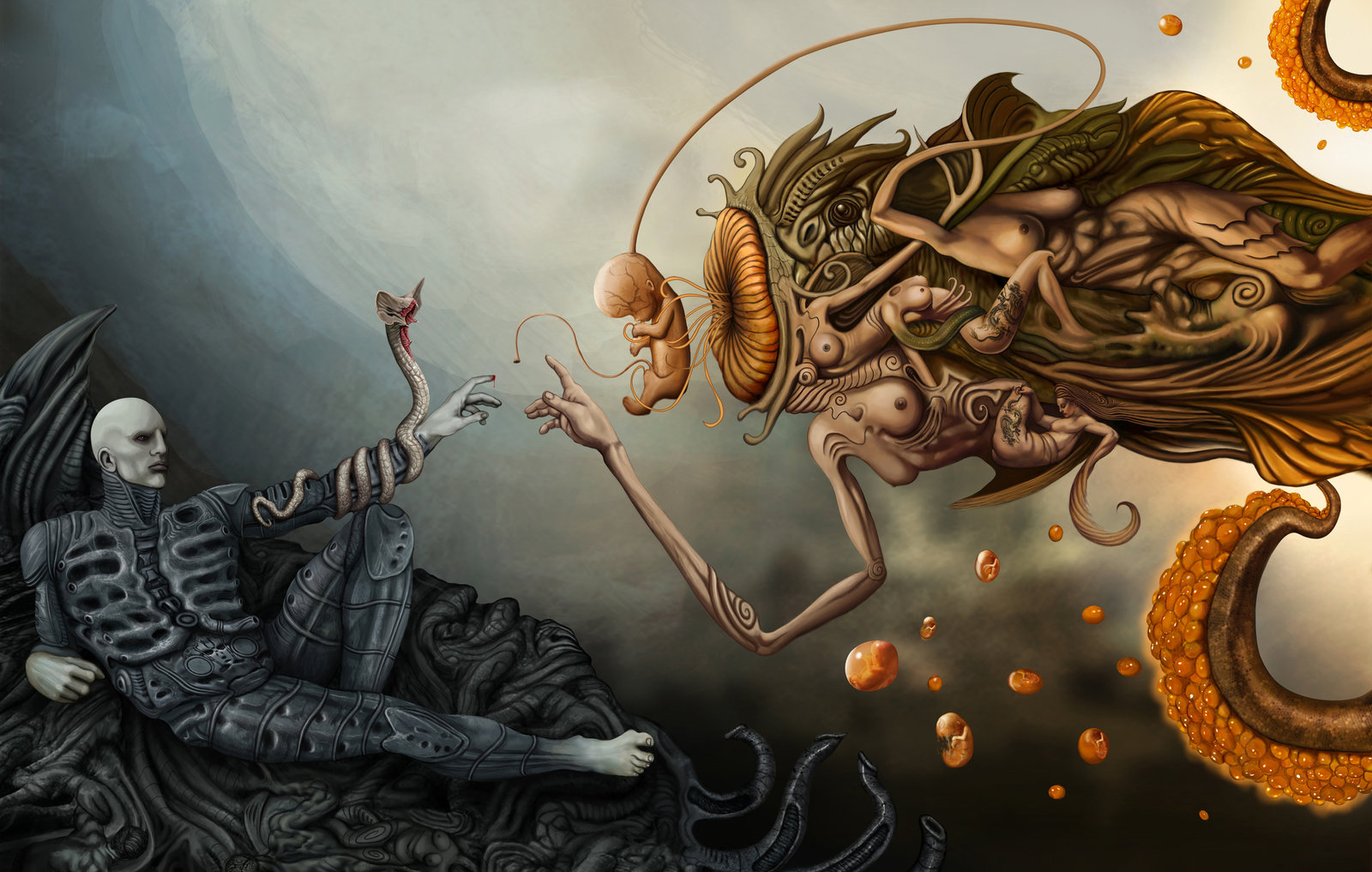
Prometheus Unbound

prometheusI came across a fairly mind-blowing article this morning.

I don’t take this sort of stuff very seriously, any more than the ideas of some about man leaving earth to live on gigantic spacecraft or reach another planet within their lifetime. Intellectual masturbation abounds! Some of the ideas are impossible or too far-fetched. Others would involve killing off most of the world’s population in order to make these ideas available to the tiny elite of the hyper-rich. What is this all about?

Most of us Boomers grew up with Star Trek and Dr Who, and with the fascination of science fiction. Ever since Mary Shelley wrote Frankenstein in 1816, man has dreamed about being the master of life and death, the very questions religious people leave to a deity or other factors beyond our control. The Romantics grappled with the struggle between man emancipating himself from the old determinism, but at the same time bewailing the increasing mechanisation and industrialisation of their world. It is not by accident that I choose the theme of Prometheus, a theme of classical Greek mythology that is present as much in modern science fiction cinema as the poetry of the Romantics.

These speculations in the 1960’s stimulated my curiosity, only to be told that Star Trek communicators didn’t exist (they do now – mobile phones), nor did robots or bionic human-machine hybrids. Technology has advanced almost at the speed of science fiction, and there are some very frightening prospects.

In this documentary, we find two opposing viewpoints: life coming from matter and depending on it – or life / consciousness / energy being the source of everything. In the former view (materialism), life depends on physical matter and the soul is not more than an active brain. When the brain dies, life is extinguished. In the latter view, life is incarnate and takes flesh during the life we know, but is independent of it. Life and consciousness continue after bodily death. The latter view is not exclusive to religious people but is also shared by some members of the scientific community.

The subject I approach is one that is based on the materialist view, that man has to seek immortality by improving the physical body or replacing it with the use of high technology. What is reassuring is that transhumanism contains the seeds of its own failure. It promises to make imperfect humanity perfect and eliminate sickness, poverty, war, etc. Briefly, it is a utopian vision, but utopianism in itself isn’t wrong, just impossible in the world we know.

Perhaps utopia for some is dystopia for others. Imagine for a moment that such technology would “work”. Would everybody benefit? The blind or lame destitute in the slums of Calcutta or London? Would there have to be ethnic or cultural “cleansing”? Transhumanists promise a five hundred year lifespan. Why not a thousand years? If you have the world populated by people in mechanical bodies who live for a thousand years, what do you do with people who only live for sixty years and who already overpopulate the earth in relation with the resources needed for industrial and technological “growth”? Put them in gas chambers or shoot them? As for humans designed with computers, would we be all the same, mass produced? Surely, mass production would be cheaper (I assume there would still be money in the new world) like it is today for cars, computers and most things we have in our homes.

There is then the possibility of chimeras, a cross between several species. I daydreamed as a child about having the wings of a bird so that I could fly. As I went to school on the bus and I saw the beauty of England’s Lake District in all seasons, I imagined myself flying alongside the bus, over the lake and the mountains and wherever I wanted. Manipulating genes and DNA makes it possible to make a human / animal hybrid. Yes, it is being done!

The next stage is separating the soul / spirit from the brain and programming it into a computer, a computer of the future, perhaps a quantum computer. As the hardware wears out, the software is just transferred as we do today on our laptops and backup drives. Strangely, this seems to collude with the view that consciousness is not absolutely dependent on the brain. Science has devised ways of improving the body with mechanical parts. We have dentures, pacemakers, prosthetic limbs to replace those that had to be amputated. Dialysis does the job of failed kidneys, when the alternative is death. No one complains. Recently, a mechanical heart has been devised that would be just as good as a natural heart and wired up to the brain. I have a couple of bits of plastic mesh in my body, used by a surgeon to fix my hernias. I also wear reading glasses, a device that has existed for many centuries to help us see when our eyes don’t focus as they used to do. After that, there are brain implants to control neurological disorders and modern prosthetic limbs. Where is the limit? Could they just transplant a brain into a robot, and recover the data and back it up before the brain dies? Perhaps it might be possible. But, is that what we want? Can we just keep pushing the tolerance and acceptance threshold indefinitely?

Who is paying for this technology? To whom will it be available?

The next stage is connecting people’s brains to the internet and other communications systems directly. Where is the limit? I suppose I am an old fogey, but I know that I would never want my brain or soul connected to a machine. What if my body fails? The alternative is death, whether we cease to exist or continue to exist at a different level. So be it…

The increase of technology and complexity in life can only go on for so long. It certainly frightens me. The essential instinct at the basis of all this is the preservation of what we know as life at all costs. We do not all fear death, but rather accept it as the closing of one mode of existence to pass on to another. We are confronted with the prospect of this life being finite, having an end. God is infinite, perfect in everything in which we humans are not. There is every chance that I am old enough not to be concerned by the maturing of these technologies, perhaps also the young people reading this blog.

This kind of materialist utopianism was a dystopia in the twentieth century. It was central to the Nazi ideology and was aptly described in the almost prophetic writings of Aldous Huxley and George Orwell. One cannot be so naive as to imagine that human / animal / machine hybrids would be allowed to be autonomous and free persons. They would presumably be controlled by some kind of master computer using something like internet and wi-fi. This utopia would involve the extermination of the majority of humanity on account of “imperfections”, race, social and economic considerations, education, etc. We have heard it all before!

I deliberately refrain from using theological arguments, because we religious folk are said to be the Luddites in this game, resisting progress and man’s ambition to excel himself. It suffices to express ourselves in purely “human” terms. Would we be happy with our thousand-year lives, our limitless perfection – but at the cost of our humanity and our spiritual souls? Such a world, like the one we know, is not immune from human evil and the danger of society collapsing. We will always have disease and pain. They are part of our condition.

The Christian in us remembers the many stories in the Old Testament about the Flood, the Tower of Babel and the many other allegorical narratives of man without God going too far and containing the seeds of his own destruction. It is the message Mary Shelley expressed in her terrifying Frankenstein so long ago. We live and experience the Prometheus Unbound of the ancient Greeks, and we may suffer greatly from the consequences. Mess about with our genes and DNA, or those of our food, and we will be in deep trouble!

I have my faith as a Christian that we continue to live after death and that we will discover new frontiers that our present life does not allow us to imagine. This faith is comforted by the kind of science that has discovered that consciousness precedes matter (or the energy that gives us the illusion of matter). That world view takes away our fear of death and the obsession of prolonging ourselves beyond what is natural and reasonable.
Posted in Uncategorized | Tagged , , , | 22 Comments

Small Dioceses

Interesting article from Fr Hunwicke – Dioceses.

In some of the southern Italian dioceses, the Bishop is as accessible as a parish priest and there is virtually no bureaucracy beyond a secretary / archivist and a bursar. This is one thing I love about the ACC and my Diocese in England. I would hate to be in one of those big Roman Catholic dioceses where it’s all management and bureaucracy, even in the big pastoral sectors that have replaced the old parishes (or rather grouped them together).

I believe that our marginal little Churches are a prophetic sign for the future.

Posted in Uncategorized | Tagged , , , , | 13 Comments

Gender Bending

Androgyny.Portrait_of_a_boy,_ca._1800

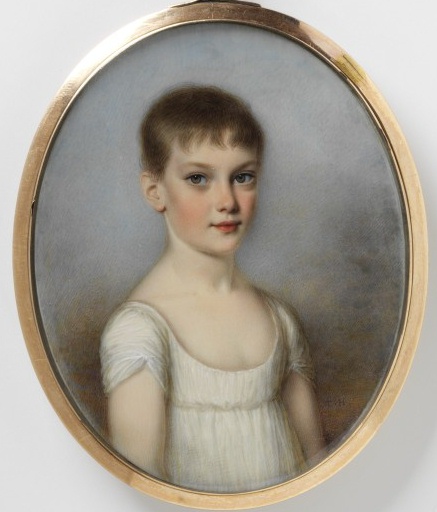
Portrait of a Boy c. 1800

One problem with modern society is labelling and stereotyping without seeking to understand the profound dimensions of things. With a hat tip to Deborah Gyapong (Foolishness to the World), I came across an article on gender identity by Monsignor Tony Anatrella.

We are indeed caught between various types of totalitarianism. Though I am not qualified in political science or sociology, I detect some in common between all totalitarian ideologies – notably the subordination of the human person to the collectivity. This is something we will find in common between various forms of Marxism and of what is commonly called Fascism. It is all about labelling and stereotyping people in order to gain control over the collective.

It seems that this Monsignor is French and a psychoanalyst. I had never heard of him, but it would be worthwhile reading some of his work to understand the ideas he is trying to get over. I would be careful about overrating him. He has studied social sciences and psychology and does not appear to be qualified in medicine. He is a priest of the Archdiocese of Paris and a teacher. He is a consulter for the Pontifical Council for the Family, so is likely to tow the party line faithfully. His theories about homosexuality reflect the positions taken by the Vatican since the 1960’s, identifying it with narcissism and express very little that is original. He even associates homosexuality with Marxist and Nazi ideologies, and this may serve somewhat to dampen his credibility.

I think one assumption we can reasonably make is that we are all males and females, and even those born with certain genetic defects (Kleinfelter’s Syndrome, etc.) are fundamentally one gender or the other. On the other hand, how do we live the role assigned to us on account of our being male or female? Stereotyping, as is more the tendency in the USA than in Europe, leads to other ideologies and the constantly banging drum of the conservative agenda.

I will probably to unfair to this cleric, not knowing all his work, but I will give my take on what I see written here. One first thing to know is that there is confusion in the idea of “sexual identity”, whether it is a question of whether a person is a more competitive or more compassionate kind of person, whether he or she wants to identify with the opposite sex (or its caricature) or have a sexual relationship with the same or opposite sex.

I have grown tired of conservatives who bang the same old drum and make the issue of same sex relationships the yardstick of Catholic orthodoxy. They go on and on as if it is all about sex and regulating people’s private lives. When we read the reams and reams of stuff against homosexuality and abortion, one would almost be tempted to see some good in the 1960’s revolution! We are faced, as usual with a binary dialectic – You’re either for us or against us. I agree that the family is the ideal base of human society, but it is a model that can so easily fail. Not everyone is made for conforming to the classical roles like in 1950’s commercial advertising for cars and household appliances!

Does that mean that we have to approve of homosexuality? The answer is rather simple. We can take over the country where we live, set up a dictatorship like Hitler, and round up all homosexuals to throw them off buildings or put them in prison – a great theocracy as many conservative Protestants and Catholics would love to have (and be in charge of). On the other hand, we can respect that the society in which we live is no longer (or never has been) Christian and we have to respect people in their ways of life. Nowadays, most western countries are intolerant of those who are intolerant, and there are other ways to propagate God’s word and the Christian way of life. Monsignor Anatrella is not wrong that we are finding ourselves in societies that are going totalitarian with their intolerance of intolerance. In the end we can’t fight a wrong with another wrong. There has to be another way.

I have given quite a lot of thought to the question of androgyny, which has to be distinguished from homosexuality. Many androgynous men are heterosexual and happily married to women, and many gays are “butch” and hyper-masculine with buzz cuts. There is psychological androgeny and there are physical conditions like Kleinfelter’s Syndrome. At a level of personality, androgyny is valued in some cultures, and certainly is considered by some psychologists like C.G. Jung as something positive for self-knowledge and individuation. However, androgyny can make of a man or a woman a caricature of the opposite sex, manifested in behaviours like transvestism or undergoing medical and surgical treatment to become a “transsexual”. Most of us find such an idea repulsive, since most of us live as men or women according to our different characters, personalities and tastes of things like appearance and clothing. To want to put all men into a common mould of clothing, hairstyle, occupation and spare-time occupations like sports is unrealistic and prejudicial to the more sensitive and “artistic”. The same thing with women – I find short-haired “butch dykes” a complete turn-off! Should such behaviours be made illegal and punishable? I think not, but each person needs to live in society and judge the consequences of what he or she does.

A big problem is created by stereotypes and rigid gender roles. It is the status quo from which the “gender benders” reacted. It is important for people to be themselves and not conformed to a competitive / caring binary dialectic. I look back at my own life, my preferences for music and art rather than competitive sports like running or football, my solitary tendencies and attitudes in life. I have recently been spitefully called an “androgynous Anglican”. I had never really thought of it quite like that, but the person who said that was not far wrong. I always looked younger than my actual age and “softer”. It is only recently in my life that I decided to overcome the taboo and grow my hair long. At the same time, I am biologically a male and totally uninterested in playing female caricature games. There are degrees and exceptions to the labels and stereotypes. My wife has a unique slant on it, and sees my sensitivity as an asset, something with which she can relate. There are difficulties we have to overcome, but much is acquired. If I were of the hyper-masculine stereotype, she would not have been interested in me. It also gives me a different basis of living the priestly life.

I know little about the so-called “gender theory“, but I think it is essential for us all to reconcile our animus and anima, what is masculine and feminine within us regardless of our physical gender. The so-called gender theory seems to consist of another kind of aggressive stereotyping and “us and them” dialectics. The way I see things, I can’t see why a certain blurring of the traditional roles would cause a desire to limit births of children through contraception and abortion. I would even suspect that the “culture of death” comes more through the exaggeration of gender stereotypes rather than their blurring or reconciliation with each other in symbiosis.

I also find this prelate’s analysis quite akin to conspiracy theories. He blames everything on feminist and homosexual political agendas. Anything made into a political agenda can be nasty and harmful. I don’t personally relate to femen extremists and gay pride. Are they the cause of all ills? Would society be better off if we went back to the days of the Marquis of Queensberry and when Oscar Wilde was sent to prison? At the same time, political correctness and absurd legislation to treat intolerance with intolerance is evocative of the Reign of Terror under Robespierre. That kind of thing rather reminds us of the quip about health and safety authorities removing all the fire extinguishers from a building because an untrained fire-fighter might hurt himself!

The Church to which I belong has a clearly conservative position as regards feminism, homosexuality and sexual morals. There are objective foundations, but I think many of these issues need to be dealt with in the confessional, not the pulpit. People live in so many extremely diverse ways of life that we cannot imagine on the outside. I would refuse to “marry” a same-sex couple (I would also be in serious trouble with my Bishop if I tried it), but in private circumstances I might decide to bless a friendship on the basis of the love between the two persons independently of carnal lust. A priest has to be pastoral as well as insisting on moral standards rather than “anything goes”. Much of feminism is the kind of caricature I described earlier, and is most distasteful and fails to respect the sensitivities of the rest of us. Empathy is a strength, not a weakness – and women who are making a caricature of masculine competitivity are quite grotesque. We have had a lot of trouble in France with “femen” women committing sacrilege in churches and violent acts against innocent folk. Lack of taste may not be sinful, but lack of concern for other people is!

How we live our lives and sort out our own psychological and spiritual health is our own problem, and something that is kept in private. Monsignor Anatrella notes that children brought up by same-sex couples always suffer. That is not always true objectively. As a lawyer’s secretary, my wife has seen many examples of balanced children who have been brought up by same-sex couples. I’m not saying that I condone it, but I think the question of the stability and health of the children is a weak argument. Children can truly suffer from abusive heterosexual parents, and there are more cases of rape, incest and excessive punishment than one would like to imagine!

As for psychiatric therapy to “correct” homosexual people to make them heterosexual, some methods are recognised to be ineffective and harmful – even considered as methods of torture. Some people are really messed up and counselling is sometimes very helpful, but will involve more than telling them to what sort of personality profile they should conform. Again, we find the old confusion between gender identity and to which gender a given person is sexually attracted, when it suits the ideological conservative, serves an agenda that is no less harmful than feminism and “gay pride”.

Monsignor Anatrella rightly notes that the Church is called to accompany persons in their discovery of God’s word and the way to holiness.

Certainly, pastoral care for homosexual people is particularly difficult and demanding. It requires experienced, welcoming priests, but with specific studies behind them. Love and truth should be combined without simplifications. Mercy cannot mean justifying sexual habits in contrast with the moral doctrine of the Church.

It is not a bad conclusion. In this journey of redemption and transfiguration, the Church’s ministry cannot be limited to diatribes about what is right or wrong, but the work of holiness begins with experience of God’s love and a profound spiritual life rooted in prayer and the liturgy. Even that precedes the long work of catechesis and spiritual accompaniment. We priests should not forget that many of our colleagues have discredited such a ministry by taking advantage of vulnerable people sexually and to the extent of preying on children. Hypocrisy is a hard one to get over, and the work of honest and moral priests is made twice as difficult. This is the kind of work that is done in private and suited to the person – not a profile or type.

The real subject of this piece is not sexual activity between persons but identities of single persons. This is a different question. I would be more sympathetic of the kind of humanity that made the music of Mozart, the literature of Oscar Wilde and the countless acts of kindness and empathy by those some would consider effeminate. Psychological androgyny (nothing to do with opposite sex caricatures) can bring something very positive in terms of emotional health and a sense of identity and creativity. In life, we encounter many unique persons, each of whom are beautiful in their own way. We all in one way or another cross boundaries without going “over there” for good, and none of this offends Christian sexual morality or undermines the fabric of society.

Posted in Uncategorized | Tagged , , , , , , | 31 Comments

Dom Alcuin Reid

dom-alcuin-reidA new book is being born in the erudite hands of an Australian Benedictine monk and liturgical scholar by the name of Dom Alcuin Reid. He needs no introduction in liturgical circles promoting ideas similar to those expressed by Pope Benedict XVI and the best of the old Liturgical Movement. He and I have been in contact for many years since the days when I was in the Institute of Christ the King.

He has known about my modest work on the Roman liturgy in the Counter-Reformation era – Missa Tridentina (pdf) which I completed in 1990 as my Licentiate mémoire at Fribourg University in Switzerland under the tutorship of Dr Jakob Baumgartner. The original version has been available for a number of years. The version to be published has been quite radically reworked in the editing process. My own thinking has evolved since then and become more critical of some of the assumptions made by traditionalist Roman Catholics. In time, as my love of the Italian baroque faded, I returned to my earlier penchants towards the medieval local traditions of England and northern France.

I have not written anything substantial since then apart from my articles on the internet, which are not written to the standards of university scholarship. In many ways, I envy Dom Alcuin for his monastic life in which his academic work is his labora part of his life of prayer. It wasn’t to be for me and my life took another direction as a secular priest.

One day last year, Dom Alcuin wrote to me asking me to condense my university work into a chapter for his new compendium on the liturgy. He was of great help to me in the proof reading and making suggestions for much-needed improvements. Many of my thoughts as they developed are expressed in this chapter. At long last, this book is now ready for the publisher. The title of the book is T&T Clark Companion to Liturgy: The Western Catholic Tradition. It is expected to be available towards the end of 2015. My chapter is mentioned as The Roman Missal of the Council of Trent in the section dealing with the liturgy in history. There are six parts in this book as can be seen in the page under the above link. As one of the contributors, I am promised a free copy of this book which promises to be very interesting.

I am deeply honoured to be a part of this work of liturgical scholarship in a perspective of restoration of traditional liturgical forms and a critical approach to the modern forms in most western churches. We who share this passion for the Catholic liturgy do not always agree on details, but the important thing is that our movement has moved into the mainstream. When the book becomes available for ordering, I will give details here on my blog as I receive them.

Posted in Uncategorized | Tagged | 4 Comments

Tour of our Chapel

My chapel is fairly well known through photos. Here it is in a very shaky video (using a laptop computer and webcam rather than a proper camcorder) and you can see just about everything there is to be seen.

Posted in Uncategorized | Tagged , , | 2 Comments

Introduction à l’Eglise Catholique Anglicane

Voici une introduction à notre Eglise en français. Peut être ça pourrait intéresser ceux qui s’intéresse à une autre vue de l’anglicanisme.

Transcript in English

The history of Anglicanism is fairly well known, at least in its broad lines: the separation of Henri VIII from Rome because of his divorce, and then the influence of the German and Swiss Reformation during a century of great changes. For many French people, Anglicanism is synonymous with the Protestant Reformation. We live in an era when we label everything to organize and classify everything without really understanding the substance. The purpose of this little talk is to provoke thought.

It is for this reason that I want to put the label of “protestant” aside. At the same time, we see many positive aspects in this great movement of the Reformation, including the translation of the Scriptures and the liturgy into the language of the people, doing something against the scourge of clericalism and the racket of the poor by clerics. We find, next to iconoclastic destruction and fanaticism, a deeply pastoral concern. Times have moved on and the Anglican idea has undergone an evolution from “dialogue of the deaf” polemics toward a concept of rediscovery of the Church of the Fathers and a more biblical and liturgical concept. If we use the term “Catholic” to identify ourselves, it is not to make people believe wrongly that we are Roman Catholics in communion with the Pope and forming part of this institution as defined by its canon law. Roman Catholics themselves recognize the existence of the Orthodox and Old Catholic Churches with which they are more or less in dialogue.

It is thus that our Church has taken the name of “Anglican Catholic” since its organic foundation in 1977. We are moving away from the pre-imposed label of “Protestants” because we keep the priesthood and a liturgical and sacramental life. There are Anglicans who are Protestants, and who identify themselves with the thought of Calvin or other reformers of the sixteenth century. Some adhere strongly to “ultra-Augustinian” theology which insists strongly on predestination and a pessimistic concept of human nature. In contrast, the influence of the theological movement of the 17th and 18th centuries was very widespread. The distinctly Anglican theology of the 17th century sought to emphasise a hermeneutic of continuity, certainly a spirit which has strongly influenced the theologian Joseph Ratzinger, among many others, including Father Louis Bouyer.

Sometimes there is talk of an Elizabethan settlement that would have established a situation of pluralism in theology and practice in a monolithic national institution. Up to the end of the 19th century, conditions for remaining a good Anglican were fairly narrow. The dependence of the Church on the state has left its mark, and in several periods, there were ritualist and pietist movements that arose in reaction with regard to the latitudinarianism of the Establishment. We thus find the Methodist movement, very high-church in its theology and spirituality, and the Oxford movement at the beginning of the 19th century in the wake of Romanticism. The Catholic character we claim is the subject of a restoration or “reform of the reform”. These different tendencies within Anglicanism are extremely varied, between pure and hard Calvinism up to the anglo-papists most of whom are now part of the Ordinariates instituted by Benedict XVI in 2009.

Things moved on since the end of the Second World War and the “liberal” movement that aims to discard religious Christianity in favour of a humanistic , moral and social vision of the teaching of Christ. Here, this is the point of divergence of two opposing views of Christianity: mysticism and the contemplative life on one hand and a humanist and inclusive ideology on the other.

Christianity is characterized by a struggle between a sensual religiosity based on natural and pagan instincts of man and biblical monotheism that is intolerant of any deviation. One might think that the Church has been formed by the desire to make itself indispensable, the reason why Gnosticism was rejected in the early history of the Church. Indeed, the roots of our “crisis of faith” are found in the mists of centuries. Anglo-Catholicism as it has been formed in the wake of Romanticism could be compared by analogy to a sort of English Gallicanism. Gallicanism over the centuries before the French Revolution wanted to emphasise the local Church before the universal and Roman dimension.

Historically, the theological movements in Anglicanism have their parallel in the Church of France in the 17th to 19th centuries: Jansenism, various spiritual movements, Romanticism after the Revolution, the Curé d’Ars, Dom Guéranger, Father Lacordaire and the reconstruction. I see more than a simple coincidence. Anglo-Catholicism has always been characterized by the eccentricity of its protagonists and a highly pronounced aesthetic sense. Like classical Gallicanism, Anglo-Catholicism appealed to Catholicism (without any other qualification) through the Seven Ecumenical Councils of the undivided Church (before the schism between Constantinople and Rome in 1054). Like the Roman Church and the Eastern Churches, we have retained the priesthood and the episcopate.
The doctrine of Anglo-Catholicism found its influences simply in historical Catholicism, which does not exclude the influence of the Conciliar ecclesiology of Orthodoxy and Old Catholicism. Generally, we Anglo-Catholics accept the Pope of Rome as a bishop with primacy of honour. We reject the developments from about the 13th century which consist of making the authority of the Pope an absolute. We therefore reject the infallibility and primacy of jurisdiction defined in 1870. We identify with the universal Church by the idea according to which the whole Church still subsists in each local episcopal Church and in the Eucharist celebrated by him or by his priests. The unity of the Church is sacramental before being institutional and canonical.

There is an important point to discuss, Apostolicæ Curae of Pope Leo XIII saying that Anglicanism is deprived of a valid priesthood because of the formulation of new rites. The same year, in 1896, the Anglican Archbishops of Canterbury, Frederick Temple, and of York, William D Maclagan, gave a response, Saepius Officio, affirming the uninterrupted succession of apostolic Anglican bishops from the Church before the Reformation or the schism of Henry VIII. This document gives a warning, saying that some criteria by which one would assert the invalidity of our priesthood would render the Roman Catholic rites just as fragile. In our days, there are extreme Roman Catholic traditionalists who apply Apostolicæ Curae to the rites of Archbishop Bugnini promulgated by Paul VI! Their argument is false, but eminently logical. The same logic would lead to a reassessment of this condemnation in the light of developments in sacramental theology and ecclesiology. Apostolicæ Curae can no longer stand up to theological examination.

I no longer belong to the Church of England in which I was baptised and confirmed, but to the Anglican Catholic Church. This is a community which broke away from the Anglican Communion and the Lambeth Conference. We are spread out worldwide, in the Caribbean, Central America, South and North America, Australia, New Zealand, and Africa. We have a small diocese in the United Kingdom. In 1984, the historical Anglican Church of India was received and it is constituted as the second province. It is very difficult to give credible and accurate statistics. We are rather numerous in Africa and the United States, but still marginal in England, Canada, and Australia. Our break from the Anglican Communion Lambeth is above all caused by the decision to proceed with the ordination of women to the Episcopate and the priesthood. A large meeting of approximately two thousand Anglicans, clerics and laity, in the United States in 1977 resolved the movement of separation and self-definition by the Affirmation of Saint-Louis, a doctrinal position. This new institution took the name of Anglican Catholic Church in 1977 and its first bishops were consecrated by the retired Bishop of Springfield (Illinois) Albert Chambers.

We have a single diocese in England, founded in 1992, the year when the Church of England ordained the first women. We need to get a good understanding of this problem. We above all have the desire for unity of faith and practice with Rome and the Eastern and historical Churches. We are not convinced that the ideology behind ordinations of women is well thought-out or healthy! Our first Bishop was Leslie Hamlett, a former Anglican priest in the north of England, who left our Church in 1997 to found another community. Over several years, this diocese had a priest at its head who served as Vicar General under the jurisdiction of an American bishop. Finally, the diocese returned to a more stable situation and elected Father Damien Mead to be our new Bishop. The diocese is organised into two deaneries, north and south. The Bishop is assisted by a council, of which I am a member, and we have a diocesan Synod each year in England.

Unlike the Traditional Anglican Communion, our Church has never given an affirmative answer to the Ordinariate project of Benedict XVI. Personally, I left the TAC in 2013 after the downfall of Archbishop Hepworth to join the Anglican Catholic Church. My Metropolitan Archbishop in the United States had taken a sober position in 2009. The terms clearly enunciated by Anglicanorum coetibus reveal a pastoral approach, but one that is based on the concept of individual conversion before the integration of people in a community where some Anglican customs are respected. The facts since around 2012 confirm this interpretation. From the point of view of Rome, Anglicanorum coetibus is generous.

What answer do we give? Rome has spoken for years about ecumenism, but the reality of its praxis reveals a very conservative Roman ecclesiology. Apostolicae Curae is central, therefore each priest is reordained, not even sub conditione. We are still at the end of the 19th century, just with a little more refinement and courtesy. They did not receive communities like the uniate Churches, but people. Even bishops are received as laity before being reordained. What emerged from the Vatican effectively cancelled all developments concerning the office of the Pope, and the encyclical Ut unum sint of John Paul II. Claptrap, or what?

The project of the TAC was to seek unity with Rome and the Orthodox Churches without “conversion” or submission, or an evolution of the office of the Pope, which would be compatible with the ecclesiology of the undivided Church. Anglicanorum coetibus is addressed to Anglicans who are “anglo-papists” by sensitivity, and not to the other notions of Anglo-Catholicism.

Our Church believes that it is fully Catholic without asking for anything from Rome. Conversion to Roman Catholicism is not necessary. We pray constantly for the unity of Christians and of all the Apostolic Churches with the successor of Saint Peter as primate of honour. Quod ubique, quod semper, quod ab omnibus – this traditional principle attributed to St Vincent of Lerins guides our fidelity, even if it can be understood according to several meanings. It is a start but not the end.

Finally, our Church is in a category called Continuing Anglican Churches, or Continuum. This concept directly implies the notion of continuity and not of rupture. Evolving in time is good and necessary, but in continuity with Tradition. We have many sensitivities in common with the Roman Catholic traditionalists, alienated by the reforms of the 1960’s and an interpretation of Vatican II that is too “rupturist”. When I was in the TAC and there was a question that I be part of a group received by Rome, I was continually asked questions by the media and traditionalist organizations. Cemeteries are full of indispensable people! I returned to obscurity, which made me ask a lot of existential questions and at the level of my vocation. My life is that much quieter, but I have to take new initiatives in my priestly ministry.

The Continuum has suffered a lot from fragmentation (especially at the end of the 1990’s), just like the groups of Roman Catholic traditionalists. We needed to arrive at a new generation of bishops made of trained, thoughtful men, characterized by a serious spirit that inspires the trust of the faithful and priests. There is a large number of small marginal groups, but there is a small number of firmly established Churches with legitimacy of foundation. Our Church goes back to the succession of Bishop Chambers in 1977.
Which liturgy? In Anglo-Catholicism since the 19th century, it has been found that the Prayer Book contained an extremely stripped-down rite of Mass, the reason for its enrichment from Roman, oriental or pre-Reformation English sources. Liturgical diversity has been tolerated in Anglicanism since the end of the 19th century, and even before in the different regions of the world which were formerly part of the British Empire. The offices of Mattins and Evensong present fewer difficulties, especially in the very rich musical tradition of English cathedrals. The Mass has especially been enriched from the Tridentine Roman rite and its translation into classical English.

A few have had the idea of reviving the liturgical tradition in England just before the Reformation, the famous liturgy of Salisbury, of Sarum. This rite in Latin (two English translations exist) is descended directly from the traditions of Normandy Rouen, Bayeux, Coutances, etc. It is my option personally, which my Bishop graciously tolerates. I celebrate in English when people are present, but I have not found a very satisfactory solution for celebration in French. Adapting Anglicanism for a French ministry is not easy without going into too many problems caused by liturgical arbitrariness.

How would Anglicanism be of interest to the French? Two things essentially, a eminently liturgical approach to Christian spirituality with a social doctrine in favour of the needy and the poor. Anglo-Catholicism was not historically reactionary in its social and political ideas. We live in an era which inspires fear, division and hatred. Anglicanism can invite to a spirit of dialogue and understanding. Anglicanism is demanding spiritually and intellectually, inviting its faithful to rise over the primary levels of life to make true progress towards knowledge and wisdom. We are not merchants of endless exorcisms and quackery, and we are not progressives or fanatical reactionaries. We seek a more peaceful vision, higher and more human.

Our future? I am still concerned about it. We don’t have financial resources. Every priest has to earn his own way, which can be a good thing. At the same time, we need places of worship and references which enable people to find us. Each is left to himself and each has to manage. We can hold out a hand of friendship and Christian love toward those who are seeking an alternative, something different. I am not here to express polemics against the Churches in place where the faithful have found their happiness. I am not interested in marketing with those who have nothing to do with the Church and who life their life with other values. The presence of the Lord invites through silence and beauty …

Posted in Uncategorized | Tagged , , | Leave a comment

Sarum Training Session

Having bought a webcam, I have done a training video on the “mechanics” of celebrating the Sarum low Mass. I never feel at ease being filmed and recorded, so I ask you to be forgiving of my hesitations of speech and formulating ideas.

This is a training session and not an actual Mass.

Posted in Uncategorized | Tagged , | 19 Comments

Sarum Mass of Thursday in the first week of Lent

I have found some software that enables me to make videos on my laptop computer using the built-in webcam and microphone. Therefore the quality isn’t very good. I will need to plug in an external microphone and a good quality webcam (which are quite inexpensive these days).

I recorded the Mass of today, Thursday in the week after Invocabit (between Ember Wednesday and Ember Friday). I was a little too conscious that I was being recorded, and forgot the Flectamus genua and Levate before the Collect. I did not say any commemorations. It is just about what I do each day, without a server.

On the YouTube page, I wrote the following introduction:

Low Mass according to the Use of Sarum on Thursday after “Invocabit” (first Sunday of Lent) in the Chapel of St Mary, Hautot Saint Sulpice, Normandy. This ministry is under the oversight of the Diocese of the United Kingdom of the Anglican Catholic Church – Original Province.

The sound quality is poor. I begin with the versicle and response preceding the Collect for Purity, and I only enter the chapel as I reach the end of the Judica me psalm. I recess whilst saying the Prologue of St John.

Purists might be disappointed at my not wearing an apparelled amice and alb. I just haven’t got round to making them, or an off-white gothic chasuble. For the time being, I wear the vestments I had when I used the Roman rite. The other slight difference is not laying the chalice on its side after the ablutions, because I use a purificator as in the Roman rite. Also, I didn’t forget the genuflections, because they are not in use in the Sarum Use. We use profound bows.

I hope to make some better recordings when I have bought the equipment to go with my computer, and preferably a video camera that I could also take on my boat!

Posted in Uncategorized | Tagged , , | 8 Comments

Front Page of Royal Yacht Association Magazine

rya-dinghy-cruisingThis is a rather nice photo from the latest Royal Yacht Association magazine. The text is to the point and positive:

Freedom to Roam
Whether it’s pottering up a local estuary or probing a strip of wild coastline, dinghy cruising is a great way to explore – and socialise – for people of all ages and abilities.

The picture seems to have been taken in France, going by the architecture of the old house in the background, probably at the Semaine du Golfe. Our favourite hobby is becoming more mainstream and better known in yachting and sailing circles. You don’t have to have a lot of money or prestige nowadays for this erstwhile sport of kings. Anyone can get an old boat for very little, sometimes for free, and do it up to requirements. The more enterprising can build a boat in traditional style more easily than one would imagine.

Posted in Uncategorized | Tagged , | 2 Comments

Lenten Asceticism

People are free to do what they feel to be best, but we were warned by the Gospel of Ash Wednesday – keep it to yourselves and don’t broadcast that you are being holier than thou! Christ is most categorical about this principle. We don’t engage in spiritual practices to impress others! It is the same with prayer. It is best to pass for someone who isn’t at all religious but whose spirituality is secret and above all genuine.

Fr X and Mr Y often have their favourite whatevers to share with the world, and most of us just don’t care. We go without a certain kind of food, drink or pleasure. I greatly appreciated something my Bishop said a short while ago – Instead of giving up something for Lent, why not take something up? The whole idea of Lent is to relive the Catechumenate of the early Church as adult converts prepared for Baptism. The programme reflects the stage of conversion and baptism. Everything begins by our being conscious of our own mortality and then overcoming the fear of it by meditating on the issues of temptation, divine light, being delivered from evil spirits all the way to considering human wickedness through the two Passion weeks. We get a refresher course every year and thus renew the Christian commitment we made at our Baptism.

Yes, we can give money to this or that charitable cause, yet we are fleeced by taxes and social contributions. Giving to the bureaucracies of charity is no longer optional, at least since the late 1940’s under the threat of a Communist revolution. When we are bled dry for hospitals, doctors, pharmaceutical companies, the increasing amounts of money needed for illegal immigrants (some of whom are vowed to taking us over) who will never do a day’s work – and old age pensioners who will have more of a dolce vita than we late boomers will ever have, the endless yammerschooner appeals and outstretched hands sound hollow. The cows are milked dry.

Probably, the best thing for many of us is to have quiet times and take a book with us – the Bible, apocryphal and patristic writings or works of more recent theologians and spiritual men. A part of our Christian life is becoming better instructed and learning, and therefore being able to reflect and take a critical point of view – in order that our faith may be more pure and altruistic. I suspect that my Lent this year will be taken up in trying to figure out something of the subject on which I wrote yesterday, what happens to us when we die. The evidence is heavily in favour of consciousness continuing in some way after the dissolution of the body. The question is how. Quantum mechanics gives us some idea of the consciousness and life experience being divided into discrete units called quanta, and without the DNA or organisms to organise it all, it is just a pile of random fragments. Do these fragments form part of the whole of God and the universe, or do they find a new incarnation elsewhere, not necessarily in this world or universe, perhaps another? To us Christians, reincarnation or at least the popular concept of it is a heresy. Truth to be told, we just don’t know. I think we do need to look at various scriptures outside our Old and New Testaments, especially Nag Hammadi and the Bhagavad Gita. We also have the Greek philosophers and modern science which takes an ever-increasing distance from Newtonian materialism. The sources are rich, but what will we make of them? Will we find more than book knowledge?

I might seem to be very complicated, and struggling at the bit! I have the soul of an explorer. I will explore some things in my boat or on foot, but the real uncharted territory is the spiritual world and the things that lie outside our experience. Each Lent, I try to push a little further and get closer to understanding things.

For the first time since my childhood, I had a dream of World War III last night. One brief part was being in a building and being warned that an atomic bomb was about to explode. You “duck and cover” as they used to instruct Americans in the 1950’s. You protect yourself from the bomb’s light and searing heat, and then in some way from the blast wave. You may have some chance of doing so if you are some tens of miles from where the thing goes off. Any nearer than that and you are instantly vaporised! Then there is the fallout which we could probably never escape. In my dream, there was only the flash, the bang and the hurricane winds. Then I was transported to a warship and a naval battle – but the ship was sunk by a torpedo and I awoke as I was nearing the possibility of jumping into the sea with the other surviving crew. There is probably very little to make of it, except the fact I am becoming as frightened as during the Cold War of my childhood. Each day at Mass, I pray for peace in the world without trying to judge who the enemy is. Actually, in a modern war, the true enemy is war itself. I am become death, the destroyer of worlds. Has this world become the hell we all fear?

Perhaps during this Lent, we may be able to overcome our fear and undergo the true κένωσις of Christ in his Passion. How do we overcome our fear of death without literalising the many allegorical narratives out there? Does it really matter that we continue to be the same person we are now, or a jumble of fragments that can get reorganised elsewhere in something bigger than ourselves? And much better? I’ll do the best I can to do some serious reading and feel that I have really achieved something by Easter. Each to our own… We think differently and are attracted by different ideas and realities. I would not dare to tell someone how to make a good Lent.

Perhaps if other people think we have made a mediocre Lent, then we will have kept the secret and made some real progress.

Posted in Uncategorized | Tagged , , , , | 3 Comments