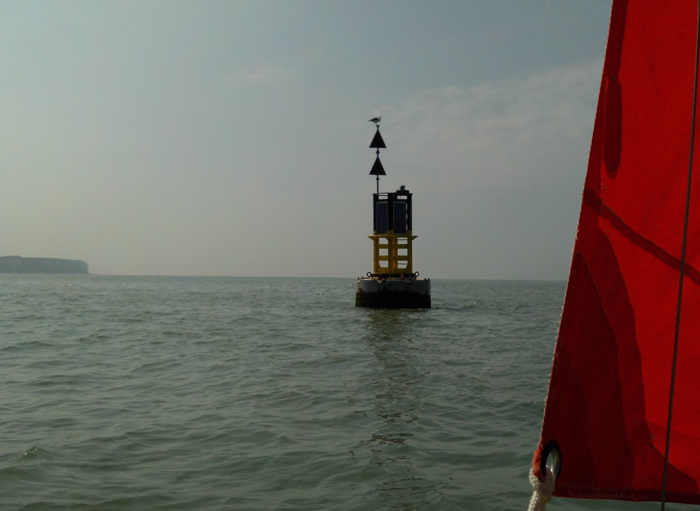
No, I have not applied to join the Ordinariate! As last time, His Eminence Lord Cardinal de Paluel is not a Prince of the Church, but a buoy half way between Veulettes sur Mer and Saint Valéry en Caux. It is a north cardinal buoy marking the distance from the nuclear power station of Paluel within which boats are not allowed to sail. We have to sail to the north of this buoy.
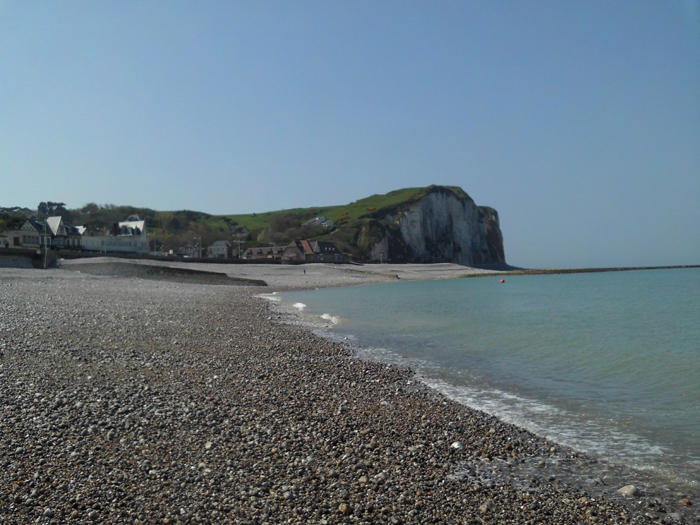
 This is the shingle beach of Veulettes sur Mer facing the west cliff and the casino. It is here at Veulettes that I took my first sailing lessons with the school here and the legendary Christophe Falon (who would sail his Laser dinghy in a force 8 gale). Today, the conditions were a beautiful fresh sunny day with a light north-east wind of 7 to 8 knots. The sea was almost flat.
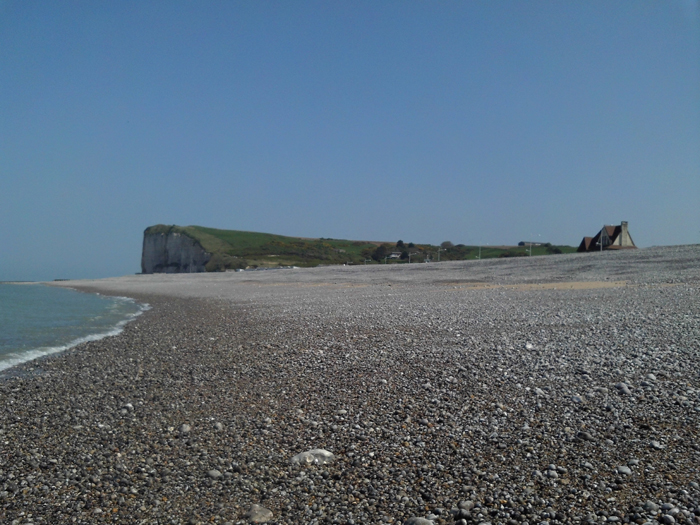
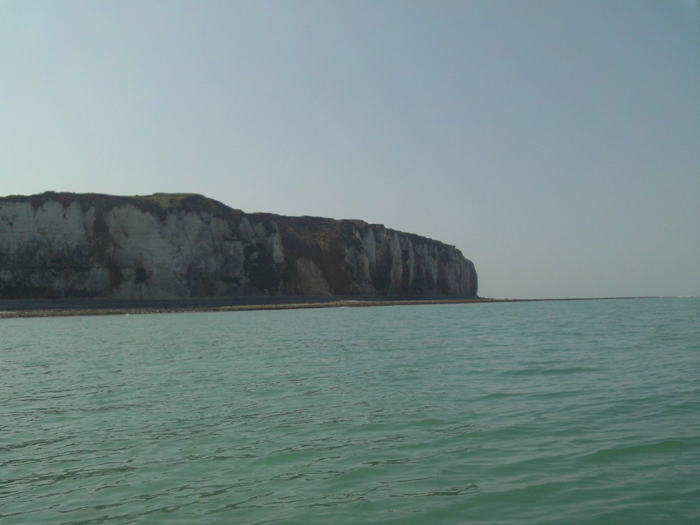
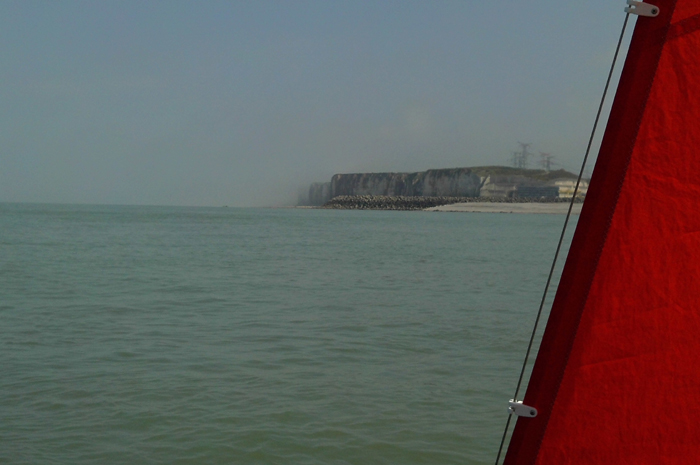
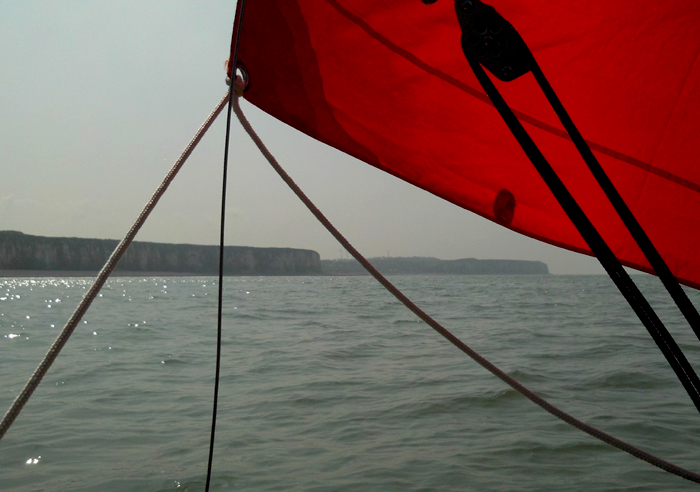
 This is the east cliff, looking in the direction of Saint Valéry en Caux and Paluel. I went in this direction against the ebbing tide and upwind.
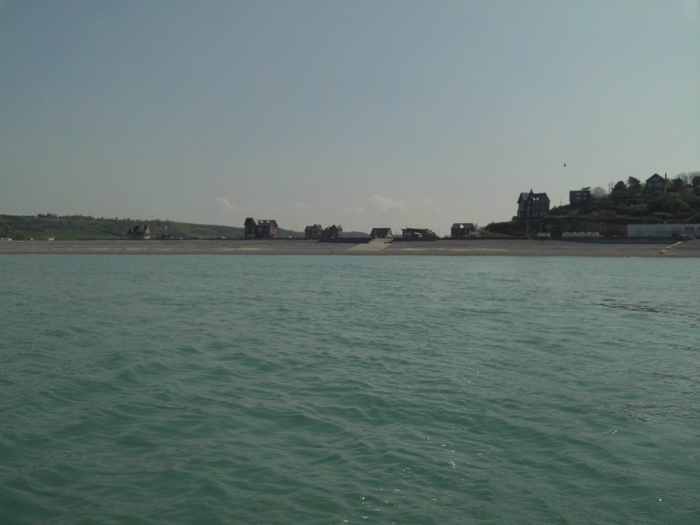
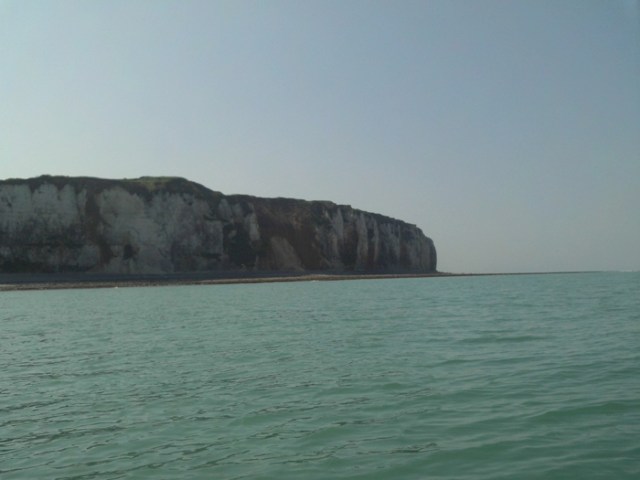 Once I had launched the boat and I was at sea, more of the west cliff became visible.
 Here I am west of the slipway and downstream, having left the beach on a broad reach. I now needed to get upwind and up-current.
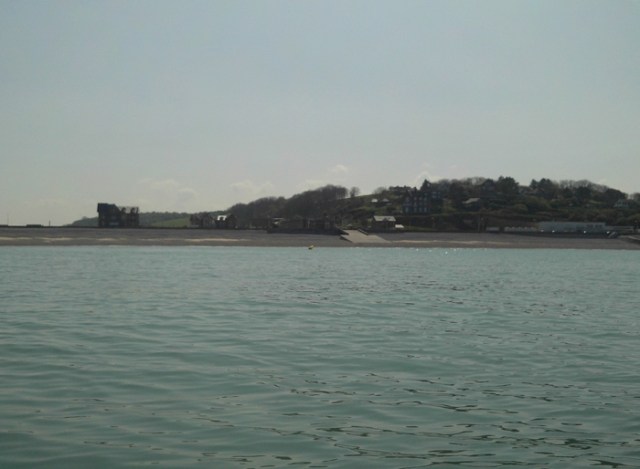 After having tacked, I was now to the east of the slipway, close-hauled and making good headway.
 The photo had badly reproduced a sea mist that engulfed Saint Valéry en Caux and remained extremely localised. Behind my jib, the Paluel nuclear power station is becoming visible.
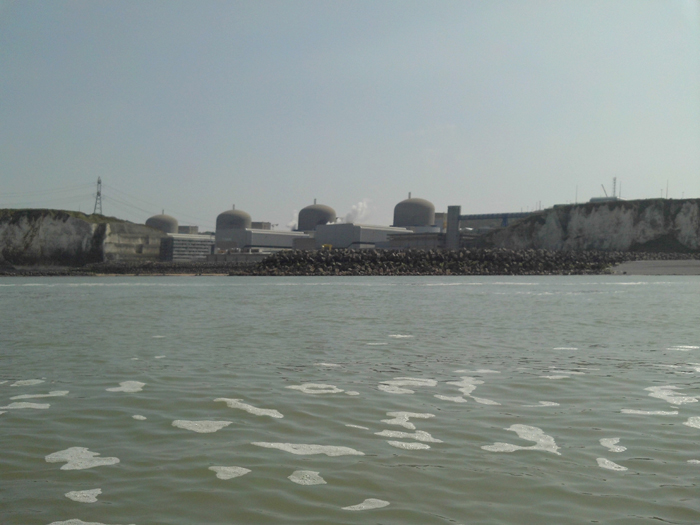
 I passed in front of the power station. It turned out that was too close, but I was increasing my distance as I sailed towards the cardinal buoy. The four reactors are clearly visible in their concrete casings. I trusted that the bubbly stuff you see in the water was not radioactive!
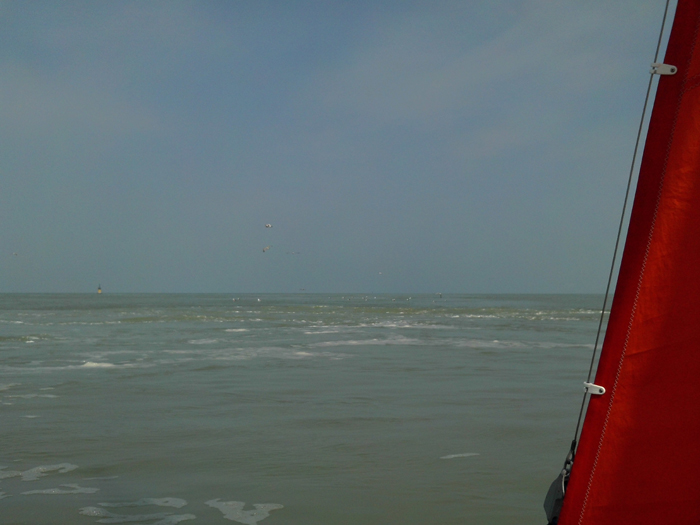
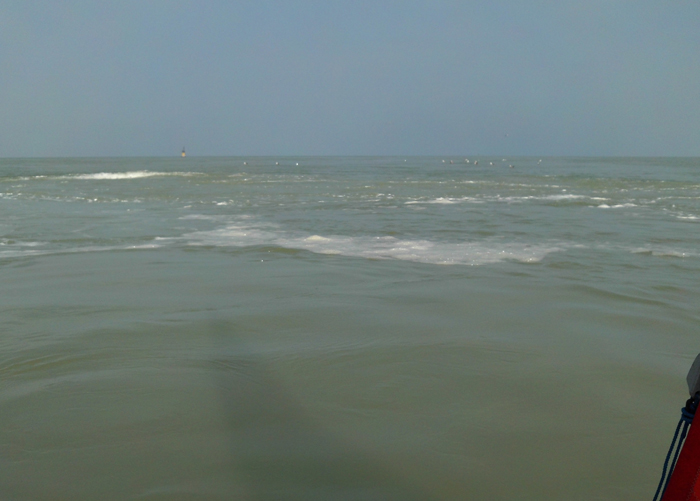
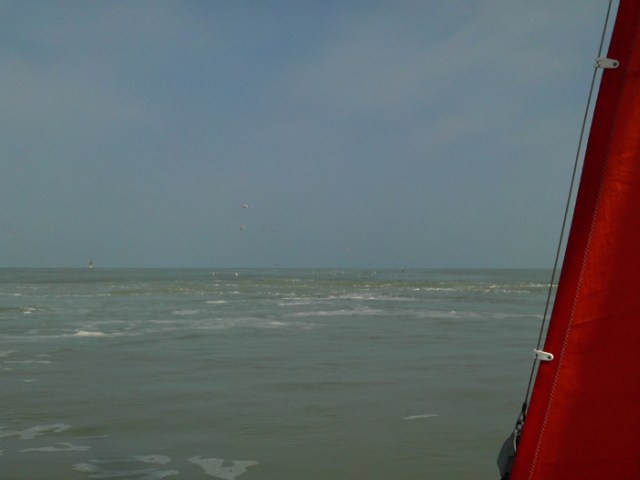 At nearly low tide, here is some very shallow water with strong currents and eddies, quite a little maelstrom to avoid in such a tiny boat as mine.
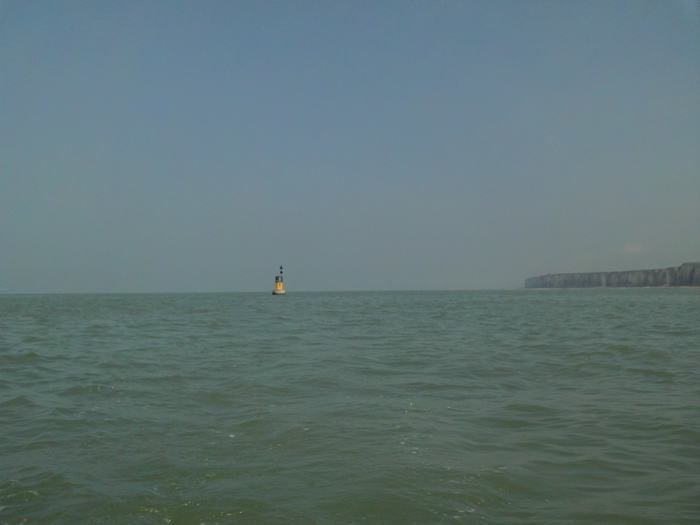
 Here I was closer to the disturbed water, and His Eminence is visible on the horizon about one quarter from left to right of this photo.
 Having passed the cardinal buoy to port, I tacked and went into a broad reach to return to Veulettes by the north of the buoy.
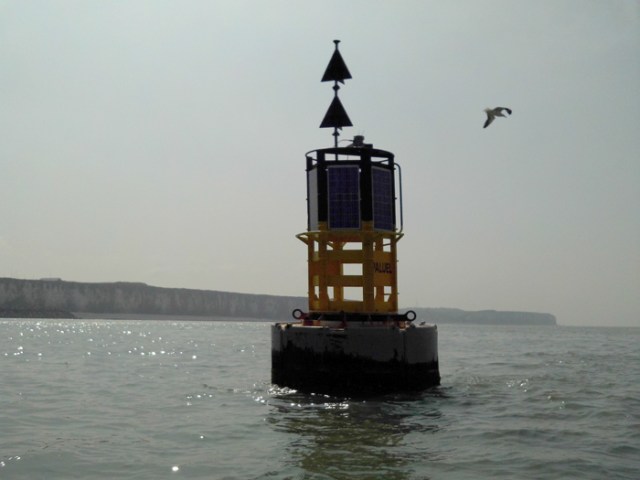 Here I am in the Sacred Presence of His Eminence. The two arrows pointed upwards indicate that this is a north cardinal buoy.
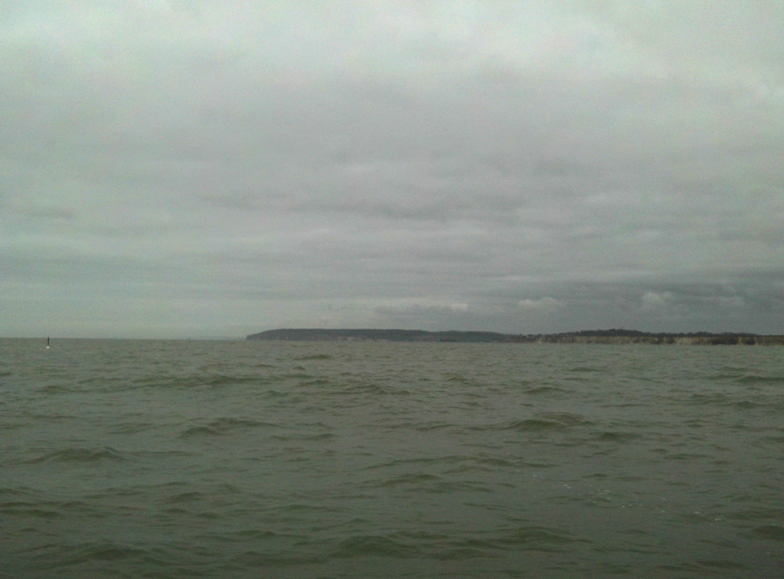
 Having taken leave of His Eminence, I returned towards Veulettes.
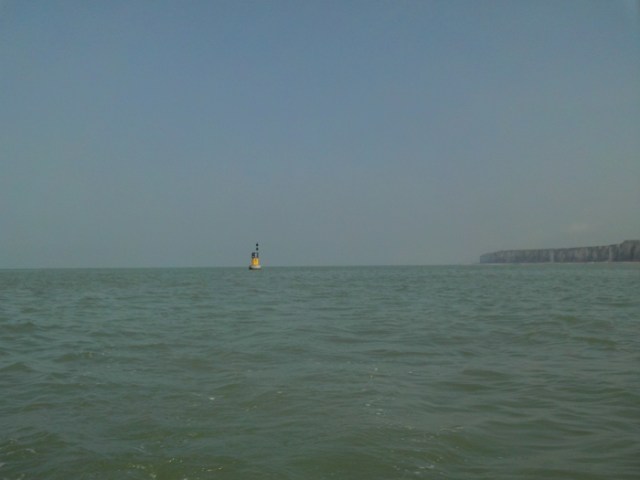 The Cardinal waves goodbye.
Soon after this photo, I was followed by a pneumatic motor boat with a French flag on it – Gendarmerie Nationale. I was sailing too close to the nuclear power station and set off an alarm somewhere. The two young Gendarmes told me that I has been seen in the forbidden zone, and that I should have been north of the cardinal buoy much sooner. I apologised and promised to take greater care in the future. I think I would really have been in trouble had I attempted to land there, because nuclear power stations, understandably, take their security very seriously! So, on I went back to Veulettes in a full reach, and beached just over two hours after launching.
It was a calm and peaceful little cruise in absolutely beautiful weather, though there could have been a little more wind for my sails.
* * *
Addendum: When I related this problem of the zone interdite on an e-mail list of cruising sailors, a kind member mentioned to me that I would have known about the triangular area had I been equipped with my chart. Here is the relevant part.
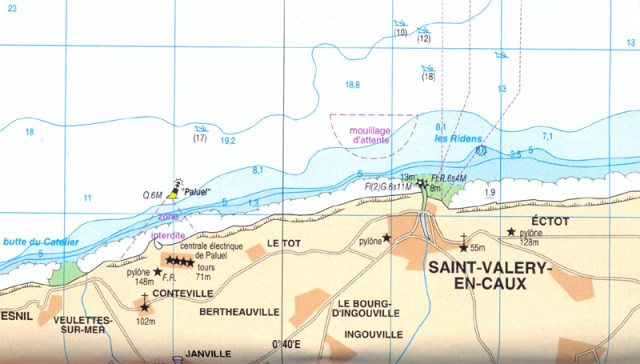
I don’t always use my GPS or maps in my car, for example when I go on known roads and routes. One thing I was unsure about was what defined the boundary other than the buoy, which is a point. Was it a radius equal to the distance of the buoy from the shore? No, the chart is clear. I would have “nicked” off the apex of the triangle whilst on a port tack, and only cleared the buoy after tacking and being on a starboard tack to the north of the buoy (correct position).
Moral of the story: always have a chart on-board even if I don’t need it 99% of the time. My coastal charts are in a handy book which goes nicely into my waterproof plastic drum. One doesn’t need extremely accurate navigation for this kind of coastal sailing, but there are limits.





 The Blue Flower