News from the Traditional Anglican Communion in England

I received this message by e-mail just now. I wish the TAC well in its Continuing Anglican apostolate and I will keep Bishop Gray and his flock in the UK and Bishop Pope and his people in Australia in my prayers. Update: See this page of the TACB’s official website.

* * *

Photographed here are Bishop Michael Pope (left) and Bishop Ian Gray (right) after their Consecration at St. Katherine’s Pro- Cathedral Church, Lincoln, England.

Photographed here are Bishop Michael Pope (left) and Bishop Ian Gray (right) after their Consecration at St. Katherine’s Pro- Cathedral Church, Lincoln, England.

PRESS RELEASE
For Immediate Release

From The Traditional Anglican Church in Britain.

In one of the most significant moves since numbers of Anglicans left the Church of England in protest at its acceptance of women into its priesthood, traditional Anglicans gathered in the city of Lincoln to celebrate the consecration of two new Bishops for the worldwide Traditional Anglican movement.

They are the former Vicar–General of the Traditional Anglican Church in Britain, the Very Rev’d Ian Gray, who is based in Lincoln, and the Very Rev’d Michael Pope of the Anglican Catholic Church in Australia which, like the Lincoln- based community, is also an element of the Traditional Anglican Communion.

The ceremony, on October 18th, was presided over by The Most Reverend Samuel Prakash, Metropolitan of the Anglican Church of India, and Acting Primate of the Traditional Anglican Communion. The event was attended by supporters from TAC parishes from within Britain, together with visiting guests – clergy and laity – from The United States of America, Australia, Canada, India and South Africa.

Representing a milestone in the history and growth of what have often been labelled the Continuing Churches, this unique ceremony took place in England at the Pro-Cathedral Church of St. Katherine which forms part of the city’s Priory Trust complex – less than a mile from Lincoln’s ancient Church of England Cathedral.

The ceremony took place at a Celebration of Holy Communion led by Bishop Craig Botterill, Episcopal Visitor to the TAC in Britain and Suffragan Bishop of the Anglican Catholic Church of Canada.

The Epistle was read by Bishop Stephen Strawn, Bishop Ordinary of the Anglican Church in America’s Diocese of the Missouri Valley. The Gospel was read by Bishop Shane Janzen, the Metropolitan and Bishop Ordinary of the Anglican Church of Canada.

The sermon, which drew on the history and significance of Lincoln to the Christian Faith and the role of Bishops in the modern world, was given by Bishop David Robarts O.A.M. of the Anglican Church in Australia.

The two Bishops Elect – The Very Rev’d Ian Gray and the Very Rev’d Michael Pope – were formally presented to Archbishop Prakash and, having made their Oaths of Obedience to him, each, in turn, was presented to the congregation. The Litany was sung by Bishop Brian Marsh, Presiding Bishop of the Anglican Church in America, and in accordance with tradition the Archbishop with Bishops Robarts and Botterill, laid hands on both men as prayers were offered for the assistance of the Holy Spirit in their future roles.

The mission of the Traditional Anglican Church in Britain is to recall Anglicanism to its heritage, to heal divisions caused by departures from the faith and to build a vibrant church for the future based on powerful local leadership.

Posted in Uncategorized | Tagged , | 8 Comments

Day for Day

As I looked at Deborah Gyapong’s article of yesterday – So, who is following this Michael Voris, Fr. Robert Barron controversy over hell?, this prompted me to look at an old article I had written on this subject. Hell and Salvation. It turns out that my article of last year was published on today’s date, the 5th of November. I assure you that Guy Fawkes had nothing to do with it, since I am an Old Peterite and we don’t burn old boys, even those who conspired to commit High Treason. He was not burned at the stake but hanged drawn and quartered, also a nasty way to go!

We can argue about this subject, and no one alive really knows. Speculations about an empty hell – well, maybe… I have the idea that it is more likely that hell is really a kind of “purgatory” in degrees, and no soul in it is totally without any hope of passing from there to the light. The idea that hell is eternal and therefore uncreated would seem to attribute a shadow side to God himself. Ultimately, it is a mystery. The Gnostics had another way of explaining it all, above all the origin of evil. Orthodox Christianity another still.

Like Deborah, “I have no doubt about the existence of hell, or of demonic powers, or of the bondage of sin and death“. These are all facts within the scope of our earthly experience. However, eternity is not, except by way of image and analogy. Like Origen and St Gregory of Nyssa, I prefer to believe that even the unhappiest soul is not without hope, that even the Devil himself, for all the evil and sin he has committed, may in the end find forgiveness and redemption through Christ.

* * *

Just one final reflection:

I am certainly criticised for questioning the eternity of hell or the absolute impossibility of the conversion of a soul who has already passed over. I have no claim to any special insight into this mystery that escapes us all. I would add the reflection that the doctrine of hell is the one factor that has justified pogroms, ethnic cleansing and the Inquisition in history. The idea is saving people from hell is the one thing that has given a reason behind the use of torture and barbaric methods of execution.

Doctrinal debates are possible on this subject, but they are all ultimately vain and pointless.

Posted in Uncategorized | Tagged , | 8 Comments

Liturgical Christianity

I went through my morning routine of drinking coffee and looking at my e-mail and blog comments. One by Christopher William McAvoy stood out on the Orthodox Blow-Out Department. Without reproducing it here, it contains a theme that is close to me and a constant idea running through this blog – that of the liturgical and sacramental dimension of Christianity. St Benedict in his rule said that nothing was to be preferred to the Divine Office.

Many, myself included, were drawn to Christianity by the aesthetic and cultural aspect, the whole framework around the liturgy: the church itself, organs and choirs, choir stalls, iconography and the whole package. Many of us were initially drawn by one of these things, and then discovered others as we went. Then substance is added to the form to make a coherent whole. Without these things, some would have been attracted by intellectual arguments, hearing a sermon or coming to the conclusion that Christianity is a great tool for fostering conservative politics. In my background, without the aesthetics and culture, church music in particular, I don’t think I would have bothered – like most of our generation and an even higher proportion of those who came after us baby boomers.

Our friend in one breath affirms this vision of liturgical Christianity – something from on high coming down to us rather than us projecting our human experience on the transcendent – belongs to Orthodoxy and western-rite Orthedoxy. In the next breath, he admits what that aspiration shares in common with the Roman Catholic liturgical movement and the monastic revival stemming from the Romantic movement. To this I would add the culturally identical movement within Anglicanism – the Oxford Movement and Ritualism in industrial city parishes, the slums of London’s East End and the South Coast. The spark came from Romanticism, the reaction against the cold and dreary moralism of eighteenth-century England and Europe, and the desire to recover the baby of medieval Catholicism that had been thrown out with the bathwater in Reformation times.

The liturgical movement began in France with Dom Prosper Guéranger, which for him was a part of the monastic revival. This led both to the Ultramontanist reaction from the kind of Gallicanism that was united with the unpopular ancien régime, on one hand, and a “high” view of Christianity that was essentially that of the middle-ages. There is the idea of a “liturgical sense”, a notion of participation by the laity. I don’t mean the roles played in modern “entertainment-style” liturgies, but being at Mass and the Office with some understanding of what is going on and being united with the community rather than absorbed in individual devotions. This would be the central idea of the constitution Sacrosanctum Concilium of Vatican II.

France, Belgium and Germany had always been more advanced in the restoration of the “liturgical spirit” than the Anglo-Saxon countries, except in the Anglican world. Western rite Orthodoxy was largely the brainchild of Julius Joseph Overbeck. He added another facet to the same movement, in the hope that restored western liturgy could be married with patristic and “conciliar” Orthodox theology. Western Rite Orthodoxy has developed, not without suffering various vicissitudes, in the USA, but has not been allowed to develop in England or Europe beyond tiny and marginal communities comparable with our own in Continuing Anglicanism. I was seduced by the idea myself as a student at Fribourg University in the 1980’s, but it came to nothing. Men like Dr Raymond Winch of Oxford University and Dr Jean-François Mayer of my own alma mater brought me to see the sheer human wastage and sublime aspirations just coming to nothing. I took it no further.

In the western tradition, there are various groups preserving the old liturgy. Essentially they are the Roman Catholic traditionalists split into three main categories: those close to the movement of Archbishop Lefebvre and the Society of St Pius X and the “left” and “right” of that movement, namely the Ecclesia Dei groups and the sedevacantists. All that seems to correspond with the Russian Orthodox Church in Exile (as it was once known) and the Old Believers in the Orthodox world. Western rite Orthodoxy is extremely marginal outside the USA. The second major category is Anglo-Catholicism that has followed similar lines of fracture: Anglo-Papalism which has now found its full expression in the Ordinariates, what little of it that remains in the Anglican Communion and Continuing Anglicanism. The third main category, with which I particularly sympathise, is the monastic revival – and there are several French abbeys now flying the flag, mostly descended from Solesmes, but some from the Subiaco Congregation. Now, this monastic revival had its influence on a few parish priests, often monastic oblates.

One particular example of the monastic spirit in parish life in France was that of Mesnil Saint Loup near Troyes and its parish priest Father Emmanuel who died in 1903. He was ordained a secular priest in the Diocese of Troyes in 1849 and appointed parish priest of Mesnil Saint-loup, a poor country parish. Something like the Curé d’Ars, he set out to convert his flock. He built a new church and founded a monastery. The two communities, of monk and nuns, were incorporated into the Olivetan Congregation.Fr Emmanuel became Abbot of his community in 1892. He died in 1903, a time when the storm clouds of anti-clericalism were gathering over France, leading to the separation of Church and State and the expulsion of monks from their monasteries. The communities of Mesnil Saint Loup were also disbanded. Fr Emmanuel, Abbot and parish priest, exercised an original ministry. This was to be the great difference between Fr Emmanuel and Dom Guéranger who left his parish ministry to devote himself to monastic life.

Father Emmanuel preached an “integral Christianity”, rigorous and without any compromise with secular values. He was situated in the extreme Ultramontanist tendency of Louis Veuillot. Many modern traditionalists and intégristes have been inspired by this approach. Yet it is also that of the Orthodox Church that makes no concessions from the rigorous fasting of Advent and Lent for the laity. The laity were encouraged to sing the Office with the monks and engage in the many devotions and mental prayer made popular in the nineteenth century. He also encouraged frequent Communion and reacted against Jansenist puritanism. He also introduced something like St Philip Neri’s Little Oratory – a Sunday afternoon conference and dialogue.

Another originality of Fr Emmanuel was his openness to the Eastern Churches, particularly those in communion with Rome. Thus, the faithful of the parish were in constant contact with the monastic Offices and high Mass. Generations of parish priests from other parts of France became oblates of this community and of the Solesmes Congregation. Most of the French priests who stuck to the “Mass of their ordination” were influenced by this movement. They went to Solesmes or Fontgombault each year for their retreat, and returned to their parishes with the idea of taking the spirit of the monastic liturgy with them.

Long before Archbishop Lefebvre appeared on the scene, there was an initiative in 1964 whilst Vatican II was not yet over. The crisis of the 1960’s was beginning to be felt, and priests were concerned about the liturgy, dogma and morality. They founded an association that exists to this day – Opus Sacerdotale. Indeed, some of its priest members founded the Institute of Christ the King having been ordained under the aegis of Cardinal Giuseppe Siri and the Archdiocese of Genoa.

The founder was Canon Catta, professor at the Catholic University of Antwerp and Benedictine oblate of Fontgombault. He founded Opus Sacerdotale with a few priest friends. The motto is Doctrina, Fortitudo, Pietas. It grew to be quite a large association in the 1970’s as priests came under persecution by bishops and diocesan bureaucracies. It is still based at the Abbey of Fontgombault. Most of the brave priests I have known in France were members of Opus Sacerdotale, and I was one myself as a cleric of the Institute of Christ the King.

In the Anglican Catholic Church in England, we have a few priests who are monastic oblates of the dying embers of Anglican Benedictine communities, and do all they can to keep the flag flying. The monastic spirit is one of giving the liturgy first priority, since it is the “place” of both prayer and doctrine, through which Christ and the Church remain incarnate and real among us. Good liturgy also implies sobriety and good taste, moderation in all things, simplicity and something different from the complex sumptuousness of the eighteenth century and the tackiness and feminine sentimentalism of the nineteenth. Newman too was influenced by the same kind of thought.

It is a wide and unanimous movement transcending Churches and their divisions and inability to unite on account of secondary differences. I have always found this convergence uncanny despite the mutual non-recognition of Rome, the Orthodox Churches and Anglo-Catholicism. It begs long reflection.

* * *

Christopher McAvoy has just sent in a new comment. The insight is amazing, not only in an Orthodox context in America, but also in the Roman Catholic and Anglican Churches. The liturgy is something of paramount priority, but is not the only thing, or a garment to be put on and taken off. It is the life blood of the Church and the Christian community. Read the comment!

Posted in Uncategorized | Tagged , , , | Leave a comment

Holy Russia

holy-russiaA circular e-mail from Dr William Tighe gives us the text of The Russians are Coming by Dr Robert Moynihan. The idea is seductive. Should we do away with Roman Catholicism in Europe, all of us convert to Orthodoxy and have the European Union under Russia? On reading this letter, there seems to be a sense of relief with the idea that Holy Russia would come to be our saviour or messiah.

According to one person who has responded:

Sorry, one assumes everyone else knows the insider baseball.

First–there is no massive religious revival going on in Russia today.  Orthodoxy is pretty much a fashion statement at best.  On any given Sunday, you’ll only find about 5% of Russians in church.

Second–Russia as a society is in a practically irreversible death spiral–plunging birthrates (lower still among ethnic Slavs in Russia), low male life expectancy, endemic corruption, an economy with two ends and no middle, an increasingly autocratic regime more interested in maintaining power and lining the pockets of its cronies than in making Russia a viable state, and a Church which seems to have forgotten history and is cozying up to a brutal regime in exchange for some good press and “free” gifts.  Russia is dying, and its foolish to pretend otherwise; its a country with the GDP and political culture of New Jersey, but with 5000 nuclear weapons.  Only a major moral revitalization can save it, and that revitalization can only happen if the Church of Moscow decides to put enough daylight between itself and Vladmir Putin to let the Holy Spirit step in.

Third, the Moscow Patriarchate is in an ongoing contest with the Ecumenical Patriarchate over who can piss higher on the bathroom wall.  Having gone the full Third Rome route and gotten little traction from it, while the EP made friendly noises to the Holy See, Moscow now tries to outflank Constantinople on the left by suddenly getting all ecumenical (at least for external consumption–internally, Rome is still the sheep-stealing bogeyman trying to undermine Sacred Orthodox Russia).  A major see change in Russian attitudes towards Rome would have to manifest itself in some concrete way–nothing big, maybe just deciding to participate in the Joint International Orthodox-Catholic Ecumenical Dialogue would be a good start.

So, in all, yes, the BS factor was off the charts here.  We used to have names for people who swallowed such stories, back in the Cold War era.

It seems to be a particularly pessimistic cold shower. All the Russians are doing is taking a page out of the copybook of atheism, debt capitalism and consumerism. Or are they?

I would appreciate comments and informed opinions on whether there anything to hope for from Russia. Try to keep comments on topic or use the Orthodox Blow-out Department. I really would like to try to get some clear ideas.

Posted in Uncategorized | Tagged , , | 26 Comments

Conspiracy Theories and Democracy

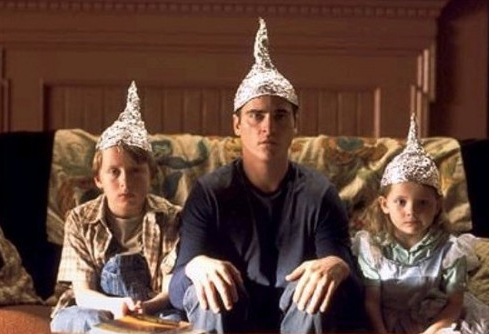
tin-foil-hatWhilst we are on the subject, this is worth reading: Are conspiracy theories the biggest threat to democracy?

Observer columnist and academic John Naughton said:

The reason we have conspiracy theories is that sometimes governments and organisations do conspire.

You can read the article and decide for yourself whether you believe what the mainstream media and advertising say, or the creeping unease of most of us who see our “purchasing power” and freedom being eroded. Who do we believe? What seems most likely?

I have known various “cranky” people in my time. I once met a fellow in London (the SSPX chapel to be precise) called John Gaster who told me about all kinds of conspiracy theories. At one time, apparently, this man had been involved in extreme right-wing political movements in England and introduced me to the idea according to which the Nazis would not have murdered large numbers of Jewish people and other minorities in concentration camps and gas chambers. I only later discovered the term revisionism to describe this way of thinking.

Sometime in the 1990’s, this man was murdered in London in unknown circumstances. I remember the fanatical look as he narrated stories about his Polish friends, the Illuminati, Freemasons and an English psychiatrist by the name of Arthur Guirdham who made extensive studies on Gnosticism. This encounter made me highly sceptical of conspiracy theories (whether the term is meant in innocence or with a derogatory overtone). There is some information on this strange man here. How representative Gaster was of conspiracy theorists, I have no way of knowing.

There is a psychological aspect, since we try to understand why things happen in history. How is it that such a nullity like Schicklegruber aka Hitler, the failed artist with a foul temper, got into power and practically conquered the whole of Europe? Was there some occult power with lots of money that helped him – to take the blame off itself? As we see inconsistencies with the story of 9/11 and the destruction of the World Trade Center, we are brought to suspect things and perhaps get a highly distorted judgement about everything. Are we heading towards a dystopian totalitarian hell, a replay of Nazism and Soviet Communism but made much worse by the use of modern technology? Are our fears justified, or is it a form of paranoia and a desire to understand the irrational by being simplistic? Secrecy and lack of transparency on the part of political authorities only feeds these thoughts, feelings and emotions.

Fear is a very destructive emotion, but are we humans or animals destined to be taken to the slaughterhouse, innocent until the fatal moment? History goes round in circles, up and down in waves. There are evil periods like the two world wars of the twentieth century, and we seem to be aware of gathering forces and shadows. I have to admit that I am afraid.

Is there a yardstick by which we can get objective views on things?

Posted in Uncategorized | Tagged , , , , | Leave a comment

Old Nick

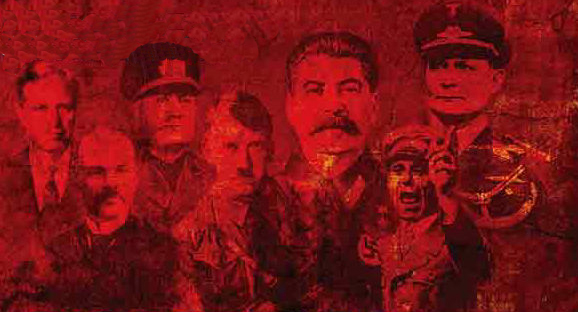
ponerologyAn article came up on an “alternative news” website I occasionally look at – The Psychological Power of Satan. This site is admittedly quite “conspiracy theory”, but we also have to say that evil in the world is, and always has been, a true conspiracy – not a figment of the imaginations of the mentally unbalanced. Nazism in Germany and Communism in Russia were true conspiracies. Evil has not gone away, far from it!

Science is giving us a tremendous amount of insight into evil. We find the notion of the psychopath, characterised in the total lack of empathy for others or moral conscience – the negation of any notion of right and wrong.

The one significant idea of this article is that “pure evil” is a myth and evil is not immutable. We all have free will and can choose between good and evil. To suggest that someone is born evil is to postulate a form of predestination and a justification for killing that person. It is the justifying notion of capital punishment and the idea that someone who has committed an atrocious crime is beyond redemption. I think this article gives us much to think about, and notably that the enemy is found within ourselves. We all have our shadows and inner conflicts.

There is a book that has had a certain influence on my way of thinking Andrew M. Lobaczewski, Political Ponerology: A Science on The Nature of Evil adjusted for Political Purposes. Here is a review of this book, which I have read. It’s hard going, for someone like myself without training in clinical psychiatry, but it needs reading.

We are brought to discover a terrifying conspiracy that goes far beyond human machinations.

Put on the whole armour of God, that ye may be able to stand against the wiles of the devil.

For we wrestle not against flesh and blood, but against principalities, against powers, against the rulers of the darkness of this world, against spiritual wickedness in high places.

Wherefore take unto you the whole armour of God, that ye may be able to withstand in the evil day, and having done all, to stand.

Stand therefore, having your loins girt about with truth, and having on the breastplate of righteousness;

And your feet shod with the preparation of the gospel of peace;

Above all, taking the shield of faith, wherewith ye shall be able to quench all the fiery darts of the wicked.

And take the helmet of salvation, and the sword of the Spirit, which is the word of God.

Posted in Uncategorized | Tagged | Leave a comment

As we remember our loved ones…

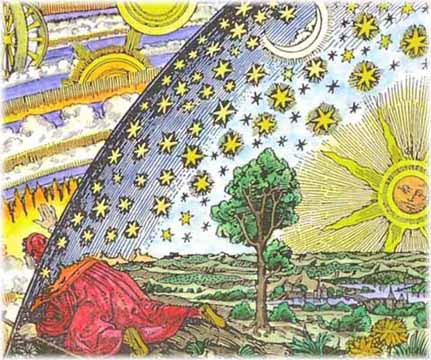
gnosticismAnother year goes by, and we have celebrated the feast of All Hallows. My wife and niece came to Mass yesterday, and the homily took the form of a dialogue. The origin of these two days in the liturgical calendar is the old pagan feast of the dead, from whence comes Halloween. The word Halloween simply means the Eve of Hallows, the old English word for saints. To hallow is to sanctify, to fill with God’s grace. The Church “baptised” this pagan celebration like so many others and give Christian meaning to it. A distinction was made between those who are canonised saints and the common lot of mortals whose fate or present situation is unknown to us. We assume that the souls of the departed are in a state of transition, being healed or purged in some way, and in need of our prayers.

This is the year when I lost my mother. As the years pass, our parents, relatives and friends grow old, and each of us takes his or her turn. Death looks so total, so absolute, reflected by the black vestments we use for Requiem masses. To our world where only money matters, death is marginalised and pushed away. Materialism claims that human beings or any living organism is merely a complex system of electro-chemical reactions – and when death occurs, there is just nothing.

I found this quote from Cardinal Giuseppe Siri, late Archbishop of Genoa, which is quite amazing in its depth (I found it here):

Materialists of every sort, even those disguised as theologians, (and they are not a few), thought they would pacify the fear and horror which the cortege of death opens: [in doing so] they have obtained this effect, sadly for them, in rendering the afterlife the most pressing of problems for human life. It is not a small thing, if you think about it , to say that without “eternal life” everything becomes a hoax, a joke, and earthly life has no purpose. With all of this, everywhere, as if dressed in a certain indifference with regard to the substance of the question, many are seeking out ways in furtive exploration of the afterlife: witchcraft, necromancy, spiritism, bearers of extra sensorial perceptions: some, to appear different, even cast libidinous glances on the other side of the “great curtain.” Everyone, apart from the sustainers of materialistic theses, are fascinated by the adventures carried out in proximity to this curtain. It does not mean that God does not allow for extrapolations in things human, especially with the most stupid and most undisciplined creatures – the demons – it is not for nothing that exorcisms exist.

It is not at all impossible, rather it is real, that God wants true contact between Heaven and earth (the Divine Liturgy celebrates some of these illustrious and beneficial contacts), but without opening the direct vision of the afterlife to any mortal. Naturally, with this assertion subjects of elevated mysticism are not understood, when returning to the dimensions of our valley of tears, were not always able to translate that which they had perceived. It is licit then to say, rather to caution, that in all this secular intrigue on the thresholds of eternal life, one is constrained in general, to stay within the boundaries of fancy. The reason is simple. Not one of us would be able to perceive anything material in five dimensions. To introduce into our limited receptive capacities something distinct of eternal life, is much more, infinitely more, than forcing us to reach a universe in five dimensions.

If things were as the materials say, then life would indeed be pointless, a joke. However, we find evidence, independently from Church teaching, that life continues – and not necessary according to the logic of classic Christian soteriology. We are not Christians in order to “save our souls”, but to be transformed and led at a much higher and deeper level.

Cardinal Siri warned us of trying to pry into the secrets of the afterlife whilst remaining in a materialistic outlook in life, not unlike the men of old like King Herod who sought signs and wonders. There is a phenomenon of mischievous spirits who can lead us astray, not only demons – fallen angels who never had bodies – but also humans who have died and who remain caught in some kind of nether-world between this world and the next and operate as ghosts and poltergeists. That is the danger of spiritualism, using ouija boards and “trans-communication” electronic devices to capture attempts of souls in other dimensions to communicate with us. Curiosity can lead us into serious problems, and it is not for nothing that exorcists are called upon to deal with situations that cannot be explained by psychiatric medicine.

We need to take an attitude of humility. We can talk to our departed loved ones like we pray to God and for the intercession of the saints. We can’t see them or hear them, but they are around us – like radio frequencies around a radio set not tuned to them. Strange things sometimes happen without our looking for them, and these are exceptional privileges. I thought I heard my mother’s voice in a half-asleep state, but it was perhaps only my own memory. Things happen in dreams and sometimes in unexpected ways. Most of the time, we can only accept this barrier between our world and other worlds, confident that all will be revealed as we pass through the curtain ourselves. Above all, we are going to discover that there are happy souls who are not there because they were Church Christians, but because they were Christ-like.

We need to review the reason why we are Christians. In considering that it is not about “saving our soul”, the Beatitudes in yesterday’s Gospel took on a whole new meaning. We should be living a life that anticipates the next life, caring for others and the beautiful planet. I find God most at sea, but there are also other beautiful places that man hasn’t yet exploited for money or been able to wreck and ruin. Our thirst for discovery and exploration is also a foretaste of that life that lies beyond the curtain.

Another source of humility is the knowledge that the Church doesn’t have all the answers. Church teaching only has a limited view of the mysteries of heaven, hell and purgatory (or whatever you want to call the “intermediate state”). Other traditions like Hinduism have a much more complete picture. Evidence comes in from many sources, some dubious and others too constant and coherent to dismiss. The afterlife is increasingly seen, not as a matter of faith and belief, but of scientific fact borne out by repeatable experiments.

In particular, those up on quantum physics have discovered that everything is energy, even if it appears to us as matter. Energy is consciousness, and we are all a part of each other and of the whole. Some of us are more conscious of this that others. There are also the experiences of those who have nearly died, and experienced something even though their brains were in a state of deep coma. Many medical doctors have made these discoveries and have been unable to explain them in materialistic terms. There are also mediums, most of them charlatans in it for the money, but a few genuine ones who have accepted rigorous control to eliminate the possibility of fraud. Strange things happen with television sets and tape recorders, as electro-magnetic radio waves are also energy. The direct voice medium is a phenomenon that is particularly mind-blowing. Some of the ectoplasm looks like cheesecloth, but things do happen that are not the result of trickery and stage acting. I keep an open mind, as there are more things in heaven and earth than our dreamt of in our philosophies.

There are many things that defy our understanding or appear to contradict the exclusive “one true church” claims of control over who goes to heaven or hell. The ecclesiastical system can only deny, condemn as heresy, and sometimes give just warnings lest we be deceived by mischievous spirits. We have to be sober, discerning and humble. One of the biggest challenges to our “system” of belief is the idea of reincarnation. Could it be that we go through a series of incarnations before escaping the “cycles” to a more Christian notion of a disembodied afterlife, or rather with a spiritual body like the glorified body of Christ who walked through closed doors, but yet could be seen and touched by the doubting Thomas? The idea of successive incarnations seems to be anathema to us – but some evidence is truly challenging if we look at it rather than deny its existence. Are we prepared to face it and work it out?

The institutional Church has always been concerned to stamp such ideas out as heresy, because it removes people from the control of the “system”, not only over our present life and loyalties but on the “other side” too. Finally, are we Christians through love and desire for beatitude or through servile fear of fire and brimstone? I believe this is the question that will determine the survival of Christianity in a world that has rejected ideologies and totalitarian control – at least those of us not part of the “global elite”.

I’m not saying I believe in reincarnation, but acknowledging that many do! So, let no one get too excited! 😉

An idea that I find most convincing is that of a universal consciousness, perhaps too close to pantheism for comfort, but something that makes us emerge refreshed from the prison of materialism and extreme individualism. We are brought to care for God and spiritual souls in other dimensions and multiverses, but also for other people and our planet. It brings us to another understanding of Christ’s message and the words of the Gospel, a whole new way of understanding the Kingdom of God – pulling us out of our anxiety concerning the fate of institutional Churches that have lost the savour of their salt.

Those are just a few ideas as I remain faithful to the teaching of the Church whilst filling in the gaps and putting colours into the monochrome image. Well there it all is, for each of us to take in moderation and discernment.

Posted in Uncategorized | Tagged , , , , , | 2 Comments

Introducing another Intrepid Seaman

I have written about Bernard Moitessier and Joshua Slocum, the solo contemplatives who took on the most treacherous seas on this planet in substantial yachts of more than thirty feet. They were to the sea as Mozart and Bach were to musical instruments, harmony and counterpoint. We all have heroes, as the devout Christian looks to the saints (it is All Saints’ Day today), and we all look to the best of every walk of life.

sternbergJacques Sternberg is a little closer to my own experience as a sailor. His boat was hardly bigger than my own. His choice was the Zef dinghy, a twelve-foot bermuda rigged sloop manufactured in fibreglass in the 1960’s. It is more suitable for cruising and fishing as it cannot compete against modern racing dinghies.

Jacques Sternberg was born in Belgium in 1923 into a Jewish family. He had a particularly hard time during World War II, taking refuge in the south of France. He began to write short stories, poetry and a diary – and learned to sail a dinghy. His family had to leave the Côte d’Azur and tried their fortune in Spain. They were caught by the Germans in 1943, but Jacques managed to escape during a transfer operation. After the war, Sternberg went to Paris and lived a very poor life, at the limit of being a down-and-out. The American Army took him back to Belgium in October 1944. From 1945 until the mid 50’s, he wrote several novels, but they were refused by publishers. It was during that time that he married Francine, aged 22 years and a Jewish and Communist resistant. Jacques worked in a factory to earn his living. He continued to write novels and found round-about ways of publishing them. From 1956, he ventured into science fiction. In that year, he acquired a Solex, a heavy bicycle with a small petrol engine mounted on the front wheel, which he rode until 2002.

He bought his first boat, a Zef, in 1970 and sailed it on the English Channel at Trouville where he lived for six months every year. He went on long cruises along the coasts whatever the weather. He considered crossing the Channel or even the Atlantic or the Pacific in his tiny dinghy, a temptation he wisely resisted. An anarchist at heart, he eschewed the world of yachting clubs and racing, and covered hundreds of nautical miles on the sea. He died of cancer in 2006.

Indeed, he is close to my own experience, as someone who quickly went off “racing round the cans” and using boats or any other material object as a “status symbol”. I appreciate the dinghy, not as a “poor man’s yacht”, but a vessel that can be transported anywhere very easily and can sail where bigger boats can’t go because of their deep keels. I have certainly sailed much less than Sternberg, and am more wary with weather and sea conditions. I thought of him as I sailed two days ago in a moderate wind between Veules les Roses and Saint Valéry en Caux – but with quite a big rolling swell with a short chop between the big waves. I have sailed around Saint Malo, the Rance, the Pertuis d’Antioche near La Rochelle, la Trinité sur Mer and along the Normandy cliffs. I also made the illegal* crossing of the Seine Estuary and had the helicopter fly over me four times! But they didn’t send out the Zodiac to give me a rollicking! There are other places in my sights for next year. I have even had the honour of being compared with Sternberg in a French sailing blog because I fitted one kind of boat with the rig of another (which I found to be very compatible)! The famous Tabur 320 with the red Mirror sails is mine!

He must have been a fascinating fellow, and he certainly lived to the full through adversity and grinding poverty. We all have to find our way…

_______

* Illegal crossing of the Seine Estuary. My class of sailing dinghy is not allowed to cross a shipping lane. Less busy ports are more tolerant, but you have to watch your step with the Harbour Master of Le Havre, one of the busiest ports of the world! There are two main ports, the Port 2000 for the biggest cargo ships in the world and then there is the traffic coming from Rouen down the Seine. It’s dangerous unless you have a bearing compass to determine whether you’re on a collision course! I won’t be doing that one again. I was lucky the day I did it.

Posted in Uncategorized | Tagged , | 2 Comments

Reflections on the Decline of Christian Europe

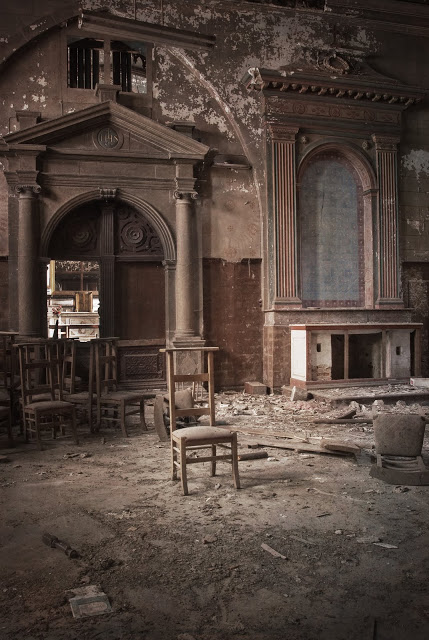
abandoned-church08I have been on this subject before, and I may have some insight not being a sociologist or a “new atheist”. It is very difficult to get any kind of objective understanding of a situation that seems to elude anything but subjective opinions and simplistic propositions. However, there are ideas floating around that might help our own circles avoid some of the very things that cause people to be alienated from Christianity. It is frustrating to live on a continent with so many monuments to its Christian past, but which will have to be put to other uses or demolished.

The general assumption over the past few centuries is that Christianity was a force of darkness and fear, and that only by denying God or any kind of transcendence could man find fulfilment and happiness in his new found rights to life and freedom. So in came emphasis on education, reason and scepticism in metaphysical matters. One idea strikes at the heart of Christianity – that belief in God is motivated by fear and anxiety rather than love of truth. Atheism largely consists of recycled arguments from the eighteenth century, but has evolved in its subtlety.

There is something else that can be blamed for the decline of Christianity, the easy availability of other religious traditions and spiritual philosophies. This has come from immigrating peoples from other parts of the world, particularly those parts of the world colonised by the various historical European empires. Thus, we have a massive influx of Islam and Hinduism. In an attempt to react against our racist past, we try to integrate foreign cultures into our own and the result is syncretism. Whether we think this is a good or bad thing, inspired by our desire of respecting and accepting people of ethnic minorities, it is eroding Christianity – or Christianity cannot adapt to such syncretism without cost to its own substance or claim to truth.

Christianity no longer runs in families, and this has eroded the meaning of tradition. People are merely free to choose a spiritual identity in which they think they would feel at home. There is no limit to the variety of products on the supermarket shelves. The decline of Christianity goes hand in hand with the erosion of the family and the notion of cultural tradition. There is a phenomenon of “cultural Christianity”, for example northern Irish republicans and loyalists calling themselves respectively Catholics and Protestants, but who are mostly alienated from their religious practice.

I don’t know to what extent the “new” atheists like Richard Dawkins, Sam Harris, the late Christopher Hitchens and others are having that much influence. Those with knowledge of recent scientific work know about a movement away from materialism in the world of quantum physics. Old laws of physics are no longer absolute, and many things even in the realm of the “natural” escape our understanding. Reason finds itself humbled. Perhaps the “new” atheists spread their ideas by irrational means like cult gurus, appealing to desires for cultural identity and moral freedom rather than a search for truth and intellectual fulfilment.

Another thing to consider is the question of why Christianity seems to be dying in Europe, yet surviving in America where there are just as many challenges like consumerism, moral laxity, education and modernity. What is the fundamental difference between Anglicanism (for example) in England and the USA. The former is an established state religion, and the latter is no more established than the Methodists or the Roman Catholics. Does that make any difference? That contrast might be better seen between the theologically and morally liberal churches of the west, always eager to comply with political correctness, and on the other hand, the conservative churches of Africa, Asia and South America. Is it still the question of whether churches can still take advantage of cultural “primitiveness”, fear and ignorance?

Some are discovering that the old rationalist / secularisation thesis is incredibly patronising in regard to people in other parts of the world, a leftover from imperialism, and it is being challenged – just like Newtonian physics. Evidence of this is the USA, with perhaps an even more advanced state of modernity and consumerism. There is just as much in the way of social problems, poverty, warfare and propaganda from the “new” atheists. Perhaps swathes of American society are going the same way as Europe, just a little late on the uptake. Time will tell.

Is the question of separation of church and state the one underlying cause? Many of us have read something about Constantine and the support given by the Roman Empire to the Church, and then the same kind of support being sought from other monarchs and princes after the fall of the Roman Empire. It’s a long and drawn-out story. Saint Jerome is quoted as saying Ecclesia persecutionibus crevit; post quam ad christianos principes venit, potentia quidem et divitiis maior, sed virtutibus minor facta est (The Church firstly languished under persecution. After this, she turned to Christian rulers who gave her wealth and power, but she thereby grew weaker in virtue). People began to become Christians to get temporal favours, and no longer for reasons of spiritual conversion. Those who wanted to continue to be the older “kind” of Christian retreated to monasteries and hermitages in deserts. All being said and done, the Roman Empire spread Christianity to every corner of its colonised lands – and that influence became Christendom. In becoming so influential, the Church had to become a society of both saints and sinners, people in it for their discipleship with Christ, and others in it for power and money. As the latter influence became unbearable at various times in the history of Christianity, the splits appeared as the former sought the freedom to be Christians. Denominationalism has always been part of American life and introduced an element of competition and the ability to self-reform. In Europe, the Reformation and the Counter-Reformation were a bloodbath! To this day, denominationalism outside England on this side of the Atlantic just doesn’t seem the “thing”. It’s OK for ethnic minorities but native (French for example) have a choice between Roman Catholicism, “mainstream” Protestantism or nothing.

Was it not Christ who warned that those who live by the sword would die by the sword?

The French Revolution showed what happens when the Church is tied to an unpopular kingdom, and why the nineteenth century in France produced two Liberal desires: the separation of Church and State and Ultramontanism. In Europe, the Church lost the working class as crisis followed crisis, caused by industrialisation and the hecatomb of World War I. They turned towards the various political demagogues of the twentieth century who seemed to have more to say than the increasingly irrelevant state churches.

Disestablishment of churches would not be the only thing to highlight, blaming Erastianism for everything, but to a significant extent. Free and independent churches, of sacramental and “reformed” traditions, also seem to be in decline. As in the twentieth century, some people are eager to listen to demagogues and Pentecostalist preachers of talent. Some are attracted to themes and ideologies similar to those of the 1920’s and 30’s in Europe. Many challenges to Christianity like New Age and the ideologies seem to have lost vital energy and are of appeal only to the margins. Doubtless, Churches that remain independent of the “mainstream” would seem to have more of a basis of credibility.

We finally come to a notion of some independent churches wanting to imitate and perpetuate trappings of their parent bodies as they were when they were connected with secular power. This idea will certainly question many of the cultural trappings we have: bishops’ violet cassocks, church buildings and ornate liturgies. I do notice that few people are turning to western sacramental Christianity or liturgical traditionalism. There are two possible answers: adapt the offer to the market or make Christianity such that it doesn’t need to attract those who are motivated by something other than Christ himself and their spiritual life. The latter is the way of the monasteries and the little Christian communities in the catacombs – the “creative minority”.

That seemingly “Jansenist” idea has been popularised by the quote from Pope Benedict XVI in his old Salt of the Earth interviews.

Perhaps the time has come to say farewell to the idea of traditionally Catholic cultures. Maybe we are facing a new and different kind of epoch in the Church’s history, where Christianity will again be characterised more by the mustard seed, where it will exist in small, insignificant groups that nonetheless live an intensive struggle against evil and bring the good into the world – that let God in.

The election of Pope Francis seems to have come to refute this essentially monastic notion of Christianity. Surely we are called to “market” what we believe to be good and true, by whatever means will draw in large numbers of people. This will remain one of our most debilitating dilemmas, bringing us to agonise over the kind of liturgy and culture we love, wondering whether it would not be better to give it all up and seek relevance in the changing values of the “market”. I think Benedict XVI’s idea was not one of turfing out all the “dross” and just keeping saints in the church, but not going out and appealing to the lukewarm at any cost – a question of priorities.

Are we to be cultural or counter-cultural? The question remains and will not go away. We in the ACC are certainly marginal, and we don’t keep people out. We give priority to traditional worship and what we believe to be right, and never mind if no one comes! It sounds a bit simplistic, but what else is there?

Posted in Uncategorized | Tagged , , , , , | 10 Comments

Just a Little Reminder

There has been something of a flurry in the Orthodox Blow-Out Department comments section. I should be very clear in that I wish all the best to our Orthodox brethren whether of eastern of western rites. The Orthodox world is entirely outside my experience and I do not have the elements on which to make any kind of judgement. I once knew the late Dr Raymond Winch during my university days, and entertained an idea of going western Orthodox – but I never did.

Those who wish to participate in this discussion are welcome to do so. Try to be civil and imagine you have the other persons who write comments in front of you. Be bound by the constraints of courtesy and respect for others. I say this to no one in particular. I keep out of these discussions because I have nothing to add.

Today’s “blow-out” comments are highly interesting, and the discussion is illuminating for those of us who are far from Orthodoxy in any shape or form.

I post this little word with no provision for comments. If you wish to comment, please use the Orthodox Blow-Out Department.

Posted in Uncategorized | Tagged | Comments Off on Just a Little Reminder