Bogus Technical Support Scam

Indian_Phone_Scammers_Claiming_to_be_MicrosoftI have just had a “cold call” from a man with a heavy Indian accent telling me that my computer was full of “errors” and that I had to follow a particular procedure. I smelled a rat immediately and told him that I was asking the questions. When I asked him whether he was living in India or England, he put the phone down.

I looked up in Google using the opening line of this person “I’m calling you about your computer errors” and came up with Phone scammers call the wrong guy, get mad and trash PC. Exactly!

When he asked me to start pressing keys on my computer, I did not do so, but asked him what happens when I do so. They are not prepared for questions. I was suspicious immediately, because I have been using computers and internet for a long time – and have learned about trolls, scammers and other undesirables. Apparently, if you complete the process and allow them direct access to your computer, they have you hand over a load of money via Paypal and then they trash your computer with real viruses or by deleting your data.

The best thing is to terminate the conversation immediately, but if you know about them you can play them like a hooked fish – if it makes you feel better. Just disconnect your computer from the internet during the call as a precaution – but they need you to set up the internet communication line. They can’t do it.

We have had the Nigerian 419 scam, phishing and now this. A healthily cynical attitude on our part should indicate that they are suspect by the fact they are phoning us and they “need” something. It is the same thing with all phone marketing – just tell them to find a job! If we call for technical support, we normally get the number we dialled and the genuine agency (Microsoft, etc.).

Remember real support phone lines don’t call us. We call them.

Watch the video and be wise. Another link on this subject: Virus phone scam being run from call centres in India.

Here’s someone who had fun with the Indians:

Don’t try this unless you know what you’re doing.

Posted in Uncategorized | Tagged , | 5 Comments

The Passing of an Era

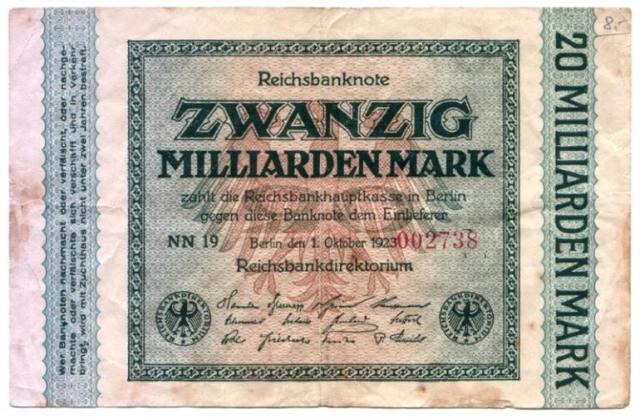
hyperinflation-banknoteIt has happened before: the fall of the Roman Empire, the transition of the Middle-Ages into the Renaissance, the French Revolution, Marxist Communism the Great Depression and the Nazi hell. Now we seem to be looking at the end of capitalism and the present debt-based economy.

I am not an economist and understand little about what is going on in America except in the simple terms of most of us – we get into debt and our creditors can help themselves to our property if we don’t pay what we owe. I have read many articles about the possible collapse of the US Dollar if they refuse to raise the debt ceiling and default. The scenarios are indeed frightening because of the human cost to us all throughout the world.

In bygone ages money represented its value in gold, and more particularly the human work and produce that made of money a medium of fair exchange. I was always taught as a child that the world owed no one a living and that we had to go out and earn it. We could buy things we saved up for, and if it was really necessary to borrow and contract a debt, we would go ahead only if we knew how much we could take off our weekly wages for the repayments. People older than I remember such simple rules in life, though it must be said that the generation before me lived through the Great Depression as children. In a small economy, money is simply a medium of exchange with an agreed and objective value. You got paid for working or having something to sell, and you would buy what you needed with your own money. Money has been around for a very long time. Jesus speaks of the Roman denarius, saying that what was due to be paid in taxes to the Empire was to be paid, and man’s debt to God was in another order altogether.

At some point came another notion of economics which escapes the common sense of most of us ordinary folk. It is a notion of money that is unrelated to the value of property, precious metals and human work. It became abstract and an object of speculation. The modern economy is based on debt. Banks and business buy debts, whilst most of us struggle to pay them and be owners rather than debtors! I have a brother-in-law who is a banker. He once tried to explain to me the advantage of buying debt. It seemed like buying the right to get the interest from the debtor, so that’s where the profit is. I assume the usury interest is higher than the price of the debt! Cross that with all the “Chinese” we read and hear from stock exchanges and those charged with the finances of states and governments – and we get really confused.

The relationship between money and what it is supposed to represent (for convenience the gold bullion standard) is what separates different political tendencies between conservatives and socialists. Another huge problem is the staggering amounts represented by petroleum products and energy in general. We arrive at the end of the industrial age, which began by farming people being dispossessed and forced into the dark satanic mills of William Blake’s Jerusalem. That economy is an illusion, a bubble, the world of financial speculation. We have a whole illusory world of credit and debt, markets, hedge funds, offer and demand and many more terms understood only by economists. Above all we have obscenely big businesses and ordinary people being deprived of an honest livelihood.

Financial speculation causes untold human sufferings. If the price of an ordinary house in southern England in the 1930’s was some £30,000 in today’s value (£300-400 in those days), the present market price would be ten times that – £300,000 – ten times more than can be reasonably afforded by an ordinary working family. Energy is another victim of speculation, and we now learn that prices of necessities like water and food are being jacked up by speculation. Millions are plunged into poverty and starvation whilst those who can afford food are wasting it. Third World countries become so helplessly poor that a whole traffic of human persons wishing to immigrate into the western world becomes another subject of speculation and organised crime. Very few own the greatest part of wealth in this world. On one side, we look at the dying agony of a Promethean monster. On the other side, our very lives are threatened by the services we are used to being withdrawn: modern medicine and hospitals, old age pensions, unemployment benefits and income support (or whatever they call “the dole” nowadays).

I have been reading about what might happen in the event of a currency collapse and hyperinflation – what happened in Germany enabling Hitler to get into power, Argentina, England in the 1970’s and other places. In an extreme scenario, the country concerned descends into chaos as services are withdrawn, food and fuel are no longer transported and delivered, and the electricity is switched off. In the cities, there would be looting and the efforts of desperate people to find food. Those in need of medication would not get medical care. If that happens, thousands and millions will die. Is that about to happen in America and Europe? To some extent, it has happened. Some entertain the idea of surviving. During the occupation of France by the Nazis, those who lived in the country fared better than those in the cities, but life was still very hard. Would it lead to dystopia à la George Orwell? It is a good question but I have no answer to that one.

Whether we are looking at an absolute catastrophe in human terms as the world is depopulated either by the consequences of the downfall of the financial empire of the ultra-rich or some kind of evil consortium of psychopaths, or whether we already get a glimpse of a new world that awaits us after the pain and suffering, we are definitely seeing a change of civilisation. The most likely outlook is more than a lifetime of suffering and penance in a long dark night of the soul.

Apart from the suffering I will have to endure as much as anyone else, I welcome the end of the consumerist culture, supermarkets, overpriced housing, crippling costs of the welfare state and the evils of those at the limit between questionable business practices and organised crime. If something bust the hypermarkets and other monsters of big business, would it bring back opportunities for small traders and shopkeepers? Probably not for a long time, but one can dream. Wouldn’t it be wonderful to be less reliant on our cars or pressured to move into a city! The dystopian visions are very depressing. Perhaps we in the countryside can barter – my woodworking skills for food and farm products – that is if the farm hasn’t been laid waste by hordes of starving city folk on the rampage. Most of us would not survive in a world of disease and starvation.

Nicholas Berdyaev wrote at length on a New Middle Ages, a notion of the period between the end of the Roman Empire and before the building of the cathedrals. He saw it coming after the demise of Marxist Communism or Nazism, but there was yet our own totalitarianism – of money – that had to run its course. In the past, there was no rotting concrete ruins, rusting wrecks of motor vehicles and Japanese nuclear power stations leaking their deadly radiation into the sea. The thought of it all is agonising. But, perhaps, nature has a way of recovering from us humans that we cannot imagine!

I have written a couple of sketchy ideas about the de-growth (décroissance) movement, but it seems not to be the aim of a political ideology but simply what is going to happen. We have technology but not the moral rectitude to use it for good. That is an old problem as speculated upon by Mary Shelley in her visionary novel Frankenstein. Using a computer is evidence of the use of technology and progress – but it can’t work without electricity or a communications network for the internet. If the basics go, my computer will be a useless pile of junk, just like my van if there is no fuel to power it. Christ warned his disciples that those who live by the sword will die by the sword. The same could be said of our technology and our machines. When all that is gone, I hope we will still have our books and everything we had before we discovered computers and the internet. This blog will vanish, with everything written on it except anything that might be printed on durable and good quality paper. Printing itself will only be possible by the kind of machines that existed in the nineteenth century and before. Are there still people trained in the craft of traditional printing? It is harder to go backwards and lose what we remember than discover new things! One of the reflections that has been through my mind, over these weeks of “doldrums” and the dearth of churchy news, was that blogs and the internet are fragile and fleeting. Just imagine where they would be without electricity! Nothing!

It is going to be more difficult than most of us imagine. American-style survivalism – a gun, two bars of gold and three weeks of tinned food – is a complete illusion. If this civilisation falls, many of us will die – which should not be a matter of fear for Christians. We will die of starvation, get murdered or executed by some totalitarian regime, or of disease because there aren’t any more doctors or hospitals. Some time or other, we have to die, and if we have the faith, we matter very little as individuals.

For those who survive and have some human, moral or even Christian ideal, the new world will have to be something human, small and beautiful. There has to be hope. Much of our present technology would be forgotten and recognised to have been of little lasting value.

After the fall of the Roman Empire, Saint Benedict came along and made something new of the monastic tradition – a civilising force and a drive to build a new world. At this time, I can see the slate being wiped clean (it will take longer than our lifetimes) and something luminous coming out of it. But, very few people would be influenced by monasticism. I think the greatest light will come from outside Christianity like the wisdom and medicine offered by the Arabs in the Middle Ages. Most of us are inclined to think that a new “social contract” could be built on a bartering economy, necessarily local and founded on honesty and moral instincts. Will that come about?

I rather look forward to the day when computers, cars and supermarkets will be a thing of the past, taken over by farming and fishing, working with our hands and preserving wisdom and knowledge through printed books and oral tradition.

If God grants me life and survival through the coming tribulations, I look forward to simplicity and innocence regained. One can but dream…

Posted in Uncategorized | Tagged , , , | 5 Comments

In Medio Stat Virtus

In medio stat virtus is a Latin expression taken from Aristotle (and translated from Greek) by St Thomas Aquinas. It isn’t quite the Via Media of Hooker and some of our present-day enthusiasts of “classical Anglicanism”. It simply means that strength or virtue is found in the moderate position between – and above – the two extremes of any issue.

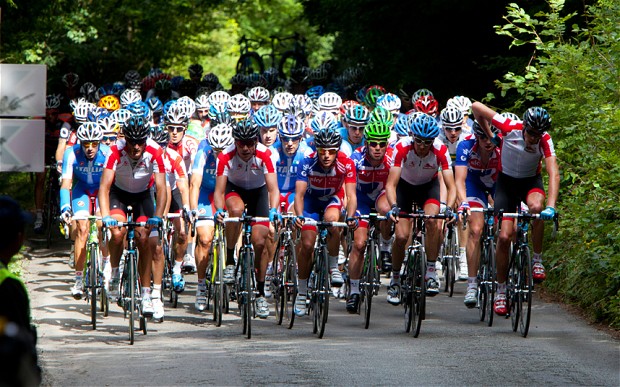
cyclistsI came across a Telegraph article about something completely unrelated to religion or Christianity but a sign of polarisation of positions and intolerance. This concerns people who ride bicycles – Take a stand against the false God of cycling. It is quite amazing, but something so predictable. I have ridden bicycles most of my life, from my tricycle which I converted to sail / pedal when I was about 10, my gleaming new bicycle for my 11th birthday. I have ridden these contraptions everywhere, fallen off them and still have a scar on my right elbow. I was once nearly killed riding into the side of a moving car when I was about 12. I have ridden all round London and Paris, and saved a lot of bus and Metro ticket money. I still have a bicycle and go for rides in the country, and take it to Rouen on Monday mornings when I go and give English lessons. Riding a bicycle is good physical exercise, good for health and non-polluting. Great, but not everyone rides a bike!

Also, I take pride in riding without any kind of helmet or anything other than ordinary clothes. As in any sport, those who take it too seriously really look the part, and often overdo it. I find the same thing with sailing with expensive sporting boats and all the clobber. It would also be like driving a car with leather gloves and goggles like the chauffeurs of the 1920’s! Why do we take ourselves so seriously?

I also drive a car, and have had experience of both intolerant and rude car drivers and cyclists alike. I have added a means of locomotion on water – sailing. I also went on a gliding course with a friend up on Sutton Bank in Yorkshire when I was 16 and had the thrilling experience of flying. Locomotion is a means of recreation as well as getting from A to B for reasons unrelated to the journey itself. I can understand the grievances of cyclists in regard to bullying motorists. I was in London in about 1982, somewhere near Oxford Street, and was in the wrong lane. A taxi physically forced me to turn the way he was going – very unpleasant. In my experience, being a motorist made me a better cyclist. You learn the Highway Code and the limitations of your vehicle due to its width and wheelbase. Cyclists do better when they observe the Highway Code and make sure they are in the right lane for turning left or right or straight ahead. The road is for all.

People on bicycles can be very rude and intolerant, as can people in cars or in motor boats on the sea. We have the same problem between sailing vessels and fast motor boats with engines as big as the egos of their skippers. There is perhaps less kindness on the road, but there are fewer on the water. I don’t think this is a problem that can be solved by laws other than the application of the present Highway Code, but by education and a different society from the one we live in.

This Telegraph article shows the tendency of everything in reverse: racism, sexism and the domination of the weak over the strong. Women try to dominate men, non-white people discriminate against white people, homosexuals against “straight” society, and now cyclists against motorists. I appreciate the tremendous progress made in towns where the road system has been designed to offer cyclists better and safer conditions. I appreciate the cycling ways in Rouen. The system is very well designed, and there are points where people can hire bicycles when they don’t have their own, or when they just want a short ride without taking their cycles on the train. It’s very convenient. I am grateful to see better conditions for women and non-whites. Racism and sexism are evils to be condemned, whether they come from one “side” or the other. Polarisation is a very dangerous tendency, when if we are critical of something – for example the LGBT lobby – we are on the opposite extreme. Many of us just want tolerance and respect for the majority as well as the minorities.

What makes people tolerant and considerate for other people? Basically, it is empathy which is born from humility and truth about oneself and our limits. We live in a world that makes it almost impossible to get on in life unless we are willing to compete and push others out of the way. Some call that Social Darwinism. Christ taught a different way, that of taking a step back and seeing more meaning to life in being good to others, self-sacrifice and being less ambitious.

In regard to the use of public highways, cyclists need to keep well in to the kerb to let the cars past, and motorists need to watch their distance and speed, knowing that the aerodynamic slipstream from the car can be as dangerous to the cyclist as physical contact. These are things we need to know. We can see this issue literally, as well as analogically. What is the effect of our lust for power and domination on others?

What will it profit us if we gain the whole world and lose our soul?

Posted in Uncategorized | Tagged , | Leave a comment

Bugnini’s Ghost, the Persisting Rumours

I won’t waste time on this one other than tipping my virtual hat to Deborah Gyapong, Fr Finigan and Fr Zuhlsdorf. I already mentioned this rumour a few months ago, which is again in the news with William Oddie’s article in the Catholic Herald Is Pope Francis thinking of appointing as prefect of the Congregation for Divine Worship a disciple of Annibale Bugnini deeply hostile to Benedict XVI’s reforms?

I have already mentioned that I am an outsider to Roman Catholic affairs, but not indifferent to the many priests and laity who face the “return of the old guard” or being alienated from churches. The rumour of Archbishop Piero Marini being appointed Prefect of the Congregation for Divine Worship was first spotted by Damian Thompson last June. Archbishop Marini is a disciple of the late Archbishop Annabile Bugnini who was in charge of the liturgical reform of the 1960’s and 70’s, and was only stopped in his tracks by Paul VI for going too far (some say it was because he was found out to be a Freemason). The above mentioned blogs, all conservative Roman Catholic, consider that such an appointment would be a kick in Pope Benedict XVI’s teeth, since it would mean a reversal or “moratorium” on his liturgical legislation in the direction of tolerance for traditionalists attached to the “extraordinary use” of the Roman rite.

One thing that makes me quite afraid is the traditionalists being unable to come up with anything original. If this rumour is true and Marini gets the job, he might think he is taking us back to the 1970’s. However we live in more cynical times and the Church is having that much more difficulty in maintaining any kind of credibility. I wrote a reflection on Pope Francis some days ago, and he has endearing qualities. I could understand him not being interested in liturgy and keeping the status quo of the Benedictine papacy – but to reverse it and deliberately alienate the traditionalists and conservatives (even with their aggressive proselytism) is something else – and indeed would send out an unambiguous message.

Whatever now happens, we as Anglican Catholics are called to a new mission, not preserving Anglicanism of the seventeenth century or ultramontanist Roman Catholic triumphalism – but preserving and fostering Catholic liturgical culture and a much wider vision than that to which many of us have become accustomed. At least as far as I am concerned, the aim would not be to have Roman Catholics come over to us, but that we should be a model of plain mainstream Catholicism as it was until the 1530’s and until the end of the eighteenth century in some parts of the world. We need to do this positively without any harshness or polemics, or any “true church” claim – just make sure that our light is visible to all.

There have been Roman Catholic traditionalist communities for more than forty years, and they cater for their faithful as we Continuing Anglicans do. Some call themselves Continuing Catholics. It is unfortunate that many are still influenced by Ultramontanist ecclesiology, and thus find it difficult to justify their dissidence.

All we can do is continue and persevere, however hopeless it all may seem. As our fake wartime mugs and beer mats say – Keep calm and carry on!

* * *

For information, see Explosive revelation: Benedict XVI himself sees Francis’ restriction of the Traditional Mass for the Franciscans of the Immaculate as a “wound” to Summorum Pontificum.

What a mess!

Posted in Uncategorized | Tagged , | 7 Comments

Doldrums

doldrumsI get the impression the Doldrums have arrived at this beginning of October. I don’t know whether it’s just me or more generally. I thought of the subject the other day when I took the boat out and the wind dropped, leaving slowly flapping and hanging sails. I look around my “usuals” most mornings with my coffee and cheese and Marmite (an English habit my French wife hates! 😉 ) on toast.

News about the Roman Catholic Church and Pope Francis can be found from different partisan points of view, and I just don’t feel inclined to enter the discussion. From the gentle Jesuit father conducting a retreat and hearing confessions to concerns about the liturgy. I’m just not part of it and it just isn’t in my life.

We are indeed far from heady days, and I get the impression that we are sad (in the northern hemisphere) with the declining days, the leaves on the trees changing colour and the timid sun rays through the heavy cumulus clouds. In a few short weeks, it will no longer be possible to go sailing except perhaps a day here or there on an inland lake or out of the Port of Saint Valéry en Caux to avoid the breaking waves on the beach. Winter is ahead of us … Brrr! And the long range weather forecasters are talking of a severe one this year!

All the same, we carry on practising our religion as priests or lay people. Even when devotion wanes and distractions enter our prayer, we persevere and do our duty for God and our neighbour. It is at such a time when prayer is at its purest. Without sensational news, we get on with deeper things like reading philosophy and theology, refreshing and building our knowledge and curiosity, discovering and making new landfalls. It is a time when I can be actually reading the books Dr William Tighe keeps sending me! I have a whole series on Gnosticism by Elaine Pagels and some more orthodox / biblical points of view. It’s fascinating stuff.

The wind will rise and the sails will fill, and there will again be eddies of water around the rudder. Sometimes we have to wait – or get the oars out and row – and everything comes to he who waits.

Posted in Uncategorized | Tagged | 6 Comments

Two Mirror Rig Questions

Another couple of search terms came up about the Mirror rig. I make no claim to expertise in this domain. I just know where to look and my boat has a Mirror rig which I set up every time I go sailing like so many others. I recommend looking at this site which concerns building a Mirror dinghy from a kit you can buy.

Where does a mirror downhaul connect?

Just to be clear about terminology, downhaul is what some call the boom vang, the device for tightening the leech of the mainsail when the boat is sailing upwind.

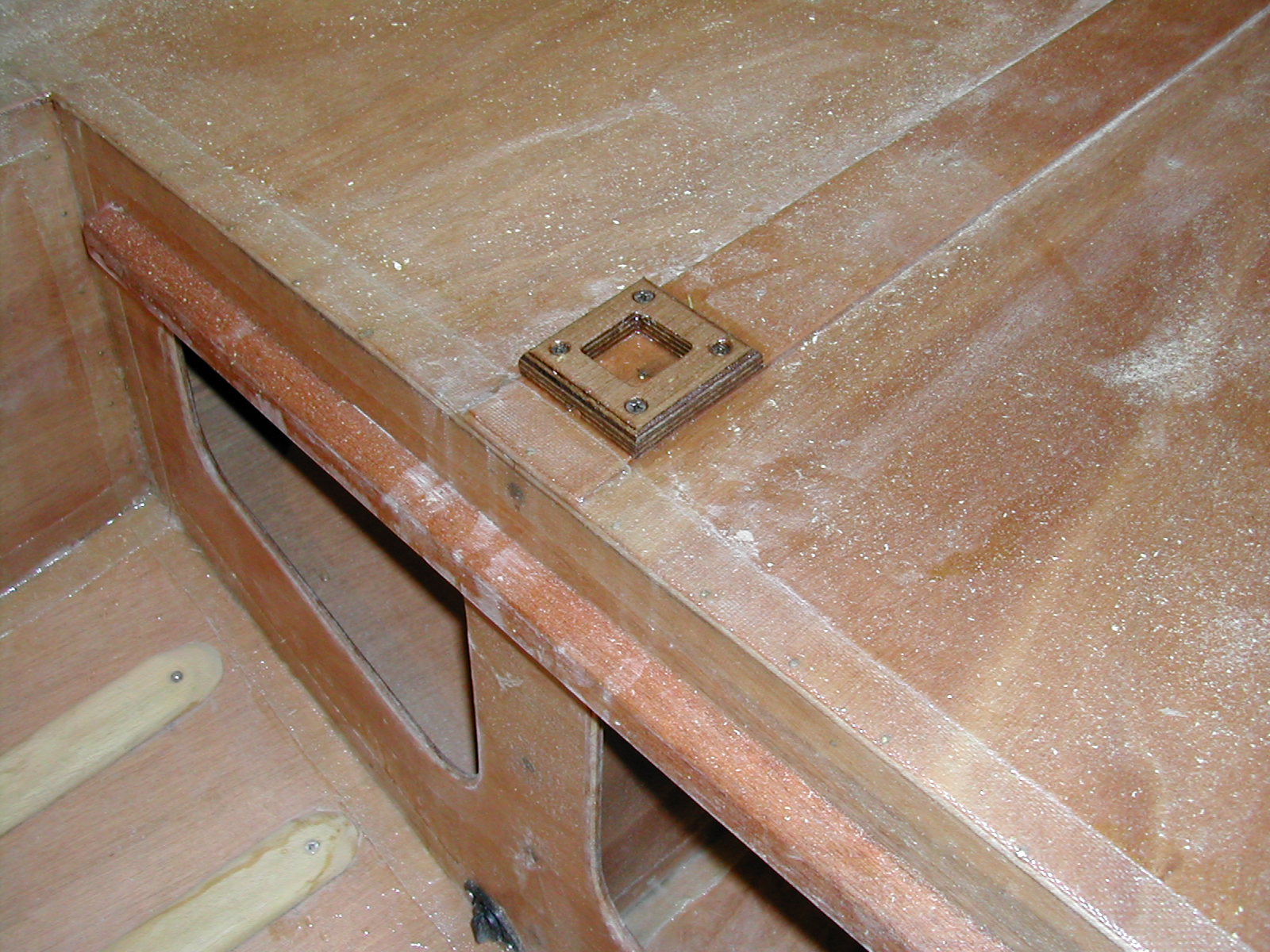
mast_stepThis image shows the mast step of a Mirror dinghy and the central mast step wooden support (not the thin piece of plywood but the block to which it is attached), linking the mast step to the keel of the boat, ensuring maximum strength. The shackle for hooking the bottom part of the downhaul pulley system is attached to this strong wooden support. The top part of the downhaul is a loop of rope which goes round the boom and is stopped from sliding towards the mast by a small triangular block of wood.

If downhaul means the cunningham for tightening the luff of the mainsail, then I attach one end of the rope to the bottom of the mast, through a pulley attached to the sail’s tack and then down again to a cleat on the foredeck within the sailor’s reach. Thus I have equal access to the cunningham, the downhaul and the outhaul to set my sail. The genuine Mirror has a different system, and attaches the cunningham to the boom. I disagree with that system, as it put stress on the boom gooseneck.

Mirror dinghy with mainsail only?

All sailing boats have their centre of effort in relation to their centreboards, and this determines the balance of the boat between lee helm and weather helm. The Mirror is normally designed to sail with a mainsail and a jib. However, it has a second mast step, further forward, and a second pair of anchoring points for the starboard and port shrouds – these two things making it possible to move the mast forward by a precise distance (as designed by the naval architect) in relation to the centreboard. When this is done, it is possible to sail with the mainsail alone in a cat boat rig.

In a force 4 or less, I can handle my boat with its jib, as the mainsail alone leaves the boat with much less power. I only sail without the jib with a reefed mainsail in heavier wind conditions, which brings the centre of effort forward. Sailing the Mirror as a cat boat can be helpful for the beginner, and it is not without accident that the designer of the Mirror, Jack Holt, provided for this possibility in his design.

Posted in Uncategorized | Tagged | 2 Comments

Article by Fr Jonathan Munn

Fr Jonathan Munn has just written this article in which he contends that man isn’t totally depraved. I won’t go into all the theology of it, the various theories of grace and sin from Saint Augustine to the present day.

I was listening to a video talk of an Australian who sailed a dinghy no bigger than mine from England to the Black Sea via a whole network of rivers and canals. His reflection was that it is a mistake to see all people as bad or selfish. There are many gestures of empathy, practical help, human solidarity, you name it. I have had the same experience with people of the sea, people I don’t know from Adam, but who are capable of extraordinary acts of kindness – and that encourages me to be attentive to their safety and well-being.

If I only considered the way people behaved in their cars, I would become about 90% Calvinist. But the way people are in boats and at sea, I would say it is the other way round. Only a minority would carve up a sailing dinghy with their powerful engines and big waves from their boats!

Power corrupts and, usually, empathy decreases as a person gets on the ascendency. Is it better to stay on the bottom, powerless and humble? Perhaps. If someone finds himself in power despite his own wishes to remain humble and unambitious, he is truly a saint if he keeps his empathy. In which case, power will be a terrible weight. I think of some of the men in history who wanted to be humble priests but were asked by the Church to be bishops and popes.

Humility is a grace, as is empathy for other people. Those are the greatest treasures we can find in life. Robert Baden Powell, the famous founder of the Boy Scouts, was a great believer in looking for good in his Scouts rather than evil, and to build up on what is good and noble in each of us. That would seem to be the healthiest philosophy of life, especially for Christians.

Posted in Uncategorized | Tagged , , , , | Leave a comment

Have Table will go

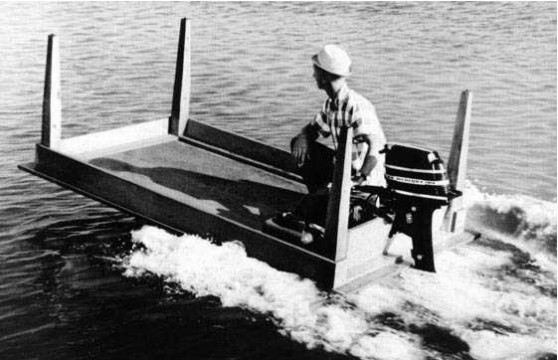
If you’re really desperate and have an outboard engine…

table-outboardLooks like fun, and you can have your dinner in style on the beach!

Posted in Uncategorized | Tagged , | Leave a comment

Décroissance

There is something I would like to run by my readers, especially as I am passionately enthusiastic about the ideas behind the Arts & Crafts movement of a century ago. Rightly, it is not merely an aesthetic or artistic movement, but something profoundly social, political and even close to spiritual.

The movement against the “dogma” of economic “growth” and “sustainable development” seems to be very much in this way of thinking inherited from men like William Morris. They rise up against the leviathan of modern capitalism, industry, banking and the consumer culture fed by advertising and marketing by psychological manipulation. The Décroissance ideology reacts from the dehumanisation of humanity but putting money before persons.

The kind of Socialism we have in Europe is really a kind of state capitalism that consumes gigantic amounts of “other people’s” money, squandering and pillaging the resources of the earth no less greedily than private enterprise. In Capitalism, man exploits man, and in Communism, it’s the other way round! In the end of the day, the only thing that is worth fighting for is the good of the planet that supports our lives and ourselves – human beings with a meaning to life, freedom, happiness and love.

The protagonists of décroissance (de-growth) see the winding down of the “monster” as the only alternative to human misery and the destruction of our planet. These principles are found in many political and ecological ideologies and principles. This ideology upholds the principles of humanism, democracy and the values of the Enlightenment. Ecology and social questions are intimately linked.

The central principle of de-growth is reducing our needs and consumption, being happy with much less, living simply. The Christian Gospel preaches simplicity, poverty and the quest for things above material needs. We need to be free from the power of multi-national business and the Prometheus / Frankenstein of modern banking and financial speculation, the very idea that money is everything.

From what I have seen of the décroissance movement, it seems to be realistic and free from misleading “romanticism” about past ages. There are niches where everyone can promote such ideas, particularly by living as simply as possible with as little money as possible, and in the country rather than the cities. I would like to meet people who are interested in these ideas and working for a society that may one day be exorcised of the “monster”.

Of course there are risks of radical ideologies creeping in from the extreme left and the extreme right, encouraging violence or ideas such as killing of parts of the human population. Such ideas are clearly unacceptable, and I eschew any group that fosters such ideas. We must have beautiful and positive visions, not bitterness and hatred. The enemy is productivism and the consumer society, modern feudalism, not human beings or humanity.

Perhaps this could be a new mission for Christians in the world…

Thoughts?

Posted in Uncategorized | Tagged , | 1 Comment

Ordinariate Use

The news is breaking that the English Ordinariate has its new Use for the Mass in parallel with the Roman rite they have been using until now. The best article on this subject I have been able to find is Introducing the Ordinariate Use in The New Liturgical Movement.

I have not seen the order of Mass in question and I would be interested to see whether the temporal cycle of Sundays will follow the Sarum / Prayer Book system or the Sundays “in ordinary time” (per annum). There is also the question of the Ember Days and Septuagesima tide. More importantly, if the old liturgical year is followed, we need to see how they will harmonise the old propers with the three-year lectionary, which we assume they will keep, but which is designed for the 1969 temporal cycle.

The question only concerns me as a matter of curiosity, but I’ll keep an eye open for when it all gets published on the internet.

Posted in Uncategorized | Tagged , | 3 Comments