Septuagesima

It seems hardly any time since we were in Advent, and already we “bury” the Alleluia and the Gloria in excelsis (at least in the Use of Sarum). The Roman rite uses violet for the liturgical colour. Sarum tended to use blue for Advent and Ash or unbleached colour for Lent. It is not very clear what is used for the Gesima season, naturally before Quadragesima which is of course Lent itself. From what I have been able to gather, violet was not unknown in pre-Reformation England like the French style fiddleback chasubles, which might be surprising to some.

There are various customs of “burying” the Alleluia. Some parishes get the children to write the word Alleluia on a piece of paper and put it in a box. I sing Ite Missa est with the double Alleluia at the Mass of this Saturday, as on Holy Saturday, which this year is the feast of St Polycarp (Roman rite) or Our Lady’s Saturday in the Sarum Use (no feast). We might as well enjoy it as it will be more than two months until Easter!

Here is a poem by Sir John Betjeman which was recited some years ago by Prince Charles on the occasion of National Poetry Day. Daily Telegraph article.

Septuagesima – seventy days
To Easter’s primrose tide of praise;
The Gesimas – Septua, Sexa, Quinc
Mean Lent is near, which makes you think.
Septuagesima – when we’re told
To “run the race”, to “keep our hold”,
Ignore injustice, not give in, and practise stern self-discipline;
A somewhat unattractive time
Which hardly lends itself to rhyme.
But still it gives the chance to me
To praise our dear old C. of E.
So other Churches please forgive
Lines on the Church in which I live,
The Church of England of my birth,
The kindest Church to me on earth.
There may be those who like things fully
Argued out, and call you “woolly”;
Ignoring Creeds and Catechism
They say the C. of E.’s “in schism”.
There may be those who much resent
Priest, Liturgy, and Sacrament,
Whose worship is what they call “free”,
Well, let them be so, but for me
There’s refuge in the C. of E.
And when it comes that I must die
I hope the Vicar’s standing by,
I won’t care if he’s “Low” or “High”
For he’ll be there to aid my soul
On that dread journey to its goal,
With Sacrament and prayer and Blessing
After I’ve done my last confessing.
And at that time may I receive
The Grace most firmly to believe,
For if the Christian’s Faith’s untrue
What is the point of me and you?
But this is all anticipating
Septuagesima – time of waiting,
Running the race or holding fast.
Let’s praise the man who goes to light
The church stove on an icy night.
Let’s praise that hard-worked he or she
The Treasurer of the P.C.C.
Let’s praise the cleaner of the aisles,
The nave and candlesticks and tiles.
Let’s praise the organist who tries
To make the choir increase in size,
Or if that simply cannot be,
Just to improve its quality.
Let’s praise the ringers in the tower
Who come to ring in cold and shower.
But most of all let’s praise the few
Who are seen in their accustomed pew
Throughout the year, whate’er the weather,
That they may worship God together.
These, like a fire of glowing coals,
Strike warmth into each other’s souls,
And though they be but two or three
They keep the Church for you and me.

Posted in Uncategorized | Tagged | 2 Comments

Of Hecklers and Bores

What makes the quality of a blog? I am not a journalist or a professional in this domain, but I do have a certain amount of hands-on experience over the years. I often have comments from people who don’t agree with my “party line” and others who debate with each other. I think I am quite tolerant, but this is an old subject.

Each blog owner, moderator, call that person what you will – the person who set up the blog with the blog hosting service and gave it a name and a main subject – deals with comments in different ways. Some blogs don’t allow comments at all, but rather invite people to write e-mails without the cover of anonymity, and at the other end of the spectrum, you have a completely laissez-faire policy. That sometimes results in 50 or more comments in a thread dominated by two or three persons who are determined to prove themselves right.

My own ideal is something of a compromise somewhere between the two ends of the spectrum. I have exactly twenty-one e-mail addresses on moderated status, because if left unchecked, some of those persons would just take over the blog like a malignant cancer tumour – profiting from the blog-owner’s tolerance. The blog is then transformed into something else: a peaceful moderate country becomes a totalitarian dictatorship run by criminals. You know, it happened to a certain central European country in 1933! The first sign I find about such people in the blogosphere is that they are not here to discuss but to heckle and dominate. I am brought to think of the song in The Mikado by Gilbert and Sullivan:

All prosy dull society sinners,
Who chatter and bleat and bore,
Are sent to hear sermons
From mystical Germans
Who preach from ten to four.

Where is their empathy for other people?

So I am obliged to keep control over this minority of individuals, so that conversations can be subtle and interesting, and not crushed out by deafening “radio jamming”.

I may be accused of being a “despot, a tyrant of this blog”. I would only be accused of such by one who himself wants to be a despot and tyrant – riding piggyback on my achievement of having gained a number of regular readers. He could start his own blog, but it might be such a boring soap box rant at Speaker’s Corner that people just wouldn’t listen or who would walk away and find a more interesting speaker. I have even had a blogger who doesn’t allow comments on his blog sending comments to mine to provoke comments to his comments. The thought that came into my mind was that he was dumping his trash in my bin, or putting it more crudely, crapping on my doorstep. The man is on moderated status and I have gained more experience in blogger tactics and strategy. The blogosphere is a free world, and anyone can set up his own blog. The more interesting ones are those set up for the benefit of other people. I leave others to judge the quality of this blog. Comments are a part of this spirit of service to others, the quality of the blog and its future.

There is nothing obliging me to let hecklers and bores onto this blog. They are the same persons, and their literary style remains the same even when they change addresses. Some are trolls, and others are just hobbyists, fanatics and bores. Imagine if Word Press, Blogger and other blog providers introduced a rule saying that we were not allowed to filter our comment boxes, that everyone has the right to jam, troll and spam at will, I would end the blog immediately. I had scruples about this when I had the English Catholic, not any longer. Filtering is accepted practice and I will continue to do so for as long as I blog.

Indeed, I have not to heed moralising reproaches about honesty on account of not allowing the blog to be taken over by some young neo-Fascist hothead from Los Angeles or the bore at the Captain’s table of a cruise ship – among others. Perhaps my blog is boring or uninteresting. It certainly is to people not interested in religion for example, but people are free to look at what they want and not look at what doesn’t interest them. However, I am perplexed by those who say they rarely find my blog interesting, yet they want to plaster their digital graffiti all over it!

Most commenters here have a free hand and will find their comments published the moment they send them, and I trust those people. They represent a diversity of views from conservative Roman Catholicism, Orthodoxy, classical Anglicanism, free and liberal points of view. The difference is that they respect that their view is a part of a diversity of views that make up the wealth of spiritual humanity.

I have noticed over the past few weeks that morale is low in the very narrow interests represented by this blog and two or three others. Posts are getting rarer as subjects become worn and hacked to death. I am aware of this. The Devil was indeed in the details of too many events of the past few years. Most of us have to one extent or another “made our beds” and decided where our spiritual and ecclesial loyalties lie.

My advice to those who comment is that I read other blogs and observe the activity of the hecklers and bores who migrate from one to the other desperately seeking to leave their mark. Their dominance has reached such a level that I hardly ever comment on those blogs any more. I am not going to allow that here. So that accounts for the moderated twenty-one e-mail addresses, some from the defunct English Catholic blog and which are probably themselves obsolete. In reality, I probably have no more than three or four to keep a vigilant eye on.

I am open to diversity of opinion and discussion. I am not interested in the “Speaker’s Corner” style where a guy gets up onto a soap box and rants, and is then shouted down or is able to shout down his hecklers. Speaker’s Corner is an old institution in London. It originated in the right of a condemned criminal about to be hanged on the adjacent Tyburn gallows to have his last word before his death. It then became a place of free speech. Discussions often become spirited and downright rude.

It’s another world. I don’t want my blog to work in that way, but rather to be like a university seminar or a peaceful fireside chat and constructive dialogue. There are commenters who are obviously concerned to win converts for what they believe to be the “true Church”. They believe this to be their duty, and I respect their conscience. The difference is that they present rational arguments all in respecting diversity. Just a question of empathy for other people and courtesy. I also draw attention to the fact that there are apologetics site and blogs, and some of them are very good. Frank Sheed would have been a great blogger!

For those who have had anything to do with boats, my analogy is the difference between a military Naval captain running a tight ship and the humble and kind skipper of a small yacht or a fishing boat. My way is the latter. I give the compass bearing and just a minimum of what I think is needed to keep the vessel from being sunk by the kraken and the rocks, and those who want to be aboard know what to do with the sails, ropes and all that…

My attention was brought to 3 Despicable Internet Behaviors (That Are Really Your Fault). Not bad, as both bloggers and commenters, like teachers and schoolchildren, prison “screws” and prisoners, anything, can be just as twisted as each other. It’s a pretty twisted world as beauty is in the eye of the beholder. So, let’s keep this blog informal and friendly while it’s still here. Books burn when you set light to them and information on a computer’s hard disk or a server can be instantly effaced with a magnet. Vanitas vanitatem! Everything is vanity. It’s as simple as that and painfully obvious for most people who do care about others.

Indeed, like Speaker’s Corner, a blog is only a reflection of the world we live in and nothing will ever be utopian or ideal.

Posted in Uncategorized | Tagged , | 15 Comments

Requiem for Dom Klaus Schlapps

Tomorrow, I will be celebrating a Requiem Mass in the Use of Sarum for Dom Klaus Schlapps who died last Sunday, probably around 11am GMT tomorrow. Those who wish may unite themselves spiritually with this Mass from wherever they are, however far away.

As I mentioned in the Facebook page, I never met Dom Klaus. I have been told that he enjoyed reading my blog. I have always heard about the way he wanted to raise standards of quality of the clergy and a sense of professionalism. He took a dim view of the more “sleazy” and “amateurish” side of independent clergy.

port-royal-des-champs

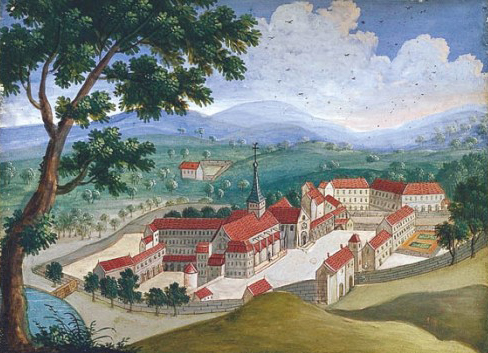
I have read short accounts about the history of the Order of Port Royal. The original Abbey of Port Royal des Champs was a Cistercian community in France which was suppressed by order of Louis XIV in the context of the Jansenist controversy. The Jansenists were forced to flee from France and were welcome in the Netherlands. Thus a very solid link was forged between the Archdiocese of Utrecht and the “Jansenist” Cistercians. There was the inspiration.

Dom Klaus did an admirable job of reviving the Cistercian ideal in an Old Catholic context, and their web site can be seen by all. It is my hope and prayer that Dom Klaus’s spiritual legacy will live on and that the community may overcome this tragic bereavement and loss of such a fine Abbot.

Posted in Uncategorized | Tagged , | 7 Comments

The “Classical Anglican” Golden Age

Classical Anglicanism™ in Retro Church is worth a read in the light of some of our recent discussions. I don’t have anything new to add, but it seems a fair evaluation.

There is also Anglican Rose with a very interesting article and series of comments from last autumn – ACC Makeover. We need to read these texts, not from the point of view of “I’m right and he’s wrong”, but with an analytical mind to discover the reasons for each argument.

Posted in Uncategorized | Tagged | 3 Comments

Technological Prometheanism

Now, that’s a mouthful! It’s nothing new, but Pope Benedict XVI is giving warnings of terrible dangers of “technological prometheanism”, meaning something like the message of Mary Shelley in 1816 when she wrote Frankenstein.

It has been a big concern ever since the beginnings of post-Renaissance science and the Industrial Revolution, the fear of the machine and a dystopian future as described by H.G. Wells, Jules Verne, George Orwell, Aldous Huxley and just about every science fiction author of our own time. We see the facts in our world. Whether or not we believe in global warming caused by mankind, we do see extreme weather and the effects of pollution, the continuing rape of our planet to profit the few. We are surrounded by noise and we are made to need ever increasing amounts of money to live. Despite being a high-technology user (I’m typing on a computer at this very moment), I have Luddite tendencies. I prefer to be away from the cities and use as little technology as possible, but it can’t be avoided altogether. At least it can’t without some very radical decisions being made in life.

Well the Pope is adopting a strange kind of language that hasn’t been heard since the days of the Popes Pius from the heady days of La Tradizione son’io to the anti-Modernism of the early 1910’s and the post-World War II period. He means well, but we haven’t to forget that he has no personal experience in the world of science and technology. Yes, He’s had a go with Twitter – big deal! I doubt he has used it more than once. I don’t blame him, as Twitter and Facebook belong to a philosophy of communication that it foreign to anyone over the age of some of our kids with little more intelligence than a computer of the 1980’s with its hard disk and RAM measured in kilobytes! Benedict XVI is a priest, someone who has studied theology to a very high level, and who has a small amount of experience administering a diocese before he became a Vatican bureaucrat. Most of us clergy tend to be attracted to the humanities rather than the sciences – and so we are natural Luddites.

I am wary about clergy making judgements about aspects of human society with which they have little knowledge and experience. People often make this observation, as with celibate men making judgements about marriage, family and sexuality.

Little has changed since 1816 and the idea of sewing together pieces of dead bodies, the best bits from each and bringing the creation to life with lightning bolts during a thunderstorm. Sixty years ago, it was nuclear energy and atomic bombs. Now it is genetic engineering, cloning and enhancing human bodies with machines. We also have quantum physics and enormous underground machines that can create “God particles”, matter from pure energy, and antimatter. I admit it is frightening, especially the biological revolution.

The Pope brings the philosophy of gender into the discussion. The problem of men and women is as old as humanity itself. There have been times when men oppressed women as today in fundamentalist Islam and certain periods of Christian history. At other times, it has almost been the other way around. Extremes oscillate, and sometimes society finds the happy medium for brief periods of time. Perhaps our own time is unique in the question of some people wanting to change their gender by surgical and chemical means. There must be statistics somewhere. I don’t think I have met more than one or two “transgendered” people in my whole life.

Short of this grotesque surgical procedure, some of us can have passing ideas and fancies about the opposite gender. Years ago, little boys were not discouraged from growing long hair and dressing up as girls to play in the house. I have seen a portrait of my wife’s grandfather dating from the 1900’s with beautiful locks of long hair. This is a part of the discovery of life. Jung’s psychology describes the animus and the anima in man, his masculinity and femininity, the primitive androgynous state of man. I think that the exaggeration of masculinity presents a danger to boys, just like the opposite for girls. A part of our individuation is to discover the balance of masculine and feminine within ourselves. There are no simple answers, but the danger is certainly found in extremes.

The surgical procedure involving making a person appear to be of the opposite gender is something I find quite revolting, because it is no more than a change of appearance, however convincing in cosmetic terms. The person remains his or her self, and the gender is not truly changed. If it were, then I would find the idea less abhorrent. But, as I say, it seems to concern a low proportion of human individuals.  The Pope doesn’t seem to be very clear about specifics.

What does the Pope want in the place of modernity and our problems of society? Does he want the old Altar and Throne Alliance, the Third Temptation by which he can “correct Christ’s work”? I doubt it as his theology and philosophy are more sophisticated than those of Torquemada and Bernard Gui, but the underlying temptation is there. We are all concerned with the idea of a return of men like Hitler, Stalin and big bankers who would hoard billions and leave the rest of us to starve. We live in fear like in the 1940’s and 50’s – or some of us do.

It is also true that we are faced with the fundamental choice between God and Satan, but without human freedom, God becomes his nemesis, the Demiurge of the Gnostics and the tyrant of the Old Testament. With unbridled freedom, man becomes rebellious and refuses to serve, because sin enters the picture. What is the Pope proposing, a return to the late eighteenth century – powdered wigs and Gucci sunglasses?

I am often criticised for upholding freedom, but there is freedom and freedom. Freedom is limited by the freedom of other people and the common good. Our rights are limited by the rights of others. Here is an essay on freedom by Nicholas Berdyaev – The Metaphysical Problem of Freedom, and it will be seen that true freedom is not simply being allowed to do anything you want. Freedom is a really tough concept to deal with, but you don’t solve it by eliminating it.

Yes Wahrheit macht frei, as our German Pope would say in his own language. Yes, Wahrheit and not Arbeit. The former means truth and the latter means work, the cruel distortion the Nazis introduced and set up over the gates of their concentration camps. As Jesus told us, the truth makes us free, but which truth? That is the question.

I have always been impressed with many beautiful philosophical and theological ideas from this Pope, as from many books in Fribourg University Library I read in the 1980’s (and I bought copies of them since). There is so much inspiration, but the reality is that words will have little effect until there are profound reforms in the clerical system of the Roman Catholic Church.

The sex abuse crisis is getting hackneyed, but it can’t be swept under the carpet. The clerical system in the Church is accountable to society.

Another hammer blow came this morning: How the Vatican built a secret property empire using Mussolini’s millions. Now who is being Promethean? Where is the credibility in this? From whom was all that money stolen from in the first place? Well, journalism is journalism – but there is never smoke without fire.

Posted in Uncategorized | Tagged , | Leave a comment

Dom Klaus Schlapps

dom-klaus-schlappsI have just received the news that Dom Klaus Schlapps of the Abbey of Saint Severin in Germany died yesterday afternoon of a heart attack. This community had recently been accepted as a part of the Nordic Catholic Church and the Union of Scranton by Bishop Roald Flemestad. He was born on September 30th 1959 and died on Sunday January 20th 2013, and therefore was only 53 years of age.

I am sure that this monastic community would be grateful for our prayers for their future and for Dom Klaus.

If you wish, it is possible to leave messages of sympathy on their Facebook page.

Requiescat in pace.

Posted in Uncategorized | Tagged , , | Leave a comment

Help, the Loonies are taking over the Asylum!

Sorry for the provocative title, but the current exchange of comments on Re-reforming Anglicanism? raises many questions about the validity of the assumptions of any of us. Just this morning, I read in a magazine about the fact that the municipal and state authorities in France can no longer afford to maintain the churches those authorities have legally owned since 1905. In consequence, 5% (1 in 20) of those churches will be sold for symbolic prices to developers. Some will become homes, others will become business premises, museums, educational and cultural centres and just about anything we could imagine. Some of the crosses, stained glass windows and statues will remain as a rebuke and a reminder to what is lost.

On the other hand, we might turn this thing around. Many people simply turn around and say “The Church brought it upon itself. It only got what was coming”. As I mentioned in another article, what is life without Christianity? A simple answer is that it is life as it is. Just go out into the street, get on a train, go to work, go shopping. Is it the end of civilisation without religion? No, life goes on. Are people looking for the transcendental absolute or meaning to life. A few might be, but not most people.

If we see things from that point of view, what viability is left to religious groups whose orthodoxy becomes increasingly narrow and exclusive. Comprehensiveness and inclusion seem to be illusions because we feel the need to establish limits. If we want Anglo-Catholics and Evangelicals under one roof, why not also women bishops and LGBT people? Why not? On the other hand, you go for narrow orthodoxy and it finishes up like Communism with its purges and pogroms. The knife edge becomes so narrow that no one can live on it. So where do we go? Who are the winners, the loonies or the shrinks? Which ones are crazy and which ones are “normal”?

People are intuitively conscious about this, and realise that human life and Christian religion have drifted so far apart that no relationship between the two is possible. Christianity has to be a sect or has to become so involved in modern human life that it will lose it specificity. Is there a third way? I’m not so sure.

What is the purpose of religion? Let’s face it. It’s us. It is about survival after death in the place of our annihilation and the ultimate emptiness of nothingness. All our achievements and what we thought important – for nothing? It is also a pre-scientific attempt to understand the origin of the universe and where we came from. That is where our interest in history comes from. Otherwise, why should we care about working conditions in a northern English coal mine in 1840?

The second part is over for churches. We don’t look in the Bible for an explanation of what now belongs to historians and scientists. Even ethics are now a secular branch of philosophy. The real “business” of churches is metaphysics, something no one else cares about. This notion is also put into doubt, since those who are interested in scientific evidence of the afterlife and quantum physics discover explanations for metaphysics other than by way of mythology. What have churches to offer?

It would seem that the only things left are certitude and security. The problem is the most ancient of problems, managing our freedom as human beings. Or are we truly someone’s property despite what we find in the laws and constitutions of all civilised countries who learned something from the Nuremberg Trials of 1945-1946? One fundamental human right is to doubt and ask questions – the essential attitude needed for discovery and creativity.

The ever-widening gulf between conservatives and liberals is the essential cause of the sectarianism from both sides and which has led to the “death of God”. Perhaps this is the greatest evidence for the existence of Satan, that Christianity as Christ meant it to be was nipped in the bud at about the time of St Paul.

Most people I know have either been influenced by liberal Christianity, or their fundamental intuitions agree with it. I have often argued for generosity and inclusuivity, but how generous and inclusive are we. What about those who are beyond “our” limits, those who lie beyond our care and empathy? We are beyond someone else’s care and empathy and are fit only to die and be gone. Surely, there is a distinction between a person’s condition (having only one leg, being poor, etc.) and being sinful! Christ pardoned his own executioners and didn’t even tell them they were doing wrong.

We hear about the trajectory of history, a positive narrative of evolution. After all, if we were going down into disaster and apocalypse, why did Hitler not win the war? Why didn’t we have the ultimate nuclear barbecue in the 1960’s? Why are we still here in spite of the prophets of doom? If that is so, to what are we evolving? Utopia or dystopia? What are we doing with our technology? What has any of that to do with Christ or a story that is more than two thousand years old?

There is also a question of society. I live in a village, but am more connected with people in America and Australia than in the house next door! We are a global village thanks to the Internet and computers that can be bought for about a day’s work. The present Churches are unable to conceive of that reality, yet anything devised to work by internet is scoffed at. How long will we have technology, and what would cause us to lose it and be forced back to pre-modern life? Is that not what we secretly wish for in our agony?

Personally, I have always lived with scientific and liberally-minded people, and I believe in the necessity of accommodating discovery and creativity. It seems as though life after death and a pathway towards light and happiness, perhaps another parallel universe, is possible without the person having been under the domination of a human organisation calling itself a “true church” offering salvation in exchange for a pledge of total obedience and devotion. Quantum physics have changed many things from invalidating Newtonian physics, fundamentalist religion – and – nihilistic atheism. Get used to it? Not easy for any of us…

What is spirituality and prayer? Those words mean so many things to so many people. They would seem to be a connection to something higher than ourselves. Those who are not narcissists are “hard wired” to seek something higher because we lack complete confidence and certitude in ourselves. We find in that higher being a source of empathy and love. It is in our nature to seek to find a better life through some kind of journey and linear evolution, whether by going from one place to another using a means of transport or by making an inner or spiritual journey. It is said that happiness is not having but wanting. It keeps us on the move. Some people look for material things, money and power over others, because they are narcissists. Others seek wisdom and better ways to empathise with others and oppose selfishness and the root of evil.

We Christians are often motivated by the saying of Christ: Heaven and earth will pass away, but my words will abide. Vanity of vanities! Everything is so fleeting and temporary, including ourselves. Why do we care so much about our fiefs and certitudes? On the other hand, is that not the root of despair and nihilism. Can we not find something of an image of God’s love here in our present life, in our fragile homes, churches, whatever?

There are also parables about caring for what we have and what we are called to do in our present life. We do care about our church communities if there is a glimmer of what it all seems to be about. I don’t think we will ever get down to the bottom of it all.

Posted in Uncategorized | Tagged | 3 Comments

Article on the Octave of Christian Unity

This is an interesting one in Virtue Online – Anglicanism, the Universal Church and the Octave of Christian Unity. Some parts of it could almost have been written by Soloviev!

Towards the end of this long article, I see where it is all going – the union of Anglicanism with Orthodoxy. What kind of Anglicanism? Obviously not what prevails in ECUSA and the Church of England, obviously not Calvinism. Is Orthodoxy ever going to be open to anything larger and ecclesial than small micro-manageable “ordinariates” or vicariates?

I also note that the author of this article, Fr Novak, a priest of the Reformed Episcopal Church/Anglican Church in North America, is not sidelining the Continuing Churches.

We also have a question of interpretation of “completing the Reformation”. The extent to which the Orthodox Churches might accept some Reformation developments and ideas might be a key to what can be united within Anglicanism. This all needs to be clarified from ambiguity. Ideas?

Here is what Fr Novak says, and comments would be welcome. The emphasis in bold type is mine.

* * *

What is Anglicanism’s future? Its future can only be found in completing the Reformation begun in 1534. That means corporate reunion with the ancient patriarchates of Constantinople, Alexandria, Antioch and Jerusalem as it existed before the Norman invasion of 1066. The provinces of the Anglican Churches in the Global South should simply enter the already existing Patriarchate of Alexandria, and the Anglican provinces in the West and North should simply enter into corporate union with the canonical Orthodox Churches in their nations. There are already Western Orthodox congregations in North America, Great Britain, Continental Europe, Australia and New Zealand. The Russian Orthodox Church, the largest of the national Orthodox Churches, has had Western Rite congregations for more than a century.

God has preserved Anglicanism, but not the Anglican Communion. Canterbury is lost, and it would be tragic if Anglicans tried to set up altar against altar in Alexandria, or tried to recreate something that Divine Providence has not preserved, whether it is in Kenya or elsewhere. I am not advocating that Anglicans abandon their identity and Church, and become something that they are not. What I am advocating is that Anglicans fully embrace what they have always professed to be – the English branch of the Catholic Church – and to enter into corporate reunion with the Orthodox Church with which they had been united for more than a millennium. I am not advocating a Western Rite Orthodoxy divorced from the last 1,000 years of history, but an orthodox Anglicanism reunited with Eastern Orthodoxy, and a rebirth of Anglican Orthodoxy. Metropolitan Jonah pointed the way at the first provincial Assembly of the Anglican Church in North America in 2009, and did so again at the second provincial Assembly in 2012.

With the present dysfunctional state of the Anglican Communion it is probably unrealistic to expect the orthodox provinces of the Anglican Communion to act together for corporate reunion, but if a beginning could be made in North America, or elsewhere, a way forward would be shown for millions of faithful Anglican churchmen. God often brings great things to pass from the smallest and most humble of beginnings.

It has been said that when God closes one door He opens another. Tradition is the life of the Holy Spirit in the Church, and the Holy Spirit has been leading us and preparing us for this moment in time for the last five hundred years. As Martin Thornton wrote in 1963, Anglicanism is “sane, wise, ancient, modern, sound and simple; with roots in the New Testament and the Fathers, and of noble pedigree; with its golden periods and its full quota of saints and doctors; never obtrusive, seldom in serious error, ever holding its essential place within the glorious diversity of Catholic Christendom” (English Spirituality, p. 14).

My prayer is that 2013 will be the year that Anglicans take action for unity in “the glorious diversity of Catholic Christendom.” We have nothing to lose in corporate reunion, but much to gain. I am convinced that we cannot even imagine what kind of renewal and revival we would see if we only learned to love one another again as Christ’s disciples should, and if the Body of Christ began to breathe again with both lungs, Eastern and Western. I love Anglicanism deeply, and have been working toward the goal of orthodox Anglican unity and Anglican-Eastern Orthodox reunion since 1997, when I was given that commission by Bishop Patrick Murphy.

Brother Roger of Taize has written, “When communion among Christians is a life and not a theory, it radiates hope… How, then, could Christians still remain divided? Reconciliation among Christians is urgent today; it cannot continually be put off until later, until the end of time. Over the years, the ecumenical vocation has fostered an invaluable exchange of views. This dialogue constitutes the first-fruits of reconciliation. But when the ecumenical vocation is not made concrete through a communion, it leads nowhere.”

During this Week of Prayer for Christian Unity will you pray for our bishops and priests in the Anglican Church in North America and its Ministry Partners, and in the Anglican Continuum, as well as for the bishops and clergy of the Eastern Orthodox Churches; and join with me in advancing this Biblical cause (John 17)? Four hundred years of dialogue is enough. May the year of our Lord 2013 be the year that the Reformation is completed and full communion and unity restored; and may this be the Octave of Christian Unity that prepares the way.

Posted in Uncategorized | Tagged , | 21 Comments

Re-reforming Anglicanism?

I always enjoy reading the Old High Churchman and the reasoned reflections of Archbishop Peter Robinson, a case in point being his most recent Keeping Things Tidy. As usual, I see the same binary choice being offered between an idealised “patristic” style of worship and doctrinal belief and “corrupt” Rome. Falsus in uno falsus in omnibus. A man has a small cancerous tumour on his back, so the surgeon removes the brain and puts it in some kind of futuristic life-support machine and sends the dead body to the morgue. The analogy is horribly crude, but this is what comes to mind.

How can anyone conceive of a church with formularies that go back four and a half centuries and expect some kind of tolerant comprehensiveness to come out of it?

I am brought back to the old article by William Tighe, Can the Thirty-Nine Articles Function As a Confessional Standard for Anglicans Today?. There may be two consequences of trashing the Articles and other relics of English legalism, becoming Roman Catholic or devising some form of English Gallicanism or Old Catholicism – a local or national Catholicism that transposes Eastern Orthodox ecclesiology onto a western idiom and cultural context.

It is surprising to find a systematic omission of the pre-Reformation English tradition, unless it is simply assimilated to the “abomination of Popery” or so-called corrupt Roman Catholicism. I don’t know if Archbishop Robinson has read Eamon Duffy and the work of other historians who concluded that early sixteenth-century religion in Europe was less superstitious and corrupt than previously believed.The Reformation seems to be just as much built on prejudice and ideology as infallibilist propaganda in the 1860’s. Or the racial and occultist theories of Göbbels and Rosenberg for that matter! Perhaps religion really is something for little children and to be grown out of!

One thing that attracts me to Dr Tighe’s thesis is that he is a historian and submits belief to reason and knowledge.

It seem to become clearer that if the kind of “classical Anglicanism” that insists on the Articles and the other sixteenth century reformed formularies cannot tolerate the “Old Catholic” tendency, then it would seem appropriate for there to be a peaceful and courteous parting of the ways along that line. That would ensure coherence and stability in the two Christian communities.

Posted in Uncategorized | Tagged , , | 19 Comments

Please pray for Fr Laurence Wells

Fr Robert Hart informs us in his blog:

Fr. Wells

I have been informed by Archbishop Haverland that Fr. Laurence Wells is in the hospital because he has suffered a stroke. I urge prayers from all of you.

He will be remembered at my Mass, and may God grant him healing. I ask prayers of my readers for Fr Wells.

Posted in Uncategorized | Tagged | Leave a comment