John Gielgud as the Grand Inquisitor

I share with you this rendering of Dostoevsky’s Grand Inquisitor by one of England’s greatest actors, John Gielgud. In view of some of the nasty smelly brown stuff floating around the blogosphere here and there, I think this parable should clear the air a little.

Posted in Uncategorized | Leave a comment

Is your Christmas Over?

My wife and I went to my mother-in-law’s home in Rouen for Christmas Day, just as soon as I had finished the Mass of the Day in my chapel. The other family members would have been to the Cathedral on Christmas morning. We had the customary Christmas pig-out (not pork but stuffed guinea fowl) together and exchanged presents. There were whoops of delight from the children as they received their Lego sets, toy cars, dolls and whatnot. We had a pleasant walk together in the streets of Rouen, and went home in the evening.

As we walked down the street to where my van was parked, we saw a bare Christmas tree on the pavement awaiting its collection by the dustbin men the next morning. What abject sadness! What did Christmas mean to people who took their tree and decorations down the day itself?

As in many countries, commercial “christmas” starts on the day after Halloween – a whole month before the beginning of Advent. The supermarkets fill their shelves with possibilities for gifts. Weekly shopping becomes increasingly stomach-turning as we find increasing quantities of foie gras, poultry of every kind and suggestions of how people are going to make themselves ill and drunk. Finally, at the beginning of December, corresponding with the beginning of the Advent everyone has forgotten, the first Christmas trees make their appearance. By the second Sunday of Advent, the houses have their sophisticated electric illuminations, some very badly done.

Sophie and I waited until about the third week of Advent to buy a Christmas tree and install a simple electric garland with coloured bulbs on the front of our house. About the same time, I brought down the Norman farm style building in plywood I use for the crib and installed it in the chapel, with all the figures except the Infant Jesus.

The Infant Jesus goes into his place just before Midnight Mass, usually with the singing of Il est né le divin Enfant.

christmas2012

We are keeping our Christmas tree and decorations until just after the Epiphany, and I keep the Crib until the Octave of the Epiphany. Normally, the Crib should remain until the time between None and First Vespers of Candlemas on February 1st, but it is folk custom, not strict liturgical practice. Mid January seems enough as Septuagesima is not far away. The Octave of the Epiphany marks the end of the Christmas Cycle in the Temporal calendar and the Purification in the Sanctoral.

So, with our being rooted in the Christian liturgical tradition, the effect of seeing a discarded tree on the evening of Christmas Day is harrowing to say the least!

Posted in Uncategorized | Tagged | 4 Comments

More Questions about the ACNA

This article came up in Deborah Gyapong’s blog – What are the chief obstacles in persuading ACNA members to consider Ordinariates?

Would the Anglican Church in North America be interested in the Ordinariate, the PNCC or the uniting Continuing bodies from the Affirmation of Saint Louis? Would they be able to persuade Canterbury to recognise them in spite of North American opposition? The ACNA represents, by all accounts, a goodly number of tithing and credibility-conferring people.

I don’t know the ACNA in spite of the many accounts I have heard about their being like “ordinary” Anglicans of the 1960’s and 70’s. I would not make any guess as to what they might be inclined to say or do, or with whom they would seek solidarity. I hardly see them join the Ordinariate unless they are prepared to assent to Roman Catholic teachings like Papal infallibility and “true church” ecclesiology – and go through the same experience of ecclesial rupture as did those leaving the Anglican Communion and the TAC. Anything is possible.

Those are my humble reflections on this subject. I would love to see the Continuum unite and get its act together and for the ACNA to renounce women’s ordination and go for more traditional liturgy.

We’ll see. Things are often in the habit of being unpredictable…

Posted in Uncategorized | Tagged , | 6 Comments

Being a Mature Spiritual Seeker

sea-boat

After the last few days of bouncing ideas around the ether of the blogosphere, I cannot avoid certain more interior reflections.

On one side, if I am not prepared to go back to Rome “for more” in the name of some infallible truth <yawn>, it must be because I am a relativist or some kind of bogey wanting a cafeteria church. I turn around and look at the TAC, and find that much of it is of a harrowing bleakness, and perhaps it was so long before the Ordinariates. The crisis over the last few years brought the weaknesses out into the open. We must face them and either run away looking for perfection elsewhere, or find strength in that fragility.

Should we be looking beyond Christianity? I am constantly brought back to the same thought, asking myself whether Christianity is bankrupt or whether we should be growing out of it in the quest for higher experience and knowledge. Until now, I have always been able to contain and integrate the Christian faith and ideal as a bedrock of a higher ideal. Churches usually prefer immature and fragile people who can be easily manipulated according to the political agendas of clerics who feather their own nests.

The Enlightenment brought critical reasoning and scientific criteria, but also drove out the spiritual dimension of human life. Liberal Christianity was originally about reconciling faith and reason, something one reads about a lot in the contemporary Papal documents of a Church struggling for relevance and credibility in the modern world. The notion of being an adult is a valid one, and can protect us from committing many errors. At the same time, there are other aspects that can prevent us from going to the excesses of cynicism and scepticism. We need to be able to experience and be enchanted by what is over and above ourselves.

Perhaps there are a few simple rules by which we can avoid the seductions of the cults and of the zealots of the “true churches”. At one time, religious people relied on their tradition and followed it with devotion and loyalty. Now, most people have no tradition to refer to and can only rely on the words of the most persuasive people – in commercial advertising as much as in religious affiliations.

We need direct and personal experience in spiritual and paranormal phenomena. It is not enough to hear it from other people. Most of us would not recognise a spiritual experience. For me, the furthest anything has been is a sense of awe in the midst of natural beauty, the sea in particular. That is a spiritual experience just as much as being a medium and able to communicate with souls on the “other side”.

Something essential is to be critical about the experiences we have. Was the dream we had last night based on a film we watched just before going to bed, a book we read, a conversation? Could the experience be explained by physical phenomena in the world of natural science? Auto-suggestion is a very powerful thing, as is wishful thinking.

Another guide for rational thinking is considering a number of different points of view. If we always listen to cynical people, we will find everything bad and become cynical ourselves. But one bell of the peal sounding cynicism is not a bad thing, as long as the other bells are sounding other notes. The mind needs to be kept open so that new information can be assimilated and ideas can be revised as realism dictates. We need to conduct scientific experiments (not chemicals and physical objects necessarily) but on our experience and self-knowledge.

The idea that Christianity could lose its validity for each of us is frightening. There is also a big distinction between Christ and the caricature that grew like a parasitic growth since the early centuries of the Church’s history. I am sure that what many mature people reject is the caricature, the cancer and accretion that has hidden what it must have been all about when Christ walked this earth and when the Apostles still had personal memories of their Master and his teaching.

As a priest, I have never felt less secure in the quicksands of what feels like an illusory ecclesial existence. At the same time, I refer to my explorations of the “independent sacramental movement” that seeks to rethink Christianity in a world that has rejected churches, dogmas and rites. I pray that the weaker parts of the TAC may find strength in the stabler and more robust elements in other countries. That is the challenge of ecclesial communion and human solidarity. We either care about each other or we don’t.

Christianity is a religion of κένωσις and weakness, of self-emptying and anticipation of our death to this world. Our worst and most cynical enemies will be those calling themselves and actually believing themselves to be Christians. This is the mystery of human freedom and redemption. Strength comes out of weakness as good from evil. That is the miracle of God.

This is why I am highly critical not only of sales pitches of those who think they have the truth and want to make it the universal rule for all, but also those who would reject all that is weak and bordering on the illusory.

We need to take time, and allow our inmost intuitions speak to us – away from the hubbub and noise of the curmudgeons and armchair inquisitors – in the waters of Siloe that flow in silence. We need the fruit of our own experience and discernment.

Posted in Uncategorized | Tagged | 1 Comment

The Anglican Church of India

This is a reposting of an old article (November 9th 2010) from the defunct English Catholic blog. I have edited the text a little.

* * *

In October 2007, I had the honour of meeting Archbishop Samuel Prakash in Portsmouth at the College of Bishops meeting. Archbishop Prakash is Metropolitan of the Anglican Church in India, and he gave me a copy of his report to the College of Bishops. It is on the basis of this report that I give information about this highly dynamic member Church of the TAC. See the Anglican Church of India’s website.

The Anglican Church of India consists of six dioceses: Lucknow, Chotanagpur, Amritsar, Madras, Travancore & Cochin and Nandiyal. The Indian Church uses the 1928 English Book of Common Prayer, the English Missal and the King James Bible. This Church sought out an Episcopal succession in America in 1976-77, and Bishops Jai Singh Thakore and C.L. Parshad were consecrated. In 1982 a request was made to Archbishop Falk for other dioceses being formed or re-formed.

The Diocese of Amritsar is curiously mentioned by Cardinal Levada in his announcement of 20th October 2009: “Sometimes there have been groups of Anglicans who have entered while preserving some “corporate” structure. Examples of this include, the Anglican diocese of Amritsar in India, and some individual parishes in the United States”. This being said, there is no knowledge of an Anglican diocese of that Indian city being received corporately into communion with the Catholic Church. I don’t know what to make of the Cardinal’s words. However, the churches of this diocese are the original buildings of the Anglican Communion of before the formation of the Church of South India.

The Diocese of Chotanagpur has seven parishes and eight priests. The Archdiocese of Lucknow, headed by Archbishop Prakash has six churches and eight priests. I have no information about the numbers of faithful. The Diocese of Nandiyal has 41 congregations “with 2672 communities”. The Diocese of Travancore & Cochin has eight priests, a seminary, an orphanage, a house for elderly people and a nursery school. Two new churches have been built.

Posted in Uncategorized | Tagged , | 1 Comment

The Anglican Catholic Church in Australia

As a final piece of work for today, I give a portrait of the ACCA, from whose ranks a bishop was chosen by Pope Benedict XVI to be the Ordinary. I am not sure the separation process is yet complete or whether it is intended that there would remain a TAC member church after everyone who is going to the Ordinariate has crossed over.

The ACCA has a static website run by Fr Graeme Mitchell who seemed at one time to be Ordinariate-bound. There are no blogs run from Australia and comments from Australians tend to be tight-lipped. This would be understandable if the separation is still ongoing and priests are still applying to the Ordinariate or waiting for an outcome. The official list of Ordinariate communities is here.

The ACCC is under an acting Vicar General, the Very Rev’d Fr Michael K. Pope, who is located in New South Wales. Archbishop Hepworth has completely disappeared. Fr Pope’s chancellor is Mrs Sandra McColl. Fr Graeme Mitchell is in office as diocesan registrar. Bishop David Robarts is still there, not in the Ordinariate, and styled as Bishop having Episcopal Authority in the Diocese of Australia. He is off the beaten track, in Tasmania rather than on the mainland.

There is a parish in Cairns, Queensland. I always thought Fr Gordon Barnier was Ordinariate-bound. I would appreciate information. Fr Owen Buckton also seems by all accounts to be Ordinariate-bound, and is still listed at his parish of Our Lady of Walsingham in Rockhampton. I had also heard the same of Fr Andrew Kinmont at the Chapel of St Stephen Protomartyr in Coomera.

There are also parishes in Surfers’ Paradise, Delungra in New South Wales, Fr Pope’s own community. Melbourne (South Caulfield) seems to be divided between the Ordinariate and Fr Mitchell’s community. Temporally or permanently? Fr Mitchell has an assistant priest. There are also All Saint in Melton, Mildura, Launceston and Hobart in Tasmania. There is a parish in Adelaide, but the priest’s name is Fr Stephen Nicholls, who also looks after a parish in West Croydon.

Now, is Australia a “toothpaste tube” or a permanent member Church of the TAC, or still in the process of resolution and separation? Information would be appreciated. I can only attempt something on Torres Strait if someone can give me hard information. Nothing substantial is available on the Web.

Posted in Uncategorized | Tagged , | 9 Comments

The Traditional Anglican Church in Britain

The Traditional Anglican Church in Britain was never very sizeable in a country where it would almost be said that people would continue to attend the same church building even it were sold to the Muslims and converted into a mosque! It is said in England that Anglicans are attached to the buildings and Roman Catholics are attached to the Mass. Religion is at an extremely low ebb in my native country.

As the Ordinariate took shape, the southern Dean, Fr John Maunder who has the care of that wonderful iconic church of Saint Agatha in Portsmouth, went over to the Ordinariate and is now one of their priests together with Bishop (now Father) Robert Mercer. The former Vicar General, Fr Brian Gill, also went over with his parish. Some other priests have left, one to return to the Church of England and some others who appear to be in some kind of canonical “limbo”. At least there is no sign of them having joined the Ordinariate.

The present state of the TTAC seems to be less discouraging as would otherwise be suspected. I intend to make a trip to England in the New Year, see Canon Ian Gray who is my own canonical superior and see what is going on in Lincoln and elsewhere in the country. There used to be two flagship parishes, Portsmouth and Lincoln. Now, there is only Lincoln, but the church is impressive.

The parishes and missions are listed here. Of these, the “brightest” seem to be St Cuthbert’s in Hereford,  Aske Hall chapel in North Yorkshire and Lincoln. I will have to research the others to see if there is more than a priest with a “ministry of availability” like myself here in France. There seem to be about twenty men in the TTAC bearing the title Reverend indicating priestly or diaconal orders.

What hard information can I actually find in the recent Advent 2012 Pastoral Letter from Canon Gray? It seems that the separation process is complete between those who were to join the Ordinariate, who were staying and who dropped out. There seems to be a resolution to “clean up” and rebuild.

There was a diocesan assembly last October, and I as a priest belonging to the TTAC am sad not to have been there, since I was not notified of any such assembly. The website is obviously improved and has been worked on in spite of it being based on a standard template, probably web-based. Images make a big difference to a website. Printed media is fine when you have people physically present at an event, but it is limiting. I would very much like to meet Michael Wilson who runs the website, and perhaps home into what is really needed.
ttac-lincoln

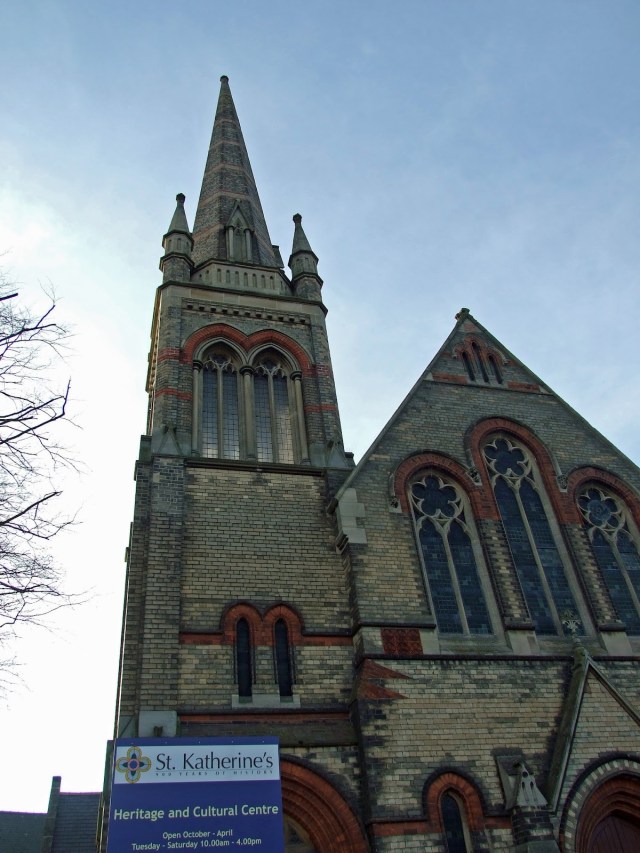
The big news in England is St Katherine’s church in Lincoln, which is a former Methodist building on the site of an old Gilbertine priory, owned by a trust and used as a heritage and culture centre and only part-time as a church, as the arrangement was in Portsmouth. This gave the possibility for an expensive restoration of the building, this restoration now being complete. I agree with Canon Gray that an iconic building is important, a flagship church with all the functions of a diocesan cathedral: a chapter of canons, music, culture and a standard pastoral ministry to the faithful. England is a small country and Lincoln is in the middle, slightly to the east. It’s an easy city to get to. Once there is a symbol of this kind, it will encourage other places of worship to emerge from marginal status and use energy and money to the optimum.

There is a question of Canon Gray being consecrated a bishop. At first, I was sceptical, but again, the bishop is a figurehead and an icon. If the office of bishop is exercised as it should be and with humility, it could do a lot of good for the TTAC. The ideal would be union between the TTAC and the ACC, which has its bishop, but that cannot be done locally. Relations between the TAC and the ACC have become very cordial internationally, and it seems to be a question of patience and continued work on our relationship. I think having a TTAC bishop is justified, and this office would boost morale. I hope I will be notified about the consecration – so that I can be there! Another important thing is having brought the diocesan offices to life with new blood. Reactivity is essential for pastoral outreach and the desired growth.

How are we going to train new priests? One essential thing is knowing what are the intellectual credentials of the clergy we have. I think the profile is higher than some may think, and we need to devise a distance learning programme such as the Americans and Canadians have. There also need to be weekend sessions for practical matters such as preaching, pastoralia and, not least, learning to celebrate Mass properly.

These resolutions represent a new beginning for a war-torn church, and may be enough to attract some of our men back who dropped out through discouragement. Canon Gray specifically assures us that he would

– welcome any who might wish to consider returning to the TTAC.

This would not only extend to “prodigal sons” but also to other individuals and groups. There is already a deacon who was with an independent sacramental community and has joined up. There is a spirit of generosity, which must remain beyond the necessity of breathing new life into a community that has been through such difficulty.

Update:

I have received a message from Fr Ian Westby who used to be the northern Dean of the TTAC. He received a nulla osta for the Ordinariate but chose rather to return to the Church of England. He awaits the decision of a special panel in regard to his priestly orders and future vocation. In what he writes to me, I believe him to be sincere and as constructive as possible.

I will not reproduce this message, but there are two important aspects to what looks like a very bleak situation. As of a year ago, there were less than ten faithful at St Katharine’s in Lincoln, and nearly all the other priests have very few laity. The picture would indicate less than fifty lay people in the whole country claiming membership of the TTAC.

He advises against the consecration of a bishop until there is a greater degree of stability and “critical mass”. I would say it might work one way or another: a bishop might provide a figurehead or what would be viewed as just another “vagante setup”. I do think extreme caution in this matter would be the right thing – perhaps wait for full union between the TAC and the Anglican Catholic Church (Original Province) under Archbishop Haverland at an American / international level, and then go ahead with a merger in England.

I hope the situation is retrievable, and Canon Gray obviously thinks it is possible to rebuild, but it sounds quite depressing as it has been, at least in 2011 and much of 2012.

Posted in Uncategorized | Tagged , , | 23 Comments

The Anglican Catholic Church of Canada

Canada is second in my attempts to survey the TAC, and this task is also facilitated by the high-quality website. The division between the ACCC and the ordinariate-bound occurred peacefully on the whole. There was a previous division involving the founders of the Traditional Anglican Church of Canada. The site still contains the March 2012 pdf bulletin which outlines how the division occurred.

There are twenty parishes and missions, which may seem very few for such a vast territory as Canada is. It is a single diocese under Bishop Craig Botterill. Last 22nd November, the Synod of the ACCC elected the Very Rev. Shane Janzen as Metropolitan of the Province of Canada and Bishop Ordinary of the Diocese of Canada of The Anglican Catholic Church of Canada. I would be grateful to know what is to become of Bishop Botterill, who does not seem to be of retiring age.

Bishop Botterill is Episcopal Vistor to the Traditional Anglican Church in England.

Remember, your informed comments are of utmost importance to fill in the gaps! Please stick to the “present state” rather than rake up the anger of the past.

Posted in Uncategorized | Tagged , | 2 Comments

The Anglican Church in America

I begin my survey with the easiest – because the web sites are detailed and kept up to date. The Americans are great with computer technology and use it to great effect. Those who are not good with computers find people who are to do the job. So the first port of call is the ACA website. In it we find the page of dioceses. There are four dioceses in the USA, and a fifth in Puerto Rico, which is American territory. Three of these dioceses have Bishops Ordinary, and two are under temporary dispositions.

The Diocese of the North-East has twenty-seven parishes, of which a good number have former TEC church buildings and are obviously well-established as parishes. Photos indicate substantial numbers of people attending services. In the post-Ordinariate situation, I am told that this diocese is the strongest and most stable diocese under the able leadership of Bishop Brian Marsh.

Bishop Marsh is also Bishop Visitor for the Diocese of Eastern US (the Southern states), which lost its bishop and several of its parishes in the altercation.  There is a suffragan who will likely become diocesan, Bishop John Vaughan, who was consecrated last April. The diocesan website indicates fifteen parishes, some with their own churches buildings and the smaller missions using buildings belonging to other denominations.

Diocese of the Missouri Valley (the Midwestern states) under Bishop Strawn continues forward with most of its parishes. According to the parish page, there are seventeen of them. Saint Aidan’s in Des Moines (IW) is included with Archbishop Falk as parish priest and an assistant priest.

The diocese with the most difficulties in the wake of the Ordinariate movement and various splits is that of the West. The most serious problems occurred at St Mary’s in Hollywood, a subject of controversy on the Web, with which I do not wish to be involved in any way. Bishop Strawn is listed as bishop visitor, and the diocese is governed by a Vicar General, Canon Anthony J. Morello. This appointment dates from late October 2012. I find eleven parishes in the parishes page. There are two retired bishops, Rt. Rev. Daren Williams and Rt. Rev. James Stewart.

Also the Diocese of Puerto Rico finally decided not to accept the Ordinariate offer. Only Bishop Juan García in Ponce is listed, which simply means that they do not use the internet. I would appreciate information about priests, parishes and other activities such as schools or missionary work.

Two new bishops have been elected, Fr Owen Williams of Trinity, Rochester NH and Fr Hiles of Brockton MA. They will both be suffragan bishops for the Diocese of the North-East.

The ACA is in full communion with the Anglican Province of America and has a military chaplain programme. There is also the International Anglican Fellowship, based in the USA but serving the entire TAC.

Posted in Uncategorized | Tagged , | 4 Comments

Sarum Calendar 2013

On Sarum Chant.

To quote from the site:

The Kalendar appearing here contains in the third column the information provided in the printed Sarum Kalendars such as that found at the front of the Breviarium 1531.  In the fourth column appears the information found in the Pica which appear scattered throughout the Breviarium.  Generally speaking the latter takes precedence over the former where they differ.  This Kalendar is provided firstly as a guide to those who wish to follow the Sarum Liturgical Kalendar throughout the course of 2013, and secondly for those who wish to gain an understanding of the nature of a typical Sarum or pre-Tridentine liturgical year.  This Kalendar follows the Gregorian or Western calendar.

Sarum Calendar 2013.pdf

I haven’t examined the whole thing, but I am dubious about celebrating the feast of the Annunciation (March 25th) on Monday of Holy Week. I would be inclined to transfer the Annunciation to Monday April 8th, immediately following Low Sunday.

Posted in Uncategorized | Tagged , | 4 Comments