Stuffy?

I have never been in my whole life been called stuffy, at least until now. John Bruce must have found me at the East India Club and discovered I had died on account of the god-awful stench from behind the newspaper.

Perhaps my jabbering on about the Imperial Home Service, feet and inches and being English has struck a sensitive chord in California. I feel quite flattered in the company of Fr Hunwicke. Fortunately for Mr Bruce, an American saying anti-British things is not (yet) offending against political correctness.

Anglo-Catholicism And New Media

Anglo-Catholics? Essentially zilch — I have no urge to look at either Fr Hunwicke or Mr Chadwick, both of whom strike me as peculiarly English in their stuffiness and self-reference. The others have basically given up. A bad sign, it seems to me. (…)

I have spent more time in Continental Europe than in my native England, but I seem to have kept something of the Old School. Stuffiness? The word seems to conjure up images of old men in the late Victorian era taking snuff and sporting moustaches, clearing their throats very noisily and having a somewhat boring style in conversation. The word might describe a party bore or someone who is self-important or pompous. It can also denote those who are rigid, “straight-laced” or moralising in their behaviour. I may be many things as a broken and sinful human being, but I don’t recognise myself in such a description. Perhaps he will call me a psychopath and serial killer in his next billet.

Self-reference? How are we supposed to write in a blog? It occurred to me several years ago that my writing would be that much more interesting if I related things the way I experience them in life. Novelists do it all the time even through they express their experience through a fictitious character. Naturally, Mr Bruce is free to ignore my blog and Fr Hunwicke’s Mutual Enrichment, and read others that validate him in his beliefs. That would be fair enough if he didn’t feel he had to mention the two English old blades about town.

Without singing my own praises, I read this extraordinary piece of encouragement from a friend in a private e-mail:

I am genuine when I tell you how powerful your teaching and sharing is via the blog, and that it is a way in which some of those men who relate closely to you through it are developing loosely into a kind of community. Hence our chat about the various possibilities for you – and for them – that might possibly open up.

We indeed live in interesting times. I wonder if Mr Bruce is bringing together a little group of people for reflection and prayer. I could mention that a blog without comments is not only free from trolls: it is also a monologue from a person who cannot bear to be challenged.

Posted in Uncategorized | Tagged , | Leave a comment

Historical TAC Material

Seeing that the question is being discussed in some quarters, I decided to re-post material from my old English Catholic blog. I don’t want it to be used for re-fuelling old polemics, but rather as a raw historical resource for any future serious work on the Anglican Continuum and the special case of the TAC during Archbishop John Hepworth’s incumbency. It shares the same server as As the Sun in its Orb, with its own directory, but the two are not linked. I like to keep things tidy and distinct.

TAC Archive

Christian Campbell’s The Anglican Catholic is gone. That is sad, because I counted on its remaining as an archive. I should have copied this blog onto my hard disk, but I do have my own postings on my hard disk, since I wrote them on Word before sending them to the blog. That is at least something. The Continuum blog has its postings from that period reflecting the anti-Ordinariate and anti-Hepworth position of Fr Hart. They too should be considered in any future historical research.

I am open to questions like Do you have anything on xxx? I’ll do my best for the sake of history and posterity.

Posted in Uncategorized | Tagged , , , | 2 Comments

The Continuum Blog

The memories come flooding back about Fr Robert Hart’s blog The Continuum when we read this again from John Bruce – What’s Become Of The “Continuum”?

This blog was founded by Albion Land who at some point became Orthodox and went to live in the islands of the eastern Mediterranean. He still has a presence on Facebook and is an interesting character. From a certain point, the blog was taken over by a couple of American priests in the ACC.

The position of the ACC has always been clear about Anglicanorum coetibus, and it is one reason why I joined it in 2013. It has to be said also that in the ACC, we have a certain diversity of “churchmanships” between Anglo-Catholicism in England and a “Classical Anglican” approach that is more widespread in the USA. That viewpoint emphasises a stricter adhesion to the Prayer Book (American 1928) and the Thirty-Nine Articles as a standard of doctrine. The more mainstream view in the ACC, as in some other Continuing Churches is adhesion to the Affirmation of St Louis with its more Orthodox ecclesiology and the notion of Tradition.

To the “Classical Anglican” view, Anglican-Papalism is foreign, perhaps even a red rag to a bull. It is understandable that the polemics in 2010-11 were particularly passionate, and I was not always very helpful in my postings to The Anglo-Catholic and my own defunct English Catholic. The Continuum, as Mr Bruce observes, is – we might say – not more than a shadow of what it was. Fr Hart sends in his sermons (written and recorded) and some nice spiritual and doctrinal reflections from time to time. Fr Hart has had some health problems, and the cause of the polemics no longer exists. The Ordinariate clergy have joined the Ordinariates, and others have stayed in their respective Churches.

I do remember everything getting quite out of hand mainly on account of the “Hepworth narrative” on the process leading to the Ordinariates. Fr Hart has remained very low key since then, even if he has “liked” some comments on Facebook postings asking for our prayers for his health. I think, however, that Mr Bruce could read through the Continuum blog to see that it is not merely a matter of Low Church against High Church. If you look on the site of St Benedict’s in North Carolina, it can be seen that Fr Hart wears vestments, has an Anglo-Catholic style altar and a High-Church style. However, his theology is more Tractarian than Anglican-Papalist. I think diversity in these matters in a charitable dialogue in a Church is a good thing. Mr Bruce would see these nuances if he cared to read through the blog and Fr Hart’s parish website.

Are “continuum” denominations without exception (…) shrinking and losing credibility? I don’t think so. We might be small, but we have learned many lessons from our experience, whether of squabbling bishops and priests in the 1990’s or Archbishop Hepworth’s attempt to be the chief mover of the Ordinariate movement. Our Churches are smaller, but better ordered and organised within.

I cannot foretell the future of Continuing Anglicanism. It may well die like other small Churches in history. It might persist for centuries. It might contribute to a “repairing” of communion at a grass-roots level like Forward in Faith. I am a priest in the ACC and have no plans of moving anywhere else. Certainly the events of those years did a lot of damage to the TAC, less to the ACC on account of its having remained quite aloof. The TAC is moving ahead slowly, and there are sincere dialogues between the TAC, the ACC and other Continuum bodies. Every little gesture means something and is positive.

Maybe in Mr Bruce’s mind, the Continuum should disintegrate and people be told that they have no alternative other than converting to mainstream American Roman Catholicism, but that they should be treated with prudence lest they should be tainted with “Anglican baggage”. I am not rising to the provocation here, nor is anyone else.

Maybe, our “prestige”, whatever that means, has been damaged. However, our life as Catholic Churches of Anglican tradition continues to worship God and witness to the life of the Gospel in our little way. The past is in the past, and those events are even less relevant to the ACC than the TAC and other Churches working for dialogue and unity. As for the “prestige”, I cannot say it worries me in the slightest.

Posted in Uncategorized | Tagged , , , , | 3 Comments

The Elusive Anglican Patrimony

I have had discussions with my friend over the past couple of days, and the subject of the Ordinariates and Anglican Patrimony came up. I think that a lot of wisdom came out of these conversations, both of us being cradle Anglicans, admittedly he from a more Anglo-Papalist background and myself from English middle-of-the-road origins.

We went on the little pilgrimage to Hursley parish church and graveyard where Keble’s grave is lovingly maintained. The church was dark in the gloomy English January weather and I couldn’t find the light switches even though the vestry was open. The altar was in the “old” position and, presumably, the cross and candlesticks were in a safe place as a precaution against theft because they were not on the altar. The atmosphere was certainly quiet and serene. Everything was quite plain as would be expected from a Tractarian-era church. Though I called yesterday’s article Roots of English Catholicism, I made a slight error of judgement, because English Catholicism goes back much further than the 1830’s! I left the anomaly all the same. I approach the notion of Anglican Patrimony from a more Romantic than Enlightenment point of view.

My own experience of Anglicanism before “swimming the Tiber” in June 1981 was limited to organ playing and choral music. I was very badly catechised and knew very little about the Romantic-inspired Catholic revival in England. I saw many highly ritualistic parishes in London, lots of bells and smells and the old quip “If it hangs, put a tassel on it, and if it moves, incense it”. Most things I have done in my life have been badly prepared and based on illusions, certainly on account of my “different experience of life” and Roman Catholicism was one of them. I was not in the right time and place to have a real formation in Anglican ways other than anecdotes and books. That being said, I did get some insights.

One such insight was the old notion of the English parish incumbent, often a highly educated man with a love of a life of prayer and a pronounced pastoral zeal. From a time much longer ago than the Oxford Movement, there was John Wesley whose theology was founded on the riches of the Caroline Divines and Arminianism, very close to many themes found in Orthodox mystical theology. I have always noticed the collusion between the English movement and the equally Romantic struggle of French Catholicism to rise from the ashes of the Revolution. There was the Solesmes monastic revival and its effect on many of the parish clergy. The Abbey of Fontgombault still fulfils that role today with many parish clergy. Some of them are monastic oblates. This, I feel, is where we are going to find the essential of Anglican Patrimony, not in liturgical revival, even the Use of Sarum – but learning, spirituality and pastoral closeness to the people in the parish. A few have understood that, but very few.

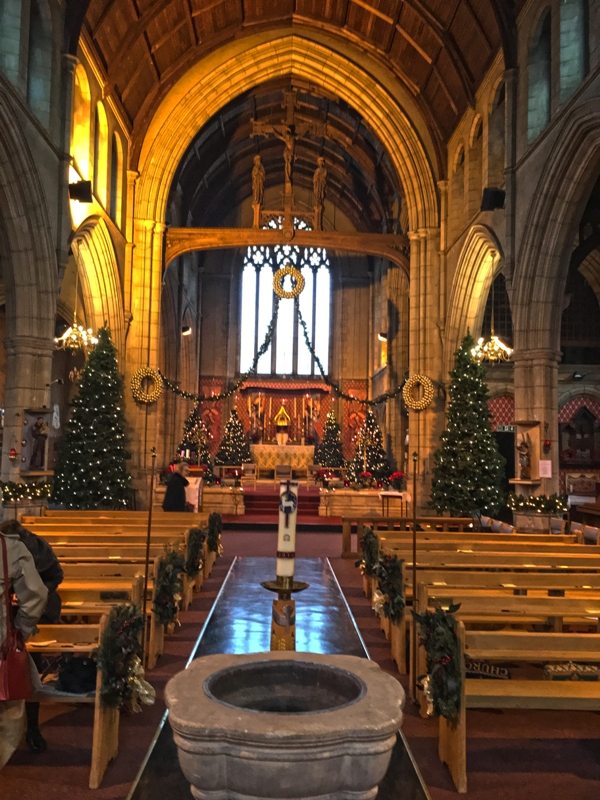
I understand the underpinnings of Anglican Papalism, which essentially consists of looking to the Church of Rome as the source and centre of the Church’s unity. This is an idea that is very pronounced in the great work of Vladimir Soloviev, Russia and the Universal Church among others. There is a high view of the constitution Pastor Aeternus of Vatican I, that sets the “inopportune” but thankfully moderated teaching on Papal infallibility in the context of the Church. Even in that teaching, the Pope has no rights over the Church; he is Pope because he is the Bishop of the Church of Rome. It is an interesting perspective that needs study. Anglican Papalism led to a very Tridentine and then Novus Ordo liturgical style because it emphasised obedience to the currently approved rites of the Roman Church. However, the churches retained the unique English style as opposed to the nineteenth-century fantasies of questionable taste of France, which found their way into England and Ireland. One such example of this kind of church is All Saints in Twickenham.

twickenham-all-saintThe combination of the bold English gothic of the Arts & Crafts era and the altar with the Big Six is striking. It works. It is English. It is Anglican, but also implies that yearning for the visible unity of the Church. It is endearing. All the same, I find the lavish Christmas decorations a little over the top.

The Catholic revival in the Church of English and the Roman Catholic Church in France has a common progenitor – Romanticism and the yearning for the “pre-rational”, something that preceded the tired-out Renaissance and hyper-rationalist culture. Some of the Romantic churchmen of England and France had a penchant towards monastic sobriety and profound spirituality through the prayer of the Office. This element persisted in Anglicanism long after it shrivelled away in post-Tridentine Catholicism as the old popular devotions were refined and promoted. The great French theologian Louis Bouyer has understood this fact about the Anglican Office of Mattins and Evensong in our cathedrals and parish churches. It does more to involve the ordinary folk than any number of “management” schemes.

I discuss this element from a point of view that is less enthusiastic about Anglican Papalism (only a tiny proportion of it joined the Ordinariate). I have latched onto the theme of Romanticism and that particular nineteenth-century perspective of medieval aesthetics and spiritual aspiration. This view is not very historical, but somewhat “creative”. After my own experience with extremely high-church (or dare I say “high-camp”) expressions in my old seminary, my taste has moved towards simplicity and sobriety, the spirit of Arts & Crafts, the Pre-Raphaelites and the monastic ethos. Perhaps my experience at Triors Abbey manifested something a little too plain, in the way I was criticised for playing Herbert Howells on the Hill organ I had installed for them when a more “recollected” style might have been more appropriate.

Again, it isn’t about liturgical trappings or merely cultural considerations. It is essential to be well educated, not only to defend the Faith, but to enter into dialogue with the world. Our Anglican vision was always broader and more inclined to follow good principles of fair debate rather than the scholastic way of proving everything and silencing objections. It is very subtle. The next thing is the monastic influence in our love of the Office. Finally, there is the pastoral dimension that I have only seen equalled by French country priests like I have known in Normandy and the Sarthe. The spirit of the great slum priests of London and many northern industrial cities is not dead, and it remains in the Forward in Faith parishes under special episcopal provisions to respect the consciences of those opposed on theological grounds to the attempted ordination of women. Though we in the ACC are critical to such an approach, its existence in the Church of England is little short of a miracle!

I finally come to the latest article on my former Archbishop, who seems to be attempting a comeback. Abp Hepworth At St Mary Of The Angels, January 6, 2017. I anticipate another triumphal article from that source about the Mass he would have celebrated in Hollywood today on the Sunday in the Octave of the Epiphany. John Bruce seems to have expressed himself in a fairly matter-of-fact kind of way as far as he perceives it.

Abp Hepworth celebrated Epiphany Day mass at St Mary of the Angels on the evening of January 6, 2017. Several things struck me. One was that this was a genuine pastoral visit — he was not presenting himself as some sort of past Anglo-Catholic celebrity, or perhaps some sort of martyr. He was entirely focused on 2017 and his specific responsibilities as bishop of the parish.

He seems to anticipate criticism from people like me and perhaps others. It was always the narrative of some commentators from about 2010-2011 that Archbishop Hepworth would not make it himself for the reasons of his canonical impediments, but that he would “sacrifice” himself to get everyone, or nearly everyone into the embracing arms of Benedict XVI’s Roman Church. The evidence of the past few days refutes that pious narrative. My question is who made him “bishop of the parish”. Since when did Roman Catholic apologists support independent “rogue” or “uncanonical” churches?

Another is that he is a big man — about the size of President-Elect Trump, maybe six feet two and hardly emaciated. Another similarity is that his mannerisms and timing command respect. I suspect that, like Trump, he’s easily underrated.

This posting is not political, so I will not discuss Mr Trump. I don’t necessarily respect a man because of his physical build but from what I believe to be in his heart and mind, his moral integrity, his having taken responsibility for the events of 2011-2012 (the sex abuse allegations which I am not qualified to discuss).

I was interested in what he’d say in his homily. Again, it was a pastoral exercise, and it was about Epiphany. He focused on several parts of the gospel narrative: Herod’s request of the magi that they tell him where the newborn Christ was located, the massacre of the Holy Innocents, and the flight of the Holy Family into Egypt. He made the repeated point that in these times, it’s also become more difficult to be Christian, and it still involves the way of the Cross.

He always did preach and talk persuasively.

Hepworth clearly has a deep understanding and familiarity with scripture and salvation history, which came out in his homily. He’s also focused on the world as it is. Although some visitors here, and other observers elsewhere, have suggested he’s something of a con artist, I got nothing like that from his visit.

Now, who is saying that he is a con artist? I don’t know, but what I do remember of 2011-2012 was that there was a different Ordinariate for every person to whom Archbishop Hepworth sold his plan. His version of his having friends in high places in Rome was not shared by Cardinal Levada. The narrative just did not add up. There were gaping discrepancies, but the man himself had such charm and persuasiveness. I got nothing of the idea of a “con artist” on listening to the Archbishop – only from the cold facts a posteriori. I was devastated like anyone having to be deprogrammed from a cult.

I came away with the impression, like that of other correspondents here, that Hepworth is a complex man, but I would add to it that he’s something of a visionary. He saw a potential in the Portsmouth Petition that simply hasn’t been realized. It reminds me of the sense of potential, if not necessarily optimism, that I get whenever I visit the St Mary’s parish.

“Complex man”? It’s the least one can say! Visionary? He obviously learned a lot about Anglican Papalism in the Diocese of Ballarat where he became and Anglican from being a cradle Roman Catholic. How much did he really assimilate of Anglicanism and the Anglican Patrimony he coined so many times in his talks, addresses and preaching? He showed a tremendous amount of knowledge, but had he really experienced it?

I was present at the Portsmouth College of Bishops meeting in October 2007. We stayed at a very pleasant hotel and were shipped by coach to St Agatha’s church. It certainly was stimulating emotionally and we were told we were participating in something historical. I trusted the Archbishop because nearly all the gathered bishops followed almost in lockstep. I had never seen or experienced such a thing in my life. In 2012 it was all smoke and mirrors, an illusion. Rome did sort something out with the Forward in Faith bishops and let in a number of TAC clergy. John Bruce is quite dissatisfied with the Ordinariates. I have kept away from that world and prefer to be out of it. What was the vision that came unstuck? Now in Hollywood, there is no longer the magic (and unverifiable) number of four hundred thousand faithful and a vast international communion. Paff! Some of the clergy joined the Ordinariates, and the TAC is still there, a shadow of what it was, but now on a par with the ACC and other Continuing Churches. The TAC has moved on and it has a new Primate, Archbishop Shane Janzen in Canada. What is Archbishop Hepworth Archbishop of?

Again, nothing adds up in the way of something John Bruce would approve of, something that would add itself to the Ordinariate movement or become a part of the mainstream.

I return to the subject of this posting. Anglican Patrimony is something that can be identified more easily by the heart and the head. It’s the same for Orthodox folk. Few non-Orthodox can truly fit into the Orthodox Church when they convert, because it involves more than a simple agreement with the Church’s doctrine. It is the same with converts to Roman Catholicism. My own experience was that I could accept the doctrine and teaching, but not the underlying spirit of unquestioning obedience to authority in one’s most intimate being. I was therefore not a good Roman Catholic and did the best thing by reversing my “swim” of 1981. That made me an apostate as far as they are concerned, but for me, it was a partial homecoming after the Roman traditionalists and then the desert of independent bishops.

The idea joins up with the so-called Benedict Option, expression coined by the American writer Rod Dreyer. The future of the western Church is not longer in the old institutions outside the surviving parishes in England and the ones I knew in France (some of them taken over by the Fraternity of St Peter, others closed down) – but in the little communities of folk in those surviving parishes or house communities, or yet the lonely and isolated souls who gather around this blog and others. I have identified the points of hard intellectual work and teaching, monastic spirituality and kindness and nearness to those who approach a priest for whatever reason. These qualities also involve honesty, deep humility, knowledge of self and something very quiet and unassuming. With my experience of life and my probable neurological condition, I have nothing to prove to anyone and no reason to manipulate or change other people to any agenda of mine. That seems to have more of the spirit of Wesley, Keble, Newman or Pusey, the hard-working dons and priests living their quasi-monastic life.

Posted in Uncategorized | Tagged , , , , , , , | 6 Comments

Roots of English Catholicism

Some of you may know that I am away from home, presently in England. I am staying this weekend with an old friend of mine.

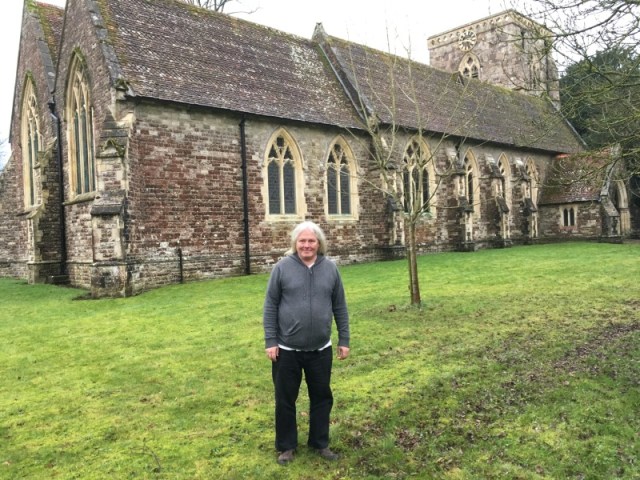
My friend took me for a little drive and we stopped off at Hursley, a beautiful village with medieval and Georgian houses and a fine Victorian church in Hampshire, not far from Winchester. John Keble was Vicar of Hursley from 1835 until his death in 1866. With Newman and Pusey, he was a pillar of the Oxford Movement. We visited the church and Keble’s grave.

keble_church1keble_church2Friendship is one of the most beautiful gifts in this life. We spoke about many things in the car, and much wisdom came through. Without going into details, many aspects of my future vocation came through. Indeed, I ask the prayers of my readers as I begin to enter the most painful part of my life. I was thankful for my little pilgrimage today.

Posted in Uncategorized | Tagged , , | 1 Comment

Neurodiversity

One of my readers seems to be a little “put out” that I seem to dwell somewhat on Aspergers Syndrome on this blog. I am about to come out with another one, so he is free to switch to another web site or go and make a cup of tea or pour himself a brandy. I write on this blog from the point of view of a Christian priest and a humanist. Following Christ, I am concerned about humanity of which I am a part for the time that I am in via – and perhaps also in the next world.

In the last couple of days, I have watched a couple of long videos about psychiatry and mental illness, and am appalled about the way psychiatry is given a “right” to take away human freedom, dignity and his rights to refuse medical treatment. We are not talking about Aspergers, or the autism spectrum in general but also all the ways that some individuals differ from what is conventionally called normality or being typical. From time immemorial, some individuals are different both physically and mentally. In the Gospel, the favoured ones of Christ were the crippled, the blind, the deaf, those who sought God’s forgiveness for sin, the possessed. They came to him, and on a word or a gesture, they were healed. Many live their entire lives with a handicap which cannot be cured, and have to learn to live in spite of that disability. It is obvious that one will seek a cure for diseases and deformations, but the usual prognosis is living one’s condition as a difference.

I have often commented on the contrast between the attitude based on Darwin’s theory and some of the more negative aspects of Nietzsche’s philosophy that only the strong, the rich and powerful may inherit our world, and the weak must be sacrificed by being discreetly done to death in gas chambers and other available means – and the Gospel of Christ that privileges the weak, the sick and the poor. I am of the conviction that one of the few truly humanist influences in the world today is Christianity!

There are atypical conditions that fall between the condition of the strong and dominant on one hand and those who are followed by the medical profession to try to bring about a cure or help that person live with his condition. Those who are somewhere in between are simply different. If all our differences can be explained by medical categories, the assumption if given that the status quo of society is correct, and that the sick do not have the same rights as “typicals”. The real question is whether people have to be “fixed” and “made normal”, or whether there must be a new form of “tolerance” or “inclusion” by society, enabling those with differences to thrive as human persons. We see this notion expressed in a number of questions like homosexuality or gender identity. This is where we have to be very careful, because the more you try to impose some form of political correctness on society, the more there will be blowback. We get sick and tired of being told that we have to include those who are not like us, because our own freedom begins to be eroded – and we find out that the whole thing is a euphemism for a whole new kind of totalitarianism. So we are back at square one.

I would like to see a world that includes everyone and behaves in a humane and Christian way rather than bring about an Orwellian-Nazi-Stalinist hell, but is that going to happen? In the same way as Hitler didn’t invent very much in the 1930’s and up to 1945, not very much has changed since then, for as long as you have vast state and international bureaucracies, centralism and an obsession of standardisation of everything.

That being said, I think there is room for a grass-roots movement as at the basis of any humanitarian aspiration. It is a part of our religion, inspired by the example of Christ in his tenderness in regard to those who suffer. Such movements can only be of limited value, because the blowback will occur from the instant they have any effect in mainstream thinking and politics. Probably, the only way is the idea conveyed by my reader: let’s stop talking about and retreat into misanthropy. Another possibility is becoming a kind of Scarlet Pimpernel – promoting something without getting too near the nerve of the mainstream. If we stop talking about it, then perhaps we have to stop talking about anything, shut down. Then what? That is how the totalitarianism of the strong and evil will prevail. So, we have to find an original approach.

It seems to be a delicate course to steer between Scylla and Charydbis (the rock and the hard place in modern American vernacular). On one side, we have the old school attitude of the British officer in the nineteenth century and a colonial helmet shooting aborigines for sport, whipping his slaves for trying to run away and swaggering about in India. On the other side, we have “identity politics” that seek to promote homosexuality and gender identity issues and a choice to be promoted, thus creating groups and ghettos.

However we are, whether we suffer from illnesses that doctors can cure (or can’t cure) or from what we like to call differences of personality and identity, we can’t expect sympathy from the state, the Church, the mainstream of “other people”, those we don’t know and who don’t know us or care about us. This world is like the sea from the point of view of a man in a boat. It is for us to decide whether or not to put to sea and take the risks, whether we have the necessary skills for the conditions we will meet. If we get it wrong and we perish at sea, the sea has no reason to care. The sea is utterly indifferent to whether we live or die. Such is society. No amount of political or social engineering will change that. Some progress can be made, but usually at the cost of blowback. Look at feminism for example!

Many men believe in feminism until they get married!

In a Christian perspective, we carry our crosses. Some people have horribly heavy crosses to carry like being paralysed or “locked in”, for which death alone seems to be a deliverance. Something like Aspergers is a light cross, once it is understood and compensated for by learning how to “play the game” in a different way.

What we can do is to write on this subject for the sake of those are are affected, and who need to learn the skills needed to “play the game”. We are like the little boat on the ocean. We are already at sea, so we have to look at what we’ve got: a sound hull and rigging in good condition, seeing if we are using the wind and the waves to the best effect. The sea doesn’t care, so we have to negotiate with the sea. When it gets a bit tough, we can try shortening sail, taking in a reef or sailing under bare poles, using a drogue (sea anchor), calling for help if there is any in the neighbourhood. If we ride out the storm, we get a better chance of survival.

The keyword is compromise, learning to be ourselves but getting on with the mainstream in what it expects (that we don’t break the law and we earn our own living, and treat people decently). I mention the idea of a Scarlet Pimpernel again. He was the mythic character who saved people from the guillotine during the French Revolution by being clever and cunning. A real character in World War II was Mgr Hugh O’Flaherty who had a job with the Holy Office – and was really clever at saving prisoners of war and Jews from the Nazi occupation. A film was made with Gregory Peck in The Scarlet and the Black, one of my favourites. Sometimes the battle of cunning is for the sake of others, and very often for ourselves. That is the case for those of us who carry invisible things.

Also, if we expect too much sympathy from others, we come under their control. That is not an option if we are up against evil, sadistic and abusive people in positions of power and authority. We can make our “neurodiverse” condition a gift that will serve people in ways only we understand. If Mozart was indeed an “aspie”, then what a gift was his music, centuries after the death of the person! Being an “aspie” doesn’t prevent us from caring about others – and those who suffer from other conditions from being physically handicapped to being in difficulty because they haven’t learned the courage and cunning of scarlet pimpernels or lone ocean sailors. Pick you own analogies and images as you see fit.

We’re not going to change society, especially when it becomes evil, but we can educate ourselves and find freedom through knowledge. If that is so, I prefer to share knowledge and experience than shut down the subject and acquiesce to misanthropy and giving up. There is a way to beauty and light, and to colouring our world with the effects of our insight and experience.

Posted in Uncategorized | Tagged , , , , , , | 2 Comments

Feedback from Los Angeles

This came up today: The Great Disappointment Continues.

I won’t attempt to understand John Bruce’s Code of Ecclesiastical Titles. Quite honestly, I couldn’t care less. Most days, I wear a pair of jeans and a hoodie with my long hair, but I’m still a priest where it matters!

Another thing that is mattering decreasingly is the story I related in my own defunct English Catholic blog. Benedict XVI abdicated just shy of three years ago and the present incumbent seems to have shown courtesy to the present Ordinariate setup. I closed the discussion with the German word Schluß meaning the quality of being shut, closed, ended, terminated or whatever according to the context. I set out to document the history of the events as I observed and understood them, knowing that history would later be changed for ideological reasons.

I don’t find Anglo-Catholicism (or Anglican Catholicism) so elusive? I, a cradle Anglican, am a priest in a Church that is cordial and polite with Roman Catholics, but is clear in its position (see Anglican Catholic Clarity). We do not seek to become Roman Catholics for the simple reason that we are already Catholics in our Church.

(…) it wasn’t a good project for Rome to try to bring elements of it into the Church, especially in light of the numbers of cradle Catholics who’ve abandoned, or been abandoned by, the Church.

Cradle Roman Catholics find it hard to become Anglicans, because our ethos is totally different. We are more respectful of personality, diversity and difference, perhaps less so these days of corporate management and bureaucracy. Church jumping is not something I would encourage. I welcome Roman Catholics to my services if they wish to come, and they can receive Holy Communion if they wish. I recognise them to be Catholics just as we are, and as the Orthodox are with their own spiritual and liturgical traditions. I also know plenty of Roman Catholic priests who give Communion to Anglicans even if they go against their canon law. As a matter of fact, I do not receive Communion in churches other than Continuing Anglican – and usually only from my Bishop when I am at his Mass rather than celebrating my “own” Mass.

We Anglicans have our Continuing Churches, the RC’s have the SSPX and the various “Indult” communities, or even monasteries where the emphasis is more spiritual than political. The Orthodox have their Old Calendar groups and various workarounds when their bishops become too involved with ecumenism and globalism.

The big problem is for John Bruce to be happy in the parish where he goes, and get involved with all the activities which are great for retired folk and being good to other people. Perhaps they also have prayers and devotions…

Posted in Uncategorized | Tagged , , | 4 Comments

Hans Asperger

I have just discovered this fascinating article – Was Dr. Asperger A Nazi?

On reading the article, I am reminded of the story of Schindler’s List, about a factory owner who saved many Jewish lives by having them work for him in humane conditions. It is significant that the article notes that Asperger was never a member of the Nazi Party and that his intention was to save as many autistic children from euthanasia as possible.

The work of this Austrian psychiatrist has only been available in English since the 1990’s, and alone has established the existence of a spectrum of autism causing various difficulties in children and adults. His discoveries with the “little professors” made it possible for high-functioning patients to receive support services instead of simply being shunned by society. Asperger’s daughter still practices as a psychiatrist in Vienna.

I don’t believe for a moment that Asperger consented to the Nazi barbarity and ideology, and only did what was necessary to keep out of a concentration camp or hanging from a meat hook on piano wire or something even more ghastly.

Posted in Uncategorized | Tagged | 8 Comments

Hat Tip in the Fish-Eaters’ Forum

My statistics page picked up a site sending 7 hits to my page on the Sarum Use. This is the Fish-Eaters’ traditionalist forum running a thread on the liturgy. I am intrigued by the title, because there are loads of people who enjoy fish and seafood even on days other than Fridays. I am also amused at what fasting and abstinence rules have become, when technically a Catholic can eat lobster and caviar on Good Friday without offending! Perhaps eating vegetarian or vegan on fasting days might be more appropriate and authentic. Anyway…

In it, someone using the name formerbuddhist has this to say of me.

https://sarumuse.wordpress.com/the-use-of-sarum Good old Father Anthony Chadwick offers the Sarum Liturgy from his little chapel in Normandy. He’s got quite a lot of information on it, and is himself quite an interesting guy.  Sarum is probably never going to be revived on the mainstream level though, just like I’d argue neither will the Roman Rite and the full calendar as it was prior to 62 reforms, or before that the Pian ones.

Liturgies come and go, but they are interesting to study no doubt.

He seems to be writing about some glorious old bugger like Fr Montgomery. Don’t the years go by fast! I also recommend the Fish-Eaters my static site As the Sun in its Orb.

I haven’t much left to say about Sarum. I am working on a missal based on the Warren translation to make it as practical as using a modern Tridentine missal or our standard Anglican Missal. I would like it to be available for posterity, like the magnificent work being done in Canada by Dr Renwick on Latin and English versions of the Office with chant.

I think it does go without saying that Sarum isn’t going to be revived at any mainstream level. Our Buddhist convert (if that’s what he is) is honest enough to say that the fate of the pre-1962 Roman books is about the same.

There is not much to discuss about it. We need to see our vocations in life from a higher standpoint. As St Paul put it: We are fools for Christ’s sake, but ye are wise in Christ; we are weak, but ye are strong; ye are honourable, but we are despised. I am not mainstream nor do I have any calling to serve the mainstream. The trick is making sure someone takes care of our work in the event of our deaths, so that nothing is lost. I remember the case of Dr Raymond Winch in Oxford whose house would have been cleared out into rubbish bags had it not been for a careful soul who saved most of the papers and unpublished work. It is too easy for an eccentric to allow things to get untidy, because if they do, they will be lost.

I intend as much as possible to organise my computer archives on my external hard disk and think of where it should all be sent in the event of my lifeless body being found spread-eagled on my chapel floor or in some dreadful hospital. One must have order and discipline if anything is to survive.

We won’t find Sarum liturgies in parishes, probably ever, but the work must continue as was begun by university scholars in the mid nineteenth century. We use their work and make it progress – and we hope that our work will make some impression in the future.

I have often had the question. What is the use of it all anyway, since no one is interested in the liturgy? Not even the run-of-the-mill Roman Catholics? As with anything, I think of the quote from St Paul and the gratuity of the contemplative vocation. We are there for God and the good of our own souls, not for some social or political agenda. It sounds selfish, as contemplative life has always been judged by the “neurotypicals” of this world.

It isn’t about details of what a priest wears, the bits and pieces – but a whole attitude to life that is not of this world. That is the spirit of this blog and my view of life.

Posted in Uncategorized | Tagged , | 7 Comments

Elegy for “The Anglo-Catholic”

The blog The Anglo-Catholic is gone and replaced with some kind of generic page. WordPress, which I am using for this blog, is free and advertising is relatively unobtrusive, but perhaps blogs get taken down when they have rotted on the hook for too long. Its moderator Christian Campbell may bring it back for the sake of the archives covering the process that led many continuing Anglicans into the Roman Catholic Church via the Ordinariates. I doubt it.

The last time I took any interest in this blog was at the end of August 2012 when I wrote The Anglo-Catholic. Fr Smuts in South Africa was still active on his blog, another one that is in long-term hiatus. I was a contributor on Campbell’s blog until I took things into my own hands against a certain narrative about Anglicanorum coetibus in the English Catholic blog, which I myself closed down in early 2012. I was not yet ready to believe that Archbishop Hepworth was not a major player in the process and that he was to be black-balled, deep-sixed, call it what you want. During that time, I had a brief stint of being interviewed on the French traditionalist radio and speaking at conferences, until I too ceased to exist. The memories are fading. The death of The Anglo-Catholic has seemed to close the lid.

I was a priest of Archbishop Hepworth’s Patrimony of the Primate for the reason that I was living in a country where there was no TAC diocese. The Archbishop had taken me on in August 2005 from having spent years in the netherworld of RC traditionalism. I was using a static website as a primitive kind of blog and posted a series of postings, and this seemed to attract some attention in America.

In my earlier article, I wrote this about The Anglo-Catholic:

I was first contacted by Christian Campbell on 29th November 2009 to ask me whether I would become a contributor on this promising new blog. I accepted, and contributed a number of articles – which are still there. Finally, I discovered that the blog had its own “orthodoxy” and “police”, and my increasing resistance to the pensée unique ended with a rupture. I set up my own blog called the English Catholic, and this met with my expulsion from the Anglo-Catholic in the last days of August 2010.

It now seems to be common knowledge that Christian Campbell went off on his own tangent after his reception into the Roman Catholic Church. I found out very early on that he was going to a chapel of the Society of St Pius X and had adopted the traditionalist ideology. Fair enough, but hardly representative of the Rome-ward movement of “groups of Anglicans”. This culminated with polemics concerning the use of the pre-conciliar Roman rite in the ordinariates, whether in Latin or the Cranmerese English form in the English Missal. This and other issues caused Deborah Gyapong to pull out, since this kind of discussion would tend to discredit other Anglicans on their way over, but less concerned about the exact rite to be used. I have been quite surprised by some things CCCC put on his Facebook page, but they are entirely irrelevant to me and concern only his personal life.

Now, Fr Christopher Phillips has pulled out too, and Campbell himself has announced an indefinite hiatus. We might suppose that Monsignor Steenson has told those who are now Roman Catholics that ordinariate business is private and not to be discussed on blogs. That seems to ring with my recent article on secrecy, but I am not myself concerned with any Ordinariate anywhere. I will not speculate, but with no discussion and no coverage of any kind, the internal business of a “private club” is irrelevant to nearly all of us, as would be the yearly accounts of some provincial golf club in England.

There is an old quip about gentlemen’s clubs in London – that you know a member has died when there is an ungodly stench coming from behind the newspaper!

Fr Phillips, as a priest under jurisdiction, would have seen the need not to provoke problems for himself or his ministry. Similarly, Deborah Gyapong is a respected journalist and maintains excellent relations with the Roman Catholic Church in Canada. It is a question of professional integrity and keeping squeaky clean.

Sic transit gloria mundi. The Anglo-Catholic met a less radical demise than my English Catholic blog which I deleted. Campbell has his personal blog on which he writes about the things that interest him. I do the same thing here, but on different subjects and from another perspective. Should I say Good riddance? I do not take pleasure about negative things, but just find it sad. I have no feelings of “getting even” – I’m just not that kind of person. At the same time, time marches forward, and the religious world is not the same as it was in the heady days of 2007 and 2009.

In 2007 and November 2009, there was an objective to work towards. That is now irrelevant to all but a very few, and the future of the remnant TAC remains uncertain in spite of the rhetoric of the early months of 2012. Archbishop Hepworth wanted to keep something going for the clergy of the erstwhile Patrimony of the Primate who were still waiting for word from the ordinariates or had been rejected. Without a clear justification for any kind of structure, it seems hard to imagine that idea going anywhere. The storm clouds and gloom seem to gather as, for many of us, Godot never arrived and the batteries ran out.

The moral of all this is that Campbell and I made the same mistake, continuing to gnaw on the same bone year after year. My English Catholic blog had become too concerned with the ordinariate question and a continuing coverage of what was happening to Archbishop Hepworth. I ended up buckling under the nastiness of many of the comments and the same “political correctness” that dominated the Anglo-Catholic. This blog was designed to be more educational and intellectual, though I have often allowed myself to discuss the old problem.

The statistics page show that I get many more times read when I discuss the old problem than when I write about other subjects. I am not “in business” to attract attention or advertise myself. This should be a lesson to us all. Christian Campbell had something more gimmicky and full of gadgets than I ever thought about. He was constantly asking for donations. My blogs have never cost me anything and I have never collected a penny. He has his problems and I have mine.

The Anglo-Catholic looks like staying available for the sake of its archives, which can be consulted. My old articles are still there, as are many others of intellectual and historical interest. No Schadenfreude – but life has to go on. The lesson the dinosaurs bequeathed us is that we adapt or go by the wayside!

It all seems to be gone. I kept the archives of my English Catholic blog and I still cringe when I read some of the “troll” comments. I don’t blame them because I was pushing my own square pegs into round holes. It is the law of Karma! The dead flesh has rotted away and all that is left is a pile of musty shrouds in the darkness.

This blog took a different turn as I had to embark on a more introspective approach. I lived in a world to which I did not belong, with which I shared only an interest in liturgical life and rites. I seem to be about the only one left. Even Deborah Gyapong only occasionally adds something to her blog, usually involving family photos and unfamiliar faces in liturgical vestments in that nice little former TAC church in Canada. She keeps up with the same quiet optimism. Where else would she go? Triumphalism evaporated with the election of Pope Francis, and in many ways, those poor folk are reliving the long John Paul II and Paul VI years after the brief ray of light and hope.

The obituary seems now to be written, the undertakers have pulled their ropes out of the grave, removed the wooden planks and the little man in the mechanical digger can now fill in the grave now that the mourners have gone. I moved on long ago, not only by joining the ACC but also by my voyage of self-discovery over the years.

Schluß

Posted in Uncategorized | Tagged , , , | 13 Comments