ACC Provincial Synod

Please see the report and photos on our diocesan site on the twentieth Provincial Synod of the Anglican Catholic Church – Original Province. Of course, I was not there and could only follow brief accounts from our Bishop on Facebook and what is now being published on the website.

The XX Synod of the Original Province of the Diocese of the Anglican Catholic Church took place in the Hyatt Regency Hotel in Newport Beach, California, USA on 23rd & 24th October 2013. The Administrative Council, College of Bishops and Trustees met on the 21st and 22nd. The host Parish was St Matthews and the main Synod Mass took place at the Church on the evening of Wednesday 23rd and the Synod Banquet, at which our Diocesan Secretary was presented with the Jack Lane Memorial Award was on 24th October.

I look forward to more information and news on this Synod and what has been decided for the future of our Province and its mission. Also, our Diocesan Secretary Dr Roy Fidge received an award from Archbishop Haverland for distinguished lay service. See Diocesan Secretary Honoured at Synod.

Bishop Damien Mead obviously had an important role to play at the Synod, and I look forward to reading his speech if someone took the trouble to record it or write it down.

Posted in Uncategorized | Tagged | 2 Comments

Interesting Thread

Following from an earlier post English Use, there has been some interest taken in the painting of the solemn Mass in Amiens Cathedral sometime in the early nineteenth century. See Need help identifying…

Indeed the “wizard hats” and tridents of the Rulers in Choir seem quite obscure. Of course it’s not the Sarum Use but the local diocesan use of Amiens, since the Roman Rite was only generalised in France under the influence of the Ultramontanists (including Dom Guéranger) in the mid nineteenth century. However, many of the so-called Neo Gallican rites adopted the Roman ordinary of the Mass, as you will find in the Parisian and Rouen missals printed since the eighteenth century.

It’s interesting to find the observation about the use of blue cassocks and choir dress in the Institute of Christ the King as a revival of the old neo-Gallican fashions. They had not yet been introduced when I was at their seminary in the early 1990’s. I remember the discussions between “pure Roman” and “Gallican” tendencies. Boy, did we live in a dream world! It all seems so long ago.

* * *

Update: a magnificent painting of what appears to be a Corpus Christi procession in the mid nineteenth century (no white powdered wigs). You can click on the image to get a bigger image and more detail.

corpus-christi-processionThe headgear of the choir rulers, looking a little like a wizard’s hat, was the turlututu, the ancient pointed hat of chanters. It is named after Saint Turlututu, martyr of the second century, devoured by lions in Lyons. It was the pointed hat of those who were condemned to death. Something similar was worn by the victims of the Inquisition as they were led to be burned at the stake.

San_BenitoThe vestments of the priests are red, not white as in the Roman rite. Red is more associated with solemnity as in the Ambrosian rite and the Norman / English tradition. Such images will give us tremendous insight into what has been lost, even in traditionalist circles, except for perhaps some of the major churches in France like Saint-Nicolas du Chardonnet in Paris. This is a real leftover from the medieval Church!

Posted in Uncategorized | Tagged , , | 3 Comments

Matthew Fox

I have been familiar with the name of Fr Matthew Fox for a number of years, but have never taken the trouble to investigate him in any depth. My attention has only been drawn by a recent exchange of comments on another posting. Unless I buy a load of books, I can only really go by his website. So all I will attempt will be a number of quick observations, and comments will be welcome to fill in the gaps.

Slogans are always suspect in my mind, such as A Spirituality for the 21st Century. What does that mean? We are all living in 2013, soon to be 2014, but we live in our time in different ways, different temperaments, personalities, cultures, situations of life and everything. Defining spirituality by the century and year seems a little superficial. Some of the things I read remind me of Bishop Gaillot and Fr Guy Gilbert over here in France or Bishop Spong in America. Where is it all going? Secularism? New Age? The abandoning of Judeo-Christianity (or Islam for that matter) in favour of other religious and spiritual traditions? I am uneasy with some of this language and the use of slogans.

On the other hand, there are some beautiful ideas like our responsibility as human beings for the world we are ruining through greed and lack of care. I was only a couple of days ago reading about a yachtsman going from Australia to Japan, and was all the time bumping into bits of trash and flotsam from the tsunami in Japan a couple of years ago. The sea is overfished and thousands of tons of food are wasted every so long. We fill our dustbins with rubbish every week, and most of it is food packaging. My stomach turns as I go into a supermarket and see the sheer quantity of food and consumer products and ask myself how long it can continue! Then we have fracking, factory farming, chopping down the trees of the world and various other means of laying waste to our planet. Those who speak up against such horrors are truly prophetic, and we are called to love our planet, because God created it and found it very good – and nature is beautiful when left to its own devices.

I saw Lee Daniels’ The Butler this week about Cecil Gaines who made it from the cotton-picking hells of Georgia to the White House as chief butler. I had no idea about the extent and viciousness of racism in the USA within the time of my own life! I was 4 years old when the Klu Klux Klan set fire to a bus transporting black students. How can people act in such a way? Of course, I was born only fourteen years after the death of Hitler and the end of the Nazi regime in Europe. We think we are so modern! At last, our legislators and philanthropists are making progress, and now people of non-white races and women make as much from a day’s work as anyone else. How much of this progress is made by Christians? Much of it is done by men like Fr Matthew Fox and others with prophetic voices.

I am also impressed by the insistence that we should know something about Hinduism and Buddhism after the example of Bede Griffiths and Teilhard du Chardin. We certainly need to discover the points of convergence between the message of Christ and wise men of the East. However, we again find slogans like Cosmic Christ that can mean anything. I don’t buy the whole package!

What about Occupy Spirituality? What does that mean? I commented a little about money and economics when the American debt crisis was at its height (it hasn’t gone away – they just stuck a band-aid on it for the time being). Sooner or later, our present economic system has to collapse like Communism in 1989 and the early 90’s. As a European, I abhor both the individualist rich man’s Tea Party ideology and the kind of State Socialism we have over here in Europe. Those who dread Obamacare should try the French system of taxes and charges sociales! Even President Holland admits that ordinary people are being taxed to the limit! Behind our problems lies the spectre of a debt-based economy and some small group of people holding the world in their grip. When that system falls, we will all suffer and perhaps die, for the time it takes for something else to be put in its place, hopefully a just society rather than a brutal totalitarian dystopia. I am attracted more by the idea of making politics and economics serve the planet Earth and all the life and beauty it contains. Occupy? It seems to be something of the way of Ghandi and Martin Luther King, an all-enduring perseverance and peaceful resistance that wins in the end. May it remain peaceful and well-intentioned!

This site gives the impression he is selling his wares. That’s fair enough, as I do the same as a translator through mailings to translation agencies to get work. I don’t think that is dishonourable. Perhaps it all appeals to some of us who grew up in the 1960’s and were part of the post-war quest for something new once Hitler’s evil empire was beaten. There is something appealing about a different kind of Christian like St Francis, Hildegard of Bingen and the medieval monastic tradition of contemplative life. Reading the Gospel through a cynical (ancient Greek) viewpoint takes things at a tangent away from strict Talmudic orthodox monotheism, and opens our minds to possibilities that Christ as an incarnate human came under influences other than his native Jewish tradition. It’s possible…

Fr Matthew Fox has always been a fly in the ointment for conservative Roman Catholics, a so-called “dissident from the Magisterium”. We have Küng and Bishop Gaillot over here among others. Fr Fox has been writing letters to Pope Francis, and they can be read on the site. I think he exaggerates about the Benedict XVI papacy, because Joseph Ratzinger is not a conservative, but rather an intellectual who sought to uphold some of the more positive aspects of traditionalist aspirations. There is two much in the way of simplistic and binary thinking. I appreciate Benedict XVI’s work on liturgical themes, and he has a firm grasp on what makes Christianity and the Church differ from political and humanitarian organisations. So much for Ratzinger’s Secret Crusade! I don’t think such a thing ever existed.

What does Fr Fox suggest? Base communities and funky masses? New Age for folk who are even greyer than I am? Is there anything positive to say about a base community? The first problem to overcome is that I have never been in contact with one. Admittedly there are more of them in countries like Brazil and Bolivia than France or England. How are such communities recognised? Do they cater for people who like classical music, a more traditional notion of life and a “classical cut”. Are young people interested in things that interested young people back in 1968 or a couple of years later when we had tie-and-dye tee shirts and bell-bottomed jeans? Is there any leadership by a priest, or is is all lay spontaneity? If any of my readers have first-hand experience of base communities, please describe it.

Then there is the so-called Cosmic Mass… It is said to have bits and pieces for every taste with song and dance. Would it be entertainment for all the family? Here is a page about it – Cosmic Mass. It’s worth seeing. There are some good ideas, like getting rid of pews. On the other hand, Fr Fox developed an idea of a kind of spiritual night club with dancing and pop/rock music. There seems to be an assumption that we all belong to that kind of culture – too bad for those of us who don’t. The method involves de-constructing traditional liturgical forms and inventing something new. I look at the images of the dancing adepts at this service, and ask myself whether they are truly in prayer or an auto-suggestive state. One big question comes out of all this – the objectivity of liturgical tradition and aesthetics, did what we have in the past mean anything at all?

We can try to shed the usual conservative / traditionalist rhetoric and try to approach these ideas and practices with an open mind. I saw in the video that those attending the Cosmic Mass obviously found it good for their spiritual lives as they understand spiritual life. From my own viewpoint, if this were presented to me as the only available form of Christian worship, I would prefer to go sailing or on a long hike alone or with a small group. This idea of liturgy would become meaningless because its assumptions and symbols are not a part of my life, whether in terms of music, choreography or general outlook on life. I am a country dweller and recoil from city life, and seek simplicity and reality. If such kinds of services were all there was, and if I were not a priest of a “traditionalist” Church, then I would probably feel that I would need to drop Christianity in order to remain a Christian.

Eventually, we liturgical “traditionalists” will rediscover a spiritual basis to our conservative instincts, digging deeper and growing spiritually and emotionally. We have work to do in order to rehabilitate the ways of the early, patristic and medieval Church in everything that is spiritual and beautiful. Personally, I don’t mind if people want to go to Cosmic Masses, just as long as they don’t try to put a crimp in our freedom or ridicule us for our aspirations.

According to information I have just received, it appears that this form of service called the Nine O’Clock Service. There is also Roland Howard’s book, The Rise and Fall of the Nine O’Clock Service. A cult within the church?, London (Mowbray) 1996. My correspondent describes it as “post-Christian worship with vestments and smoke”. According to the footnotes of the Wikipedia article, it would appear that the English priest in charge of this service “would talk regularly about how we were discovering a postmodern definition of sexuality in the church, but it was really one bloke getting his rocks off with forty women“. Yeah…

There’s a lot of thinking to do, and some of these characters are a great help in our reflection on what things are really about. I am not convinced by the slogans or the assumptions of another age – but they are the fare of some obviously sincere people. We need to try to understand people like Küng, Gaillot, Spong and Fox – what drives them. I don’t think (at least speaking for myself) that the final objective is all that different – contemplative life and concern for our world over and above the work of politics and humanitarianism. It is a question of the means rather than the end. That in itself is something to think about.

Posted in Uncategorized | Tagged , , , | Leave a comment

Church Hopping

I was certainly a little uncharitable about jibing someone for church-hopping when I have done it myself. I was originally Church of England, was Roman Catholic for about fifteen years, was in the traditionalist fringes for a little under ten years, TAC for seven years and in the English diocese of the ACC from April this year.

Many of us find ourselves in the situation of “ecclesial refugees” looking for a way to continue to practice our religion according to our consciences in a setting where we can credibly claim to believe in it sincerely. At least, that is the way I see it, having to make changes to continue along a line of thought and belief corresponding with my intimate convictions and what I believe to be good and true.

When changes do occur, we are always challenged for them and thought to be opportunistic or emotionally “unstable”. The notion of stability can sometimes be distorted. I remember a film about a Russian submarine defecting to the west, and its Zampolit (political officer in Russian) explaining to the captain that his job was to oversee the “stability of the crew”- viz. making sure the crew remained blindly loyal to Communist ideological “orthodoxy”. I define stability in several ways. There is the stabilitas loci of Benedictines and many established middle-aged and elderly people, who live in the same place for forty, fifty or more years. Secondly, there is the idea of people in sound mental health and who settle down to a steady job, marriage, family, commitment, life in society, that sort of thing. Thirdly, there is a notion of constancy of belief and thought, or at least change in the sense of development, discovery and growth. The growth curve takes us out of childhood and along the path we take for good or ill.

Change is sometimes needed for the sake of survival, such as when a person has to leave his country and live somewhere else in a place perceived to be a safe haven. The same thing happens in spiritual and religious terms. This is the drama of Anglicans who are opposed to the priestly and episcopal ordination of women for doctrinal reasons. The choices are Roman Catholicism, Orthodoxy or one of the Continuing Anglican Churches. Staying put might in some cases actually mean instability for a person seeking to live without cognitive dissonance and conflict of conscience. It’s probably the same thing for a convinced Protestant who believes that Anglicanism should be Protestant and the existence of Anglo-Catholics, also claiming to be Anglicans, creates cognitive dissonance in the same way as women clergy for those opposed to them. Either that or ecclesial communion is based on something other than doctrinal agreement and consensus. It is the drama of comprehensiveness to which I alluded in a previous posting.

In churches, this elusive notion of stability is situated either at an institutional level or at the level of conscience, belief and intellectual conviction. The most “visible” type of stability is institutional, that of the Vicar of Bray. It is the story of a clergyman who stays in the same institutional position, but as an opportunist changes his beliefs to suit the historical situation in which he finds himself. The Vicar of Bray is not a church-hopper, but it would seem that he is not a man of integrity or trust either.

There is of course the “sleazy” factor, for example of a priest not promoted to the Episcopate in his particular ecclesial body and joins another for a promise of promotion and consecration. It is something like the syndrome of the stereotyped episcopus vagans who has all the grandiose titles in the world but not so much as a cat at Mass on Sunday mornings. There may be (or have been) men of this level in some of the Continuing Anglican Churches, but I have a great degree of confidence and trust in our present ACC hierarchy, especially my own Bishop and our Metropolitan Archbishop. They are men of integrity, with a respectable level of theological learning (a doctorate in the case of Archbishop Haverland) and above all a significant number of clergy and laity under their oversight.

As we have three forms of stability: institutional, emotional / mental and in terms of belief and intellectual conviction allowing for organic growth – we have three correlative kinds of church-hopping. Some change from one Church to another to remain true to belief and intellectual conviction. Others are vicars of Bray doing anything needed to cling onto their position and have nothing substantial about them. Others still are of twisted morality or of poor mental health and hang around churches in a quest for emotional security. That’s how it seems to me.

I am uncertain of the motives of the person I rather unkindly mocked over this issue. Who am I to judge? I have notions given to me by others, and some make me think. But in the end of the day, the respect of other people’s freedom and fundamental rights is something very important for me. If they seek to take away ours, we can only offer peaceful resistance, turn the other cheek or make of it all an occasion to learn and understand things better ourselves. This is why I look at his blog fairly frequently and see what is going on. There is very little on the blogosphere these days about Continuing Anglicanism – only one regularly maintained blog about the Ordinariates, compared with the feverish activity just two and three years ago.

If someone is changing Churches for reasons of staying the same in terms of belief and intellectual conviction, he will inevitably suffer hardship and worse criticism than what I levelled at him. I can only respect and praise him and again wish him peace and God’s blessing on his spiritual integrity. If this is not the case, I won’t be his judge. His judgement will come from elsewhere – from himself and God.

Personally, I have a sense of foreboding about the future of all Christian Churches and others “kinds” of Christian communities. I have a sense of foreboding about our world. Perhaps that is my introverted and fearful nature. I no longer have the freshness and enthusiasm of thirty years ago, but yet try to hang onto the essential contemplative nature of the Church. I don’t have a taste for doctrinal debate and counter-apologetics – yet I still read books on theology, philosophy and spirituality. There is something I cannot allow myself to lose on pain of losing my very soul, and this is something I have held onto since my adolescence.

Will I remain a priest of the ACC until my dying day? I sincerely hope so. The alternative would be returning to the Roman Catholic Church as a layman, perhaps attending Mass and Office at Saint Wandrille Abbey. Would this be the thing to do? It doesn’t attract me, and I have grown beyond where I was thirty years ago. One has to go on and on. When I joined the ACC, totally bereft of any clerical or institutional ambition, I knew I was joining an imperfect community of human beings, just as sinful and weak as myself. The important thing for me is that it and I agree on the essentials, at least what we believe to be essential, without which we would be something else in that notorious hermeneutic of rupture. For me, it is the end of the road – which is to say I’m not going anywhere else. If the ACC starts with women clergy and clown masses, then I might consider just fading out of the picture altogether, but that seems more than unlikely. The Romewards movement has been halted by what happened to the TAC (even though there are now happy signs of reconstruction). I am a priest and do what I can for the good of my Church, and am happy to benefit from that grace from the Lord. My Church gives me everything I need in terms of intercession, prayer and ecclesial communion. I seek nothing more.

Souffrir passe, avoir souffert ne passe jamais – Léon Bloy

Many of us have church-hopped and incurred the wrath of those who expected institutional stability of us. Change always brings suffering, but yet it is needed when it is needed.

In the end, it is just a question of knowing what we wanted. Sometimes we want something so badly that we get it! I’ll leave you with that thought.

Posted in Uncategorized | Tagged , , , , , | Leave a comment

More Commentary

I shake my head compassionately when I read Fr. Munn, Fr. Chadwick and The Embryo Parson on the 2013 Provincial Synod of the Anglican Catholic Church (Etc.).

It’s an interesting piece from someone about to church hop again – see By The Way, The Embryo Parson Is Going REC.

The article pretty well bangs the same old drum and I have other things to do. He’s not essentially wrong in that our standard, at least in England, is more or less pre-Reformation in the essentials. I don’t think any of us are ashamed of that. Is we disappear because of it, so be it. As we draw towards November, we are brought to meditate on our own mortality and to confide our departed loved ones to God’s mercy.

I’m sure Embryo Parson will enjoy the traffic I drive to his blog. I take the words out of his mouth (or hands typing on his keyboard). It doesn’t really matter. I bid him peace and God’s consolation in his pilgrimage to the REC.

Posted in Uncategorized | Tagged , , | Leave a comment

Dreary Mass

Interesting article by Damian Thompson – ‘Draw your favourite part of the Mass’, said the RE teacher. Big mistake.

We priests seem to take it for granted that the laity are as much “into” liturgy as we priests are. Apart from a few men who are former seminarians or altar servers, or who have made of liturgy a “hobby” most laity cannot relate to the liturgy.

I find it interesting that Damian Thompson says that he has “a strange feeling that my aversion to Sunday morning services would have been just as strong if I’d grown up with the Old Rite“. Many lay people feel that liturgy just isn’t their “thing” or that taking an interest in it would be like passengers on a ship going up onto the bridge or down to the engine room.

I try to recall my own feelings about religion as a teenager. Of course, my perspective is affected by the fact that I was in another “engine room”, that of organs and choirs, but one that is more “lay” than the sanctuary. As a boy, I remember feeling more at home at Mattins and Evensong than the Communion Service. The new style altars facing the people and the modern language reinforced the feeling of alienation from that strange service that involved going up to get a piece of something that looked and tasted like cardboard and a sip from the chalice of something that tasted good and gave a warm feeling in the throat.

Obviously something made me want to become a priest rather than do a music degree or join the Navy. It seems to have been church music for me and the beauty of church buildings, and then a kind of liturgy that “melted” into the church as a complete spiritual experience. Like looking at a painting at the art gallery from a distance before examining the artist’s brush strokes, the lay person feels that the “spell” might get broken if he gets too near. High gothic churches and distant altars do the trick! Many religiously inclined people talk of the “mystery” of the Mass and keep their distance.

Monks and priests are right in it. If I didn’t celebrate Mass or say the Office, I don’t know how often I would go to church given the distance to town on Sunday mornings and the desolation of many generations in our country churches! If I were a devout layman, I would probably trek out to the Abbey of Saint Wandrille where they use Latin and Gregorian chant. Whether you’re at a “mystical” distance or the priest “doing it”, how does the Church cater for those who are somewhere between the back of the church or in the priest’s shoes?

In times before clerics began to insist on congregational participation, either at the time of the Reformation or in our own times, lay people had their own devotions and helps for their spiritual lives. They had books of hours, rosaries and other forms of prayer. The Church allowed a degree of “Christian paganism” as a more liturgical expression was perhaps too demanding for some.

Protestantism, both in the “old” style and modern Pentecostalism and Evangelicalism, gutted liturgical services into what would be essentially a collective lay devotion involving free improvised vocal prayers.

What is the place of liturgy in the Church? Only priests, monks and a certain “type” of urban young (and not so young) man seem to be interested in traditional rites. What makes the traditional Byzantine Liturgy more of interest to Orthodox lay people than the western Latin rite for Anglicans and Roman Catholics? Are the Orthodox also becoming alienated? Is it merely because they have television and other electronic gadgets to spend their money on? I use a computer, drive a car and have a mobile phone – but that doesn’t make me an atheist!

I hope there will be some comments on this posting, because it would be good to have some input from lay people who believe in God and pray, but who feel alienated from the liturgy. Obviously, Protestant-minded people would say that the liturgy encourages “Christian paganism” and idolatry, and that iconoclasm, whitewashed preaching barns and dreary sermons are the way . Perhaps those with a more moderate or “mystical” mindset might be able to give valuable insight.

Posted in Uncategorized | Tagged , | 8 Comments

Fr Jonathan Munn on Defining Anglicanism

Fr Jonathan Munn of our Diocese has written Provincial Synod and Provincial Anglicanism in his blog. He is just about to accompany our Bishop to America for the Provincial Synod of the Anglican Catholic Church. Perhaps I might go another year if my Bishop asks me to do so. Synods are not only for discussing serious business but also for renewing friendship and spiritual fellowship.

Fr Jonathan inevitably goes into the difficult question of Anglican identity. This is a contested question, especially contested by those who would like the monopoly of that title and for Anglo-Catholics and others to make the thorny choice between Orthodoxy or Roman Catholicism. He and I have learned to ignore such jibes (nothing to do with changing tack with the wind abaft of the boat!) and to try to express things in positive terms. The experience of the last couple of years has been most instructive for all.

We look to the Undivided Church, a notion that is really an idea that transcends the squabbling over the centuries of Roman Catholics, Orthodox, Anglicans, Lutherans and various confessions of the Reformation. It is essentially a notion of the Church being over and above any particular group that claims alone to be the “true church”. This is a theme we go through over and over again without any agreement being reached. The True Church is higher and beyond any of us, and at the same time is within us all. The Gospels call it the Kingdom of God.

This somewhat Platonic universal idea concept of the Undivided Church enables us to see whether we are images and icons of that Church through our participation in the one Apostolic Priesthood and the living Sacrament of Christ. Such a vision of the Church allows for local and cultural variations. We are Anglicans and claim a heritage that comes from the Ecclesia Anglicana, as French Catholics appeal to the Ecclesia Gallicana. Anglican means English, but it also means placing more emphasis on the local Church than the authority of Rome. Fr Jonathan and I were born and bred in England, but this is not the case for all Anglicans. They were born in countries that were once part of the old British Empire but which are now independent nations. Many Anglicans do not even speak English, but appeal to our cultural and spiritual heritage.

Fr Jonathan makes a good point regarding those who would define Anglicanism exclusively in terms of the Book of Common Prayer and the Thirty-Nine Articles, or through being in communion with the Archbishop of Canterbury and the Queen of England. We in the Anglican Catholic Church are quite diverse on these points, but our general consensus is to rely more on the Undivided Church “universal idea” rather than what are really Protestant formularies restricting the Anglican Church to its post-Reformation expression and denying even the most sublime and good aspects of her pre-Reformation heritage. Perhaps we Catholics can be accused of short-changing the Protestant heritage. We have to be selective and praise the Bible and the Liturgy in the language of the people (even an old-fashioned idiom) but condemn the doing down of the priesthood and the sacramental dimension of the Church – and remaining bogged down in endless neo-scholastic reasoning about things like grace, predestination and who gets to heaven based on Mother Superior’s reports ( 😉 ).

Even in ethnical terms, Anglicanism isn’t always well defined, since we are not all English (even though I am), and England hasn’t always been a unified state under a single Monarch. If anything, since the eleventh century, we are more “French” (Norman to be exact) than Saxons or Angles or hailing from a Germanic culture. The Norman heritage established our liturgical heritage in the Use of Sarum and the other diocesan uses until the reign of Henry VIII.

There are interpretations of Saint Augustine of Hippo outside Luther and Calvin. He is a Saint of the Catholic (wider than Roman) Church, and is recognised to have shaped western theology and spirituality. Augustine enjoys considerable authority in all western Churches, but he is not the only Church Father, even from the fourth century. Others are concerned for subjects other than simply who gets to heaven or gets sent to hell.

In the absolute, the Anglican Catholic Church to which Fr Jonathan and I belong is an independent body like the Old Catholic Church or any other that is not in communion with any of the Eastern Patriarchates or “recognised” Synods, Rome or the Lambeth Conference. We do Anglican and Catholic things, and consider our canonical separation to be simply an accident of history, which we hope one day will be repaired in God’s good time. We share our cultural roots with the Catholics of northern France. I live in Normandy, part of the same ethne as southern England. To this day, the coasts of Sussex and the Pays de Caux are so similar, and even the traditional architecture has much in common. Our liturgical heritage is the Use of Sarum, sharing its roots with the rites of Paris, Rouen, Bayeux, Coutances, Evreux and so many other dioceses in these parts. The Reformation brought translations into English for bringing a clear pastoral benefit for the people, though Latin hasn’t entirely disappeared. It is used for musical settings, a constant reference (eg. the first words of the Psalms in the Prayer Book and parts of the Mass to be sung like the Gloria in excelsis and the Sanctus), and sometimes for whole liturgies.

There is also the monastic element, which I would define as an insistence on the liturgy, a balance between work and prayer and sobriety in the devotional dimension of our spiritual life. Anglicanism has done better than post-Tridentine Roman Catholicism at keeping the parish and cathedral Office going. That is an undeniable aspect of the Book of Common Prayer over the Roman Breviary.

Fr Jonathan rightfully places a great deal of emphasis on tolerance, something I mentioned in my most recent sailing post. Some of us have very “authentic” wooden boats built the way they used to be built a hundred years ago. Other boats are made of plywood stitched and glued with epoxy resin and made to look like traditional clinker-built vessels. Other boats are made of fibreglass or plastic but have traditional rigs depending on the resources and skills of their owners. Once we are all on the water, some boats might go faster than others because of their hull shapes and / or the sailor’s skill, but we all respect each other. It should be the same in the Church. I use Sarum in Latin (English or French when needed), and others use the Anglican Missal, a careful compromise between the Sarum / Prayerbook and post-Tridentine Roman traditions. Like epoxy-plywood and plastic hulls, we do the same thing as what an expensive authentic vessel can do – sail and bring joy to the sailor and the seafaring community. We need to build up tolerance but welcoming difference and diversity.

There is the problem of comprehensiveness, the notion of compromising on what we believe to be good, true and authentic, but it seems to be the only thing that holds a Church together. But, where are the limits? These are difficulties, but there is a whole difference between the liturgy in English and women priests / “gay marriage”. We have to keep the discussion going, however difficult it is to keep tempers from fraying.

I look forward to reading about what will be achieved at our Provincial Synod, and my heart and prayers go out to those who will be assembled at Newport Beach (must be a nice place for sailing if the Pacific Ocean is behaving itself!). But our people won’t be there to mess about in boats, but to work for the good of our Church and our mission in the world.

Posted in Uncategorized | Tagged , , , , | 5 Comments

Sail and Oar

voile-avironI have just published an article on my French-language blog – Voile-Aviron, about a particular navigational mindset that distinguishes itself from aggressive competition or showing off one’s wealth and social status as in the case of some of the upmarket yachts in our ports.

Like modern dinghy sailing, sail & oar is a concept of boating that pleases me, having been to sailing schools more geared to regatta and sporting sailing rather than peaceful exploration or friendship with other amateurs. Many of the sites promoting this recreational activity show a more balanced spirit than some of the more bitter “sea anarchist” ideas floating around in their reaction against obscene wealth and the aggression of the consumer society. Let us avoid ideologies and promote tolerance and what is good in seafaring humanity.

Messing about in boats brings a person a certain childhood innocence like when he sailed model boats on the village pond. There is a distinct pleasure in managing with sails and a pair of oars and no engine – or a small outboard that is only used for safety reasons (if you have the type of boat for it). There is a clear notion of slowing down and finding our communion with nature – and the Creator. This kind of navigation gives place to others, friendship and tolerance. We find ourselves at the opposite end from our roads where drivers of cars and lorries behave with such rudeness, aggression and intolerance! If we find such aggression on the water, it is almost invariably from drivers of speedboats with powerful engines, rarely those who sail. The sea is still very much a space of freedom.

Some types of boats are more suitable for this spirit, above all wooden boats with simple lug or gaff rigs with or without a jib. Emphasis is placed on traditional designs and amateur building, but some of the older modern dinghies are not excluded, like for example the immortal Mirror. My own boat has a modern plastic hull, but is very definitely a sail & oar boat as opposed to a state-of-the-art regatta boat. What is important is the paradigm, that of upholding human friendship, respect of the environment and the old values of the seafaring community.

Next year, I intend to participate in some big celebrations like La Route du Sable and La Semaine du Golfe. The former is exclusively for small and light sailing / rowing boats, and the latter groups several categories of vessels from dinghies to ships. The sight of hundreds of sailing boats all going in the same direction, passing cheering crowds, has something electrifying to it. Less than for the sake of narcissism, these are manifestations of human solidarity as its noblest.

Any common interest in any group of people can be the occasion of sin, selfishness and snobbery. That is also the risk of those who collect classical cars, become members of Masonic lodges or gentlemen’s clubs, or otherwise want to have what others can’t have. We should be open and encourage others to be able to obtain what we have, for example by learning to build a boat or find a good second-hand one – so that we can share our human values with them. We have to be open and tolerant – and this is a value I try to promote as a Catholic Christian.

A great thing about sail & row boats is that they cost nothing in mooring fees in ports. They can be hauled anywhere on a trailer behind an ordinary car, and they can be rigged in minutes, ready for launching. They can go anywhere – the sea, rivers and lakes – anywhere where the others are going.

Here’s a couple of links to site featuring the sail & oar boating philosophy:

One last thought. Why the emphasis on the boat being able to be rowed as well as sail? The answer is very simple – you get the oars out and start rowing when there’s no wind. The wind drops more than we imagine, even on the sea. Many parts of sail & oar events are organised on rivers (slow flowing), and a couple of trees and a high bank are enough to take the wind out of anyone’s sails. Oars give us access to rivers as well as lakes and the sea. Furthermore, if we use a port to put to sea as an alternative to battling with waves on the beach, we’ll need to do a bit of paddlin’ to get beyond the harbour wall. As an alternative to having an engine, it doesn’t seem idiotic to insist that the boat can be powered by sail and oar.

I am still discovering through my own experience and reading about what others get up to in their boats. The adventure continues…

Posted in Uncategorized | Tagged , | Leave a comment

More Reflections on Freedom and “The Pit”

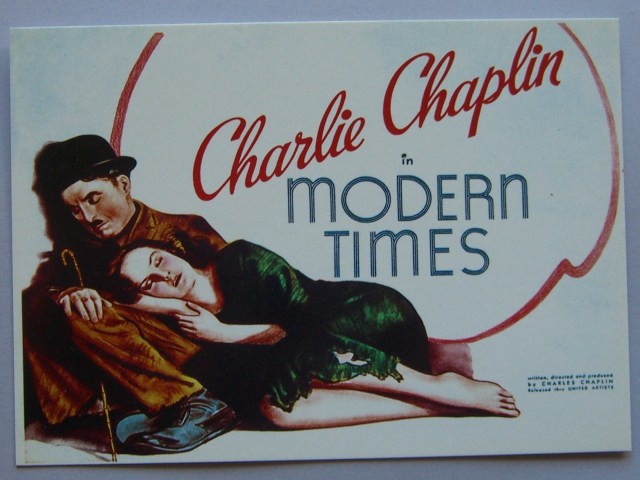
modern-timesI often return to the recurring theme in my life, and I still work at it and do all I can to “reality-check” it. This theme is one of the relationship between the human person (me or anyone else) with the world we live in. It is no new issue, and the drama has played out throughout history. There has always been the status quo of the majority in society and the minority, the person who is variously a freedom fighter, a terrorist, a criminal or who simply opts out. We all live this tension in different ways and surround our quandary with various philosophical theories or ideologies.

I have written before on the subject of Christian anarchism in Another Nibble at Christian Anarchism and the earlier article Christian Anarchism. Much of the Gospel concerns this tension of the child of freedom under the New Testament against the slave of the Old Law. Christ’s message has often been compared with ancient Greek cynicism.

For the Cynics, the purpose of life was to live in virtue, in agreement with nature. As reasoning creatures, people could gain happiness by rigorous training and by living in a way which was natural for humans, rejecting all conventional desires for wealth, power, sex, and fame. Instead, they were to lead a simple life free from all possessions.

I think this is the essential of Christianity, at least at a moral level, as emulated by the medieval Franciscan movement. Of course, there is also the sacrificial and sacramental aspect of the Christ-Mystery which is perpetuated by the apostolic Church, more or less faithful to what seems to be an originally Cynical ideal. This ideal, present wherever individual persons are confronted with any anonymous and inhuman system, pervades our society as at other times when humanity was threatened by totalitarianism of any kind from British Imperialism, French Imperialism, anyone else’s Imperialism, Fascism, Communism, Capitalism or Socialism. The present totalitarianism, capitalism, seems about to go the way of Caesar’s Empire or Herman Goering – but a lot of people will suffer until they can learn to adapt to a new paradigm.

I was reading a sailing blog this morning, one in French (here if you’re interested) and it hit home for me in many ways. Sailing for reasons other than transport, warfare and fishing, was once called the sport of kings. A boat or a ship (a vessel capable of carrying a tender or other landing craft) is a large and expensive piece of equipment, and the violent action of the weather and the sea often cause the owner to carry out expensive repairs. That is an inescapable reality, no different from houses, cars, computers or washing machines. Some things in our lives are purely useful and utilitarian, and others make our life more pleasant.

The writer of this French blog seems to have a chip on his shoulder about the boat being a status symbol of its owner, with a whole issue of urban snobbery. The same goes for expensive cars and sports utility vehicles, especially when much less would do to transport people and goods by road. Ultimately, we are all free to spend our money as we want and assume our commitments in terms of paying back the debt of however much the thing cost and what’s needed to maintain it in optimum working order. I often see these big expensive cars in towns and big expensive boats in ports – and don’t envy those who have to pay for them. In the world of yachts, as in any single-interest group, you have people like in the gentlemen’s clubs in London who want the privilege and not have to share it. On the other hand, you have others who do want to share an inestimable gift with others and create a kind of parallel society. This you will find in all walks of life, from the yacht club to the Church, from the local pub to anything else.

Our friend of the French blog describes the life of the sea as perfectly suited to the spirit of the anarchist. Yes, the sea is a space of freedom by its covering more surface area of this planet than land and its hostility to human life. Thus, the sea can only be inhabited by humans by means of seagoing vessels, and only for short periods of time – from a few hours in an open boat to a few months in an ocean-going ship. During the time we are at sea, we leave everything behind – political power, markets, money, authority, the so-called “Pit” of modern life. This is the thing that enamoured me to the enigmatic figure of Captain Nemo in the world of Jules Verne – Jules Verne and the Sea. The problem with Captain Nemo is when his idealism became violence and destruction when it came to sinking the ships of the authorities he hated. We don’t get anywhere by hatred and revenge, and the Christian Gospel gives us the way. But, this embittered man also represented an ideal that captured my boy’s mind at the age of about 12. I have only changed in the details, not the foundation.

The chance to put to sea on my own terms is a little taste of that aspiration of the soul. I am limited only by the fact that my boat is only a ten-footer and can be safe in a force 4 wind and not to much in the way of waves. There is the limit – I am a coast-hugger and limited to staying very close to land. On the other hand, there is even more “freedom” of “being near the shore but not of it” to misquote the Christian’s usual attitude about the “world” in the Joannine meaning of the word.

The personality of Captain Nemo, apart from the ship-sinking hatred that drives him, is in a way prophetic. There is a strong protest against the use of technology for warfare and killing or enslaving. He is almost a kind of Robin Hood figure robbing the rich to feed the poor, voicing the protest of the outlaw against the forces of money and corrupting power. It is almost a Jungian archetype, technology used to combat the abuse of technology by the powerful majority. But in the end, there is the aspect that mars – Nemo is little more than a pirate. Piracy nowadays is a very sordid business of horrible men in powerful motorboats attacking cargo ships off the east coast of Africa and making those waters inaccessible to the circumnavigating yachtsman. Piracy was probably just the same in the past, except that it has been romanticised by films and books from about the nineteenth century. The real issue here is the our freedom is limited by that of other people. Otherwise we would become anti-socials and criminals. That is always where anarchism has become unstuck, as soon as someone commits a terrorist act like planting a bomb and killing innocent people.

There is another category of marine anarchists – tramps, like the ill-clad man in the street of a city asking you for the money you earned through your honest work. Already, it is an improvement when this man asks for money instead of attacking you to steal it. It is even more of an improvement when the tramp (who is no longer a beggar) finds a way to earn what he needs, bartering for necessities through offering services. I met a man in my chandler’s shop who was preparing a circumnavigation in a large Westerly yacht. I asked him how one finances such an adventure. You save up what you need as a reserve and you do “little jobs” wherever you go: language teaching, repair work to cars and machines, whatever you can do. You don’t expect much in return, just food and a little “top-up” money. It takes about three years to sail around the world, so this is something you need to think about. You don’t need money at sea, but you do need food and warmth.

One of my favourite historical characters, since Nemo had to be discredited in my mind for his violence and bitterness, is Joshua Slocum. He suffered bankruptcy and being widowed. His life meant nothing other than the call of the sea. His book is wonderful and refreshing in its down-to-earth way, and the absence of bitterness or hatred against what he had left behind. Life becomes motivated by a whole different set of priorities and values, until one is lost at sea or returns to land as an enlightened prophet or wise man. Such was also the way of the contemplatives in the desert!

The rest of this blog’s thought is more specially of interest to sailors, where we learned to sail, whether it is a status symbol of a way of finding ourselves before God, whether the only thing that matters is competition and evermore expensive racing vessels or the joy of being afloat and discovering something. In all walks of life, we shy away from the values of power, competition and money to restore the human person and the spirit. Ideology can enter any walk of life, from the traditional Latin liturgy to having the best nec plus ultra boat that money can buy.

The present financial and political crisis in the USA brings me to consider the various answers people have attempted in order to define the person’s relationship with “The Pit“, this term being defined as the world outside someone’s (cf. The Invisible Empire of Romantia) particular way of escaping into an ideal world. Christianity also proposes the opposite of the “world” – the Kingdom of God, parables being used by Christ to convey the inner meaning. There is the myth of the survivalist who dreads the total breakdown of society, and believes he can retreat to the forest with a gun, a bar of gold and three months’ supply of corned beef and butter beans! We might be tempted to think we could do it in a boat! At least the boat can move around, however slowly it does so…

Perhaps freedom is an illusion, but yet so is the world we live in, based on a notion of money that corresponds with neither property nor human work. As we advance in years, we ask whether anything has been worth it, whether life ever had any meaning. We fall victim to the noonday devil of acedia. I have seen this over the years with priests in parish ministries, bloggers and contemplatives. We have to fight to be free from prisons of our own making, and often that is only possible by asceticism and symbolism that means something for us.

Perhaps something will make us a little more hardy in the face of adversity, whatever form that might take, is the possibility of managing on our own, doing things ourselves what others did for us in exchange for money, being satisfied with less and more simple things. One essential point I am making is the need to remain a sign of contradiction, keeping up the tension between us and the “system”, “pit” or whatever you want to call it. In the time to come, we will do this in different ways. Going through the various ideas on the internet, there is the temptation of the bandwagon, the signgle-idea hobby horse, the “orthodoxies” of those who themselves seek advantage and gain. It is only human.

As in Catholic Christianity (as opposed to the institutional notion of “the” Church), we have to learn to be individuals and persons, always open to the “other”, be it God or those we love or with whom we keep polite relations. We have to manage on our own or in little like-minded communities. Small is beautiful. Will a general collapse of debt-based illusory economies enable us to build new and small societies and make do with what we’ll have, however difficult that would be?

Many are alarmists and make mountains of conspiracy theories. We need to be informed and learn about things, react rationally and moderately. This is something I learned whilst speculating on the current situation in the USA. It will probably be business as usual as their national debt goes up and up and up and they continue to rape the world’s resources. The zero point is either now or in a couple of years’ time. What happens over there will come over here to Europe, and some of us might be able to make a new start somehow. It will help to have been something of a rebel and a cynic in the ancient Greek meaning of that word.

Like many, I am afraid and feel highly vulnerable, and don’t know where the blows will come from. Life is so precarious. I look out of the window and see the trees swaying in the wind and the rain spattering against the panes. Yesterday, I found a brief respite in the weather to sail along the Alabaster Coast from Saint Valéry en Caux to the north cardinal buoy of Paluel, enjoying a hearty east wind and swell for surfing – and today it was a slog just to cross over the yard to the chapel to say Mass. Wise people of the east – and Christ – would tell us to count our blessings and treasure what we have without looking to have yet more. Many of us come to that point, and we will be the happier for it.

Lay not up for yourselves treasures upon earth, where moth and rust doth corrupt, and where thieves break through and steal: But lay up for yourselves treasures in heaven, where neither moth nor rust doth corrupt, and where thieves do not break through nor steal: For where your treasure is, there will your heart be also. The light of the body is the eye: if therefore thine eye be single, thy whole body shall be full of light. But if thine eye be evil, thy whole body shall be full of darkness. If therefore the light that is in thee be darkness, how great is that darkness! No man can serve two masters: for either he will hate the one, and love the other; or else he will hold to the one, and despise the other. Ye cannot serve God and mammon. Therefore I say unto you, Take no thought for your life, what ye shall eat, or what ye shall drink; nor yet for your body, what ye shall put on. Is not the life more than meat, and the body than raiment? Behold the fowls of the air: for they sow not, neither do they reap, nor gather into barns; yet your heavenly Father feedeth them. Are ye not much better than they? Which of you by taking thought can add one cubit unto his stature? And why take ye thought for raiment? Consider the lilies of the field, how they grow; they toil not, neither do they spin: And yet I say unto you, That even Solomon in all his glory was not arrayed like one of these. Wherefore, if God so clothe the grass of the field, which to day is, and to morrow is cast into the oven, shall he not much more clothe you, O ye of little faith? Therefore take no thought, saying, What shall we eat? or, What shall we drink? or, Wherewithal shall we be clothed? (For after all these things do the Gentiles seek:) for your heavenly Father knoweth that ye have need of all these things. But seek ye first the kingdom of God, and his righteousness; and all these things shall be added unto you. Take therefore no thought for the morrow: for the morrow shall take thought for the things of itself. Sufficient unto the day is the evil thereof.

Posted in Uncategorized | Tagged , , , , , , , , | 1 Comment

Mysticism and Asceticism

There is an extremely interesting article from the Latin Mass Society Chairman Joseph Shaw in his blog – Mystical not ascetic: a response to Pope Francis, Part 5. This is the last part of a series of articles on Pope Francis. As I have mentioned elsewhere, I am of the conviction that we don’t need the Pope to be Catholics, and that we are Catholics in various Churches that are not in communion with Rome. Of course that subject is open to debate, but I do not flinch from such a position.

What is of interest to me is that what seems to be entering the picture is a third way, one that is neither liberal nor conservative. He begins with the distinction in Pope Francis’ mind between mysticism and asceticism – “Ignatius is a mystic, not an ascetic”. Mysticism is openness to the influence of the supernatural, of the Holy Spirit, and asceticism in his mind is close to legalism and being closed in on oneself. He is very insistent on criticising the kind of Christian who wants to turn back the clock, go by rigid rules and want everything clear and safe. Being attached to Tradition transcends looking to authority and discipline for doctrinal security. Tradition is the wholeness of the Church and the Christian experience in the whole of history, and not merely the period when the Church seemed to offer the most security and certitude.

This distinction may seem to be a little tortured, but it reflects some of my own thought over the years, and also that of some so-called “modernists” from the beginning of the twentieth century, Tyrrell in particular. That is a notion of being attached to traditional forms of liturgy and spirituality without being of a legalist or authoritarian attitude. We come to the idea that such “traditionalism” is not a part of the “liberal” and “conservative” dialectic. Many traditionalists are not “extreme conservatives” but rather of another category altogether. The points on which “traditionalists” differ from the “conservatives” are exactly legal positivism and Ultramontanism. Incredible! That this should come from a Roman Catholic’s pen!

Being a traditionalist in this perspective is being critical of these conservative tenets. We find Pope Francis showing opposition to canonical positivism and the centralisation of the Church with its logical consequence in Ultramontanism. One capital principle of canon law is salus animarum seprema lex – laws are overridden by the spiritual principles of Christianity. The moral obligation to obey laws is overturned when their literal observance would go against the whole purpose of ecclesiastical law. Laws have to promote the common good, and it is not legitimate to use law as a tool for gaining personal power – for example. Looking through the layers, I see Pope Francis calling upon the principle of subsidiarity – decisions being made at the lowest levels possible: leaving to diocesan bishops what diocesan bishops find within their competence, and the same with parish vicars and vestry councils. In that way, we don’t need to hear doctrines and moral teachings repeated ad nauseum by the Pope so that they may be that much “more true” for us. Still, many things said by Pope Francis seem to be incoherent, far from “infallible” and often confusing. It is not my duty to defend him at all costs – though there is a very appealing “core”.

Traditionalists like Dr Geoffrey Hull have influenced my own thinking in that they are critical of centralism and absolute Papal authority. In this, they differ from conservatives. A highly apposite point is that traditionalists appeal to the principle of preserving and fostering local liturgical rites and uses. Conservatives see liturgical pluralism as a source of problems and a lack of unity in the Church, above all a lack of lock-step discipline. Traditionalists are more likely to disobey through the use of their conscience. Do not we Anglicans see our own faces in this particular mirror?

One thing I do notice about this Pope is that his positions are not typical of the old liberalism of the 1970’s or the Anglican Establishment. I try to see through the tacky vestments and externals that seem to have taken the post-Benedict XVI Church back to the 1970’s. His doctrine of the priesthood is completely traditional. The liberal sees secularism as the yardstick to which religious practice should be conformed for the purpose of fostering political issues or “going beyond” Christ. We should be open to the world – but not of the world. Liberals love bureaucracy, committees and meetings. The Jesuit Pope sees the priest called to the front lines of his ministry and the sacrificial dimension. One thing by which we will be able to judge the Pope in the coming years will be how he deals with bureaucracies and all the stuff that makes the Church inaccessible to ordinary folk.

These considerations will not classify the Pope as a “traditionalist” and certainly not a “traditionalist” who is really a “super conservative”. Anyone’s words can be twisted around to mean anything. This is why I am not interested in “Pope-sifting”. We have to try to understand the underlying philosophy and get beyond the “buzz” phrases and the trappings.

We need to explain that Traditional Catholics are not hyper-conservatives with all the baggage of Ultramontanism and legalism…

It’s an interesting thought, but many of the RC traditionalists I came across were “super conservatives” and “true church” fanatics. But not all by a long chalk. All we can really understand from Pope Francis is his criticism of both conservatives and liberals. Does he recognise a “third way” transcending Tweedledum and Tweedledee? Only time will tell.

In regard to the use of the old Latin liturgy, the Pope seems concerned that it should become a kind of “ideological banner”. On the other hand, he has wonderful things to say about the Orthodox Liturgy and everything we attribute to our own traditional rites and uses. As mentioned in an earlier article, much will be discovered by the Pope’s choice of someone to head the liturgical department of the Vatican.

The traditionalist world is extremely diverse, with Jansenistic (“Augustinian” puritanism) undercurrents together with other theories more or less detached from reality or common sense. We continuing Anglicans, especially Anglo-Catholics, have much in common with the eminently liturgical motivation of our dissidence from the “mainstream”. Problems arrive when there are obsessions, single-issues and hobby horses, rather than an honest attempt to see the big picture. We have analogical problems in our circles.

I suppose, as this series of articles was written by a Roman Catholic, it is an appeal for “traddies” to get their act together and get rid of the cranky “stuff”. It would be a start. One lesson can be learned from the American experience of Prohibition in the 1930’s. Ban alcohol, and human nature will bring people to want to drink it increasingly. Ban the old Mass – and it is a most unpastoral thing to do. Prohibiting the old liturgy brings people to revolt and come up with self-justifying theories. If people could just get on with life, there would be no controversy, and the Church would be one in peace. We still have alcoholism and drunkenness in countries where people can drink freely, but perhaps less so than under Prohibition. I think the comparison is valid.

Wherever we are, in the RC Church, some dissident traditionalist community, or among us continuing Anglicans on the “other side of the fence”, the priority is not our self-justification but our Christian commitment and to the living and incarnate Christ through the Sacrament, the liturgy and beauty. Once we just get on with life, the world might become that little bit more peaceful – and nearer to God.

* * *

Update: see Alms and Liturgy. How Francis Wants Them by Sandro Magister. For all the good words we read, we cannot count on this Pope for the liturgy. Thank goodness we Anglicans don’t have to!

Posted in Uncategorized | Tagged , , , , , | 8 Comments