I am one of relatively few who has swum the Tiber both ways, return journey. I left the Church of England and returned to Anglicanism via the Continuum. I experienced the traditionalist world at first hand. I knew the most toxic and fanatical elements, and I have also known gentle and beautiful souls who sought sanctity and the beauty of holiness.
I was also able to discover my own difficulties in relating, because my experience was analogous in the community as in marriage. I have (Aspergers) autism which essentially means that I cannot deal with the cut and thrust of hypocritical and insincere people negotiating for power, money and sexual domination. I live on “another planet”, and found refuge in a Church where I was not expected to take extreme political positions or adopt the “one true church” ideology.
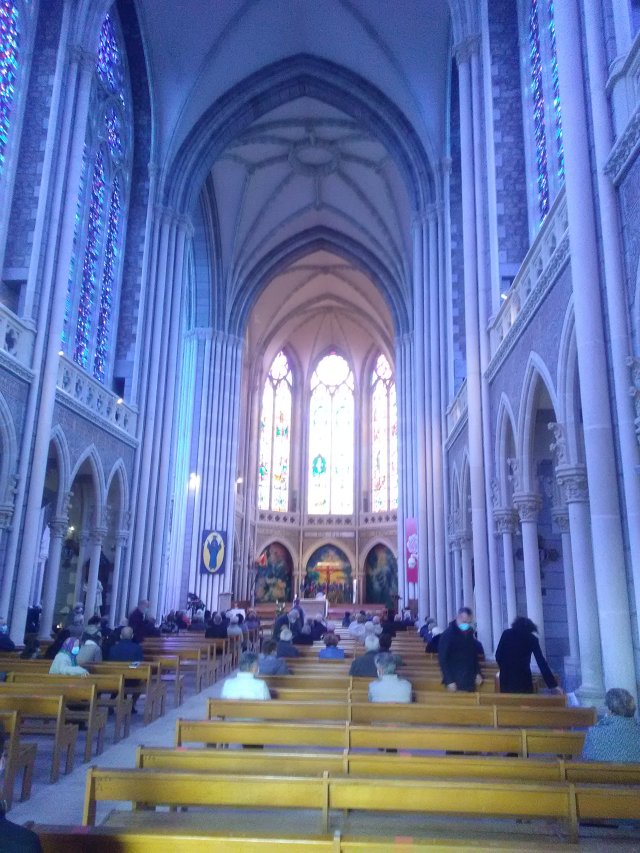
Pope Francis has decided (the writing was on the wall for a good while) to line up his sights on the traditionalists, defining them by their liturgical use. It is ironic, since many traditionalists used their liturgical rite and other symbols (like the cassock) to promote extreme political views like the intégrisme favoured by Pope Pius X at the beginning of the twentieth century. I lived in the traditionalist world from 1981 when I was received by a priest of the Society of St Pius X. The following year, I went to France hoping to escape the crankiness of many I found at St Joseph and St Padarn in Holloway Road. Many would call this kind of rigorism and fanaticism a form of Jansenism (Jansenism and Jansenism Revisited). I would call it the madness of mass humanity as happened in Nazi Germany when ordinary people hung on every word of Hitler and Göbbels. Over the years, I separated from this kind of sectarian religion and learned about alternative theories and views about truth and consciousness. Eventually, I would discover Romanticism and noble souls like Thomas Mann. Many others too have taken the road of silence and attend Mass and prayers, but avoid the indoctrinating socialisation on the steps outside the church door. This silent minority is also being punished because all they want is a Christian life with the old rite but without having to adopt a clear identity other than being simply Catholic.
The motu proprio Traditiones Custodes is a clear expression of the Pope’s policy of reversing that of Benedict XVI which was to “mainstream” traditionalists and grant them a particular liturgy in the legitimate diversity of rites that those of religious orders and some dioceses like Lyons and Milan. The official text and its English translation is found here. I won’t go through it all here. Quite simply, those who want the old rite have not only to accept the mainstream status quo but also to identify with a self-defined traditionalist community. This is the crunch point of belonging to an ecclesial institution and not being able to accept things like the new rite, the ordination of women (in the Church of England). It is an agonising choice. We choose marginalisation or leaving institutional Christianity altogether.
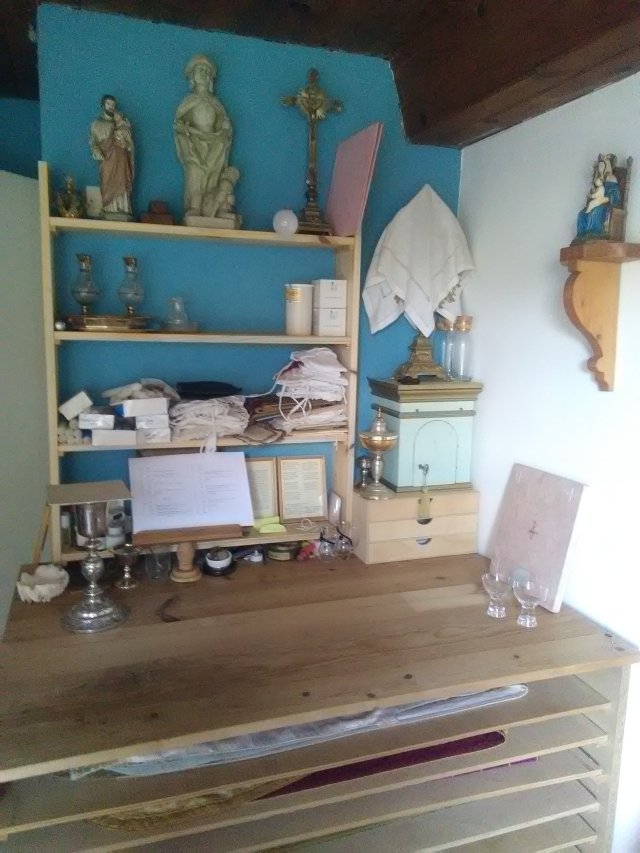
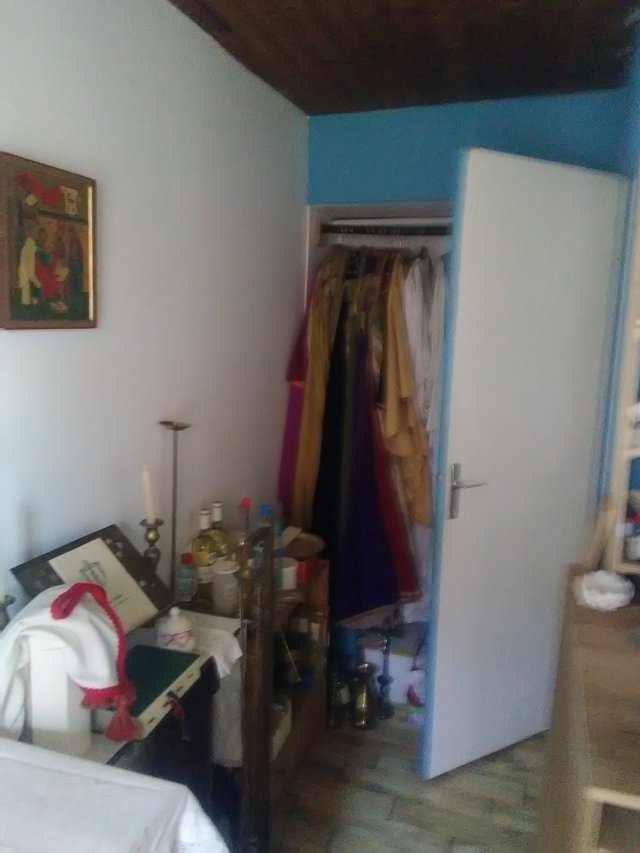
Personally, I returned to Anglicanism to find an ecclesial spirit that was generally much less fanatical, though upholding traditional rites in archaic English. Being mostly alone as a priest, I was allowed at an unofficial level to adopt the Use of Sarum, which I continue to use. I probably belong to that category of people called geeks or enthusiasts for anything that is out of the ordinary. I have many friends who as laymen collect church plate and vestments, making them available for the priests they support. Some of my friends became Orthodox, even if it meant embracing the Byzantine Liturgy and a whole different Christian culture. It was the only way they could remain coherent.
Pope Francis is a Jesuit, the very force that promoted ultra-papalism in the nineteenth century around Vatican I and the pontificate of Pius IX. It is all about obedience, blind obedience, Der Führerprinzip which Hitler “borrowed” from the Church. It is all about authority. Benedict XVI has a different attitude as a German, placing Tradition and custom above authority. Authority has to be accountable, something we are reading about all the time in the political world of prime ministers and presidents of republics. The ultra-papalist Pope is accountable to no one, and that is the very weakness of a system that has destroyed its own credibility.
In a piece of his writing, a friend of mine has pointed out that, like in current British politics, the blame has to be put on an enemy, the “rigid” traditionalists. They are the ones to blame, not the pedophile clergy or the money embezzlers. This is not entirely just, because, at least in theory, sex-abusers and crooks are severely sanctioned in Rome. Unfortunately, the bias seems to be in favour of liberals who are far from liberal or concerned with other people’s freedom. Like in society in general, Catholics are becoming polarised in the extreme positions and “cancel” each other. This new motu proprio comes over more as a punishment than a real pastoral attempt to win the unity of the faithful in Christ.
The impression I have is the story of Charlie Chaplin’s Dictator, in which the Jewish community in Tomania is tolerated for as long as Hynkel is negotiating for a loan with the Jewish banker to finance the invasion of Osterlich. The loan is refused and Hynkel declares his persecution of the Jews with the repeated word “Straff, straff!” (German word for punishment).
Don’t misunderstand me. I am not accusing the Pope of being like the Nazis, but there are profound human characteristics in common which make comparisons possible.
For many years, I have thought that the Roman Catholic institution (like the Church of England) need to go to the end of their self-destructive logic and face the consequences. I share many ideas with Rod Dreher in terms of seeking to live a Christian and priestly life differently. Personally, I am not persecuted, but I am already in the catacombs. I have come to terms with certain realities. I am canonically irregular for Rome and I would not be acceptable to the traditionalists because I am not of the right Apostolic succession or I am unorthodox. I am elsewhere, and I legitimately function as a priest because I am under episcopal jurisdiction.
I won’t go calling Pope Francis names or saying that he is some kind of anti-Christ. That kind of talk is sterile and hateful, and not based on real evidence. We can be prophetic and apocalyptic, as nihilistic as we want. But that will bring no good. I sense and observe many of the things Dostoyevsky found in late nineteenth-century Russia: madness, nihilism, negativity. This is what brought me to Russian philosophers and the inspiration they found in German Romanticism. There is another side to humanity from this ugliness.
I am realistic to come to terms with the fact that this century may well resemble the past one, not with the same symbols and caricatures, but with the same ideologies deep down. Those who will not learn from history are condemned to repeat it. The victory has already been won by Christ. Our tiny little communities, identifying with Roman Catholicism or Anglo-Catholicism (or Old Roman Catholicism for that matter) may go the way of all mortal flesh, but we will have tried. I and many others are not concerned for ecclesial respectability or status. We have been down the road of contradiction for so long already.
Our duty now (at least mine) is to know what liturgy really means to us. We need to go to the heart of everything and not remain at the superficial level of appearance or worldly politics. It is not unlike my own campaign to revive the Use of Sarum, a new Romantic medievalism and a way out of the present dualism of extremes. In worldly terms, it is hopeless, and we will have died before anything moves. Our vocation is to sow seeds without any hope of reaping a harvest. That harvest will be for others.
I leave this subject with the words of the repentant Cardinal Altamirano in the film The Mission:
Your Holiness, the little matter that brought me here to the furthest edge of your light on Earth is now settled. The Indians are once more free to be enslaved by the Spanish and Portuguese settlers. I don’t think that’s hitting the right note. Begin again… Your Holiness, I write to you in this year of Our Lord 1758 from the southern continent of the Americas, from the town of Asunción, in the Province of La Plata, two weeks march from the great mission of San Miguel. These missions have provided a refuge for the Indians against the worst depredations of the settlers and have earned much resentment because of it. The noble souls of these Indians incline towards music. Indeed, many a violin played in the academies of Rome itself has been made by their nimble and gifted hands. It was from these missions the Jesuit fathers carried the word of God to the high and undiscovered plateau to those Indians still existing in their natural state and received in return, martyrdom.
These final words resound in my mind, remembering that the Church was in the pockets of those anti-religious rulers like the King of Portugal. I have in my own time known priests who died from broken hearts. Cardinal Altamirano utters the words of his own salvation or damnation:
So, your Holiness, now your priests are dead, and I am left alive. But in truth it is I who am dead, and they who live. For as always, your Holiness, the spirit of the dead will survive in the memory of the living.