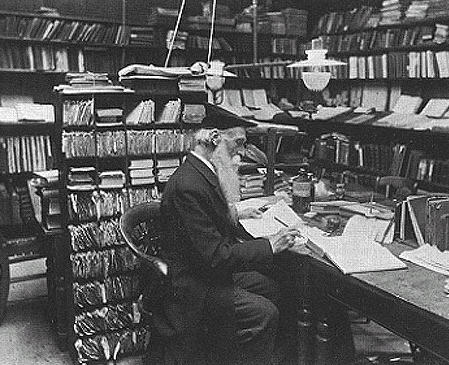
Sarum Low Mass, how to celebrate it

It is following the enquiry of a priest that I give more details of how I celebrate Low Mass according to the Use of Sarum. The rubrics are generally clear and easy to follow, but there are some points where it is difficult to know what to do. In those cases, I have followed what the Dominican Rite does. A popular misconception of the Use of Sarum is that it is extremely complex, which is to some extent true for the full High Mass with rulers and the whole crew. Low Mass is actually simpler than the “extraordinary” Roman rite and very similar to the austere Dominican rite.

For comparison, after having studied this article, see this Dominican Rite Online Tutorial. There are videos that show you how to do it, and some of my explanations will come to life in comparison with the Dominican Rite. I do not have the equipment to make a digital video of a Sarum Mass and follow the methodology of the Dominican tutorial, but I have the idea in the case of someone being prepared to lend me a digital video camera.

I diverge in two minor details from Sarum practice as it seems to have been in the early sixteenth century. I use the purificator as in the Roman rite instead of laying the chalice on its side on the paten after the Ablutions, and I use a modern pall instead of a folded corporal to cover the chalice.

In this explanation, I give the text of the Mass in English (it isn’t the best translation I have), and I assume knowledge and practical experience of the celebration of the pre-1963 Roman rite. Please send comments, especially if you find I am wrong and need correction.

* * *

Put on the vestments whilst saying the Veni Creator or Creator Spirit, come. etc. After putting on the vestments, and whilst still in the sacristy, say:

V. Send forth thy Spirit.  R. And thou wilt renew the face of the earth.  Let us pray.

Almighty God, unto whom all hearts be open, all desires known, and from whom no secrets are hid: cleanse the thoughts of our hearts by the inspiration of thy Holy Spirit, that we may perfectly love thee, and worthily praise thee. Through Christ our Lord. R. Amen.

Say the antiphon I will go to the altar and the psalm  Judge me, O God. etc. on the way to the altar, or standing outside the sanctuary of the church. Then repeat  the antiphon. I will go to the altar of God, to God who makes glad my youth.

Then go up to the altar, spread the corporal put the chalice to the left, unveil, take off the host on the paten, put the purificator to the right side of the corporal. Have the servant bring the wine and water cruets, and say the following whilst blessing the water and before pouring it into the chalice with wine.

From this be blessing + for from his side came forth blood and water. In the name of the Father, and of the Son, and of the Holy Ghost.

Re-veil the chalice leaving the purificator on the altar. Give a nod to the altar cross, go down to the foot of the altar, make a profound bow and say:

Lord, have mercy. Christ, have mercy. Lord, have mercy.

Pater Noster up to … who trespass against us. , Ave Maria.

[I’m not sure when the interpolation of the Ave Maria originated. Many of the pre-Reformation liturgies “farced”, put bits of text into the Kyrie, the Gloria and even the Sanctus and Benedictus on feasts of Our Lady. I interpret it like this – a “farced” Pater noster. Of course, the Ave Maria is without the second section Sancta Maria Mater Dei, ora… The Et ne nos inducas is not said twice. That’s how I do it. On the other hand, the Ave Maria can be omitted to allow the Pater noster to be said straight.]

Then say in a moderate voice:

V. And lead us not into temptation. R. But deliver us from evil.

V. Confess ye to the Lord, for he is good. R. Because his mercy is for ever.

Bowing:

I confess to God, to blessed Mary, to all the saints and to you: because I have sinned too much by thought, word, and deed by my fault: I pray, holy Mary, all the saints of God, and you to pray for me.

R. The Almighty God have mercy upon you, and pardon all your sins, deliver you from all evil, preserve and confirm you in good, and lead you to everlasting life. Priest. Amen.

R. I confess, &c.,

V. The Almighty God have mercy upon you, and pardon all your sins, deliver you from all evil, preserve and confirm you in good, and lead you to everlasting life. R. Amen.

V. Absolution and remission of all your sins, space for true repentance, amendment of life, grace, and the consolation of the Holy Spirit, the Almighty and merciful God grant to you. R. Amen.

V. with the sign of the cross Our help is in the name of the Lord. R. Who made heaven and earth.

V. bowing your head Blessed be the name of the Lord. R. From this time, now, and for ever.

Let us pray.

Go up to the altar and kiss it during the following prayer:

Take away from us, O Lord, all our iniquities, that we may be worthy to enter into the holy of holies with pure minds. Through Christ our Lord.

Whilst still at the centre of the altar, make the sign of the cross whilst saying:

In the name of the Father, and of the Son, and of the Holy Ghost. Amen.

Go to the missal  on the Epistle corner of the altar and say the Office (introit). Then say the Kyrie eleison in the same place (as at Roman High Mass). If the Gloria is sung, go to the centre of the altar to intone it, and then go back to the missal to say the rest. Nod your head as in the Roman rite and make the sign of the cross at the end.

Glory be to God on high. And in earth peace, good will towards men. We praise thee. We bless thee. We worship thee. We glorify thee. We give thanks to thee for thy great glory. O Lord God, heavenly King, God the Father Almighty. O Lord, the only-begotten Son Jesu Christ; O Lord God, Lamb of God, Son of the Father, that takest away the sins of the world, have mercy upon us. Thou that takest away the sins of the world, receive our prayer. Thou that sittest at the right hand of God the Father, have mercy upon us. For thou only art holy, thou only art the Lord. Thou only, O Jesu Christ, with the Holy Ghost, art most high in the glory of God the Father. Amen.

Turn to the people but without kissing the altar or moving from the Epistle corner. Turn by your left.

The Lord be with you. R.   And with thy spirit.

Say the Collects, Epistle, Gradual and Alleluia or Tract and the Sequence as in the Roman rite.

The prayer for the Gospel is (make the sign of the cross):

The Lord be in thy heart and in thy mouth to read the holy Gospel of God. In the name of the Father, and of the Son, and of the Holy Ghost. Amen.

Say the Gospel as in the Roman rite, but there is nothing to say at the end and no response. Bend down to kiss the book as it rests on the missal stand.

The Creed, when said, is as in the Roman rite. Keep bowing until On the third day…

I believe in one God, the Father almighty, Maker of heaven and earth, And of all things visible and invisible. And in one Lord Jesus Christ, the only-be­gotten Son of God. Begotten of his Father before all worlds. God of God, Light of Light, Very God of Very God. Begotten, not made, Being of one substance with the Father: By whom all things were made. Who for us men, and for our salvation, came down from heaven. {Here genuflect) And was incarnate by the Holy Ghost of the Virgin Mary: And was made man. And was crucified also for us: under Pontius Pilate, he suffered and was buried. And the third day he rose again according to the Scriptures. And ascended into heaven : And sitteth on the right hand of the Father. And he shall come again with glory to judge both the quick and the dead : Whose kingdom shall have no end. And I believe in the Holy Ghost the Lord, and giver of Life : Who proceedeth from the Father and the Son. Who with the Father and the Son together is worshipped and glorified: Who spake by the Prophets. And I believe one Holy Catholick and Apostolick Church. I acknowledge one Baptism for the remission of sins. And I look for the Resurrection of the dead. And the life of the world to come. Amen.

The altar is not kissed at the Dominus vobiscum, but make a nod to the cross and turn by your right. The Lord be with you &c. Turn back the same way and unveil the chalice. Lift off the pall but leave the paten with the host on the chalice, and lift chalice and paten to breast level, and say:

Receive, O Holy Trinity, this oblation, which I, an unworthy sinner, offer in honour of thee, of the blessed Virgin and all the saints, for my sins and offences, and for the salvation of the living, and the rest of all the faithful dead. In the name of the Father, and the Son, and the Holy Spirit. Let this new sacrifice be acceptable to the omnipotent God.

Make the sign of the cross over the corporal with the chalice and then place it in its usual place. Lift off the paten, put the host in its place on the corporal, and slide half of the paten under the right side of the corporal, the right half over the purificator.

Go to the right side of the altar, and wash your hands, saying:

Cleanse me, O Lord, from all iniquity of my body and soul, that clean I may be able to fulfil the holy work of the Lord.

Standing before the altar with inclined head and body, with joined hands, and say:

With a humble spirit and con­trite souls, let us now enter thy presence, O Lord : and so offer our sacrifice to thee, that it may this day be precious in thy sight, O Lord our God.

Kiss the altar, stand upright and bless the oblata, saying: In the name of the Father, the Son, and Holy Spirit. Then turn to the people, and with a loud voice say:

Pray, brothers and sisters, that my sacrifice and likewise yours may be acceptable to our Lord God. R. May the grace of the Holy Spirit illuminate thy heart and thy lips, and the Lord accept worthily this sacrifice of praise from thy hands for our sins and offences.

Then say the secrets. Unlike in the Roman rite, say Let us pray. The preface is said as in the Roman rite.

The Canon is said as in the Roman rite with the following differences:

You don’t extend your hands over the oblata at the Hanc igitur, but you keep your hands extended. If you know this prayer by heart, say it whilst looking at the host. Otherwise, take a glance at the host when beginning the prayer.

I have “tweaked” things a little at the consecration, namely I make a profound bow or a genuflection before and after the consecration of the host and the chalice like in the Roman rite. Idem for the elevations.

After the consecration, during the Unde et memores, stretch your arms out in the form of a cross until offer unto thy excellent Majesty, &c. For the Supplices te rogamus, cross your arms instead of placing your hands on the altar.

The Per ipsum is quite different: uncover the chalice and make a profound bow or genuflection, make a big sign of the cross with the host over the chalice, a small cross within the lip of the chalice, a third small cross further down, fourth cross tibi Deo omnipotenti like the first cross, and the fifth cross in front of the chalice. Then do not elevate host and chalice, but place the host on the corporal and make a profound bow at omnis honor et gloria. Cover the chalice and make a profound bow or genuflection.

After saying the Lord’s Prayer as in the Roman rite, the next difference is during the Libera nos.

Deliver us, we beseech thee, O Lord, from all evils, past, present, and future: and by the intercession of the blessed and glorious ever Virgin Mary, mother of God, and of thy holy Apostles Peter, and Paul, and Andrew, and all saints.

Kiss the paten, place it to your left eye, then to the right. Afterwards make the cross with the paten above your head, and then slide it under the host while saying the following part of the prayer:

Graciously grant peace in our days: that assisted with the help of thy mercy, we may be always free from sin, and secure from all disturbance.

Uncover the chalice, make a profound bow or genuflection and break the host into three parts, but do not put the left part back on the paten. Put it in front of the right part a little diagonally so that a part of the right half shows. Holding both halves in your left hand, break off the third part with your right hand. Doing this, say:

Through the same our Lord Jesus Christ thy Son; (the second breaking:,) Who liveth and reigneth with thee in the unity of the holy Spirit, God.

Hold the two halves in the left hand, and the third piece in your right hand over the top of the chalice, and say with a clear voice: World without end. Amen.

Make three crosses within the chalice with the third part of the host, saying: The peace of the Lord be always with you. R. And with thy spirit. Do not drop the third part into the chalice at this point. Say the Agnus Dei.

Then sign with the cross and drop the third part of the host into the chalice, saying:

Be this holy commixture of the body and blood of our Lord Jesus Christ to me and to all receiving it, salvation of mind and body; and a salutary preparation for the meriting and embracing of eternal life. Through the same Christ our Lord. Amen.

Then place the two halves of the host on the paten, bow and say:

O Lord, holy Father, Almighty and eternal, grant to me that I may so worthily receive this holy body and blood of thy Son our Lord Jesus Christ, that I may merit to receive through this the remission of all my sins, and to be filled with thy Holy Spirit, and to have thy peace. Because thou art God alone, and there is none other beside thee, whose glorious kingdom shall remain for ever. Amen.

Kiss the corporal on the right side, and the top of the chalice. Cover the chalice, make a profound bow or genuflection and say the prayers before Communion, holding the host in both hands over the paten:

O God the Father, the Fountain and Origin of all goodness, thou, who, moved by compassion for us, didst will thine only begotten Son to descend to the low places of the world, and to take our flesh, whom I unworthy hold here in my hands:

Bow to the host, saying:

I adore thee, I glorify thee, I praise thee, with the complete intention of the heart: and pray that thou mayest not forsake thy servants, but pardon our sins: that with pure heart and chaste body we may deserve to serve thee: who art alone the living God, and the true. Through the same Christ our Lord. Amen.

O Lord Jesus Christ, Son of the living God, who, according to the will of the Father, the Holy Ghost cooperating, through thy death, hast given life to the world, deliver me, I beseech thee, by this most holy body and this thy blood from all my iniquities, and from all evils: and make me so always to obey all thy commandments, and never permit me to be separated from thee for ever. Who livest and reignest God, with God the Father, and the same holy Spirit: through all eternity. Amen.

Let not the sacrament of thy body and blood, O Lord Jesus, which, although unworthy, I presume to receive, be to me for judgment and condemnation, but may it avail, through thy mercy, for the salvation of my body and soul. Amen.

Make a profound bow or genuflection and then say: Hail eternally, O most holy flesh of Christ: to me before all things, and above all things, the greatest sweetness. The body of our Lord Jesus Christ be to the a sinner, the way and the life. in the name of the Father, and of’ the Son, anti of the Holy Ghost.

Receive the body, first having made the sign of the cross with the body itself before your mouth. After having made a profound bow or genuflection, scrape up any crumbs of the host from the corporal with the paten. Then say to the blood, with great devotion:

Hail for eternity, celestial beverage, to me before all things, and above all things, the greatest sweetness. The body and blood of our Lord Jesus Christ be to me, a sinner, a never-failing remedy to eternal life. Amen. In the name of the Father, &c.

Receive the blood, bow and say with devotion the following prayer:

I render thanks to thee, O Lord, holy Father, almighty eternal God: who hast refreshed me from the most sacred body and blood of thy Son our Lord Jesus Christ: And I beseech that this sacrament of our salvation, which, unworthy sinner as I am, I have received, may not come to me to judgement nor to condemnation for my deserts, but to the perfecting of body and soul to eternal life. Amen.

Do the Ablutions as in the Roman rite, except that you wash your thumbs and fingers with wine and water saying: Let this communion. O Lord, purge us from crime and make us to be partakers of the heavenly remedy.

Dry the chalice with the purificator and then put the purificator on the chalice followed by the paten, the pall and the chalice veil.

Then say:

Let us adore the sign of the cross, by which we have received the sacrament of salvation.

Move the missal back to the Epistle corner. Wash your hands as during the offertory but saying nothing. Return to the right side of the altar and say the communion verse. Turn to the people, staying at the Epistle corner and say:

The Lord be with you. R. And with thy spirit. Let us pray.

Then say the post-communion(s), and again turn to the people, and say:

The Lord be with you. R. And with thy spirit.

If the Gloria is said, say Ite Missa est. Turn by your right back to the altar and go to the middle. If the Gloria is not said, turn by your right back to the altar and go to the middle and say Benedicamus Domino.

R. Deo gratias. The Mass of the Dead has its own formula.

After this, kiss the altar, bow and say the Placeat:

Let this performance of my homage be pleasing to thee, O holy Trinity, and grant that the sacrifice which I unworthy have presented before the eyes of thy Majesty, may be acceptable to thee, and a propitiation through thy mercy to me, and to all of those for whom I have offered it. Who livest and reignest God, for ever and ever. Amen.

Then stand upright, make the sign of the cross and say:

In the name of the Father, &c.

Go to the foot of the altar, make a profound bow and say the Prologue of St John: In the beginning [John 1:1-14] on the way back to the sacristy and in the sacristy before taking off your vestments.

Posted in Uncategorized | Tagged , | 9 Comments

Local French Rites

This is a reposting and slight amendment of an article on the English Catholic, but which now has pride of place on a blog with the theme of local liturgies and “Northern Catholicism”.

The Use of Sarum is largely based on the importing into England of the usage of the Cathedral of Rouen. There was a great variation of liturgical usage in the French Church up until quite recently. These are the so-called Neo-Gallican rites, the local usages of the French dioceses.

Like the Use of Sarum, these rites are characterised by their complex ceremonies and the number of ministers officiating at High Mass. Their being maintained after the Council of Trent and the codified Roman Missal of 1570 was justified by their having being in existence at least two hundred years before that date. However, in the eighteenth century, they proliferated in quite an anarchical way, even in dioceses hitherto using the Roman rite of St Pius V. Many of these uses followed the Parisian liturgy.

When the Concordat of 1801 was forged between Pius VII and Napoleon, the Holy See granted tacit recognition of these liturgies. It was only under the influence of Dom Guéranger, the founder of Solesmes and an Ultramontanist, that many of these rites gave way to the Roman liturgy in the second half of the nineteenth century. However, some ceremonies, usages, and in some cases, complete books like the Lyons Rite, survived up to the 1960’s. At that point, the modern Roman rite flattened everything to McDonalds uniformity.

Since the various indults and the motu proprio Summorum Pontificum of Benedict XVI, the Lyons rite has been resurrected to a point. I have myself seen many survivals of Sarum-like customs in celebrations of the old Roman rite. Actually, Sarum is essentially the old medieval rite of the Archdiocese and Province of Rouen.

The Parisian rite is of particular interest. Before the fifteenth century, the Parisian Missal and Breviary were kept at the Cathedral. Those priests wanting copies could copy out the originals and keep the copies in their churches. These books were printed for the first time under the Episcopate of Louis de Beaumont (1473-1492). A revised edition was printed by Jean Le Munérat who did the Breviary in 1479 and the Missal in 1481.

En 1583, the Bishop of Paris, Pierre de Gondy, was asked to adopt the Roman Breviary as King Henry III of France had introduced into his chapel. The Chapter wanted to keep the old books of the Diocese. Corrections were made to the Breviary and the Breviarium insignis Ecclesiæ Parisiensis restitutum ac emendatum was published in 1584. The Missal was printed in 1585, one year later.

In the eighteenth century, the Archbishop of Paris, Charles de Vintimille, promulgated the Breviarium Parisiense of 1736 and the Missale Parisiense in 1738. These books had considerable influence in other dioceses, including Rouen. The Breviary became the prototype of Pius X’s reform of the Breviary in 1911.

The Order of Mass in the Parisian Missal is identical to the Tridentine order, but the propers are a mixture of medieval and revised texts. There are many more Prefaces in the Parisian Missal than in the Roman.

The colour sequence in Paris is strikingly similar to Lyons, and even to Sarum.

White: From Christmas Eve to the Presentation of Jesus in the Temple, feasts of the Virgin Mary, Saint Joseph, and non-virgin martyrs, the Nativity of St. John the Baptist, marriages, and the administration of baptism; and funerals of little children.

Red: Maundy Thursday, Pentecost, the feasts of martyrs, time after Pentecost.

Green: fests of confessor bishops, the Chair of St. Peter, the consecration of bishops.

Violet: Time of Advent and Septuagesima; feasts of holy confessors, for administering extreme unction.

Ash grey: Ash Wednesday to the day before Passion Sunday, Mass for the forgiveness of sins.

Black: In the blessing and imposition of ashes on Ash Wednesday, all offices for the dead.

Yellow: During the octave of the Epiphany, feasts of the holy angels.

Gold: Trinity Sunday and Corpus Christi Sunday, from the Presentation in the Temple to Septuagesima, Trinity to Advent. Red is used if gold is not available.

Blue: For feasts of St. Joachim and St. Anne, St. Louis King of France, abbots, monks and righteous men and women, holy women. Violet is used if blue is not available.

Brown: Passion Sunday until Vespers of Holy Saturday.
Red vestments with black orphreys (like Sarum) are used if brown is not available.

* * *

Here also is a repost about a Roman Catholic priest (former Anglican who swam the Tiber during World War II) I once knew here in Normandy, who celebrated the Roman Rite with Norman usages

* * *

From here, I found a typical photo of Fr Quintin Montgomery-Wright (1914-1996), who was parish priest of Le Chamblac near Broglie (Eure).

Note the two young boys each side of Fr Montgomery in blue dalmatics, wearing apparelled amices. I remember the presbytery gates and the presbytery just visible in the background. There are two rulers in copes and the deacon and subdeacon further towards the front of the procession. The vestments being red, it is anyone’s guess what Feast it was.

Fr Montgomery, as a priest of the Diocese of Evreux, used the ‘extraordinary’ Roman rite – but he kept what he could of the old Bayeux and Rouen usages which were so similar to Sarum.

I said this in another posting I wrote:

Fr. Montgomery was an amazing fellow. He had stacks and stacks of vestments, and did the liturgy the old Norman way, like Sarum. There were little blue dalmatics for altar boys, and I often sang as a coped Ruler at Sunday Mass at Le Chamblac. He vested on the Lady chapel altar (the church’s south transept). The Judica me psalm was said at the Lady altar and in procession. He likewise said the Prologue of St John on the way from the high altar back to the Lady chapel. At the time, I though he was just being odd, but this was the medieval and pre-Tridentine way of celebrating.

Here are a few photos:

Posted in Uncategorized | Tagged | 1 Comment

The Use of Nidaros

Fr Sean Finnegan, the English Roman Catholic priest known for having celebrated Sarum Masses in Merton College chapel in the 1990’s, has produced a posting on his blog on The Use of Nidaros. This is the pre-Reformation Norwegian use, which I am sure would be of great interest to Bishop Roald Flemestad of the Nordic Catholic Church. Fr Finnegan has transcribed the Ordinary of Mass and published it.

This Mass order is closer to the Roman Rite than the Use of Sarum, as I doubt that Norway would have sought inspiration from the customs of those who invaded England in the eleventh century. However, there are some parallels with the Use of York.

I hadn’t looked at his blog for some time, and he wrote here to enquire about ceremonial details of Sarum low mass. What a surprise when I went to look at Valle Adurni and found this. Thank you, Father.

Posted in Uncategorized | Tagged , | 2 Comments

Rome and Romanticism

With a biretta tip to the Young Fogey, I recommend this interesting reflection from someone who obviously knows something about history. I have already addressed this theme in For a New Romantic Movement and this article takes things a little further.

Of course, Romanticism has nothing to do with the contemporary use made of the word. It was a cultural movement in the nineteenth and twentieth centuries, and above all a reaction against the rationalism of the Enlightenment and all forms of progressivism and secularism. Mr Coulombe does well to begin with definitions of words, a sound methodology to situate the topic.

It is a reaction against the Enlightenment and its effects on religion, culture, economics and all areas of human life. Romantics appealed to the perceived “other-worldliness” of the middle-ages – terrana despicere et amare caelestia. Romanticism is also a quality of us northerners in our sombre moods and introspection. Enlightenment Catholicism led to the modern Roman liturgy and its ethos of doing down mystery and other-worldliness in favour of a more didactic and moral approach.

Romanticism essentially goes back to the extreme end of the eighteenth century, and its heyday was the period preceding the 1848 upheavals in much of Europe. The Middle-Ages were idealised and seen through the eyes of illusion and daydreaming, an attitude perhaps justified by considering that medieval people lived in nostalgia for lost innocence and heaven. Unlike the secular rationalist, the Romantic is a believer. Of course, there is the “inconvenient” fact that Romanticism spawned Ultramontanism and infallibilism via men like Guéranger and Lacordaire – in reaction to diocesan bishops who would have made of the Church a department of State for policing morals!

The influence of Romanticism extended into the twentieth century through men like J.R.R. Tolkien, T.S. Eliot and many others. In our own time, the election of Benedict XVI as Pope slowed or perhaps halted the project of the Enlightenment in the Church, of banning miracles and mystery and replacing them with moralising and political correctness. Many Roman Catholic bishops, like their Anglican Communion counterparts, are Febronians at heart. This spirit did much to harm Old Catholicism, especially the Union of Utrecht, and brought it into line with the secularising trends of all western Churches, including Rome. Rome stopped short of approving homosexuality and ordaining women, but also maintained clerical celibacy. One may detect certain Romantic tendencies in Benedict XVI in his resistance to the secular movement. There are also similar reactions in Anglicanism, Lutheranism, Old Catholicism (especially the Union of Scranton) and in the Roman Catholic Church.

The article smacks of much of the traditionalist rhetoric that has circulated over the past thirty years, but it is thoughtful and cogent. I recommend it at least to provoke thought and a movement to refine this theme in our new century.

Posted in Uncategorized | Tagged , | 1 Comment

Kind words from Sweden

Nordisk-Katolska Kyrkan has just published a very kind article on my coverage of the reception of the Order of Port Royal into the Nordic Catholic Church. I do not read Swedish, but Google gives me this translation which I tweak a little from the words I recognise as similar to English and German. I replied in English to thank our brethren in Sweden and to assure them of my prayers.

* * *

The Nordic Catholic Church’s first monastery in Germany apparently seems to be echoed in the ecclesiastical world.

Father Anthony Chadwick, a respected Anglican priest active in the Traditional Anglican Communion in northern France, reports regularly on the Nordic Catholic Church’s development in his widely read blog, “As the Sun in its Orb”.

Some time ago he wrote the posting: https://sarumuse.wordpress.com/2012/02/02/the-order-of-port-royal-and-st-severins-abbey/

Father Chadwick has previously written about the Nordic Catholic Church and the Union of Scranton in a positive way, for example here: https://sarumuse.wordpress.com/2012/01/19/the-union-of-scranton/

For all those interested in the liturgy, we recommend Father Chadwick’s highly readable treatise on the Tridentine Mass and its historical development. This thesis can be downloaded here: http://civitas-dei.eu/Mass_of_St_Pius_V.pdf.

Posted in Uncategorized | Tagged , , , | 1 Comment

Welcome and Growth

Another spiritual treasure from Deacon’s Blog. This is from Bishop Thaddeus Peplowski of the Buffalo-Pittsburgh Diocese in Acts: New Hope – New Vision – New Growth. This is from an old article, 18th February 2011, but who could not be profoundly moved? If our faith is flagging, read these Apostolic words!

* * *

This second decade of the Twenty First Century promises a sturdy and sure foundation for the Polish National Catholic Church. We enter in the 114 Anniversary of the organization of the Church and the 104 Anniversary of the Consecration of the First Bishop, Francis Hodur in valid and licit Apostolic Succession. The fact that we have preserved our Holy Orders in an unbroken line with the first Holy Apostles, has ignited the flame of a New Hope and an enlightened vision for the future growth and expansion of the Polish National Catholic Church. Our battle cry for success continues to inspire people in other nations to follow our lead in preserving the concept of National Catholic Churches in which: “By Truth, Work and Struggle, We Shall Succeed!”

I have just returned from a successful missionary visit to both Germany and Italy where there are both former Anglican and Old Catholic Parishes and Communities that are disillusioned over the questionable validity of some doctrines and sacraments that are being practised in those Churches. They respect the decision that our bishops took in 2003 at the Bishop’s Conference in Prague in breaking official ties with European Old Catholic Churches. There are many clergy and lay members who feel the same way and want to be in union with our church. They are asking that we listen to their pleas and offer some type of accommodations that will allow them to be in Communion with the Polish National Catholic Church. The purpose of the “Union of Scranton” was proposed so that they might find a haven that will continue to maintain the traditional Old Catholic teachings and practices.

In Germany, I was invited to visit a former Old Catholic Monastic Abbey that follows the Cistercian Rule and they are looking for union with an on-going traditional Old Catholic Church. The Polish National Catholic Church is the only Old Catholic Body that fits that criteria, so through the influence of Father Roald Flemested of the Nordic Catholic Church, they were directed to contact me. We met with Abbot Klaus Schlapps at St. Severn’s Abbey in Kaufberuren, Bavaria. This Abbey also serves about 100 members of a Parish Church St. Lucas in the town of Kaufberuren. There are priests, brothers and nuns who make up this Order and serve five other Old Catholic Congregations in Germany. There are also possibilities of accepting other groups in France, Switzerland and five Parishes in Cameroon, Africa. The talks appear to be very positive for establishing relations that could include them in the Union of Scranton.

We traveled nine hours by train from Bavaria through Austria and the Swiss Alps to the famous city of Turin, the permanent home of the Shroud of Turin. Our missionary endeavor was successful there for now have three Parishes in Italy: St. Stanislaus Kostka Parish in Luca with Fr. Claudio Boca as Pastor; Merciful Jesus Parish in Turin with Fr. Giuseppe Biancotti as its Pastor, and Holy Spirit Parish in Sabaudia with Fr. Luciano Bruno as its Pastor. Another Parish is in the process of being organized near Pizza by Father Gastone Bernacchi, whom I ordained on Saturday, January 15th. Two of these Parishes were formerly Old Catholic Congregations under the Bishop of Switzerland. Inquiries are also coming from other former Anglican and Old Catholic Communities who see in the PNCC the traditional catholic teachings and Apostolic Orders that are vital signs of being a part of the true Church of Jesus Christ.

Too often we America National Catholics take our Church for granted and feel that we belong to a small, little known denomination that no one knows or cares about. The Polish National Catholic Church however, is greatly admired by people throughout the world as being a Church of great faith and conviction, and they seek to be one with us because we maintain the traditional signs of a true Church, for we are: One, Holy, Catholic and Apostolic in preserving a very orthodox and traditional faith. For these very reasons, we should continue to have Hope and New Vision for the future growth and expansion of the National Catholic Church’s expression of the true faith.

In 2011, let us take the example of our newest mission fields where people are very open and positive about expressing their joy of being a part of the PNCC and because of their new or refound faith, they are not afraid to talk to others about what the Church means in their lives. We need to stop standing along the side lines and criticizing what is happening and get out into the mainstream of life and tell others about the Church. Our words and actions are positive seeds that will cause the PNCC to grow not only in new mission fields, but also blossom and bear fruit right in our own hometown congregations. All it takes is faith, and God will do the rest.

Posted in Uncategorized | Tagged , , , | Leave a comment

Solidarity

I am deeply moved by this article by Deacon Jim of the Polish National Catholic Church who has a fine and spiritually-inspiring blog, Deacon’s Blog. Last July, the PNCC prepared to consecrate Father Roald Flemstad as the first Bishop of the Nordic Catholic Church. Deacon Jim wrote this: In solidarity with the people of Norway.

* * *

I kveld gråter vi med dem som gråter. — We weep with those who weep.

In these days of sorrow we stand in solidarity with our brothers and sisters in Norway, and all members of the Nordic Catholic Church. Know that our prayers and thoughts are with you.

This coming Monday, the Feast of St. James the Greater, Apostle, I will stand with the Very Rev. Roald Flemstad on the occasion of his consecration as bishop in our Lord and Savior’s Holy Catholic Church. The gift once given to the then Rev. Franciszek Hodur, so as to organize the Holy Polish National Catholic Church, is to be passed on to the Holy Nordic Catholic Church. I will stand with them and by my mere presence will offer support and prayer for them, and all the people of Norway.

* * *

What a beautiful message that is so full of the love of Christ! Now we understand why Bishop Flemestad now prepares to come to the help of Christians in England, Germany, France and yet other countries.

Ego enim accepi a Domino quod et tradidi vobis.

Posted in Uncategorized | Tagged , , , | 3 Comments

The Order of Port Royal and St Severin’s Abbey

On Sunday, 22nd January 2012, the Abbot of a monastic community in Germany, Dom Klaus Schlapps, was received into full communion with the Nordic Catholic Church. The community, now indirectly a member of the Union of Scranton, is the Abbey of St. Severin in Kaufbeuren, Allgäu in Bavaria. I gather that Dom Schlapps is also responsible for a number of Old Catholic parishes in Germany that have left the Union of Utrecht. Dom Schlapps committed himself to the Declaration of Scranton and the faith of the Church as described in The Road to Unity. The PNCC’s Ecumenical Officer, Father Robert Nemkovich Jr was present.

Abbed Klaus Schlapps og biskop Roald

As Bishop Flemstad has related in the NCC blog, it was two and a half years ago when he visited the monastery together with Father Ottar Myrseth. They quickly saw that the monastery, having left the Union of Utrecht, was in distress and needed help in the way of being in communion with a legitimate Church. There is the monastery, but also several priests and faithful who left the Union of Utrecht for reasons of the liberal changes being enacted. The plan is that there will be a separate parish in Munich. The Church in Germany will be named Christkatolische Kirche in Deutschland. For the time being, Dom Schlapps is nominated as the Administratur der Nordische-Katholischen Kirche in Deutschland.

These priests are all recognised to have been validly ordained, and thus no re-ordinations are needed, merely the canonical act of incardination.

The Order of Port Royal

The Order of Port Royal is a monastic community which began with the French Cistercian convent of Port Royal of Jansenist fame. The original community was founded in 1204 and dissolved in the year 1705 by orders of Louis XIV. Remnants of the convent moved to the Netherlands receiving assistance from the Bishop of Utrecht.

In 1946, a group of Hungarian Old Catholics under the Polish Mariavites was organised. The present group began in 1992 as (I quote from their website):

a small group of men and women meeting regularly to pray, share the Eucharist, and encourage one another in the spiritual life. Over time this small nucleus developed into a religious community. This group was shepherded by two priests from the order of Port Royal, Dom Klaus Schlapps and Dom Michael Maier. These two priests were responsible for the sacramental life of the community. In the year 1998 several members of this community took religious vows. The following year the community decided to commit to a lifestyle more in keeping with the Benedictine rule and began searching for a building which would be suitable for use as a monastery.

The name “Order of Port Royal” (OPR) was resumed at this point. In 2004, the Order placed itself under the jurisdiction of the Catholic bishop of the Old Catholics in Germany (Union of Utrecht). In October 2010, the Order separated from the Old Catholic Church in Germany and was again independent until its passing under the jurisdiction of the Union of Scranton a few days ago. The Abbot of St. Severin was confirmed in his office as Abbot General of the Order.

They have, since 2010, a building in the Eichwald of Kaufbeuren between Oberbeuren and Friesenried. Today 4 professed monks belong to the monastery of the abbey. One monk lives as a “Solitary” outside the cloister. In addition there are two secular professed nuns who belong to the abbey.

Outside this small formally monastic community, the Order has a number of secular oblates living in various countries.

Links:

Posted in Uncategorized | Tagged , , , | 7 Comments

Participatio actuosa

I have adopted a Latin expression – participatio actuosa – which, without taking the trouble to check, seems to be an expression used in the Vatican II constitution on the liturgy Sacrosanctum Concilium. It concerns the roles of those present at the liturgy and their fundamental principles.

I would like to give a warm recommendation to read Derek Olsen’s new article The Congregation and The Ministers. It is a question of getting back to principles as perceived by Walter Frere. This seems particularly relevant in view of my reflections of interest in medieval liturgy in the Victorian era.

Feel free to comment here, or over on that site where the article was written.

Posted in Uncategorized | Tagged , | 3 Comments

Victorian Sarum

If anyone still mentions the Use of Sarum nowadays, it is certainly due to the Catholic and liturgical movement in the Church of England during the latter half of the nineteenth century.

Most frequently, research into medieval liturgical usage was applied to “ritualising” the 1662 Prayer Book. In those days, an Anglican priest found using the Use of Sarum would have been in very serious trouble. In spite of this, the complete texts in Latin of the Sarum Missal were published and printed in 1868, and in the same year, a complete Missal was translated into English. Perhaps some priests used Sarum for masses during the week and kept it to themselves – we will never know. The former book is what I use for my daily Mass – wonderful just to follow a rite and not be tinkering about!

The nineteenth century was a period of two clashing cultures: the Industrial Revolution and Romanticism. The first represented reason, capitalism and progress; the second sought to emphasise the spiritual and aesthetic qualities in man. The first was resolutely modern and the second sought its reference in the Middle-Ages or rather in an idealised vision of that period.

Romanticism produced the Gothic Revival in Victorian England as it did elsewhere. The movement concerned mainly architecture, but was the foundation of the artistic movement known as the Pre-Raphaelites. The image most of us have of King Arthur or St George and similar legends is entirely a product of Romanticism. That is how we learned those stories at school.

Another fallacy we have to reckon with is that the Oxford Movement was not Anglo-Catholic but a theological and spiritual movement. Newman was not a Ritualist! The impetus for building Gothic churches and elaborating the liturgy came from Cambridge, the Camden Society which became the Ecclesiological Society. Medievalists like John Mason Neale pushed for a full-scale medieval revival.

The Victorian mind being both pragmatic and eclectic, some of those men published liturgies that amalgamated historical sources, contemporary Roman Catholic practice, the compulsory Prayer Book and whatever they fancied. The other forgotten Uses of England were plundered for material to fill in the gaps.

The weakness of Victorian Sarum was the fact that Roman Usage was not strictly codified in the years preceding the first Prayer Book. The nineteenth century Sarum enthusiasts sought to do with Sarum what Pius V did with the Roman Rite, that Ecclesia Anglicana might be able to stand even with Rome. The idea was to be Catholic but not Roman Catholic. I suppose it was something like our own experience – we defend ourselves from having it rammed down our throat like the ducks and geese in France that are force-fed to produce the famous foie gras. There is the idea of being Catholic whilst holding Rome at arm’s length, a lesson taken from Gallican France, Germany and Josephist Austria. The English legal mind exploited the Ornaments Rubric to the full – which led to riddle posts and fine curtains adorning every altar of the Kingdom by the turn of the century.

I’m afraid the subject of the Victorian attempts at reviving Sarum would require a considerable amount of historical research in uncharted waters – and access to libraries the other side of the Channel. It would be quite a challenge.

For the studies themselves of the Use of Sarum, I can recommend the following works which you can download and print – not the same as having the printed book, but it’s better than nothing.

Other standard works are Vernon Staley’s Ceremonies of the English Church, Percy Dearmer’s Parson’s Handbook and W. H. Frere’s Principals of Religious Ceremonial. A good search on Google can often bring up a scanned copy or the possibility of ordering a printed copy.

I have already covered an article on this subject by Derek Olsen in my older article Sarum, a Liturgical Experience and a Romantic Cultural Movement. It is quite amazing to think that some mainstream Anglican clergy set up a meeting in America to study the Use of Sarum. Quite incredible! Previously, when another vision of the Roman Catholic ordinariates for ex-Anglicans prevailed, I wrote The Future Liturgy of an Anglican Ordinariate: Why not Sarum? in the Anglo-Catholic blog. Those were heady days!

Also see Rule of Analogy about Walter Frere’s work.

A good question would be, if they failed then, would we be any more successful now? I have not got involved in any real movement, but people follow my blogs and e-mail list (very little traffic on that these days). My ideology is not the same. I don’t expect Sarum to take root and become a trend! I do feel in tune with the nineteenth-century Gallican ideal, but they represented a national Church, and I represent very little other than sympathetic contacts with other Christians resenting the dominance of the apologist zealots. With the turn taken by the Ordinariates, another opportunity is gone, and I hardly ever see Sarum being any more the official rite of a Church than the Dominican rite now celebrated by only a few Dominican priests or the old Lyons rite in France.

Dying embers? Perhaps, but the dream was worth it!

Posted in Uncategorized | Tagged , , | 8 Comments