My Former Archbishop

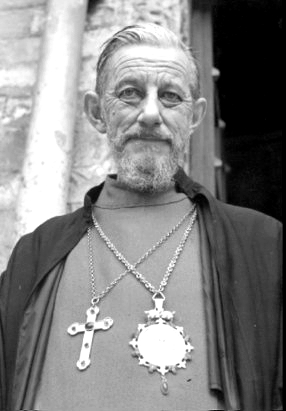
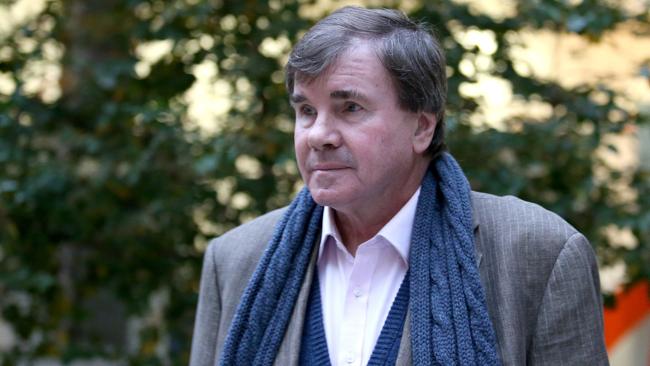
Bishop John Hepworth

Fr Stephen Smuts has published photos and articles from the mainstream Australian press in No Charge for Priest Accused by John Hepworth and Oh How the Mighty Have Fallen….

I followed much of this at the time, especially between the time I joined the TAC and the final showdown in September 2011. Most of my old English Catholic articles went into The TAC Archive. Fr Smuts has written the second article with about the clearest explanation.

The key to this whole story was when a decision was made to bring the TAC into communion with Rome as some kind of “uniate” structure. In 2007, it seemed plausible as encouragement was forthcoming from an obscure Australian priest and former Anglican and even from some elements of the Roman Curia. I assisted at the big Bishops’ meeting in Portsmouth and heard the sales patter for myself. No one was less suitable to lead this whole movement than a priest who had deserted from his RC diocese, committed what is canonically termed as “apostasy” by joining the Anglican Church and working out a whole new life for himself. Furthermore, he was in a second marriage, though the first was arguably invalid due to the impediment of orders and having received an annulment from Anglican authorities.

Many of us were brought to believe is some kind of “amnesty” operation worked out by the Pope and Cardinal Levada. The other TAC bishops didn’t walk out at the time through the enormity of it all. They followed, and the only movement of dissent came from a few American bishops in 2010, just as soon as it became plain that Rome was going to apply the same methods as for Anglican clergy converting and joining the old Pastoral Provision.

I had reams of conversations and correspondence with Mrs Deborah Gyapong, and nothing was ever clear. She tried to see the whole thing fairly and the most favourably as possible towards the Archbishop. Finally, she had to admit that he in some way had what I might call an impaired grasp of reality. Please see footnote * for links to her postings on Archbishop Hepworth, since I would hate to misrepresent what she has really said. [Update: The latest on Archbishop John Hepworth] I have the impression he either had psychological problems, in which case he was unsuitable for exercising an episcopal or priestly ministry – or he thought he could force Rome’s hand by invoking mitigating circumstances for his “apostasy”, which in any case would also disqualify him from returning to ministry.

Perhaps this was a pastoral move on his part to get everyone onto the Ordinariate bandwagon, the rest of the TAC discredited for “reneging” on their commitment at Portsmouth, and that he was ready to sacrifice his own vocation. The evidence doesn’t seem to support such a theory, but things are often very odd in this world. Others portray feu Archbishop Hepworth as wicked to the core of his being. I tend to seek a middle path.

What do I think, as I have known him and spent time with him? He is forceful and single-minded, determined and charismatic. I have also heard him speak very disparagingly about individual persons whom I will not name here. Others have suggested he can be something of a bully. I cannot entirely discount that possibility, though he hasn’t bullied me. Perhaps he is so single-minded about something, perhaps to a point of almost fanaticism, that he would go into denial about all the obstacles and conditions to be seen to before the main objective becomes possible. I am not a professional in psychology or psychiatry, so I cannot even attempt a “diagnosis”. A man can perhaps become so afraid of failure, as he has had his fill of it in the past, that success becomes an imperative at any cost.

I also have a word about the other TAC bishops. Some of them elected John Hepworth to be their Primate. They all followed the plan, even the Americans, until the early months of 2010, about the time when Christian Campbell of The Anglo-Catholic blew his particular whistle and a very ugly controversy ensued. When I resigned from the TTAC in England and joined the ACC, like those who joined the Ordinariates, I put an end to the ambiguities as far as I was concerned. I repeat the old French quote from Léon Bloy: Souffrir passe, avoir souffert ne passe jamais.

In 2011 and 2012, I began to see him as a man playing a big gamble, like compulsive gamblers in a casino, betting away their houses, cars and families. Abyssus abyssum invocat. There was no turning back.

The whole motivation is clear to see. When a little boy starts to prod a wasps’ nest with a stick, he is liable to get stung. This is what happened when feu Archbishop Hepworth started to think he had a chip in the big game, that he was almost friends with Cardinal Levada and that he was going to come out of this victorious. The only reaction possible by the Roman Curia was to stay silent and let the man get his own rope to hang himself. And this happened. He even told me during one of our long Skype conversations that he was well-connected in Australian political circles (Senator Xenophon) and that this would be the miracle solution to make Rome react from its silence and quiet work at building up ordinariates from elements leaving the Canterbury Communion.

This is Romanità. If you disturb a sleeping dog, you are liable to get bitten. The whole thing originated in wanting a negotiated solution with Rome. It doesn’ t work. I see fault on two sides, and I would almost write a parable or fable called The Compulsive Gambler and the Snake. Rome could have been forthright about this whole thing from the beginning, that the game belonged to the Forward in Faith men in England and Bishop Steenson in America, with a sop thrown to the Australians by making Bishop Entwistle the Ordinary, and the TAC would not be considered as a partner in dialogue, only individual members and the kind of groups that joined the Ordinariates. It seems to me that the “hermeneutic” of Cardinal Kasper is the most accurate one:

Almost two years ago, their [the TAC] representatives asked to be incorporated into the Catholic Church. But they didn’t participate in the conversations. Now, however, they have hopped onto a train that is already moving. All right, if they are sincere, the doors are open. But we are not ignoring the fact that they have not been in communion with Canterbury since 1992. […] Also, conversion is a personal matter: there is the freedom of grace, the freedom of the human decision. It is not possible to intrude in this matter, to manipulate or organize it.

Fr Smuts writes like a prosecutor and hits hard, but at this stage, I can’t say he is wrong. Perhaps a nuance or two would be in order, but the logic is clear. I don’t know Monsignor Dempsey, but the law in his country has nothing against him. If there were homosexual acts between the two seminarians, chances are that they were already no longer illegal in the 1960’s. A man in his late 20’s is either going to punch his aggressor’s face or consent to sexual acts. That’s between him and God, since it is a moral matter, not legal. The law has nothing more to say. Perhaps the Archdiocese of Adeleide might instigate legal proceedings against feu Archbishop Hepworth for libel. Talk about Oscar Wilde and the Marquis of Queensbury – o tempora, o mores!

Fr Smuts talks of divine justice. There is little of it in this world. He might be right, or wrong in seeing God in this whole story. Some believe in the law of karma, you sow the wind and reap the whirlwind. If you don’t get it in the neck in this life, you’ll get what you deserve in the next. It’s not for us to judge, or even to take pleasure in Schadenfreude.

I still pray for this complex person who was good enough to take me into his clergy back in 2005, preside over my marriage and show many signs of friendship and pastoral care. I was not important enough to matter to him, but yet I found fatherly qualities in him. I have had to see reality over the years and months I waited for clarity and truth.

I may have been a victim of the Compulsive Gambler, but I have also been so of the Snake. I found my spiritual home in the Anglican Catholic Church. Many of us are lone sailors in the vastness of the sea, buffeted by storms and becalmed, the slowly flapping sails hanging from the mast. No one can fathom the mystery of the human soul, and all we can do is pray and have faith, stay clear of addictions and false illusions. Truth and clarity are only found by abnegation and being true to oneself.

I pray that John Hepworth will find peace. He is a sailor – at least he told me he was rebuilding a 37-foot yacht. If she is stout and well-rigged, and if he can keep a steady helm in a heavy sea, she could take on the Roaring Forties. I could see him following in the way of men like Bernard Moitessier or Joshua Slocum. He might find the peace he seeks in the contemplative life, where the priesthood left him with torment and ruin. If he is reading this article, I can say in all good conscience that I have tried to be fair and compassionate, loyal to him as one of his priests for as long as he was Primate of the TAC and Ordinary of the Patrimony of the Primate, truthful to my own doubts and concerns, and that I pray for him and wish him that peace that presently eludes him.

________________

* A good number of posts found via the search function with the word “hepworth”. Press the “older posts” button at the bottom of each page.

Posted in Uncategorized | Tagged , | 4 Comments

Prayers for our Bishop

Bishop Damien Mead had a bad accident – Bishop’s Accident 1st June 2013. A heavy display cabinet in the ACC church shop in Canterbury fell onto his foot causing a lot of damage, enough to cause great pain, the need for surgery and his being handicapped for several months.

Human feet are sensitive things. When I was received into the ACC last April, I had something like tendinitis or strained ligaments in my left foot and I had difficulty walking for a few days. Problems and injuries with feet are excruciating, and we only appreciate them when we get better from some problem. My problem got better in a few days. This injury suffered by our Bishop will take much longer to heal. There is no comparison, but I feel for him!

Please pray for him as he soldiers on with his ministry and the ongoing installations in the new church shop.

Posted in Uncategorized | Tagged | 4 Comments

The Judgement of the World

Defending Our Oceans Tour - Hawaii Trash (Hawaii: 2006)

This is only indirectly germane to this site, but it is a fact that will relativise many of the ideological arguments between us on the blog.

Take a look at The Trash Vortex. Where I live, Tuesday is what my wife and I call La Sainte Poubelle, dustbin collection day. In our village, we have the “normal” rubbish in black plastic bin liners, “recyclables” in translucid yellow plastic bags and we take the glass bottles ourselves to the bottle bank. We have to take more bulky stuff and metal, together with domestic machines that don’t work and can’t be repaired, to the municipal dump. So, there is an effort made in sorting all the stuff so that it will be burned, decomposed with chemicals, recycled in special factories, all sorts of processes. We have become more conscious of this problem since environmentalism became a part of “political correctness” – in this instance rightly so.

Yet a big percentage of indestructible plastic ends up in the sea, a small amount from boats and oil platforms, but mostly from the land. Deliberately dumped? Who knows? Whatever, this stuff is killing fish, sea mammals and birds. The trash vortex is the size of Texas. Every time I take my boat out on the English Channel, there are bits and pieces. I take a shopping bag with me, and catch a few bits of rubbish if I can get close enough, and put them in the bin when I put in on the shore. I ask myself what’s the use. Will it all end up back in the sea?

What goes into our dustbins? Mostly, it is the packing materials we buy our food in at the supermarket – all plastic and polystyrene. Every week, there are heaps of the stuff to put in the dustbin and have taken away by the refuse men. Multiply that quantity by the number of persons living in my village. Compressed, it takes the space of a whole lorry – every week, every year. And there has only been plastic in mass production since the 1950’s. European regulations require the packing of food in this type of container on grounds of hygiene. Domestic appliances are made according to principles of planned obsolescence. It works for the warranty period, and then it can’t be repaired for less than the cost of a replacement product. So the old one is thrown away and you buy a new appliance – fridges, cookers, dishwashers, washing machines, you name it. Then we have the old tyres and used oil of our cars – that really gets me going! Washing machines can be repaired, but we have to do it ourselves and find spare parts via the internet and that sort of thing. It’s usually the solenoid valve that goes, or the machine is full of calcium deposits. It’s laborious, and most modern people can’t be bothered with doing a job the old-fashioned way.

This is the reality of the capitalist – consumer world. It’s all big money for someone who hasn’t a care for anyone or anything else.

Perhaps the world will survive us – just a couple of million years for the plastic to decompose after the extinction of mankind – nothing compared with the time the earth has left before being frazzled by the sun when it becomes a supernova. That would be a few billion years. Mankind could come to a sticky end – probably through starvation and disease, out with a whimper. We will have consumed everything we can grab – and will have replaced it with stuff that kills the very natural life we won’t be able to eat. These reflections don’t exactly put me in a good mood!

We can pray, get people to join our “true churches”, something that becomes a cruel joke. Some of us might become Greenpeace activists. I’m not really into political activism, but evil comes about by good men doing nothing. At least, we can pause and think what we are doing to ourselves and the planet Earth as if there were no tomorrow. Some conservative Christians upbraid liberals for being concerned about the environment, but the reality is there.

I have no real conclusion. We can’t all afford to buy food from traditional grocery shops that wrap their products in paper. We have no control over our rubbish once the dustbin men take it away. We can avoid throwing trash out of our car windows or boats, unless it is organic like an apple core or a bone from a piece of meat. Every little bit adds up to that incredible “continent” of plastic crap in the middle of the ocean.

We can do what we can, which is very little, but I really hate the ideology that produces the problem – the few getting rich and to hell with the rest! We can at least think about it, and that will be a part of knowing whether the Christian Gospel is really a part of us or just another ideology.

Posted in Uncategorized | Tagged , , | 2 Comments

The Artist’s Canvas

In the Parable of the Sower (Mark iv.3-20), the seed is the Word of God and the various places where it can fall represent the attitude of those listening or not listening. There seems to be another element, the types of ground not simply being individual persons, but also societies and collectivities.

Many of us are well-disposed to receiving the Word of Jesus and practising a Christian life, but when we are “turned off” by nearly all Christian communities, when we find that what some of us cherish most is for others trash to be discarded. A most interesting article was written in response to my recent musings on Western Orthodoxy. We find recurring themes between my own reflections and his. One doesn’t convert to the Roman Catholic Church, or the Orthodox Church or any denomination. One joins a community as a Christian, or at least as one who wants to become a Christian. I liken this accessible and tangible community to the artist’s canvas, without which no amount of artistic talent can produce a work of art. Music without harmony and counterpoint has been tried – it is random noise or at best like the sound of a machine if there is rhythm.

At various times in the history of the Church, there have been alternative communities for those who fled the world in search of God. Some went to the desert, others to sea, others in established communities at the time when Saint Benedict really started getting the concept of monastic life organised. How did ordinary lay people live their Christian life in those days? Chances are that they were born in a village, got married there and died there. Perhaps some went off to join the Crusades and become enthusiastic Christians, but most stayed put.

These days, when you live in a village, it is little more than a dormitory. Most people lock up their houses in the morning to take their kids to school and go to work. We don’t know each other. Yesterday in my village, we had a fête des voisins, an event for our part of the village. We were about fifteen, and my wife put a lot of effort into making pâté and cakes. Sophie and I know about three of four families in our village, and we met others, including a woman from the farm opposite us suspected of poisoning cats with strychnine. You know how it goes. Village gossip and real deeds can be really evil. The church opens about once a month for a Sunday morning Mass, attended by perhaps fifteen people, and for the occasional marriage or funeral. Normandy is a part of France where the Church is vibrant compared with other regions, where the game is truly over. At our fête des voisins, not a single person remotely spoke about or implied any question of God or religion. Apart from the suspected cat poisoner, true farmers who talk about money and hard realities, the others mostly seem to be retired civil servants. They are well off and jovial, but they seem to be completely materialist in their outlook – or just polite people who avoid starting religious and political polemics.

Traditional Catholicism (I don’t mean neo-Tridentinism or French right-wing politics, or American tea parties for that matter but something like the mainstream Church from the fifth to the fifteenth centuries) seems to have nowhere to go. It depended on the culture it found where people lived and worked. Alternatively, people could leave where they lived and join a monastery.

Nowadays, ordinary lay people have to shop around and commute to church as they commute to work. They have to go to church away from their cultural roots as does someone joining a monastery. This gives an interesting slant on things, because the ordinary person has to be an enthusiast, no longer the good earth where the Word could grow. A mature plant was expected before any seed was sown.

Just last Saturday, we went to a Mass of profession de foi for our 12-year old nephew. It was in the church of Saint Romain in Rouen, near the railway station. The service was straightforward Novus Ordo, quite 1980’s in style. The various bits and pieces to sing were accompanied on the organ and a very able lady directed the congregation and got everyone to sing. City religion is still doing quite well in France, among fairly well-to-do middle class people in the 4,000 € a month bracket, running new Peugeot, Renault and Volkswagen saloons, with an average of three to five children. Bourgeois religion in France is nothing new. With the Revolution, Liberalism, the industrial revolution and the massive move to the cities, traditional Catholicism was left behind and replaced with the “new” Catholicism of the nineteenth century. Great efforts were made in the twentieth century to stem the haemorrhage of the working folk, but they ultimately failed. All but a quiet narrow cross-section of society is alienated from the Church and indeed from their own roots.

There have been efforts to found alternative communities outside the cities, and some in cities. The charismatic communities are well known: the Lion de Juda, the Emmanuel, the Chemin Neuf. Sophie and I visited a charismatic community established in an old abbey last summer. I was not dressed in clericals but casual, and so looked very ordinary in my hoodie and bermuda shorts. I would hear conversations in the community shop and the part of the grounds near the old cloister. The conversation reflected a quite self-righteous and holier-than-thou mentality, quite surprising for people not expected to be “pure and hard” integralists. It was a lesson. It has been said that some of those communities were quite totalitarian and vulnerable people had been exploited like in the cults. Being “officially recognised” just means not having financial problems – it doesn’t take away human lust for money, sex and power.

There are other enterprises of this kind, seeking to bring in something new. There are many new ideas on New monastic fresh expressions and the New Monasticism Network. I am not recommending any of these communities, mostly attached to the Church of England, but my objective is to discover what ideas are being tried to make Christianity work in a world that has made it fail, to give it a new lease of life. I’m not sure I would want my life to be ruled by hyper-driven, extroverted and “rugby player” types!

The obvious has to be said: we have life in the cities and out in the country. In both, the emphasis is on community. If you go to a ball, you dance! It involves maturity and commitment, leading to the community making itself useful in humanitarian projects from helping unemployed youth to helping individuals out of mental problems and addictions. Like in traditional monasteries, the commitment is made in stages to be sure the person’s freedom is respected. In the new monasteries, married people and families can join a community.

Some communities are residential, like many of the French charismatic groups. Others involve a part-time commitment which would all the same be deeper than ordinary parish life. The old monasteries had oblate and third order programmes, to differentiate levels of commitment. The new communities try to be more accessible by getting rid of these “classes” or some of the old baggage like abbots and priors, notions that would put many people off, being associated with the old lust for control and power that we post-moderns eschew. However, these communities might draw on some aspects of the old communities of St Benedict, St Francis of Assisi or yet the old Celtic tradition.

I have no personal experience of these communities, most of which do not attract me, but there are characteristics that could be used in new ideas and inspirations. Some of the Anglican communities are officially recognised and supported, and have property and money. Others resemble the old third orders and guilds in their flexibility. The model of the Franciscan friars seems to be more suitable than strict contemplative traditions, because they can incorporate work with people and the social side.

The two sites I mentioned emphasise the aspect of distinctive identity and charisma, the idea of clarity from the outset. There need to be common values that hold the community together. There needs to be an acceptable method of government avoiding the dangers of autocracy and totalitarianism, and also the endless blather and hot-air meetings of a democratic system. The advice given sounds a surprising note of familiarity.

Like the mustard seed, don’t make it grow too quickly. There needs to be solidity and stability. Realism is essential, and there has to be provision for coping with difficulties, conflicts and disillusionment. Conflict management is often forgotten and conflicts lead to fragmentation and the destruction of the community if left unchecked. It is for each community to find the right methods.

The essential inspirations for these new communities are figures like Dietrich Bonhoeffer and Jean Vanier among many others. However, is this model of religious life of interest to those who would like to revive old and traditional liturgical forms? Most of these communities are geared to working with people without any religious culture or church background. They try new methods of meditation, simplified and modern liturgies with a minimum of ritual and form. It is a very emerging church and liquid church concept.

What about those attracted to a different form of traditional Catholicism than what was form by the Reformation and Counter-Reformation conflicts in the sixteenth century. There is a fairly small minority of Anglicans who look more to the pre-Reformation Church than to Rome, Arminianism or pure and hard Reformation Protestantism. Without trying to turn back the clock, and knowing that our way is hardly mainstream, how do we live this kind of aspiration as a community? We don’t want to bring back indulgences for money and sappy devotions, yet parish life in the fifteenth century was not Dearmerish tidiness and good taste, nor exclusively about a well-done Sarum liturgy. From all accounts, medieval English church life was quite messy as it was this side of the Channel a hundred years ago! Fr Montgomery made the most of it! The more self-conscious we are about the liturgy, the more we will not succeed in doing anything other than dreaming and getting frustrated with our failures.

Our main enemy is our modernity or post-modernity. We cannot escape it, and it pushes us to become materialists and addicted to money. That is the essential message of Francis of Assisi. Our other enemy is the thinness on the ground of people with the kind of aspiration I have mentioned, that of reviving the kind of church life one had in a fifteenth-century village in terms of the liturgy and avoiding straight-laced attitudes as in “reformed” Christianity.

Should we home in to a notion of “unreformed” Christianity as a common identity or foundational myth? It is an interesting idea, as anarchical as appealing to past forms of authority in society that are no longer there. I noticed how the new communities emphasise the importance of a clear identity, and you cannot found a community merely on the basis of liturgical and aesthetic preferences. A house is built on solid foundations, otherwise it will fall down.

Is unreformed Christianity possible or desirable? Does it exist? Can it be revived, even selectively? This question has to be asked at a time when Roman Catholicism is reformed or partially reformed and in need of further reformation. I have often quoted Oscar Wilde about the soul-deadening effects of reformations in religion and morals!

Homing in onto this notion, Orthodoxy is unreformed – but on condition that it remains uninfluenced by the west. I knew a German student of Roman Catholic origin who converted to Orthodoxy in the 1980’s. He wanted the “unreformed” Church, so he went to live in Greece – and probably adapted to Greek life as I have adapted to French life. I can only suppose. The “unreformed” notion was one thing that drew me to France, the idea of where the red wine flows and religion being characterised by joy. I found it in a few RC parishes, but those priests are all dead now. The Anglican Catholic Church in England seems to have avoided the “reformed spirit”, and we are quite a relaxed bunch. We are spread out very thinly, but the heart seems to be in the right place even if some find us to be “pastiche”.

The dream is finding Christianity in some kind of a “natural state”. Did that ever exist? I increasingly have my doubts, yet each reform of Christianity has brought the seeds of destruction and removed this religion further and further away from its origins in revelation and tradition. We always get excited about the idea of “time capsules”: Greek islands, Old Believers, Old Calendarists, Petite Eglise, Sedevacantists, Non-juring Anglicans, just about everything that has resisted the movement of history. The big problem is not knowing where history is going…

Yet if we let go, Christianity can only go in a direction of notions that revise the message of Christ, whether in the direction of secular humanism or some degree of totalitarianism. I find a frightening collusion between Protestant fundamentalism, the far-right in French traditionalist Catholicism and the equivalent in Islam.

I am still driven to believe that there is a need for the old Catholicism, and I know I am not the only one. It is the Goliard aspect of my blog. In their day, the Goliards were wandering clerics who didn’t take anything seriously – yet they found holiness in their own way of shedding the bourgeois conventions and external orthodoxies. As I see possibilities for its survival narrow and closing. On the other hand, the bane of medieval Catholicism was clericalism like in France in the eighteenth and nineteenth centuries. Unreformed Catholicism, like Reformed “whatever”, is a victim of human nature. The Protestants got rid of the Sacraments to be rid of clerics, and then replaced the old clerocracy with a new form of clericalism – such is the way of any revolution!

There is a criterion for judging the soundness of such a dream, the existence of a stable community seeking this ideal. In England, it was the Romantic movement – like in other countries – that set in motion the idea of reviving the old Catholic tradition. I ascribe this movement more to culture than religious ideology, because exactly the same thing was happening in France as in England, and France in the 1830’s was not Protestant. There were the early Liberals like Fr Félicité de Lamennais and Montalembert, Lacordaire and Guéranger. They sought to revive the medieval liturgy and a society built of faith and tradition. It was a reaction against eighteenth century latitudinarianism and secular humanism. There was a inner aspiration and thirst for the transcendent.

After the horrors and faithlessness of the twentieth century and this beginning of the twenty-first, could we revive Romanticism? It would be a great step forward, though beyond the capacities of any of us. It would have to start in art and culture, unafraid of using modern media like cinema and the internet. It has to be a forthright spirit and world view. Through Romanticism, we would seek the spiritual roots of the romantic eras of history between the other eras that brought revolution, bloodshed and war. Such a movement can only remain marginal, but it would have the means to establish itself with a clear identity and purpose. We need composers who have returned to melody, harmony and counterpoint. I know a man living in South London, a sedevacantist Roman Catholic, who writes romantic music – but yet the style is personal and the music original. There are painters who have returned to the old realism. Prince Charles advocates the return of classical architecture in our towns and cities. Culture that searches for the transcendent will seek out a transcendent version of Christianity.

There are manifestations of contemporary neo-Romanticism in some of the stranger sub-cultures like the the Goths,and every movement had its parodies and offshoots. We should not be discouraged in our quest. I have written about some quite dotty people in Retro-futurism and The Invisible Empire of Romantia. I don’t light joss sticks in front of the Union Jack and meditate about the Sepoy Rebellion of 1857! I find the Romantic Ladies’ discipline school quite kinky and discrediting. It may be possible through art, culture and cinema – and I know of independent priests in Paris bringing a discreet leaven of faith over with art and beauty in the more bohemian aspects of Parisian society. That is something I find interesting.

These little bits and pieces of Romantic culture need to be found and identified. Perhaps there, there is hope.

Posted in Uncategorized | Tagged , , | Leave a comment

A Sense of Wonder

After a brush with a nasty troll of the worst kind, who has kindly agreed to leave us in spite of a corny line from The Terminator – “I’ll be back”, I am truly quivering and shaking with fear! We’ll soon find out if this person has sufficient computer skills to hack the blog or my e-mail.

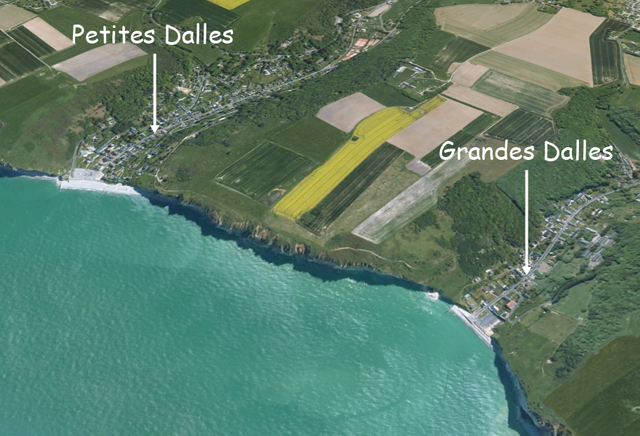
It really is preferable to think back to this afternoon when I went sailing in a “new” place along the Côte d’Albâtre – the Alabaster Coast as it is called here. The cliffs either side of Les Petites Dalles were cast in a quality of light that has inspired many impressionist artists at the beginning of the twentieth century. The sea was in a mysterious mood as the rain clouds dissipated to reveal a veiled sunlight. The wind was light (about 8-10 knots), and it was nice to have the boat under full sail and jib.

Let all mortal flesh keep silence as the sea and the land soundlessly sing God’s praises. The sense of wonder is the one thing that makes life worth living. I am thankful that I have always lived in beautiful places, from my origins in the Lake District and Yorkshire, Tuscany and now Normandy. That is truly a blessing from God.

normandie-albatredalles_mapdalles

Posted in Uncategorized | Tagged , | 4 Comments

Western Rite Orthodoxy, a new proposition

Bishop Jean Kovalevsky, consecrated by the Russian Church in Exile, a capital figure in the history of Western Orthodoxy

Bishop Jean Kovalevsky, consecrated by the Russian Church in Exile, a capital figure in the history of Western Orthodoxy

Not a little noise has been made about The Secret to Preserving Anglicanism by Fr Anthony Bondi of the Russian Orthodox Church outside Russia. I’m sure our friends Michael Frost and Dale will make much of it, and there has already been a thread of e-mails started by Dr Tighe.

Fr Anthony Bondi is a good and kind gentleman with whom I have had correspondence over the years. Myself, I thought about the Western Orthodox idea from my student days in around 1988 when I met men like Dr Raymond Winch in Oxford and Dr Jean-François Mayer of Fribourg University, my own alma mater. I posted my translation of Dr Mayer’s magisterial article from 2002 in Western Rite Orthodoxy.

I became friends with Dr Ray Winch and went to see him in his Victorian terraced house in Oxford from time to time. He said the Office according to the Benedictine Breviary and worked on the The Canonical Mass of the English Orthodox, an attempt dating from 1988 at reconstructing the Mass of Ordo Romanus Primus and the Gregorian Sacramentary for use in a western rite Orthodox context. We had long discussions about how Orthodoxy could “protect” what is left of pre-Reformation western Catholicism.

I saw Dr Winch less frequently towards the end of his life in 2002. He occasionally wrote to me, and explained his growing disillusionment with the various Orthodox jurisdictions present in England. He quietly went to Mass at St Aloysius, the former Jesuit church which is now the Oxford Oratory and drifted away from his former dreams without ever truly re-embracing the Roman Catholic ideology. When he died, he was buried without any ceremony. It seemed sad, but there was an inner logic to it all for those able to see it.

In theory, for a university student aspiring to the priesthood and some stable ecclesial solution as an alternative to neo-Tridentine RC traditionalism, western rite Orthodoxy seemed appealing. One thing that I noticed is that it remained as marginal and “odd” as Germanic Old Catholicism. It appeals to intellectuals but has very little to propose in terms of pastoral ministry to ordinary Christians. For example, there is no “open communion” – anyone who wants to receive the Sacraments has to be fully received into Orthodoxy. It means a commitment for which most western Christians would not be prepared. That is from the pastoral point of view. There are many other considerations.

At the time, I wrote to one of the priests of the Antiochian WR vicariate, which was much less developed and communicative that it is now. For me to follow up this possibility seriously, it would have meant emigration to the USA. That is where it stopped for me. I continued in the RC Church for another seven years, not really “all there”. It will be seen that Western Orthodoxy occupied a large space in my mind, but it was never a reality with which I would ever connect, let alone commit myself to whether as a candidate for the priesthood or as a layman.

I believe Fr Anthony and his superiors are obviously sincere in their pastoral outreach to Anglicans and other western Christians who for one reason or another can no longer relate to their Churches of origin. I believe there has been some success in the USA with the Russians “in exile” and the Antiochians. They have established parishes and it all looks attractive. The Russians and the Antiochians have a slightly different approach about what they are preserving. The latter caters more for former Roman Catholics with an attachment to the Tridentine liturgy (in English) and some Anglicans using an Orthodox version of the Prayer Book. The Russians seem to be more interested in referring to an earlier period, completely bypassing the Reformation, something with which I sympathise, but historical restoration can be quite “sterilised” and inappropriate in pastoral terms. Where is the balance found?

Some have left Western Orthodoxy very embittered, a few resorting to “hard” Protestantism and the Continuing Anglican Churches. I have not gone into all the reasons, so I will not come anywhere near to daring to make judgements. In Europe, if there was anything worthwhile, I would know about it. There are various communities using Gallican and Celtic reconstructions, nothing that would interest me. The Russian western riters in England have a public profile that compares with our Anglican Catholic Church, just as fragile and marginal as we are!

So my fundamental attitude is to be kind to Fr Anthony and see the best in what he is trying to get over. His subject of discussion is Orthodoxy being the best solution for Anglicans. Whether Orthodoxy is the best way to “preserve Anglican patrimony” is open to question. It might be a solution for individuals and groups looking for a spiritual expression close to their culture, and to their liturgical and social preferences. No one is blaming anyone.

Over the last few years, I have seen the weakness and fracture lines of the Continuing Anglican world. The TAC thought Rome would make it into some kind of “uniate” Church, and the ambiguity of Rome’s response destroyed it. Many became Roman Catholics by joining one of the three Ordinariates, and the rest would try to reconstruct a “TAC without Hepworth” or enter into alliances with other Continuing Anglican Churches. Despite these moving boundaries, I see no large-scale movement towards Orthodoxy, at least on anything like the scale of the Ordinariate-bound movement of a couple of years ago. There are strong parallels between Anglicanorum coetibus and what is being offered by Western Orthodoxy. Some could do very well out of it and others would become seriously unstuck.

What kind of Anglicans are attracted to Orthodoxy, albeit with a western rite? Certainly those “classical Anglicans” who like a strong dose of Calvin in their 39-Article soup are unlikely to consider Orthodox as any less an idolatrous abomination than Rome. Some of the “old high church” might idealise Orthodoxy in the manner of John Mason Neale and William Palmer in the nineteenth century. The more “Roman” Anglicans might be more attracted to the Ordinariate through the idea of being in communion with a billion Catholics in the world and having a chance to be exempt from the sappy and goofy Novus Ordo liturgies on offer in most parishes. The Orthodox Church has a sounder theological basis for the liturgy, but it is hard enough to build up a WR congregation in the USA, let alone Europe or England.

The biggest obstacle to overcome is closed communion. It is more rigorous in Orthodoxy, though the Roman Catholic Church still has laws against allowing other Christians to receive Communion except in the most unusual situation. We Anglicans will willingly give Communion to Roman Catholics and Anglicans from other ecclesial bodies. We don’t require an immediate all-or-nothing commitment.  It seems to be how I started this article – a pastoral problem. If the Orthodox Church were a little looser on this point, perhaps that would make things more practicable, but would also take away the appeal of a Church that has resisted liberalism at all costs, so us outsiders would be inclined to believe.

For the clergy, there is a more or less radical discontinuity in their priestly vocation: they have to be chrismated and almost certainly reordained. There is no question of loose ties between the Churches or a smooth transition. Perhaps the Russian Church outside Russia is making adaptations to smooth the way for those going over.

I’m not against it, the suggestion and this priest’s invitation. Those who feel they should go that way will follow their consciences. Perhaps Orthodoxy could to an extent play host to the “pre-Reformation” Church – though one would be encouraged to go back to the eleventh century as the “cut-off” point.

The article is worth reading and much can be learned.

Posted in Uncategorized | Tagged , , | 75 Comments

Slogging Away

big-machine

Blogging is a little on the low side due to a big 33,000-word technical translation about a huge machine for making parts for aircraft. It fills up a whole factory! As with any complicated piece of machinery, the operators have to learn their job of running the machine and doing its job of making engine turbines, wings and all that sort of thing – and the job of a maintenance technician fills up whole books! My job is translating this stuff from French into English. On top of that, I have four hours teaching English today and four hours tomorrow.

I’m not complaining! I’ve had some slender months this year, and things seem to be picking up with my translation agencies. It’s the downside of being a non-stipendiary priest, but it has its advantages too…

This kind of work brings me a lot of information about technology and its advances in our life. This machine makes aircraft parts to a very high degree of precision. Most of us travel by air from time to time, and know that we will be safe only if the aeroplane is properly built and maintained. The machines that make the machines have to be just as accurate and fault-free!

In the Middle Ages and Renaissance times, man’s culture was artistic, centred on beauty and harmony. Today, we are worried about where technology will take us, when we consider that technology has done much good, but has also invented atomic bombs, evermore deadly weapons of war, cloning, biological manipulation, pollution of the seas and land of this planet in the name of lust for money and greed.

Yet, we are part of it through using technology and earning our living as a part of the chain.

Posted in Uncategorized | Tagged | 1 Comment

A fine piece by Fr Robert Hart on the Trinity

I draw your attention to his passage on the Iconoclasts …

calvinist-iconoclasts… since there have been iconoclasts other than the Mohammedans.

The Fathers who gathered for the second Council of Nicea knew that the heresy of the Iconoclasts was very dangerous indeed. The Iconoclasts failed to understand the difference between Christian icons and pagan idols. Christian icons are based on revelation, especially the ultimate revelation, the Incarnation: “The Word was made flesh.” Pagan idols are a deception, taught by human imagination at best, by demons at worst, to lure men away from the true God. Icons, on the other hand, are based on revelation, and point to the Truth. The true God is known only through the Son (John 14:6, 17:3). The Fathers at that Second Council of Nicea (787 AD) knew that if the Church rejected icons they would reject the iconic nature of revelation, the truth that the Word was made flesh. In time, they could refuse to believe in the Son, as he has been revealed through his human nature. In time, the knowledge of God could be lost, if the Iconoclasts were to prevail.

Iconoclasm had come from a new religion that had only recently appeared in human history (I John 2:18). The cruel god that Mohamed’s hordes proclaimed, as they ravaged and plundered the weak and defenseless, was the god of this Medieval desert unitarianism, the combination of all antichrists who had come before, be they Gnostic or Arian. This god cannot understand love, because he is not the One – Elohim of Israel, known more fully by the Church as “the Father and the Son and the Holy Spirit.” The doctrine of the Trinity teaches us that “God is love,” as St. John put it (I John 4:8,16). But, about a god who is one and only one, through and through, with no plurality of Persons in him, we cannot speak of love; rather of an emptiness, a void in which eternity knows no compassion. G.K. Chesterton contrasted the God of revelation against the god of Islam very well:

“To us Trinitarians (if I may say it with reverence) — to us God Himself is a society. It is indeed a fathomless mystery of theology, and even if I were theologian enough to deal with it directly, it would not be relevant to do so here. Suffice it to say here that this triple enigma is as comforting as wine and open as an English fireside; that this thing that bewilders the intellect utterly quiets the heart: but out of the desert, from the dry places and, the dreadful suns, come the cruel children of the lonely God; the real Unitarians who with scimitar in hand have laid waste the world. For it is not well for God to be alone.” [From Orthodoxy by G.K. Chesterton. (chapter VIII)

Posted in Uncategorized | Tagged , , | 12 Comments

The Nips are having a field day!

Country Views
United States FlagUnited States 150
United Kingdom FlagUnited Kingdom 63
Australia FlagAustralia 41
Japan FlagJapan 19
Canada FlagCanada 19
France FlagFrance 10
Ireland FlagIreland 8
South Africa FlagSouth Africa 3
Sweden FlagSweden 2
Spain FlagSpain 1
Portugal FlagPortugal 1
Jamaica FlagJamaica 1
Switzerland FlagSwitzerland 1

The day is yet young in the USA. I have had an occasional look-in or two from the Japanese, but 19…! I hope they aren’t angry on account of my quotes from The Mikado! Jamaica must be a lovely place for sailing outside hurricane season.

Posted in Uncategorized | Tagged | Leave a comment

Goofy Clerical Dress

female-clergy-blouseI found this via Fr Smuts’ blog, and here is the commercial site advertising feminine clerical garments.

I get quite bored with blogs and commenters who poke fun at the Church of England about women clergy, and I don’t usually bother. That doesn’t mean I approve of them – I cannot as an Anglican Catholic and on theological grounds. All the same, this is worth a comment.

I never dreamed I would ever see such a thing. Of course, as a seminarian and deacon in a parish, I was always in a cassock and collar in public. I wear the cassock at clergy meetings and in parish situations in England. There is also the formal and informal way of dressing without the cassock: in a black suit with either a clerical shirt and slip-in collar or a full collar stock, and with black socks and shoes. A less formal attire is a pair of black trousers and a clerical shirt with slip-in collar.

In private or in purely secular surroundings, many of us priests dress in “civvies”, which can be of any appropriate style from casual to a suit with shirt and tie. Many priests have secular work, so we dress appropriately for that.

I belong to a Church that does not have a female clergy. I am no expert on feminine dress apart from seeing what my wife likes to wear for various occasions, but she is a lay woman. In those Churches that have female clergy, I would expect to see them in a cassock or the simple kind of dress a lady wears for going to work in an office, a tailleur or a simple skirt below the knees and blouse similar to a man’s clerical shirt. Sobriety is the key notion for both men and women clerics if we have any idea of a serious religious commitment.

This kind of fantasy dress seems to be quite unnecessary and provocative. We might enjoy making fun of it. Inventive fashion designers could be making money out of it – business is supply to meet a demand. Some of those fashion-conscious pétasse priestesses must be buying the stuff!

Quite frankly, I find these particular examples pretentious and vulgar.

It takes all sorts…

Posted in Uncategorized | Tagged , | 4 Comments