Romanticism takes off!

I was doing my daily rounds today and found Brexit: Hell No? This little article reflects a comment from yesterday in my previous posting in the theme of inevitability. A light bulb moment happened. I remembered my old philosophy classes at the Angelicum thirty years ago. The Dominican professors droned on in Italian, which I could hardly understand, especially with a thick southern accent – but something rubbed off on me. The word that came into my mind is determinism. Open up a new tab on your browser, read the Wikipedia article and then come back here…

* * *

I have to admit that the word determinism hit me subliminally as I read Rad Trad’s article. He describes the so-called “liberal” establishment as being characterised by teleological determinism. The acceptance of the “new orthodoxy” becomes inevitable. This was an aspect of Marxist and Leninist teaching, that everything was the inevitable result of brute forces shaping man’s destiny to which he must submit.

All of a sudden, something comes out of the woodwork to challenge the inevitability of “growth” and “closer integration”. Brexit put a spanner in the works, and many of us will suffer. Unless the British government fails to implement Article 50, many of the perks we Europeans have had (visa-free travel and residence) for the last twenty years will be over. Fine for myself, I fulfil all the requirements for getting French nationality (though I would hope to keep my British passport too). But for others who are younger than I am and who have a culturally European outlook and would not be satisfied workin’ down ‘t’ pit in Barnsley (sorry I forgot that Maggie Thatcher shut down the entire coal mining industry in the 1980’s).

I suspect that the EU will collapse from its own weight and go the way of the Soviet monolith in November 1989. I remember it when I was a student at Fribourg. A friend came to my room to tell me that the Berlin Wall had fallen. How was it possible for something so eternal and indestructible? It happened – and to Russia itself. I thought of all those sad faces of Czech seminarians at the Nepomuceno College in Rome who had left home with such heroism. Marxist inevitability was over, and left-wing politics is still in tatters, discredited and as dead as the dinosaurs.

The Industrial Revolution thought it had everything in the bag, and along came William Blake and the dark satanic mills of his poem Jerusalem (set to music by Parry and sung as something ultra-nationalistic). Then along came the Romantics protesting that there was more to humanity than rationalism and the Machine. Grass roots movements? Here’s our chance for anyone who can write books, poetry, paint beautiful images, compose music, advance the cause of human thought. As the French Revolution guillotined the old order before guillotining itself, a chink has appeared in the black opaque curtain. Man is free and soars like an eagle in the heights of the imagination and his life of the spirit.

You, my dear reader, and I can do nothing about the political and financial movements in the world, but we can put our imaginations to work – just two hundred years after Mary Shelley wrote Frankenstein on the shore of Lake Geneva in 1816. We look on the prospects of post-humanism and trans-humanism with horror – but for the first time, the Thing is no longer inevitable. In the words of Wordsworth:

“O pleasant exercise of hope and joy!
For great were the auxiliars which then stood
Upon our side, we who were strong in love!
Bliss was it in that dawn to be alive,
But to be young was very Heaven!” (The Prelude, x, 690-4.)

Posted in Uncategorized | Tagged , , , , | 3 Comments

A Tale of Two Englands

The referendum seems to have revealed a similar kind of dialectic as between the North and South of the United States. After Brexit? The Referendum and Its Discontents by Scott Stephens offers some acute analyses of the referendum of last week. I have been brought to believe that the referendum should never have taken place – and that the EU needs profound reforms or to be destroyed and replaced with something new.

One such opinion is from John Milbank of the Radical Orthodoxy school:

Christians are duty bound for theological and historical reasons to support the ever closer union of Europe (which does not imply a superstate) and to deny the value of absolute sovereignty or the lone nation-state. Tragically, the Reformation, Roundhead, nonconformist, puritan, whig, capitalist, liberal version of Britishness last night triumphed over our deep ancient character which is Catholic or Anglican, Cavalier, Jacobite, High Tory or Socialist. The spirit of both Burke and Cobbett has been denied by the small-minded, bitter, puritanical, greedy and Unitarian element in our modern legacy. Unfortunately it has duped the working classes, once again to their further ruination.

One commenter on this article expressed surprise that someone of the intellectual calibre of John Milbank should equate the Brussels dinosaur (my expression) with the “high” view. That question is debatable. We would need to ask him. Apart from that, Milbank seems to have come up with an idea of two Englands that has always fuelled my own pilgrimage in life.

I was born in Kendal at the south end of the Lake District, a small market town where my parents settled in the late 1950’s when my father found his opportunity to join the local veterinary surgeon in partnership. As I grew up, I had the impression of stick-in-the-mud conservatism in attitudes. Older people kept the young at a distance with the old idea that age brought privilege. Kendal is a predominantly Protestant town with I don’t know how many denominations: one RC parish dating from the early nineteenth century, the main parish church with an excellent musical tradition and a “Prayer Book Catholic” ethos. I was in the choir there from 1975 to 1976. St George’s is quite high with its fine Edwardian chancel and St Thomas’ (where I was baptised) is rock-bottom low. They still had north-end celebration in the 1970’s but now it just has the big screen and the place for the “praise band”. There are many pentecostal and independent evangelical communities. High church worship has never been of much appeal to Kendal people. As the years went by, young Kendal folk modernised and followed the trends of fashion, consumption, smartphones and all the rest. The Lake District voted for staying in the EU, in spite of the conservatism I knew as a child.

I went to school in York and worked there for a few years before going to London in 1978. Yorkshire seemed to be less “closed” than Westmorland and Lancashire. Older people saw young people as the future, and there were more opportunities for things that interested me like church music. There was also the difference between a cathedral city and the smaller and industrial towns producing coal or mint cake.

What now remains of the revolution of the mid seventeenth century? Milbank opposes the two sides he finds implicit in our attitudes today. The USA still has its Yankees and Red-necks reflecting the two sides of the Civil War. I meet people occasionally who seem to come from another planet. No thought is shared in common. Having lived in France for so long, I see the same dividing lines between the revolutionary republican and those who look to the old medieval order as survived until 1789. It is the dividing line between the Classicist and the Romantic. Surely we all have both head and heart!

Perhaps this is one reason why there needs to be cooperation at a cultural level, not merely economical, financial and business. These splits need to be understood and worked on from the point of view of diversity and tolerance. This fundamental divide is everywhere, not least Russia or any country that had experienced a violent reformation or revolution. The cracks have certainly appeared in England as people voted more with the guts than with their heads.

England has been a very stable country since about the eighteenth century, and shone in contrast to the upheavals in France and much of Europe in the nineteenth century. The Empire was at its height in the Victorian era, and was finally destroyed after World War II, the 1960’s and the return of Hong Kong to China. Our industrial production is only a shadow of what it was until the 1960’s. Perhaps it is England’s turn to know such upheavals and accounts to be settled between lying and treacherous politicians, “ordinary” people and those more motivated by culture and humanism than brute money.

In spite of the differences, I see a common trunk of culture in the whole of Europe. England’s music in the eighteenth century was deeply influenced by Italy. England was not all puritanical but assimilated Latinitas as a part of its quiet and reserved Renaissance. France was never far away. My own family was very Germanophile before World War I. The damage done by those two wars is incalculable quite apart from the massive loss of human life and the destruction of our culture. Europe is something real and desperately needed to reconcile the two Englands and the two Europes, the two Russias and the north and south of the United States. I hardly see this with the present EU which is all about collecting and wasting gigantic amounts of money, the scandalous waste of foodstuffs on a huge scale and dictating over us in the tiniest details of safety standards and piffling details.

Certainly, in the same way as I sought something beyond 1970’s Kendal, the heart needs to be open and eager to soar with inspiration and imagination. Wordsworth leapt with joy with the changes in France – until he saw the stinking carts of headless corpses. We truly need philosopher kings – not bankers and billionaire grippes-sous. We need a completely new constitution of principles, a new social and human contract.

Perhaps we are at the brink of something great, or the greatest catastrophe to befall humanity. Sometimes, a good shake-up can bring a lot of good.

Posted in Uncategorized | Tagged , , | 12 Comments

A new Europe?

Since the vote for Brexit on 23rd June, even my wife has joked with me about what would happen if I had to return to England or whether that troublesome country shouldn’t have the plug pulled out so that it sinks into the North Atlantic. The French have been going on at us Brits for centuries over the Hundred Years War, St Joan of Arc and the way the Perfide Albion thrashed Napoleon in 1815.

Humour apart, I have been reading different ideas about the profile of those who voted for Brexit, and I tried to see through the caricatures of the butcher selling meat in pounds and ounces and the Romantic Ladies. The thing about England in the past is that we had an Empire, but the reality of that empire involved cruelty and atrocities that sometimes rivalled those of the Axis during World War II. Englishmen hunted aborigines for sport and blew Indian rebels away from cannon. The reality of the arrogance of our forebears is quite sickening.

I have been very mixed up about this whole thing, and I am glad that I didn’t have the vote having been an expatriate for more than fifteen years. In the early 2000’s I still had to have a Carte de Séjour, quickly abolished when Europeans acquired the right to live and work anywhere in Europe without visas or residence permits with restrictions on work. That is about to come to an end if the referendum result is ever implemented. I will have to apply for dual nationality (French-British) or a succession of residence permits. Of the two, it would be better to be naturalised in order to participate in the country’s political life at the level of the State, the region and the local municipality. If we have rights, we also have duties!

I have few ideas of what will happen. There has been a lot of hype and hot air on Facebook over the past few days, about how England can go back to the glorious days of Victorian Empire to the strains of Elgar or how the reign of hatred has won. I have even seen a video of a “Remain” woman crying and getting emotionally upset about how the extreme right was coming. Such extreme outcomes are rare in history, in spite of our “conspiracy” thinking and desire for an explanation and an end to incertitude, a conclusion that marks the end of history.

I have Union Jack mugs and enjoy the music of Elgar. I wax nostalgic during my visits to England, seeing the graceful Georgian town houses with their six-over-six sash windows. An Englishman’s home is his castle. English is my language, and speaking French is simply an expedient to live with those people in whose country I reside. I am writing it now in my blog – plutôt qu’écrire en français pour des gens qui n’ont rien à foutre. I abhor the French revolutionary ideology and its republican “religion”, but I am also sickened by French nationalism and the dominant Cartesian philosophy. French religion is à vomir! I am as uprooted here as I was in England in the elitist system I knew in the 1970’s (I came to France in 1982, during the Thatcher era). I warm to the idea of belonging to something greater than my native country or the parochial and small-minded culture I left years ago. Since my teens, I felt I needed something new, new air to breathe and give a wider view of human life and a better world. I found Europe exciting and my visits to the USA between 1998 and 2003 confirmed this high and flying view of life in the United States of Europe. I saw the possibility of an American notion of religious freedom and a spiritual vision in the EU flag in spite of those who said that Christianity had no place now, in the past or ever, in the EU.

My attention has been drawn to the site of Europa Nova. I haven’t gone into this very much, and we are all concerned about the Islamisation of Europe, the death of humanism and Christian culture and the integration of countries like Turkey. We have seen the way Greece was treated, though it can be said that the problem of socialism is running out of other people’s money as Mrs Thatcher said in an inspired moment. We read about croneyism, the corruption of the European ideal and institutions by big business and vested interests. Is there not an exaggeration with regulation and standards down to the size and shape of carrots?

Could Europe be reinvented to allow us to keep our traditional national and cultural identities? Can the idea of a federation adapt to the differences between we “stuffy” English and the flamboyant Italians and Spanish? Can there not be more transparency about how the Islam question will be dealt with, since those people are coming in from outside? The Europa Nova bunch seems to be endeavouring for an innovative point of view. Reforms are needed in Brussels and Strasbourg, in Berlin and Paris. It needs to integrate the great achievements of Renaissance humanism and the Enlightenment and the way that Christianity can assimilate these values of human rights and the dignity of the person. If there is a movement for that and not yet more money for the plutocrats and the billionaires of this world, there is hope and something we should support for the sake of our species and the planet that gives us life.

Democracy can often be a mere slogan, and rights are often given to those who do not have the education or rational thought needed to exercise them. I have often said it. Genius resides in individual persons, not in the vox populi. Plato spoke of rule by the wise, by philosopher-kings known for their prudence. We need to rediscover the heritage of humanism and our local cultures, rather than be stifled by them.

The immigration and Islamisation questions need to be addressed. For the question of religion and non-humanist ideology, the original French and American notions of secularism would serve as a guarantee of peace and respect for all. There’s nothing wrong with Muslims having mosques and practising their religion, as long as they respect us and our laws founded on justice and humanism. If I seek to immigrate into a country like the USA, I have to prove that I won’t be a burden on their social system – that I have an income and am able to live independently. Not so with millions of economic migrants who are not refugees fleeing for their lives from war zones. There need to be clear policies for helping genuine refugees and getting back to their own countries and cultures after the end of what drove them to England in the first place.

The gut reaction of England is understandable: the grottiest houses are too expensive for ordinary people to buy or rent with the money they earn from their jobs. The NHS is cash-strapped and the waiting lists are endless. The American system is cruel and cynical making sick people wonder if they would be better off dead!

There seems to be no problem with Europeanising the police and the armed forces, like in Switzerland and the USA. We need security and civil protection. Equally, the social security and health systems need to be streamlined, made cheaper to favour employment of local people and their being paid what they need to live in the financial reality of our time. The present tendency is to roll back workers’ rights as were conquered in the nineteenth and twentieth centuries by the Trade Union movement.

I know just about zilch about economics, but something needs to be done about the banks and the criminal elements in them.

Again, the essential is the spiritual and cultural elements of those of us living in or near our native lands. Certainly, we need the achievements of the Renaissance and the Enlightenment, but also the wealth of art and culture fostered by the Christian Church over centuries of influence and usage. The role of Christianity has been deliberately marginalised for ideological reasons, yet radical Islam goes uncriticised for the very abuses for which blame is heaped upon Christianity.

European institutions need to be accountable as surely the Swiss and American federations are in regard to their member States. We need a sense of proximity and the human touch, not being faced with anonymity, the Infernal Machine and Promethean arrogance. We won’t find those qualities in our nation states either, nor even in our towns and villages.

Yes, we need a new Europe, one that is spiritual, human and made for humanity.

Posted in Uncategorized | Tagged , | 6 Comments

Shiver me timbers!

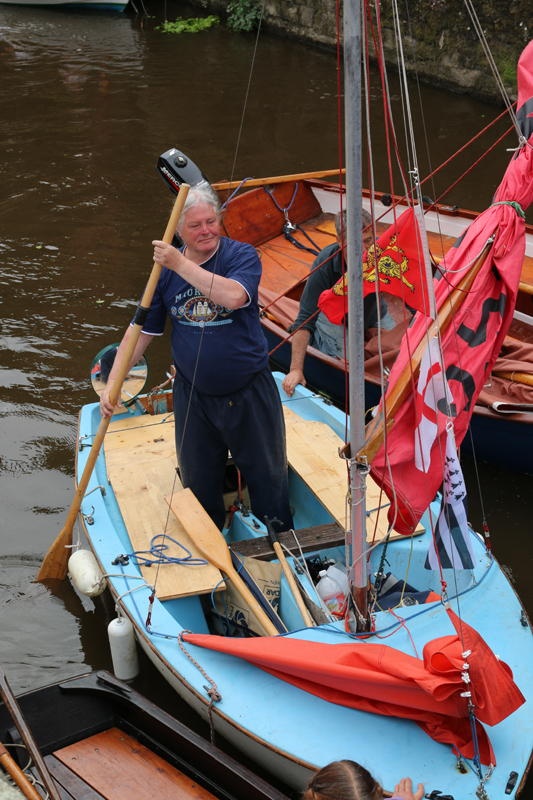
shiver-me-timbersThree-cornered hats cause not a little amusement at sailing gatherings. No, I haven’t had a haircut! It’s all tied up. The lifejacket and mobile phone are anachronistic! The photo was taken in the lock of Guilly Glas between the tidal part of the Aulne and the canal that eventually reaches Nantes.

Priests and sailors can both have fun. Here’s a couple of photos I have just received. In the first, I was helping a boat that had capsized by grabbing things that had fallen into the water. The boat itself was helped back up by one of the accompanying motor boats. The lesson is that you never retract your centreboard completely!

close-hauling

Here I was paddling my boat into the second lock (Chateaulin).

paddling

Posted in Uncategorized | Tagged | 4 Comments

Bishop Cantor

I have just received news of the death of Bishop Maurice Cantor of the Eglise Sainte-Marie near Rouen. He was born in 1921 near Dieppe and was ordained a Roman Catholic priest at the Abbey of Saint Wandrille. He served for a time in the Archdiocese of Rouen and left in the 1960’s to found an independent community. He was consecrated a bishop in the Eglise Gallicane, and received a sub conditione consecration from Bishop Cornejo-Radavero, a former Roman Catholic auxiliary bishop from Peru.

I met Bishop Cantor several times, and he was always very kind and pastoral, whilst making his policies of keeping his ministry in one place clear. It all seemed to be founded on popular RC devotions, which one would expect in France. The church he founded is well attended by local families, and will long survive its founder. Other bishops were consecrated years ago to ensure the Succession for this community.

I do not think that it would be appropriate for me to attend his funeral, but I will say Mass for Bishop Cantor with prayers for peace and unity between all Christians transcending differences of doctrine and culture. I have always admired this little Church from a distance, but never with hostility.

Posted in Uncategorized | Tagged | 2 Comments

Triumphalism?

This morning, I received an e-mail from a friend. He writes from a conservative point of view, one that historians would qualify as isolationist. Will this latest move bring about a dissolution of the present political establishment built on masculine power, money and lies? Will we see the radiant dawn of principled politics with the Common Good in view? Would we see the end of cultural Marxism and “political correctness” founded on the principles of Frankfurt critical theory?

Will we see a resurgence of nationalism like at the end of World War II or in the heyday of the Empire under Queen Victoria or during the period preceding World War I? I have the impression that we are reading too much into things. Do we really want Donald Trump, Mme Le Pen or Farange? Is that really what we want? We are warned about the succession of Scotland and Northern Ireland, the breakup of the United Kingdom. The first thing parents ask a teenager who wants to leave home is whether he has a job, something to live on and decent digs. It is said that the Empire subsists in the form of London’s City banks, but is that true? The era of top hats, moustaches and snuff boxes seems to be over!

We are buffeted and swayed by politicians and medias who don’t seem to know more about it than we do. I have felt for many years that the hitherto quagmire needed to be broken. What will we get under nationalism? Perhaps a good dose of Trump, Le Pen, UKIP, etc. – and then chop their heads off to find something new. All most Frenchmen have to say is how odd the English are for things like eating Marmite and for having beaten Napoleon! Not very helpful!

Most serious analysis attributed the success of Brexit to nationalism and the ham-fisted way the waves of immigrants are being handled. No one can afford them, and Europeans in need are pushed further to the back of the queue as Syrians, Afghans, Turks, etc. get first service and rich pickings. I am definitively “exiled” because I could never afford a house in England, not even something grotty in the north-east. One problem I see if how the UK can afford independence without the old Empire plundered from everyone who now wants to come and colonise England.

I look to the first major cracks in the EU monolith. Perhaps we will live our very own 1989 (I was 30 when it all happened in Germany and eastern Europe). It is an Orwellian monster, and would eventually become a dystopia if left unchecked. We are losing money over the plunge of the pound Sterling.

Will this cause mainstream British politics to go back to the 1930’s and Winston’s bulldogs and Department of Dirty Tricks under the pavements of Whitehall? I doubt it. We can’t expect too much unless we are truly at the gates of a revolution. Usually, when revolutions happen, heads roll, and we have to be careful that those heads in the baskets won’t be ours!

In brief, I am not triumphalistic. We have to wait and see what happens. The political elite might just ignore the result of the referendum and it would be business as usual with Brussels. There could be a big backlash against the right-wing Conservatives and nationalists and we go back to the 1970’s and everything on strike like with Callaghan and Wilson (when I was in my early teens). All over Europe, it is up and down, mostly chickening out at the last moment from bringing back right-wing nationalism. Indeed, where is it all going?

These are momentous times or one big boring anti-climax.

Let’s just keep our eyes and ears open.

Posted in Uncategorized | Tagged , , | 15 Comments

Brexit

It would seem strange if I said nothing on this subject a day before the referendum. I can’t vote because expatriates who have not lived in the UK for more than fifteen years lose the right to vote. The matter seems to be one of debate – but that’s how it is at present. I don’t have the vote!

I have already expressed ideas, in the sense of the UK leaving the EU, mostly influenced by nationalistic ideas and a notion that the EU was becoming a kind of Orwellian Big Brother. We are being told different things on the media, and I am so confused about the issues. Some are lying to protect their self-interest. Others are saying what they believe to be the truth, but may be confused as most of us ordinary folk are.

As I understand it, the EU was intended to put an end to European wars as well as rationalise trade and the use of money. I have heard it said that it was intended to be a kind of “United States of Europe”. America has been the land of opportunity and freedom to make one’s living through work and practice any religion according to one’s conscience. On reading some sources, the USA now frightens me. To what extent is the EU the vassal of the USA and the various power elites?

If England leaves the EU, we might face a break-up of the United Kingdom. Our old Empire has not existed outside a few token islands here and there since World War II. We would have to live on what we can sell on the world’s market, with industry being but a shadow of what it was. Politics may go back to the rhetoric of Churchill and Thatcher – maybe that of Trump! Maybe that would be a good thing, perhaps a dangerous illusion of British triumph. Housing would become no more affordable. The NHS might go the way of private American health insurance. Those with all the money will have a free hand, and life might become very difficult for workers and poor people. I am afraid as many others are.

I am no longer sure of anything. Nationalism showed many ugly fruits in the twentieth century, and the world said “never again” as the Nazi concentration camps were liberated in 1945. I could see small federations of even smaller states like the Swiss cantons. I like the idea of breaking up the gigantic bureaucracies to make life more human and democratic. Is that only a vain dream?

Perhaps dissident elements need to work for the destruction of the present EU structures before they become something like the old Soviet Union. That rather than individual countries leaving and leaving the rest intact. That is the anarchist in me speaking…

Posted in Uncategorized | Tagged , , | 5 Comments

First days back home

moulin-mer01It always takes a while to get back into the routine of being back home after these days of messing about in boats. There was a progression between my three days alone on the Rade de Brest, the Friday passage with five other boats to the river Aulne and finally the gathering of seventy-two boats, there, more for the “Woodstock” of boats and baby boomer skippers than the long and hard sailing I had been doing.

I fired up the computer yesterday morning and found hundreds of e-mails, mostly spam and e-mail lists. I had to look firstly for translating orders and the prospect of getting back to work. I now have two orders under way, to continue my nautical thinking. Sarum lies on hard standing in my back yard on her trailer. It rained continuously yesterday and this morning, and I hope tomorrow to have the courage to remove the tarpaulin and take the stuff out. My three-cornered hat is still in the forward compartment with my little toolbox. I’ll do it tomorrow.

I was struck by a series of e-mails about a blog posting of someone who had lost his Christian faith. I don’t know who this is, but he appears to have some intellectual baggage and is / was an American Lutheran. Americans approach these questions so differently from Europeans. Here, people just don’t care. Americans feel they have to justify themselves and announce their position to the world, whilst protesting that they don’t want to influence others. The article is poignant and interesting. He has a point that biblical Christianity is hard to defend and when you start pulling threads, the whole lot becomes unravelled. He lives through the same drama as Bultmann and Harnack at the end of the nineteenth century. This is why I have always had an interest in Modernism as a way a “saving” Christianity from those who unravel everything and against whom one can do precious little other than entrench oneself in a Fundamentalist position. I have lost confidence in apologetics and attempts to prove anything to anyone – but I continue with knowledge of what separates us from materialism and having to face ourselves in the absence of transcendence and the immanent spirit. I wonder if God wants to be proven to anyone, and those without the capability of inner knowledge and introversion will never see much evidence of anything, let alone a “truth” with which they can bash others over the head.

This morning, I saw a clever slogan on Facebook: “If your religion causes you to hate other people, it is time to change your religion“. Either that or ask oneself many questions about the role of religions and take up sailing…

Perhaps my experience of last week gives me some insight. My real sailing was alone. I had nothing to prove to anyone. I went out in quite demanding conditions without taking any real risks. Friday was like a “small church” of our informal group of six boats. I felt I was always waiting for the “inertia of other people” and took it all in good humour. My boat should have more sail area, and I tend to be on the slow side – and they took it all in good humour. Things can be discussed light-heartedly in a small community. For the Saturday and Sunday, up went the colourful flags of Normandy, England and Brittany, and it was more about showing off than real sailing. It was a larger and more “mainstream” expression and we all went along with what had been organised. There was a lot of noise as we all got together on Saturday evening for food, folk music and dance. The extroverted side of me greatly appreciates Breton culture with its similarities to the Irish and the Cornish. The introverted side drew me to my memories of sailing the Rade de Brest and being at one with the sea and the weather, going beyond previous limits. We need both in our life: other people with common interests and sympathy – and the solitary life when real achievements become possible. So it is with religion and spiritual life.

The longer I live, the more I see that it is pointless to want to influence the masses. Man is at his most creative and inventive when he is alone and literally honest to God. Maybe I will be judged for being a “hidden” priest, living my vocation with something of the inspiration of the monk. We live in a world where Christianity is back in the catacombs, and only a caricature remains in the mainstream churches. Holiness is hidden and cannot be seen with vulgar eyes. Christ hid his divinity before Ciaphas, the Sanhedrin and Pilate. Biblical scholars talk of the Messianic Secret. It has to be the way of many of us too. Some of us might be tempted to “encourage” ourselves with apocalyptic prophecies that all fail. We are simply up against a world that doesn’t care. Our treasure is their trash. Why bother rowing against the wind? Drop anchor and wait for better conditions!

I think about the article. I wonder how that fellow will come to terms with himself once he has shed Christianity with the intention of not becoming a “New Atheist”. Will the blank emptiness bring relief from the cognitive dissonance he says he suffers? On the other hand, he did have a lot of junk to discard. The sea does a wonderful job of bringing us to the essential. It isn’t emptiness or futility but something that is alive and spiritual, an element of incertitude to humble our human pride. Certainly we all need a “reboot” and new beginnings, but as incarnate spirits – not as materialist beasts.

I had better get back to work…

Posted in Uncategorized | Tagged , | 3 Comments

Behold, the Sea!

Glossary of Nautical Terms – I apologise for presuming too much of my readers. Open a second window in your browser and you can look up terms as needed.

And if you call for a song of the sea,
We’ll heave the capstan round,
With a yeo heave ho, for the wind is free,
Her anchor’s a-trip and her helm’s a-lee,
Hurrah for the homeward bound!

No two times out on the sea are the same. Like we humans, the sea and the weather have their moods and humours. I am most stimulated by freshness in a lively wind but with a bright and clear sky. Leaden grey clouds and rain bring a sinister hue to the waves. The people of Brittany say about their country that the weather is fine every day, several times a day! I naively expected the Rade de Brest to be like a lake except with a tide! The chop can get vicious as the wind goes against the tidal current. This isn’t a Swallows and Amazons jaunt but real sailing, but it made me live my childhood dreams of sailing a small boat on the sea. There is the Goulot open to the Atlantic Ocean, but make no mistake. This is the sea.

Here are my photos on Facebook: Rade de Brest and Route du Sable.

I arrive at home extremely tired, but it is a good physical fatigue. I have a nasty gash in my left big toe from having disembarked with bare feet. The pieces of cockle shells are like razors! The week was one of discovery, going from hard slogs upwind to the gentle run before the wind up the river Aulne all the way through two locks to the town of Chateaulin. From Tinduff to Brest, and back, and several return trips east to west and vice versa, my little twelve-foot dinghy covered approximately sixty nautical miles, about the equivalent of a return crossing of the English Channel between Dover and Calais.

Tuesday

The weather was really quite nasty and I debated whether it would be prudent to go sailing at all. Finding that the wind was blowing at about twelve knots, I launched the boat at Le Tinduff from the slipway. I ran with the wind up the channel to Daoulas and bought a few bits and pieces from the grocery shop. I met up with a nice fellow repairing his yacht who was living the life of someone who had cut off from most social conventions to live in a caravan and his boat. I tend to collect marginal people! My immediate problem was getting out of a very narrow channel against the wind. No question of rowing! It was to be close-hauling on very short tacks or waste a day. I succeeded with only the ebb tide in my favour. The chop increased as I reached the open Rade. The wind began to freshen and was blowing at about 18-20 knots (force 5) and I had to shorten sail. I doused the jib and sailed with only the reefed main. I cleated the mainsheet and met the gusts by luffing up with the helm.

I turned eastwards and was able to reach an exhilarating speed. I blocked the helm and raised the jib. I was caught is several heavy squalls of rain, and I gladly offer free advertising for Guy Cotten for the quality and tightness of my “oilies” as the old fishermen  used to called waterproof over-garments. I put into Moulin Mer which is the site of an old tidal mill and factory (now a derelict building) and an educational / adventure centre for children.

I moored the boat on a dry-out beach and anchored fore and aft. I slept aboard which was less uncomfortable than one might imagine.

Wednesday

I left Moulin Mer in the morning, but decided against a visit to Hôpital Camfrout on account of worse restrictions than Daoulas. I sailed to Le Tinduff and enjoyed a crêpe at the fishermen’s bar. I had a good think about what I would do. Would I dare try for Brest?

I sailed to the Point de l’Armorique and the Ile Ronde where the tidal currents are merciless on the spring tides. I was lucky to have a week with neap tides. Even so, the chop foamed with white tops. The wind was down to a small force 4 and made it possible to sail with an unreefed sail – to get the speed and momentum to force my way through the chop. Once past the old German moorings built for the Bismarck (and never used), I passed the Ile Ronde on the weather side. One has to keep well away from the Ile Longue where the French Navy has a submarine base and many secrets to keep! I sailed on to Brest and had a pleasant break at the Marina, something to eat and a look round the chandlery shops, where I found a very practical watertight box for my safety kit. I decided that I should return to east of the Ile Ronde to anticipate any problems in getting back to Le Tinduff for Friday morning. I entered the Baie d’Auberlac’h and set up my boom tent and bed with the boat anchored and afloat.

Thursday

I left my mooring and found very little wind. There was a nasty rain squall, and I continued east towards Le Tinduff as a breeze came up from the south-west. At a careless moment, I ventured too close to the rocks and broke my centreboard pivot plate. As I was running with the little wind there was, I had no need of the centreboard and could continue back to Le Tinduff and make repairs. I was well prepared  and had my toolbox in the van together with an assortment of stainless steel screws and bolts. I needed a kind of anvil to straighten the twisted centreboard pivot plate, and looked around. There was a steel frame used by fishermen to straighten their nets, and found that the steel girders had a good sharp right angle. I hit away with a hefty hammer. Bang! Bang! Bang! The plates were straightened to my satisfaction. I drilled six new holes for the screws with my hand drill (no electricity) and screwed the pivot plate back into place.

I tried for Hôpital Camfrout, a pretty village with a medieval fishermen’s chapel, and got about half way up the channel before deciding to turn back. Those are places for boats with engines! Time was marching on in the afternoon, and I returned to Le Tinduff. I left Sarum on a beach fore and aft mooring. I met with some of the guys going on the pre-Route du Sable passage up the first part of the Aulne. We had supper together at the crêperie, and I slept on land in my little tent.

Friday

I awoke at about 6.30 and found Sarum still afloat from the night’s flood tide. I rowed to the slipway mooring on the lee side, and went to take the tent down and get some breakfast. I cast off at about 10 am and sailed around the port, admiring a magnificent schooner in which a retired couple live. Tinduff is full of traditional fishing boats, now used to teach young people to sail or take tourists out for a trip round the Rade. Some of those boats accompanied us up the Aulne the following day. We were all ready about half an hour later and sailed south-east to the first meander of the Aulne. The area is overlooked by the Benedictine Abbey of Landévannec, one of those constructions from between the wars.

At this point I ran into trouble with water turbulence and an inabilty to sail upwind to keep up with the group. We were in contact by VHF, and I was up against the clock from the point of view of the flood tide. I was lucky that there was a fishing boat with a powerful engine. The two kind fellows towed me to the Naval ships’ cemetery (where decommissioned naval vessels go before being towed to places for scrapping). I then had an aft wind and could then run on my own. I thanked the two amateur fishermen and managed to catch up with a few regatta tricks with trimming the sails. We reached Rosnoën with the tide beginning to ebb. We made it just in time!

We all had pizza together at Le Faou and we had two very heavy rain squalls back to back. There was so much mud at Rosnoën that there was no question of putting up a tent. I slept in the back of my van. The humidity pervaded everything, even in my van. This is something a sailor lives with all the time.

Saturday

This was the day of the official Route du Sable, named after the ships that took sand up the river for the farms. The weather was fair. We prepared our boats and had a drink and a hot dog offered by the local Mairie. We, some seventy boats, ran with the wind to the next meander. Then there was no wind and we rowed the rest of the way to Port Launay. I was in the second group to be taken to the non-tidal stretch of the Aulne by lock. I met up with a friend who was once in the Merchant Navy and who now works as a port traffic controller at Le Havre. We joined the flotilla for a meal in a special big tent and watched people playing traditional sea shanties on the accordion and traditional Brittany dances. My friend François invited me to his little house in the country just about 15 km away to sleep in better conditions and get a good wash. That was most welcome.

Sunday

We left Port Launay in the morning and rowed to Chateaulin. It wasn’t even worth raising the sails. We went through the lock and I lowered my mast for the two low bridges. We all had a picnic lunch at the campsite and rowed back to Port Launay. There was a slight tail breeze, and I got a few freebies by raising the jib only. In the afternoon came the sad moment of going for our trailers and taking our boats out of the water. There was only to pack up and go home, tired but fulfilled by this week at sea.

Spiritual Retreat?

I only got to say some Office a couple of times. The sea isn’t a place to pray, but to face what the sea throws at us. It is up to us to decide whether to go sailing or not. I was trained on the English Channel with its frank and honest swell and chop, and I ceased to be afraid of waves since my trip out in a force 6 on a catamaran with Christophe Falon. The movement becomes predictable. Sometimes you get a rogue wave that has to be faced and you get an instant shower! The sea is neutral, couldn’t care two hoots about human beings, and there is nothing “romantic”. You play the game, that of Nietzsche’s Ubermensch, not as someone who is indefectible or infallible, but as humility against titanic force. A sailor has to obey: take the waves at the right angle and trim the sails to the wind. A sailor remains a plain and humble man before that benign force of our sea and weather.

In monasteries, retreatants walk about with rosaries and devotions, often with affectations. The sea makes us truly ourselves, stripped of pride or any need to prove ourselves to anyone. It is like a game of chess. The sea plays and we play back. So much is predictable and then something unexpected happens. The sea teaches us modesty, as an old seafaring priest said to me. There is no theological sophistry or untenable ideologies, just the reality of that force from the Universal Consciousness that is God. That is the teaching of the sea.

The return to land, society and sophistry is hard. We have to keep that same humility and plainness so that we do not again get drunk on the old wine of proving something to other people.

Posted in Uncategorized | Tagged , | 3 Comments

Gone Sailing

I am offline for a week and am unlikely to “release” any moderated comments (e-mail addresses under moderation or newcomers) until Monday 20th June. I will be “based” at the Port of Le Tinduff on the Rade de Brest, and the fishermen’s café and bar might have wi-fi to enable me to check my e-mail. I’ll take my laptop computer, but will leave it in the van – no question of taking it on the boat! I have recently acquired a waterproof mobile phone, so that GSM 2G and VHF radio will be the only means of communication whilst I am under way.

This will be a time of exploration and communion with nature. It will also be a solitary retreat. I will not be able to say Mass, but I will be saying my Office and spending time in prayer. I need the solitude and the chance to breathe new air. I will be living the same extremely frugal life as last year, though with improvements to my sleeping arrangements and the boom tent. The weather promises to be fair except a few rain showers on Tuesday and Thursday – though the forecast is presently extremely unreliable as the weather is unpredictable.

I am unlikely to be taking any risks, since I have prepared everything meticulously, but I ask your prayers as I seek God in the beauty of his creation. I will only answer e-mails from Monday 20th June.

Posted in Uncategorized | Tagged , , | 1 Comment