
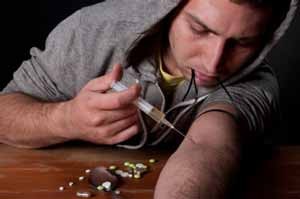
 I have occasionally had occasion to write about addiction and reflect on points of view of those who are truly informed from medical and psychological points of view. Many things to which we can become addicted can be dangerous for our health and can even kill us. That is a fact, but must people be forbidden by law from indulging in such addictions and not be allowed to take responsibility for their own lives? In the 1930’s, alcoholic beverages were prohibited by law in the United States, and now alcohol is legal for those over the legal age in each country.
My father came over very strongly with his warnings to his children against drugs. My two sisters, my brother and I wisely heeded these warnings, and none of us became addicted to anything other than cigarettes. Only my mother smoked until her death from heart failure, certainly brought on by her chronic emphysema. My father stopped smoking in the 1950’s even when it was still in fashion, and I was the last of the children to kick the weed, already ten years ago.
There are chemical substances that are intrinsically addictive like nicotine and other alkaloids and opiates. Addiction is mostly psychological and partly bio-chemical. Hooked like a Fish! is an article I wrote quite a long time ago, quite heavily based on information from the journalist and cured alcoholic Damian Thompson. There are also theories according to which some people are more susceptible to becoming addicted to chemical substances and behaviours than others.
The drug baron Escobedo from Clear and Present Danger
The real point to this article is to add a couple of reflections on the debate as to whether prohibition on recreational drugs should be lifted and repealed. This article – Legalize it all – is extremely interesting. The real issue is the legitimacy of a nanny state, a coercive law originally designed to protect citizens, but which has had the result of filling prisons and creating drug cartels that practically own South America and other parts of the world. The amounts of money made from black market drugs are obscene. Those who are minded to believe in conspiracy theories saw (modern) prohibition as a way to outlaw all forms of alternative lifestyles like Hippies, off-grid people and non-white races, bring about the Orwellian totalitarian state with all men wearing black suits and closely cropped hair! Plenty do think that way, but it isn’t very healthy.
Progress is being made as alternatives are found to throwing addicts and small-time dealers into the slammer. We have to be clear that all these soft and hard drugs are harmful for our health, and one should never take them, but we all know that. Most of us like a drink, which is a part of our social life – for as long as we stick to our known limits and don’t get drunk. We are responsible for ourselves and others, and the law is right in severely sanctioning someone who drives a car whilst drunk. The danger goes beyond the individual and puts other lives at risk. The law must intervene. But, must the law be the appropriate organ for preventing persons from doing harm to themselves? That is a good question, even in cases where responsibility is to some extent diminished. Where is the limit?
I was highly impressed on reading Brideshead Revisited and thinking of the way Charles Ryder dealt with his friend Sebastian who became an alcoholic. Lady Marchmain’s approach was coercive: take away all the drinks and make sure no money was available to buy booze outside. Charles respected Sebastian’s addiction and diminished willpower. It is agonising to see someone we love go that way, but they can only reverse the addiction if they want to – and then seek appropriate help. It is simply that you can’t get someone off the cigarettes, booze or drugs by punishment and force. The person has to want to quit – and then use the available tools to achieve the goal of being free from the addiction.
Hashish and “shit” rot the brain, but occasional use does little harm. I tried it a couple of times, a drag on a joint in a group of several persons, when I was a student in London. The feeling was like a non-smoker smoking tobacco – it causes dizziness and “feeling sick”, but some people feel very peaceful and contented – stoned. I wondered why people spent so much money on the stuff for the mediocre feeling it gave me. The smell is very distinctive. Back in the 1970’s, if you got caught in England, it was fines and imprisonment – and shame on one’s family. So I just smoked ordinary cigarettes, which filthy habit I started when I was at Wennington in 1971.
Then there are the hard drugs. The 1970 English documentary Gale is Dead was the poignant story of Gale Parsons, who had spent most of her childhood in institutions and died aged 19 from an overdose of heroin and barbiturates. I was 11 at the time, and the documentary made as much of an impression on me as my father’s passionate warnings. Why do kids go wrong? Something is up when they are being burned up from the inside out. The main problem is the society these young people are being born into – just like in the Victorian era. There were drugs then too!
I need no convincing that drugs should be decriminalised, but there needs to be a well designed programme of education in schools and packages for parents. I’m sure it is possible to avoid the moralising tone and still get the message over. Lifting prohibition would save enormous amounts of public money presently spent on policing, the legal system and keeping people in prison. It would put the cartels out of business overnight (at least in theory). People could grow their own pot in the greenhouse and buy other stuff over the counter at the chemist’s shop for moderate prices. Naturally, as with cigarettes and other tobacco products, there should be no advertising or commercial pressure to buy this or that brand of the product.
One big problem would be how the prohibition would be lifted. There are enough deaths from overdoses of prescription drugs. Hundreds or thousands would die from heroin, opium, crack, cocaine and all the others. Public opinion would support draconian policing and repression rather than the “irresponsibility” of allowing young people to kill themselves. There would have to be at least the same degree of regulation as for legal alcohol and prescription drugs. There must be a way to work out a transition.
A key to this would be understanding addiction. You can smoke a pipe and good cigars without becoming addicted to nicotine. I wouldn’t, because I was addicted to cigarettes! One thing that keeps me going is that I never again want to go through the pain of stopping smoking. I envy those who can enjoy a good cigar after a meal! I enjoy a drink in the evening or some wine with a meal – but I’m not alcoholic. I can easily go without a drop for days or longer. One must be careful for signs of becoming dependent. Then, it isn’t just chemicals, but our psychology and what we rely on in life. I do believe in being as independent as possible from outside stimulation and self-aware as much as possible. Some do that through asceticism, others by adopting a totally non-conforming and anarchistic approach to life.
What about using drugs recreationally and not getting addicted? I can’t imagine this being possible with heroin or some of the horrible synthetic stuff people can buy in night clubs! Apparently, no drug is immediately addictive. I often think about the anaesthetic I was given for my hernia operations. You just go out like a light – and that’s it until you find yourself in the recovery room with the oxygen mask. There are drugs that are supposed to make you feel wonderful. There are also the mind benders like LSD and DMT. I have heard of people going to a special clinic where they could be given a dose of this “near death experience” drug and be supervised so they they would not do themselves any harm whilst being under the drug. I envy them. In past eras, such drugs were given to heighten spiritual life in some Native American tribes and shamans of other traditions. I would be too afraid to try something like that alone, but with proper supervision. Ketamine is also said to have amazing effects, but it is a veterinary anaesthetic and can kill you if you overdose. At the same time, would I have the moral right to try such things? I have never done so, and I am sure I never will.
Addiction needs to be distinguished from these chemical substances and studied as a medical discipline in its own right. Addiction is the problem, even to chemicals and behaviours that are not forbidden by law – but are harmful and sometimes life-threatening. I was considerably enlightened by Damian Thompson’s work on this subject – The Fix. This looks interesting: Drugs, Brains, and Behavior: The Science of Addiction from a scientific point of view.
One thing that shocked me when I stopped smoking is that the drug Zyban my doctor prescribed for me at the time was not financed by the health service and its price was unreasonably high. The cost was actually calculated to be the same as that of smoking twenty cigarettes a day. It seems a very moralistic approach. Zyban was originally formulated as an anti-depressant, and doctors found that patients who smoked lost their craving for cigarettes and spontaneously stopped smoking. It worked very well for me combined with a progressive nicotine diminution approach through the use of arm patches. I stopped using the nicotine patches months before the prescribed end of the treatment. Perhaps there is a less moralising approach now and more support from public health schemes. I would hope so. A more positive approach will help smokers and people hooked on hard drugs. That is where they need to spend money, and not on throwing drug users into the slammer!
Many countries have legalised marijuana, and rates of addiction do not seem to have increased. Actually, the stuff isn’t physically addictive. I have heard it can actually be good for you in small doses, perhaps in a non-smoke form is that is possible. It is not sure that an intelligent repealing of prohibition would increase rates of addiction to hard drugs. Everything would depend on developing medical treatment for both soft drugs (including nicotine) and hard drugs, and removing the moral stigma. That takes original thinking and a lot of money, but probably less than with the present police and carceral repression.
What would be the effect on organised crime and the cartels, the big dealers and the complicity of some countries? There has to be a way to put the bad guys out of business! This question would have to be studied, and perhaps some of my readers are informed and would enrich a discussion.
A historical study of Prohibition (against alcohol) in the USA in the 1930’s would contribute greatly. There is not only the supply and demand, but the aggressive marketer who makes a lot of money from old rope and other people’s misery. Binge drinking is a real problem and some advocate the return of Prohibition. Perhaps a state monopoly on drugs, alcohol and tobacco (gambling and computer games too – perhaps) would be the right thing, if the state isn’t corrupt and pathocratic. All the substances would be sold or dispensed at reasonable prices, regulated and above all made safe. “Sin tax” is another issue, which merits discussion.
The greatest issue is human freedom and nanny states. Driving a car is potentially dangerous. So is crossing the street, going somewhere by plane, eating food, breathing polluted air, playing sports, anything. We take risks all the time, and we have to weigh up what is reasonable or reckless. Freedom is improved by education. I mentioned above the idea of taking a mind-bending drug, but under medical supervision and professional care – just something once in a lifetime. Frankly, the idea freaks me out, but I sometimes wonder what it would be like. But absolutely not at home! It is simply a question of safety like using a push stick when cutting a piece of wood on a circular saw.
The world is in such a mess, and people are so wretched and broken. Perhaps we could prop them up in a church and climb up into the mighty pulpit and tell them they’re all going to hell if they don’t show moral uprightness, thrift and will-power. I have lived long enough to know that this would do no more good than policing and prisons. Perhaps it is just what we little people can do, get good ideas out using the internet to have some influence on doctors, lawyers, politicians, social workers – and priests among so many who can really help the wretched. Indeed, blogging is a form of ministry.





 The Blue Flower